

Conti Hybrid HT 5 Trailer Tyre Completes Continental's Hybrid Family For Regional Haulage
- By TT News
- February 16, 2026
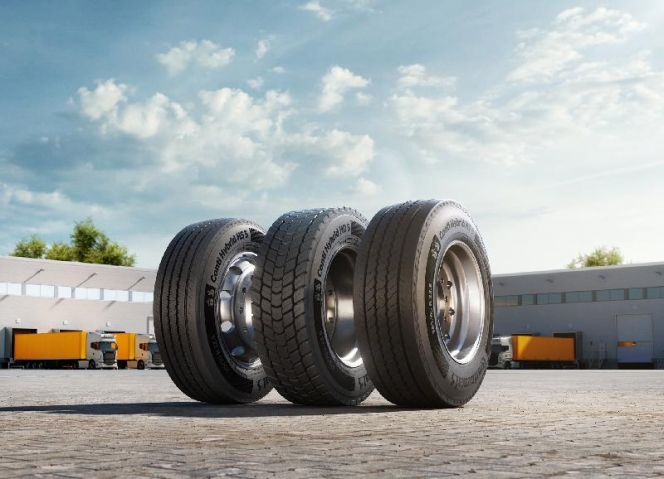
Continental has unveiled the Conti Hybrid HT 5, a new trailer tyre that completes its fifth-generation hybrid tyre family designed specifically for regional freight transport. This launch provides fleet operators with a fully coordinated tyre solution for steering, drive and trailer axles, all engineered to handle the rigorous demands of distribution transport. These operations often involve a challenging mix of inner-city manoeuvring, highway cruising and occasional light off-road driving.
The new Conti Hybrid HT 5 was developed to address the specific pressures of daily regional logistics, including frequent stop-and-go traffic, navigating tight urban streets and managing variable load weights. According to Hinnerk Kaiser, Head of Product Development for Bus and Truck Tyres at Continental, this tyre model integrates safety, operational efficiency and robustness to support dependable and economical fleet performance under fluctuating conditions. The trailer tyre delivers a 15 percent increase in mileage over its predecessor, the Conti Hybrid HT 3+, leading to fewer replacements. For a fleet operating 80 trailers covering 110,000 kilometres each annually, this translates to saving roughly 32 trailer tyres per year, along with reduced labour, storage and procurement costs.
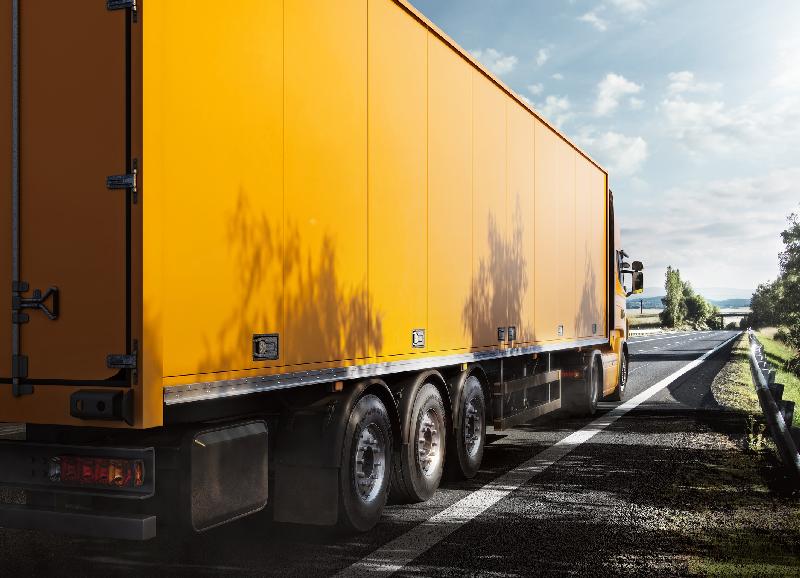
Beyond durability, the tyre contributes to lower fuel consumption thanks to its optimised rolling resistance, a critical factor given that tyres can constitute more than half of a commercial vehicle’s operating expenses. This efficiency also brings environmental advantages by decreasing raw material use and cutting CO2 emissions throughout the production chain. The Conti Hybrid HT 5 excels in wet and cold conditions, achieving a B rating for wet grip on the EU tyre label. This performance stems from a new tread compound and a redesigned pattern featuring zigzag centre grooves and 2D pocket sipes, which maintain reliable traction even as the tread wears down. The design also ensures even pressure distribution for stable braking on slippery surfaces. Additionally, it holds a top A rating for external rolling noise, helping to reduce sound pollution.
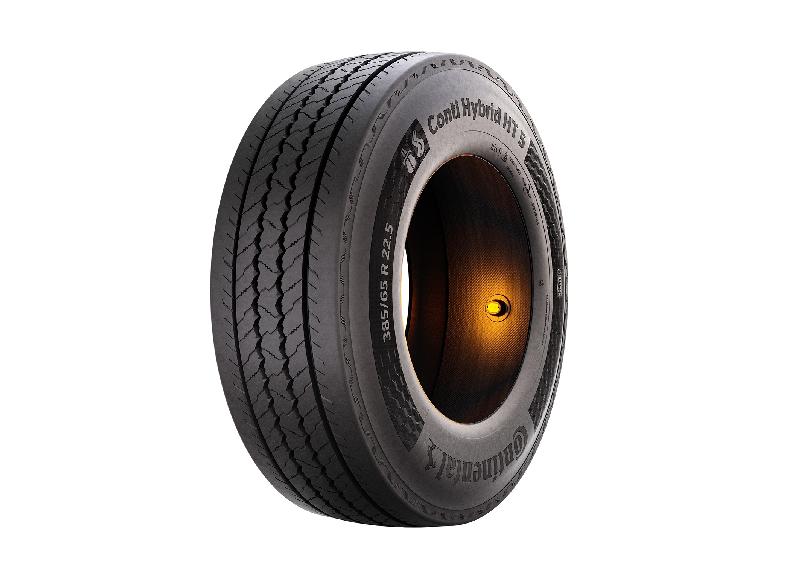
With the arrival of the HT 5, Continental now offers a unified technological approach across all axle positions for regional transport. The Conti Hybrid HS 5 provides steering precision and comfort, while the Conti Hybrid HD 5 delivers strong traction and consistent braking for drive axles. The new HT 5 rounds out the lineup for trailer axles with its stability, rugged build and adaptable grip. All Generation 5 tyres share a focus on extended mileage and long-term performance, featuring an optimised casing suitable for multiple retreading cycles and embedded RFID sensors for digital tracking. The Conti Hybrid HT 5 will launch in March in sizes 385/65 R22.5 and 385/55 R22.5, with additional sizes expected by 2027. These tyres come ready for integration with the ContiConnect digital management system via pre-installed sensors.
TyreSafe And West Yorkshire Police Join Forces On Tyre Safety
- By TT News
- September 17, 2026

TyreSafe, UK’s leading tyre safety charity, has entered a new partnership with West Yorkshire Police, reinforcing a joint commitment to road safety and reducing fatalities and serious injuries across the county. The collaboration arrives amid concerning road safety figures, with 51 deaths and 1,210 serious injuries recorded on West Yorkshire’s roads in 2025.
The two organisations will work together to highlight the essential role tyres play in road user safety. Drivers will be encouraged to perform routine checks on tyre pressure, tread depth and overall condition. The initiative also supports West Yorkshire Vision Zero, which aims to eliminate deaths and serious injuries from the county’s roads.
West Yorkshire Police becomes part of a growing network of over 260 organisations partnering with TyreSafe to promote safer motoring and enhance public understanding of tyre safety. A rising number of police forces now recognise tyre safety as a vital component of their broader road safety efforts.
As the sole point of contact between a vehicle and the road, properly maintained tyres are critical for braking, steering and grip, especially in difficult conditions. TyreSafe advises road users to check their tyres monthly and before long journeys, helping identify pressure, tread and condition issues before they become safety risks. This partnership marks another significant step in TyreSafe’s mission to reduce tyre-related incidents and improve road safety across Britain.
Stuart Lovatt, Chairman, TyreSafe, said, “We are delighted to welcome West Yorkshire Police as a TyreSafe partner. The fact that 51 people lost their lives and more than 1,200 suffered serious injuries on West Yorkshire’s roads in 2025 is a stark reminder that there is still so much work to do. Road safety requires a collective effort, and partnerships such as this are incredibly important. By combining the reach and expertise of West Yorkshire Police with TyreSafe’s specialist knowledge and campaigns, we can help ensure more road users understand the simple but crucial role their tyres play in keeping themselves and others safe.”
Inspector Claire Gray, Roads Policing Support and Proactive Intercept Team Inspector for West Yorkshire Police, said, “Every death and serious injury on our roads has a devastating impact on families, friends and communities. We are committed to working with partners to make West Yorkshire’s roads safer and to support the Vision Zero ambition. Vehicle safety is an important part of that work, and tyres are fundamental to a vehicle’s ability to stop, steer and maintain grip. We are pleased to be working with TyreSafe to help raise awareness and encourage road users to take responsibility for checking and maintaining their tyres.”
Hankook Showcases First Pre-Production Tyre From Expanded Rácalmás Facility For CVs
- By TT News
- September 17, 2026
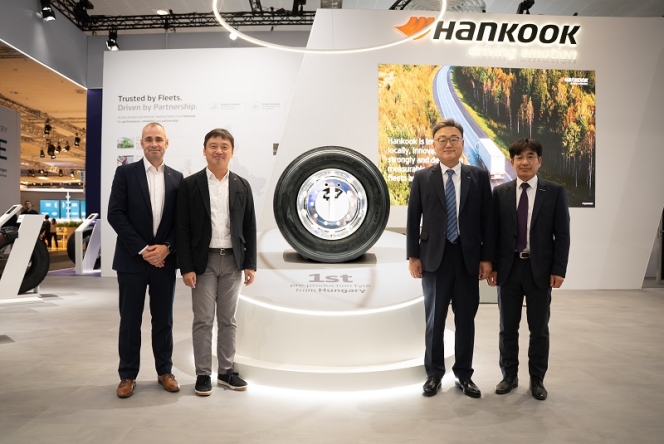
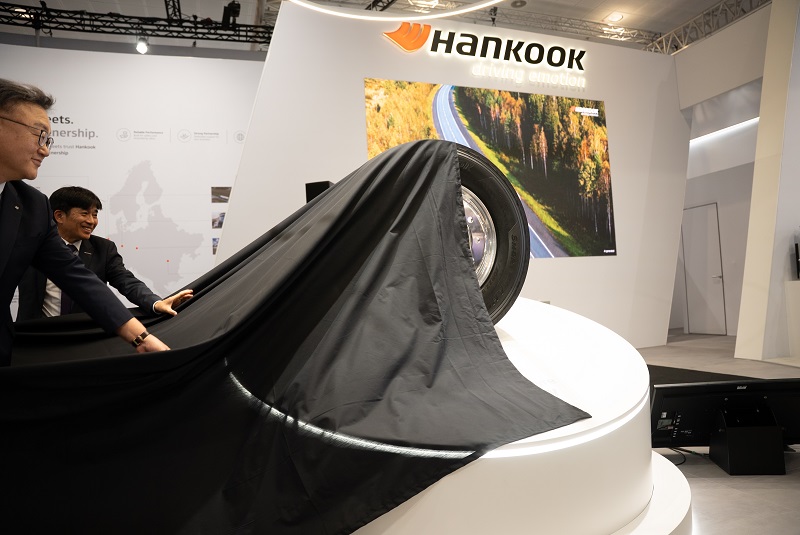
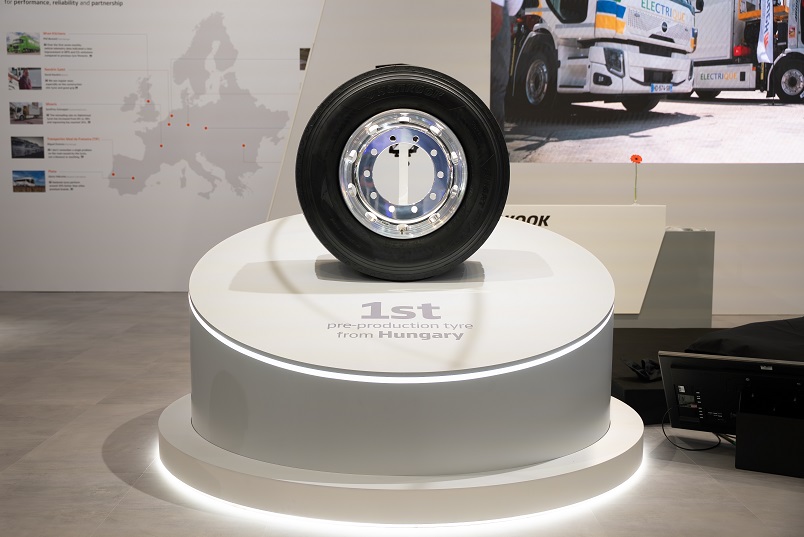
Hankook Tire has completed a significant expansion of its European manufacturing facility in Rácalmás, Hungary, marking the company's first production of truck and bus tyres on the continent. The new line, representing an investment of EUR 540 million, is scheduled to commence operations in October and has been configured to deliver more than 800,000 units annually. The first pre-production tyre from these facilities was officially unveiled at the ongoing IAA Transportation exhibition.
Previously, Hankook supplied European commercial vehicle customers exclusively from plants in Korea and China. The Hungarian line substantially reduces delivery distances, strengthening supply reliability and cutting lead times. Logistics-related carbon dioxide emissions also decline as lengthy transport routes from Asia are partially eliminated. Europe represents roughly 45 percent of Hankook's worldwide sales, making it a critical market for the tyre maker.
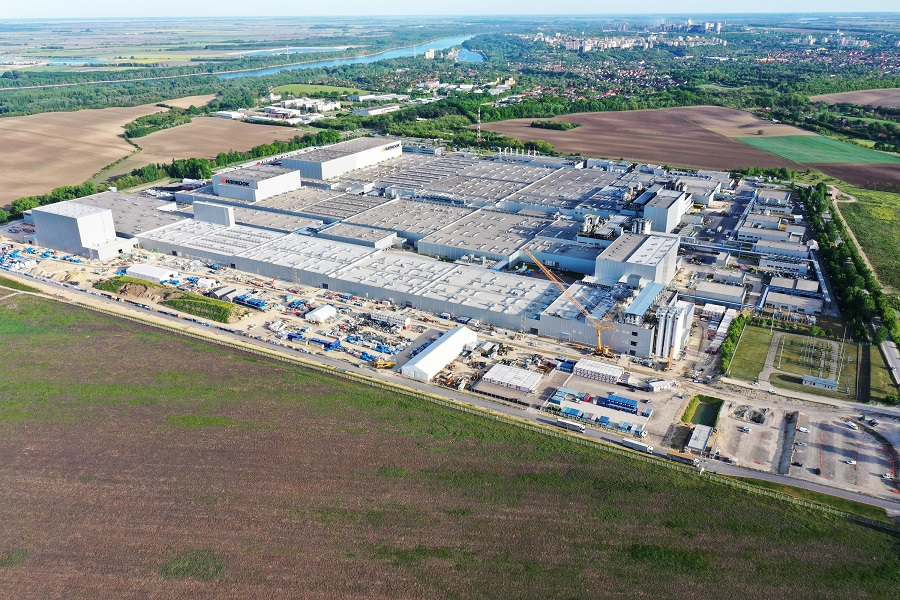
The Rácalmás site has received approximately EUR 856 million across three earlier expansion phases since 2007, with the third stage finishing in spring 2015. It now produces as many as 17 million tyres yearly for passenger cars, SUVs and light commercial vehicles. The fourth phase added the truck and bus tyre line and has seen around 66,000 square metres of production and support buildings constructed since 2024. More than 450 local jobs are being created. Globally, Hankook operates eight plants with capacity for up to 100 million tyres annually and employs about 20,000 people.
Designed as a highly automated facility, the new line relies on automated logistics systems, autonomous guided vehicles and real-time tracking to manage material flow and warehousing, while automated testing ensures consistent quality. Sustainability guided planning and operation through energy-efficient systems, optimised supply infrastructure and modern process controls that lower energy and water use. The plant earned ISCC PLUS certification in 2023. Production will initially centre on 22.5-inch truck and bus tyres, gradually broadening as capacity and approvals allow.
Jongho Park, President and COO, Hankook Tire Europe, said, “The expansion of our European production plant with a new line for truck and bus tyres is yet another key milestone for Hankook in Europe. The central location of the facilities in Hungary and their proximity to the core European markets is a key locational advantage. It will enable us to supply our European customers with premium commercial vehicle tyres even more reliably and quickly, and to respond to their needs with the greatest possible flexibility.”
Ho Taek Lim, Vice President and Managing Director of the plant in Rácalmás, said, “This expansion project was one of the largest industrial development projects ever undertaken at the site in Hungary. The new truck and bus tyre production facilities will transform the plant into a comprehensive production site of significantly greater complexity and with a higher level of automation.”
Continental Expands Ultra-High-Performance Tyre Portfolio
- By TT News
- September 17, 2026
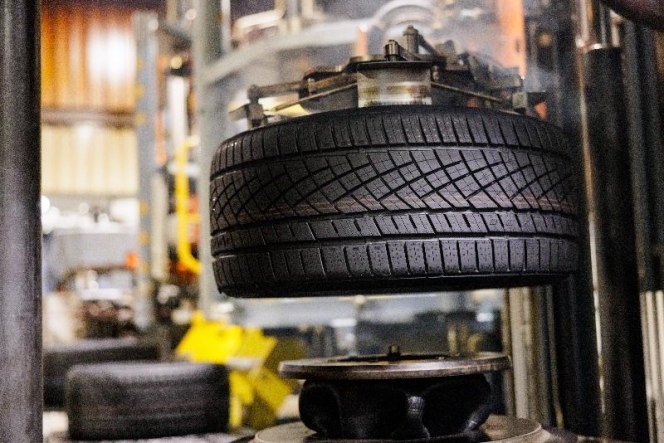
Continental has expanded its global ultra-high-performance tyre portfolio, covering sizes 18 inches and above, over five years and plans further growth. By late 2027, it will add over 650 new sizes across all lines for original equipment and replacement markets. This responds to demand for tyres suited to larger, heavier, more powerful and electrified vehicles, supporting profitable growth.
UHP tyres for passenger cars and light commercial vehicles now matter more to Continental and its customers. From 2020 to 2025, their share of global passenger-car tyre sales across all brands rose from 41 to 55 percent. Asia-Pacific leads at 70 percent, the Americas at 66 percent and EMEA at 43 percent. For the Continental brand, the share grew from about 49 to 62 percent.
The trend towards larger tyres links to vehicle market shifts. Cars are becoming bigger, heavier and more powerful, with SUVs increasingly common. Electric mobility is another weight driver, since batteries add considerable mass. Modern drivetrains also produce torque once associated only with high-performance sports cars. These changes demand more from tyres, which must support heavier loads while ensuring safety, efficiency and comfort.
UHP tyres combine high grip, short braking distances and precise handling with low rolling resistance and high mileage. Continental develops them mainly for wheel-and-tyre combinations of 18 inches and above, performance SUVs, premium sedans, sports cars and high-performance electric vehicles. It is expanding this range across major markets, adding over 650 sizes by the end of 2027, including secondary brands such as Semperit and Uniroyal.
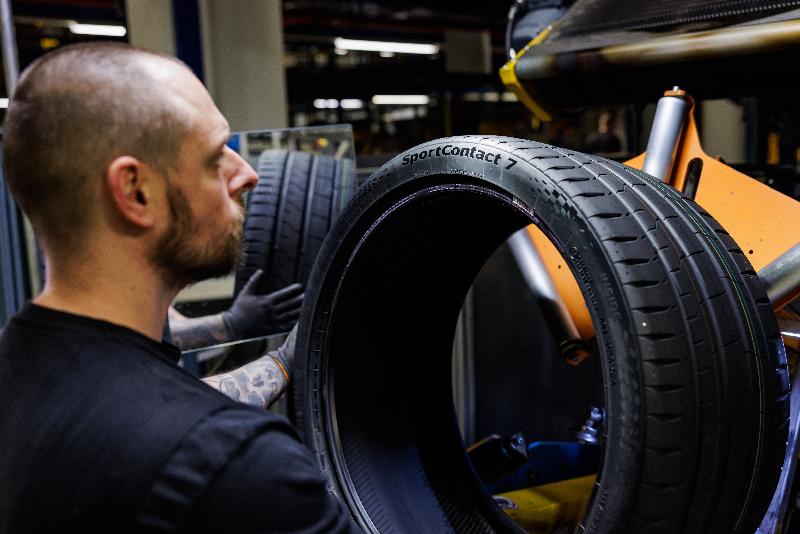
This reflects growing vehicle market diversification, as manufacturers offer more variants and need tyres tailored to differing performance, efficiency and comfort requirements. UHP tyres must meet conflicting demands, balancing grip, braking, handling, rolling resistance, comfort and mileage, with rubber compounds playing a central role. Continental relies on simulations, laboratory analyses, bench tests and driving tests across varied conditions, with the High Performance Technology Center in Korbach driving manufacturing advances applied globally, where UHP tyres up to 24 inches are made.
Testing occurs at the Contidrom near Hannover, Arvidsjaur in Sweden and Uvalde in Texas, focusing on braking, handling, high-speed capability, comfort and durability. Collaboration with tuners ABT Sportsline and BRABUS, plus motorsport input through Hoosier, further advances development. The SportContact 7 exemplifies the segment, available from 18 to 24 inches and approved by Audi, BMW, BYD, Maserati, Mercedes-Benz, Polestar, Porsche, Volkswagen and Zeekr, ranking top three in 27 of 29 international tests.
Edwin Goudswaard, head of Research and Development for Continental’s Tires group sector, said, “With our expanded UHP portfolio, we are responding directly to the increasing demands of modern vehicles. This enables us to offer our customers around the world even more tailored solutions for safety, efficiency and driving dynamics. As modern tyres become larger, heavier and more powerful, tyres are becoming even more critical. They are no longer simply the vehicle’s connection to the road, but a key prerequisite for safety, efficiency and driving dynamics. The UHP segment clearly demonstrates how capable modern tyres need to be. The art lies in combining conflicting requirements at the highest level, and that is precisely what sets our tyres apart.”
Yokohama Rubber Celebrates Overall Win At Nürburgring NLS Round 8
- By TT News
- September 17, 2026
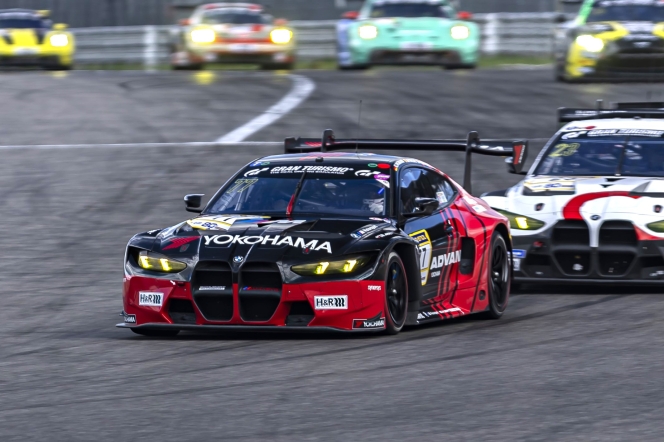
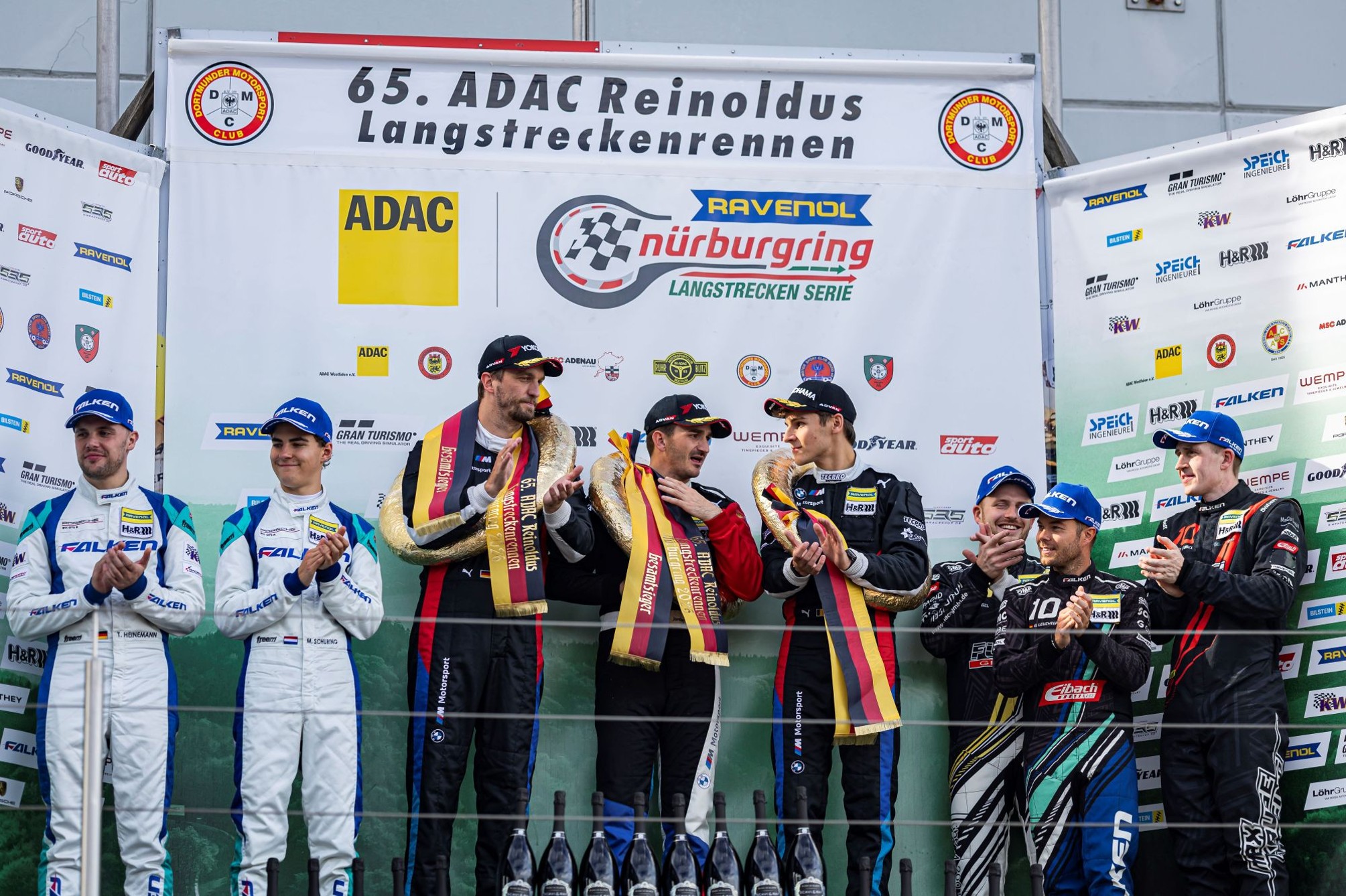
The Yokohama Rubber Co., Ltd. has announced that a car equipped with its ADVAN flagship tyres claimed overall victory at the 2026 Nürburgring Langstrecken-Serie (NLS) Round 8 in Germany on 12 September. The ADVAN racing tyres delivered the grip and durability required to succeed in the demanding endurance event.
The winning entry was the No. 77 BMW M Motorsport car, fielded by Schubert Motorsport. It started from the front row, took the lead early and stayed with the front-runners throughout. After moving back ahead on lap 24, it resisted heavy pressure from closely pursuing rivals and crossed the line just 0.308 seconds clear of the second-place finisher.
This season marks the first collaboration between Yokohama Rubber and BMW M Motorsport in almost 40 years. The No. 77 BMW M4 GT3 EVO, featuring ADVAN’s ‘Red in Black’ livery, has been consistently competitive, winning Rounds 3 and 8 while finishing second in Rounds 6 and 7.
Following Round 9 on 13 September, the car leads the NLS Speed Trophy standings, awarded for the most points across all classes. The ‘Red in Black’ entry will seek to secure the trophy and the series title in October’s final round.

Comments (0)
ADD COMMENT