

- Bridgestone
- Bridgestone India
- Rajarshi Moitra
- Turanza 6i
- Automotive Tyre Manufacturers’ Association
- ATMA
Bridgestone India To Sharpen Focus On PV & CV Segments
- By Nilesh Wadhwa
- June 12, 2026
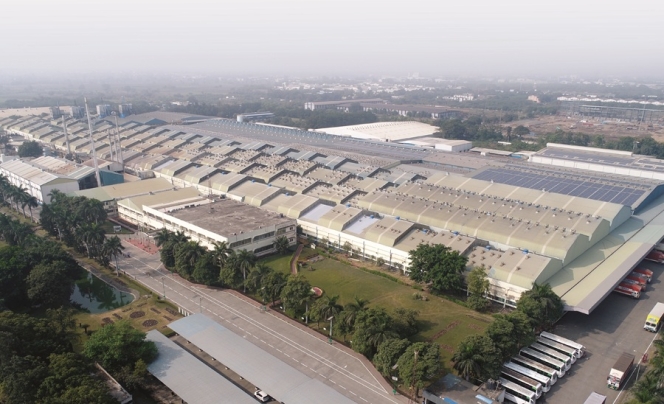
The Indian automotive landscape is currently undergoing a seismic shift. Driven by the rapid rise of rural urbanisation, an aggressive government push for electrification and the development of world-class road infrastructure, the industry is witnessing a period of robust growth. With sales of both new and used vehicles touching record highs, the demand for high-quality tyres remains in a significant upswing.
At the helm of one of the market’s most prominent players is Rajarshi Moitra, Managing Director of Bridgestone India and Vice-Chairman, Automotive Tyre Manufacturers’ Association (ATMA).
In an interaction with Tyre Trends, Moitra discusses the company’s future-ready roadmap, from its substantial capacity expansions to a ‘sharp and deep’ strategic focus designed to maintain leadership in an increasingly premium and electrified market.
A BULLISH OUTLOOK ON THE SUBCONTINENT
While global economic indicators remain varied, Moitra is unequivocally optimistic about the local trajectory. “The Indian automotive industry is at an exceptionally positive juncture from a medium-to-long-term perspective,” he asserts.
This optimism is grounded in several structural tailwinds that suggest India is slated for very strong growth. Key among these factors is the sheer room for market expansion.
“Firstly, we are still significantly under-indexed in terms of car penetration, with only 50 cars per 1,000 people – well below even some smaller developing nations,” Moitra explains.
Furthermore, the geographical spread of wealth is changing. Bridgestone is observing massive growth in Tier 2, 3 and 4 towns, a phenomenon Moitra attributes to ‘rural urbanisation’.
Bridgestone India estimates a transformative half-decade ahead for the industry. “The number of affordable households – those capable of purchasing a car – will double in India over the next five year. When you couple this with the government’s massive capital outflow into road connectivity and the rise of e-commerce, it creates a very bullish environment for both passenger and commercial mobility,” Moitra says.
THE ‘SHARP AND DEEP’ STRATEGIC PILLAR
Despite India being the world’s largest two-wheeler market, Bridgestone is famously absent from that segment – and intends to stay that way for now. Moitra clarifies that the company’s philosophy is rooted in specialisation rather than horizontal expansion. “At Bridgestone, we believe in being ‘sharp and deep’ in our strategy,” he says.
Currently, Bridgestone India’s business split is heavily weighted towards the consumer segment, with 70 percent of sales coming from Passenger Car Radial (PCR), 25 percent from Truck and Bus Radial (TBR) and 5 percent from Off-the-Road (OTR) segment.
“We see enough headroom for growth within the passenger car segment across products, channels and customer experience, so we are focusing our resources on maintaining our leadership there,” Moitra notes, dismissing any near-term plans to enter the two-wheeler space.
Instead, the company is doubling down on ‘white spaces’ within the consumer car category, specifically targeting higher rim diameters and specialised compounds for Original Equipment Manufacturers (OEMs).
INVESTING IN CAPACITY AND LOCAL INTELLIGENCE
To support this growth, Bridgestone is moving aggressively on the manufacturing front. With current operations running at 90–95 percent capacity, the company is in the midst of a major investment cycle.
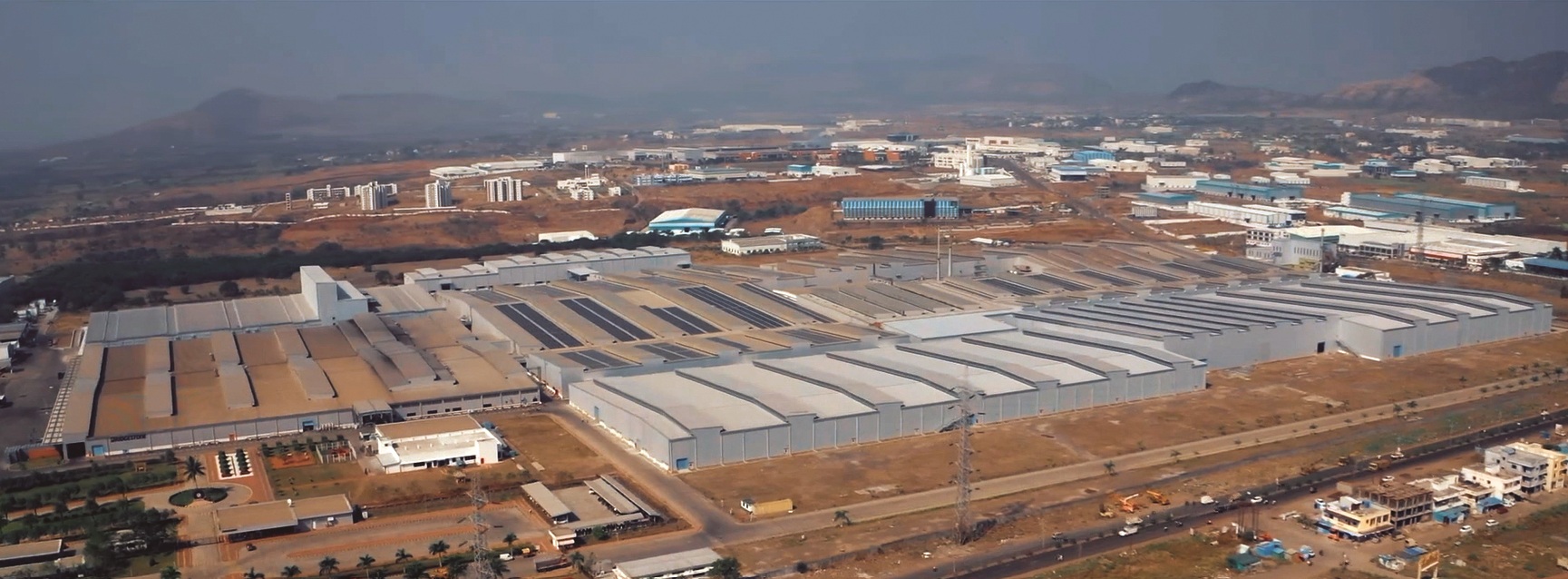
At present, the company’s Pune plant has a capacity to produce 4.01 million passenger car tyres and around 693,000 truck & bus radial tyres, while the Indore plant has a capacity to produce 7.11 million radial tyres for passenger cars and light trucks.
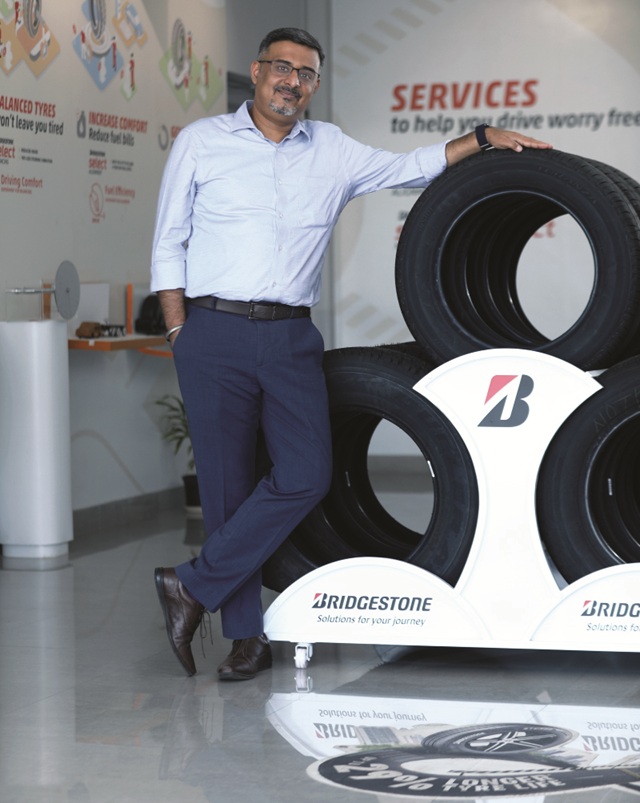 “Our last major investment was USD 85 million in October 2024, which is being ramped up in phases through 2029,” Moitra confirms. This capital is being used to scale volumes and enhance technical capabilities at the Indore factory.
The new investment is expected to further add 1.1 million tyre production capacity in Pune by CY2029, thus taking its total production capacity to around 11.1 million units in the country.
“Our strategy is two-fold: we want to be future-ready for market demand while simultaneously sweating our current assets to drive higher efficiency,” Moitra explains. Crucially, this expansion isn’t just about physical output; it’s about local autonomy. Moitra highlights that a ‘very large part’ of procurement is now local, decided by teams on the ground in India.
The launch of a Satellite Technology Centre in 2025 has further decentralised the company’s innovation engine. According to Moitra, this centre plays a pivotal role in increasing local leverage and technical presence, allowing the Indian arm to maintain a balance between local agility and global sourcing.
EVs AND PREMIUMISATION
As the Indian market matures, consumers are demanding larger wheel sizes – a trend Moitra says is led by OEMs. “We are seeing a clear market shift towards higher inches – for example, a car like the Maruti Suzuki Swift moving from 14-inch to 15-inch and others moving from 16-inch to 17-inch,” he observes.
Bridgestone’s ‘all-inch’ strategy covers the spectrum from 12 to 20 inches, but their brand strength is most potent in these premium, higher-diameter sizes.
This premiumisation dovetails with the transition to electric vehicles (EVs). Bridgestone has positioned itself with an ‘EV-ready’ portfolio, exemplified by the Turanza 6i. “It balances long-lasting durability and safety with low noise and comfort – essential for EVs,” says Moitra. To ensure they capture this nascent but fast-growing market, the company expanded the range from 36 sizes in 2024 to 72 sizes by 2025.
The OEM relationship remains the cornerstone of this technological foresight. “The OEM segment allows us to see ahead of the curve regarding future vehicle technologies,” Moitra explains.
At present, 35 percent of their consumer business is OE-based and Bridgestone is in active discussions with many of the newer automotive entrants arriving in India.
While Bridgestone is aggressively expanding its footprint in new tyre technology and premium consumer segments, it is taking a markedly more conservative approach towards the retreading sector in India. Despite the potential for material circularity, the company does not view retreading as a strategic priority for the immediate future.
Moitra clarifies that Bandag, Bridgestone’s global retreading arm, is not currently active in India, and there are no plans to introduce it in the near-term. This decision is driven largely by the unique and challenging dynamics of the local market, which is currently dominated by cold retreading.
He points out that a significant pricing challenge exists when ‘cold retreads versus biased tyres versus some of the cheaper tyres’ are compared, making the business case difficult to justify at this stage. Consequently, Bridgestone has opted to remain focused on its core segments for the next two to three years rather than entering the retreading space.
SUSTAINABILITY AND THE ‘INSTITUTION OF RESPECT’
Beyond the numbers, Bridgestone is attempting to build what Moitra calls an ‘institution of respect’. This involves a heavy commitment to environmental goals. The Pune plant already holds the distinction of being the first carbon-neutral facility in the Bridgestone group.
“Sustainability is a core agenda across our entire value chain,” Moitra explains, noting a public commitment to reduce the company’s carbon footprint by 50 percent by 2030, including Scope 3 emissions. This holistic approach ranges from manufacturing processes to material circularity in the tyres themselves.
Looking ahead, the goal is to protect a dominant market share – currently over 20 percent by volume and 23 percent by value in the passenger car aftermarket. To do this, Bridgestone plans to expand its physical reach by 30 percent over the next five years, building upon its current network of over 4,000 touchpoints.
As the company transitions its branding from the Olympics to Formula E, the focus remains clear: high performance and the next era of mobility. “It’s the perfect platform to showcase our technological edge,” Moitra concludes.
Cabot Names Steve Delahunt As Interim CFO
- By TT News
- September 16, 2026

Cabot Corporation has named Steve Delahunt, currently Vice President and Corporate Treasurer, to assume the Chief Financial Officer role on an interim basis starting 1 October 2026. He will hold the position while Cabot continues searching for a permanent finance chief.
The interim appointment follows the previously disclosed leadership transition in which Erica McLaughlin, Executive Vice President, Chief Financial Officer and Head of Corporate Strategy, will become President and Chief Executive Officer on the same date. McLaughlin succeeds Sean Keohane and will relinquish her CFO duties at that time.
Delahunt brings over three decades of finance and treasury experience, including nine years leading Cabot's investor relations function through January 2026. As Corporate Treasurer, he oversees global treasury operations, capital markets strategy, liquidity management, banking relationships, risk management and pension investments. He has been central to Cabot's capital allocation, financing, investor engagement and strategic growth initiatives, as well as strengthened shareholder relations during his investor relations tenure.
McLaughlin said, “Steve is a highly respected finance leader with deep knowledge of our business, strong relationships across our global organisation and a proven track record of disciplined financial leadership. As we continue executing our strategy and building on our strong financial position, Steve’s experience, judgment and understanding of our business make him exceptionally well suited to lead our finance organisation while the Company conducts its search for our next Chief Financial Officer.”
JK Tyre Launches New Off-The-Road Tyres For Construction And Mining Sectors
- By TT News
- September 15, 2026
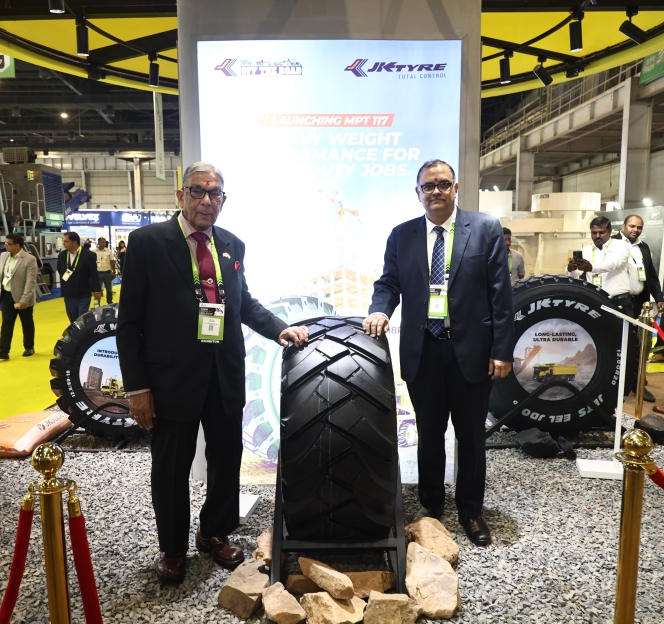
JK Tyre & Industries Ltd has launched four new off-the-road (OTR) tyre products for construction, material handling and mining applications, as the company expands its portfolio in performance-focused segments.
The products were unveiled at BAUMA CONEXPO INDIA 2026, held at the India Expo Centre in Greater Noida, and are designed to improve durability, load-carrying capacity, traction and operational efficiency in demanding conditions.
The new range includes tyres for self-loading concrete mixers, backhoe loaders, telehandlers and mining tippers. JK Tyre said the additions are intended to meet evolving requirements across India’s construction, infrastructure and mining sectors.
Srinivasu Allaphan, Director of Sales And Marketing at JK Tyre & Industries Ltd, said: “India’s infrastructure and industrial growth is creating a growing need for high-performance, reliable and application-specific mobility solutions. At JK Tyre, we are committed to developing OTR solutions that address the specific needs of our customers and the demanding conditions in which their equipment operates. Our latest range combines durability, reliability and performance to help customers maximise equipment uptime and operational efficiency. As we continue to strengthen our premium OTR portfolio, we remain committed to delivering solutions that create value for our customers and support the growth of India’s construction, infrastructure and mining sectors.”
The company said the MPT 45 tyre pattern has been developed for traction and stability in mixed terrain, while the MPT117 range is designed for construction and material-handling operations, with a focus on grip and durability. A separate JDO XD tyre has been introduced for mining tippers, with reinforced construction aimed at resisting cuts and abrasions.
JK Tyre said the products were developed with Indian operating conditions in mind and are intended to improve machine performance and reduce operating costs in demanding applications.
The group added that the launch supports its expansion in off-the-road tyres across construction, mining and specialised industrial segments.
Ascenso To Invest USD 100 Million To Expand Mining Tyre Manufacturing In India
- By TT News
- September 15, 2026
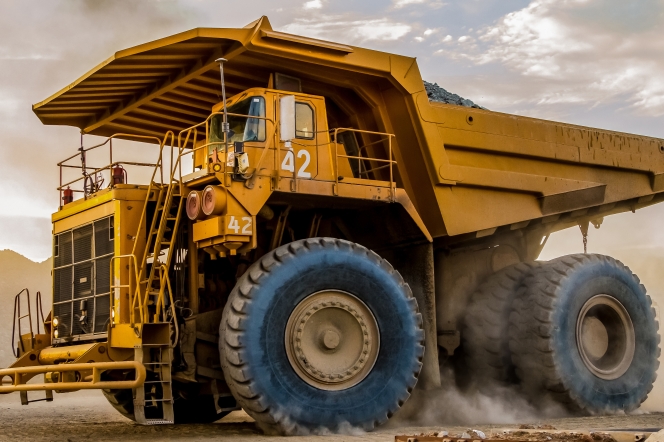
Ascenso Tyres will invest USD 100 million to build manufacturing capability for large mining tyres in India, as the company seeks to expand its presence in the domestic off-the-road (OTR) segment.
The investment will support the development of all-steel radial tyre production at Ascenso’s Indian facility, including manufacturing infrastructure, product development and engineering capacity. The move comes as India’s mining sector scales up output of coal, iron ore and critical minerals, driven by government initiatives to boost domestic production.
Ascenso said the expansion would allow it to produce tyres of up to 49 inches, with larger sizes under development. The company stated that large-format mining tyres in India have historically been sourced from overseas manufacturers, with limited domestic production capability.
The group has begun deploying field application engineers across key mining regions to work directly with operators, monitoring tyre performance and feeding data into research and development.
Yogesh Mahansaria, Managing Director of Ascenso Tyres, said: “India's mining sector is scaling up like never before, and the equipment that powers it needs tyres that can match that ambition. Building this capability in India, for India as well as the rest of the world, has been central to our thinking from the start. Our US$100 million investment is about building world class radial mining tyre engineering and manufacturing capability within the country, not simply adding capacity. We want Indian mining operators to have access to global standard performance without having to look overseas for it, and we intend to compete on that performance, not on price alone.”
Dhaval Nanavati, Chief Executive of Ascenso Tyres, added: “Over the past four years, our foundation in Agriculture, Forestry and Construction taught us how important it is to stay close to customers on the ground, and that is exactly the approach we are bringing to mining. We are placing field application engineers directly in India's key mining belts, from the coalfields of Jharkhand and Odisha to the iron ore regions of Chhattisgarh and Karnataka, so that we can respond to real operating conditions as they happen. Reaching 49-inch giant mining tyres, engineered here in India, is a significant milestone, not just for Ascenso but for what Indian manufacturing is capable of in this space. We see this as the start of a long-term commitment to mining customers in India and around the world.”
The company said its radial OTR portfolio, launched in 2023, would expand through to 2027 and 2028, with additional sizes and applications across mining and earthmoving equipment.
KraussMaffei Names Ren To Lead Extrusion Unit Alongside China Role
- By TT News
- September 08, 2026
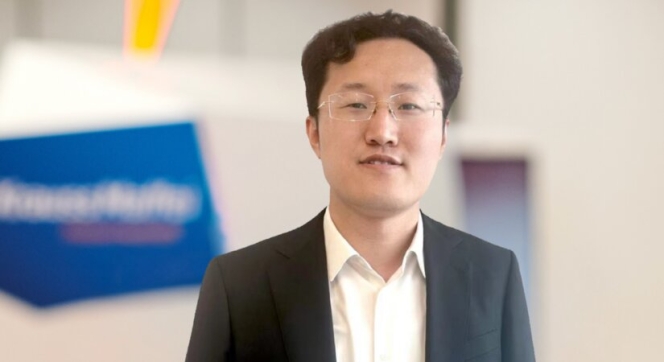
KraussMaffei has appointed Xinting Ren as Managing Director of its extrusion business, effective 1 September, 2026, combining the role with his existing leadership of the group’s China operations.
Ren succeeds Ralf Benack, who left the company at his own request on 31st August , ending a tenure of about two years.
The company said the dual appointment is intended to strengthen integration between its extrusion activities and international operations.
Ren has led KraussMaffei China for the past three years, overseeing cross-technology activities in the Chinese market. Before joining the group, he held several management roles in the chemical industry, including Assistant General Manager at KraussMaffei Company Limited, now operating as Sinochem Equipment Technology Qingdao Co., and most recently served as general manager of Shanxi China Coal Pingshuo Energy Chemical Co., Ltd.
Benack took over leadership of KraussMaffei Extrusion in 2024 and was responsible for the group’s global extrusion business. During his tenure, the company focused on operational processes and customer orientation, reducing delivery times and further developing the Technology Center at its Laatzen site.
The facility now offers 26 pilot lines for development and customer projects, and the company said it also expanded its extrusion technology portfolio.
From September, responsibility for the extrusion business and management of the China business will be combined under Ren’s leadership.


Comments (0)
ADD COMMENT