

CEAT Specialty’s Off-Highway Tyre Playbook
- By Sharad Matade
- October 09, 2026
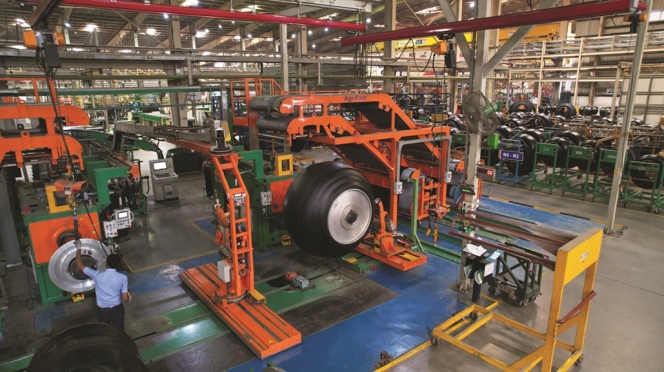
CEAT’s Chennai and Halol plants are the only tyre facilities globally with two WEF Global Lighthouse Network inductions, and the company has also won the Deming Grand Prize for manufacturing excellence.
Yet 30 km from Mumbai, CEAT Specialty’s 49-acre Ambernath plant tells a different story: tyres too heavy for automation, built instead around nitrogen curing, induction presses and orders as small as one unit – a bet that sustainability will win markets in Europe and America.
The stakes: an INR 5 billion investment in all-steel radial technology, capacity expansion to 160 tonnes/day and a Camso manufacturing deal Tolani pegs at up to USD 1 billion – turning a manufacturing constraint into a competitive edge.
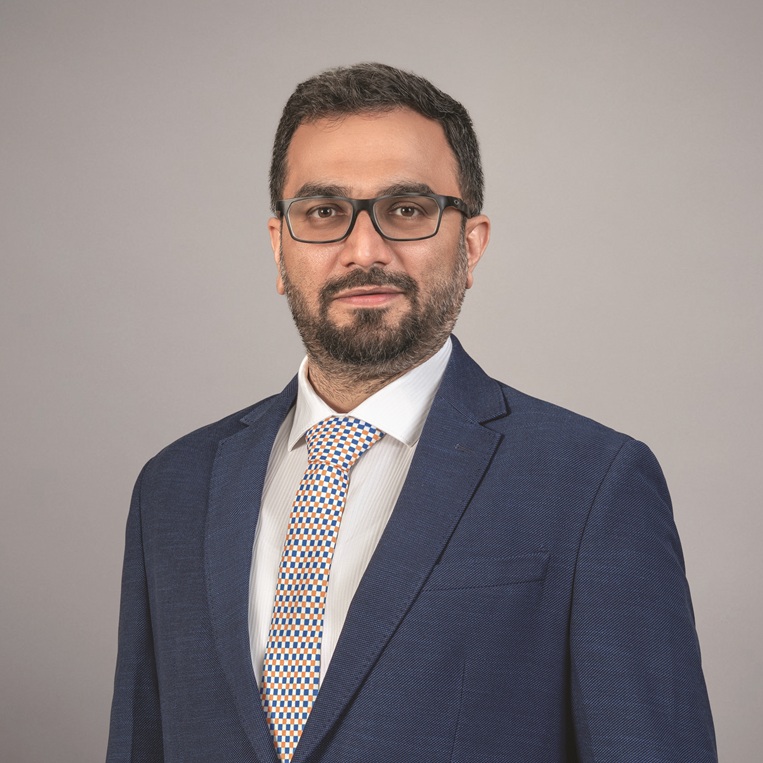
Amit Tolani, Chief Executive of CEAT Specialty, does not talk about tyres the way most executives talk about their products. He talks about them the way an engineer talks about a puzzle that keeps changing shape. “The way to look at it is that the manufacturing processes that we follow – how modern they are, how capable they are, how technically efficient – that’s what matters,” he says, sitting inside the plant that has become the nerve centre of CEAT’s off-highway tyre (OHT) business.
That plant – the Ambernath facility, a division of Mumbai-headquartered RPG Group’s CEAT Limited – is not a conventional tyre factory. It builds tyres that can weigh up to over 600 kilogrammes, tyres too large and too heavy for the automation that has transformed the passenger-car tyre business. And it is this constraint, as much as any strategic masterplan, that has shaped how CEAT Specialty has chosen to compete.
A PLANT THAT CANNOT SIMPLY COPY THE ROBOTS
Ask Tolani why Ambernath has not adopted the wall-to-wall robotic automation seen at CEAT’s Chennai or Halol facility, and the answer is refreshingly unglamorous: physics. “PCR tyres can be lifted by an ordinary human being, or a forklift, or robots,” he explains. “For these tyres, which are 600–700 kg, it’s very difficult to have a conveyor that can just lift them.” In the processes that do lend themselves to automation – mixing, calendering, curing – Ambernath’s equipment, he insists, is ‘as modern as the Chennai plant. More modern’. The plant intends to formalise that claim in the coming months by pursuing Industry 4.0 certification.
Where the physical limits of scale end, digital ones have taken over. A SCADA system tracks steam lines running beneath the plant floor. Where a leak once required a worker to walk the line, take manual temperature readings and diagnose the fault, artificial intelligence now flags the location almost instantly. “The point time taken to identify the problem is close to zero,” Tolani says. Every tyre carries a digital identity from raw material to finished good; a single scan reveals the batch, the machine, the operator and the timestamp behind it. AI is also being trained on the plant’s visual tyre inspection – traditionally a human, eyeball-driven task – using high-resolution cameras to catch defects, and on optimising mixing recipes and cycle times, the invisible chemistry that determines how a tyre performs in a paddy field or a quarry.
CURING WITHOUT STEAM
The most technically striking claim to emerge from Ambernath concerns curing – the energy-intensive process of vulcanising rubber under heat and pressure that has, for a century, meant steam. “This plant has already started using nitrogen curing on one of the lines,” Tolani says. Alongside it sit two proof-of-concept induction curing presses – a steam-free process, while the nitrogen conversion has come via LMT. “There are two presses that are already commissioned here,” he says. “We’ve already started working in that direction, where we want to take a lead in this space.”
The bulk of the plant’s newest investment, however, is going into something more conventional in principle but strategically significant in intent: all-steel radial off-the-road tyres. CEAT Specialty has committed INR 5 billion to this latest phase of expansion, representing a decisive shift in product architecture. Where a car’s tyres are universally radial, only 60–70 percent of truck tyres have made that transition, and agricultural and OTR applications lag further still – agriculture because usage is seasonal, OTR because a fabric-belted bias tyre still does much of the heavy lifting. All-steel radial construction changes that calculus by delivering higher load-carrying capacity and greater comfort, attributes increasingly demanded not only by Indian buyers but, crucially, by European and American customers. “It’s for demand from the European market, the US market – and the Indian market is also growing in such a handsome fashion that we want to cater to it,” Tolani says.
LEAN BY DESIGN, NOT BY SLOGAN
CEAT’s manufacturing philosophy is inseparable from its most prized accolade: in 2017, CEAT became the first tyre company outside Japan to win the Deming Prize, the world’s most prestigious award for total quality management; in 2023, it became the first tyre company anywhere to win the Deming Grand Prize, a distinction held by only 33 organisations globally as of 2025. Inside CEAT, this discipline is branded QBM – Quality Based Management – a homegrown fusion of Total Quality Management, the Toyota Production System and Total Productive Maintenance.
“We are a Deming Grand organisation. That means we follow the philosophy of lean manufacturing – not to use resources or have any wastage in the process,” Tolani says. That philosophy is embedded, quite literally, in the plant’s straight-flow layout, which runs from raw material storage through mixing, stock preparation, tyre building, curing and final finish in a single unbroken line. Even small batch sizes, he says, are produced without the wastage, excess labour or lost efficiency – what the plant’s internal vocabulary calls ‘Muri’ – that might otherwise creep in.
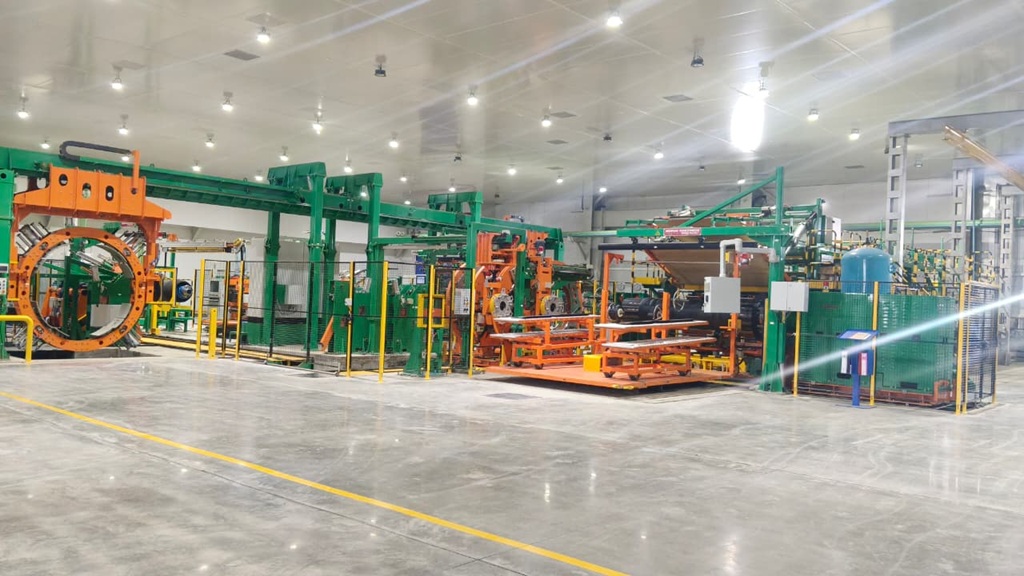
That same lean instinct underpins one of Ambernath’s more unusual competitive claims: a minimum order quantity of one. In an industry historically built around economies of scale, the plant will build a single speciality tyre to a customer’s specification without demanding batch aggregation – a capability the company says few OHT plants worldwide can match. Self-managed teams on the shop floor plan and execute changeovers themselves, allowing a highly automated, digitally traceable line to pivot rapidly to low-volume, customised orders. A related innovation, branded Unistage, builds and shapes an agricultural or OTR radial carcass into its final toroidal form on a single drum rather than the conventional two-stage process, reducing the handovers.
AN R&D CENTRE BUILT FOR SPEED, NOT SCALE
CEAT Specialty operates a dedicated in-house research and development facility at Ambernath, distinct from the group’s broader R&D infrastructure, and Tolani is candid about why. Tolani says, “This business is very, very different. There is no Pareto here – no 80/20 rule where a handful of product sizes serve the bulk of demand. Because farm and off-highway equipment come in such a long tail of sizes and configurations, and because the plant supplies numerous international OEMs directly, the time taken to develop, validate and commercialise a new tyre has to be compressed.”
“We needed a dedicated facility, closer to the manufacturing, so that we can quickly pilot, quickly turn around,” he adds. A new Compound Laboratory, opened in September 2025, now anchors materials science work spanning OTR, agricultural and industrial segments, while AI-assisted testing has trimmed, by Tolani’s estimate, roughly a third off the time from concept to market. The centre’s pipeline currently spans all-steel OTR tyres, a newly launched forestry range, very high flexion (VF) agricultural tyres and expanding work in earthmoving and material handling.
CAMSO ACQUIRED FOR BRAND, CHANNEL AND CATEGORY
CEAT Specialty’s move into Camso – a name Tolani values at up to USD 1 billion in brand potential across agricultural tracks, power sport tracks and material handling – may be its most consequential strategic bet. “It was a natural fit for us in terms of completing our portfolio,” he says. Ambernath, built in 2018 solely for agricultural radial tyres, gains through Camso’s new OEM ties (Massey Ferguson, John Deere) and construction-channel access across South America and Europe.
Under a three-year Michelin agreement, CEAT can currently manufacture and sell only compact construction tyres and tracks under Camso, taking over end-consumer sales in that segment – with other categories opening up once the term ends. The impact is already visible: standalone, CEAT Specialty’s off-highway mix is 85:15 agriculture to non-agriculture; with Camso’s, it shifts toward 50:50.
THE NUMBERS BEHIND THE AMBITION
Ambernath is running at 105 tonnes a day, at 92–95 percent utilisation – ahead of schedule. A further phase, due within 45 to 60 days, will lift capacity to 160 tonnes. Camso, still integrating, runs at roughly 50 percent.
Off-highway tyres make up close to 20 percent of CEAT’s speciality revenue, with the agriculture-to-non-agriculture split narrowing from 85:15 to near 50:50 once Camso is included. Domestically, Tolani credits GST reforms for a strong OEM market, led by Mahindra and TAFE, while mining stays flat – a segment Camso’s construction heritage should help lift as the new all-steel OTR line comes online.
Giti Tire USA Promotes Michael Markoff To Chief Operating Officer
- By TT News
- November 18, 2026
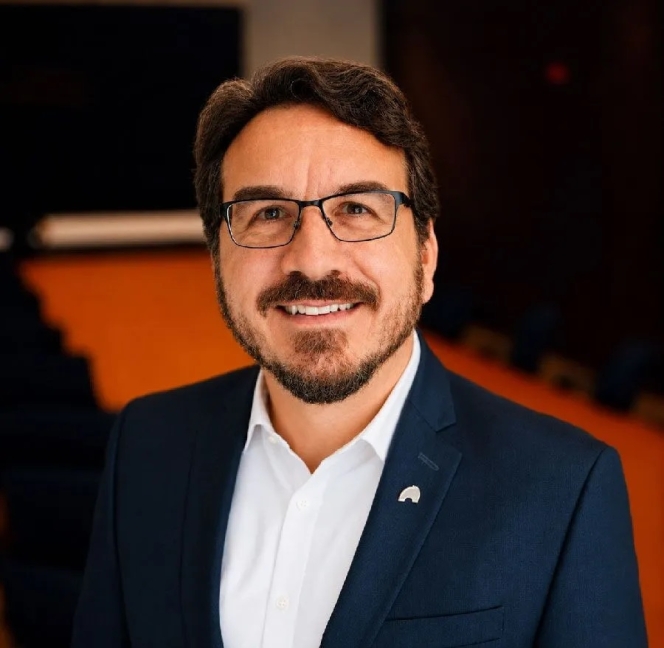
Giti Tire USA has named Michael Markoff Chief Operating Officer effective 1 November 2026, a promotion tied to a planned leadership transition as the company enters a major growth phase featuring the US debut of the Giti brand and sustained GT Radial momentum.
Phang Wai Yeen, previously Chief Executive Officer of North American operations, now leads global research and development. Markoff, formerly Executive Vice President of Sales and Marketing, answers to Executive Chairman Dr Enki Tan and adds Logistics, Supply Chain, Technical Service, Industry Relations and Product Development to his Sales and Marketing oversight.
A 29-year tyre industry veteran, Markoff spent over 26 years with The Goodyear Tire & Rubber Company in research and development, manufacturing, marketing and sales leadership roles across the United States and Europe. The US Army veteran steps into his duties at a moment of considerable opportunity for the brand portfolio.
Giti entered the US market this year, and GT Radial gained new products, wider awareness and its strongest Formula DRIFT season, taking the PRO Driver Championship with Conor Shanahan, a second straight Tire Cup Championship and Rookie of the Year honours with Cole Richards. The fastest road legal EV tyre Guinness World Record also fell recently. The Champiro SX2 RS was engineered and built at the Richburg, SC, plant, where both brands are produced.
Markoff said, “I am honoured to take on this role and build on the strong foundation our team has established. I look forward to working with our employees, customers and partners to strengthen our operations, enhance customer service and support Giti Tire USA’s continued growth.
“We have tremendous momentum across our business. The introduction of the Giti brand to the US market opens an exciting new chapter for our company while GT Radial continues to build on its success with innovative new products and an outstanding year in Formula DRIFT. Winning three major championships is a tremendous validation of our tire technology and performance capabilities.”
Synthomer Names Investment Banking Veteran Anthony Fitzpatrick As CFO
- By TT News
- November 17, 2026
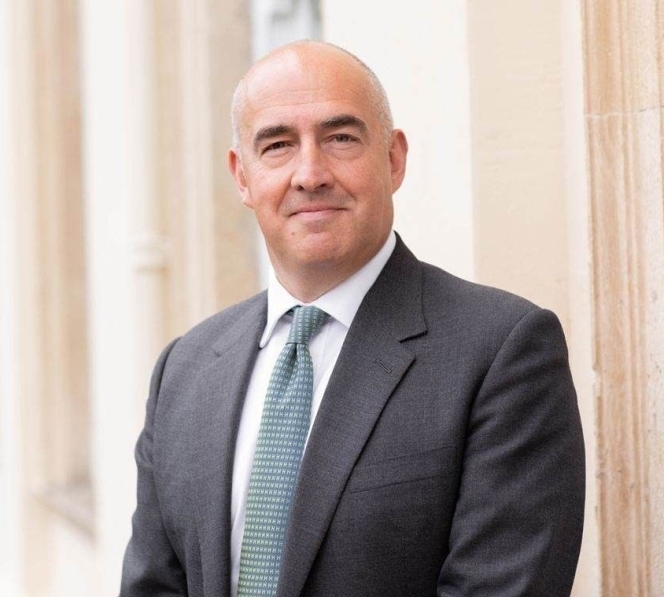
Synthomer, a leading supplier of high-performance, highly specialised polymers and ingredients, has named Anthony Fitzpatrick as its incoming Chief Financial Officer and Executive Director. He arrives as CFO Designate on 1 March 2027 and steps into both roles on 1 April 2027, succeeding Iain Torrens, interim CFO since May 2026. Torrens will stay on as CFO and Director to steer the 2026 year-end results, working with Fitzpatrick through March on a smooth handover before leaving the Board and the company.
Fitzpatrick's background combines board-level finance with hands-on operational leadership. At Croda International Plc, the FTSE 100 speciality ingredients firm, he has sat on the executive committee since 2014, filled the interim Group Chief Financial Officer chair during 2024 and 2025 and now heads Strategy, Corporate Development and Industrial Specialities. His Croda tenure also includes running the Latin America region and the Performance Technologies & Industrial Chemicals division. Earlier, he spent over 20 years in global investment banking with Goldman Sachs, Bank of America and UBS across London and New York, concentrating on chemicals and allied sectors.
A Durham University chemistry graduate holding a BSc (Hons), Fitzpatrick brings extensive financial, strategic and corporate finance experience to the group. His appointment caps a planned leadership transition, with the outgoing and incoming finance chiefs overlapping during March to safeguard continuity. Torrens will formally depart once Fitzpatrick assumes the CFO and Executive Director positions, closing out his interim tenure on the Board.
Michael Willome, CEO, Synthomer, said, “I am delighted that Anthony will join Synthomer as our next Chief Financial Officer. Anthony brings highly relevant financial, commercial and industry expertise to Synthomer, combining experience as interim Group CFO of Croda with more than 20 years in investment banking and deep knowledge of the speciality chemicals sector. I am looking forward to working with him as we continue to strengthen the business and deliver on our priorities.
“I very much enjoy working with Iain. Since he joined Synthomer as interim CFO, he has made a significant contribution, particularly in helping to steer Synthomer through a volatile period for the chemicals sector while continuing to strengthen the balance sheet and the finance function. On behalf of the Board, executive committee and all colleagues, I thank Iain for his continued contribution and wish him every success for the future following his handover to Anthony on 1 April 2027.”
Fitzpatrick said, “I am excited to join the Synthomer team. The Group has substantial opportunities for further value creation ahead and I look forward to working with Michael and the team to help realise them.”
Torrens said, “It has been an exciting time to serve as interim CFO of Synthomer, which has clear momentum and is in an increasingly strong position to embrace the opportunities ahead. I would like to thank the Board, Michael and the team for their support, and I look forward to completing the year end and working with Anthony on a smooth handover.”
PCBL Chemical Names Rituraj Singh Kalra As Executive Director And Chief Of International Markets
- By TT News
- November 13, 2026
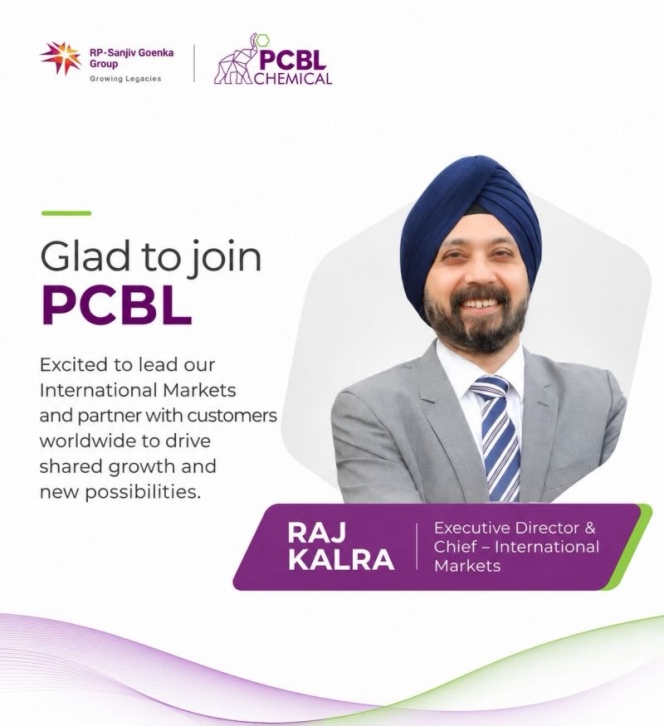
PCBL Chemical has named Rituraj Singh Kalra as Executive Director and Chief – International Markets (Rubber Blacks), effective 9 November. The Kolkata-based company disclosed in a regulatory filing that Kalra will also serve on its Senior Management team and will be based in Belgium.
Kalra brings roughly three decades of expertise in international sales, marketing and business strategy, with senior leadership roles at Bekaert, GKN Driveline and MAHLE. He will oversee operations across Europe, the Americas and key Asia-Pacific markets, lead the Innovation Centre and drive Green Carbon initiatives, prioritising close customer relationships, resilient supply chains and commercial and technical partnerships built on shared sustainability goals. He previously served as Senior Vice-President of Global Sales, Marketing and Strategy at Bekaert in Belgium and holds a mechanical engineering degree from the University of Leeds and an MBA from Warwick Business School.
The appointment strengthens PCBL's global ambitions as a unit of the RP-Sanjiv Goenka Group, a conglomerate tracing its roots to 1820 that now generates about USD 5 billion in annual turnover and employs more than 55,000 people. With over six decades of operations behind it, PCBL stands as India's largest and the world's sixth-largest carbon black manufacturer, positioning itself as a global partner across carbon black, speciality chemicals and advanced materials.
Tyrecycle's Jim Fairweather Concludes 10-Year Run As ATRA President
- By TT News
- November 13, 2026
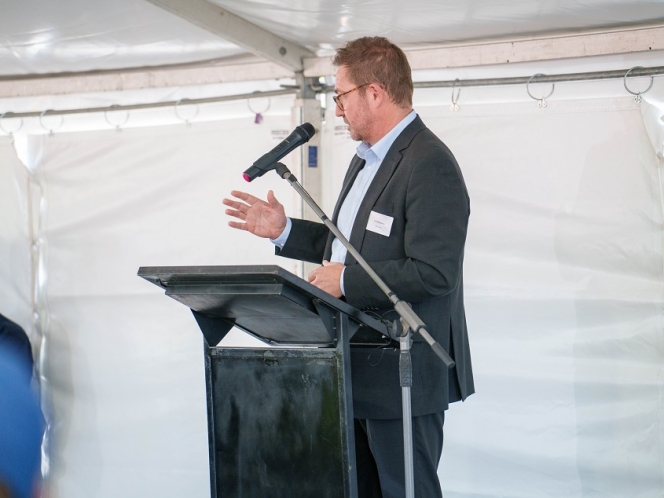
Tyrecycle CEO Jim Fairweather has stepped down after more than 10 years as President of the Australian Tyre Recyclers Association (ATRA), passing the role to Leigh Cometti, Managing Director of CTS Tyre Recycling. Fairweather will remain involved with ATRA and the wider industry.
His departure closes a period in which the association and Tyrecycle jointly pressed government to adopt the prohibition on exporting whole-baled waste tyres. That measure stopped such shipments reaching developing markets, where poor handling, storage or disposal could endanger human health and the environment, and it pushed the sector towards more accountable end-of-life tyre management and more processing and recovery on Australian soil.
Tyrecycle describes engagement with bodies like ATRA as central to its aim of building up the country's tyre recycling and resource recovery sectors. The company argues that recyclers, governments, regulators and other parties must work together if tyre recovery is to rise and end-of-life tyres are to be handled better nationally.
Looking ahead, ATRA has flagged several priorities: lifting off-the-road market recovery volumes, tightening compliance and enforcement, maintaining close ties with State and Federal regulators and pursuing regulatory changes that leverage existing Australian recycling capacity. Tyrecycle says it will keep contributing its experience, expertise and national outlook to ATRA and its members.

Comments (0)
ADD COMMENT