

Pirelli Posts 13.3% Rise In 1h Net Profit As High Value Strategy Underpins Performance
- By Sharad Matade
- August 05, 2026
Pirelli reported a 13.3 percent increase in first-half net profit as the premium tyre maker benefited from continued growth in its High Value business, despite persistent geopolitical uncertainty and a volatile economic environment.
Net profit for the six months ended 30TH June rose to EURO 299 million from EURO 264 million a year earlier, supported in part by lower financial charges. Revenue was broadly unchanged at EURO 3.49 billion, although organic revenue increased 2.5 percent after excluding the effects of foreign exchange movements, hyperinflation accounting and changes in the scope of consolidation.
Adjusted earnings before interest and tax (EBIT) were EURO 557.8 million, broadly unchanged from €558.3m a year earlier, while the adjusted EBIT margin remained stable at 16 per cent.
High Value products accounted for 82 percent of total sales, up from 80 per cent in the first half of 2025, reflecting the company's continued focus on premium and prestige segments.
The company generated a net cash outflow before dividends and the consolidation of Xushen Tyre of EURO 556.9 million, compared with EURO 547.1 million in the corresponding period of 2025, excluding the positive impact from the disposal of Däckia AB. Net financial debt stood at EURO 1.92 billion at the end of June.
Pirelli confirmed the financial targets announced in May.
Second-quarter revenue increased 1 percent year on year to EURO 1.76 billion. Organic growth was 1.4 percent after excluding the effects of foreign exchange, hyperinflation and changes in the scope of consolidation.
Second-quarter adjusted EBIT rose 0.7 percent to EURO 280.4 million, while the adjusted EBIT margin remained unchanged at 16 percent. Net profit increased 3.9 percent to EURO 142.2 million.
The board approved the half-year results, although directors Zhang Haitao, Xi Xiaohong and Wang Kun voted against the financial statements because of the declaration of control by MTP Spa contained in the financial report.
Pirelli said its first-half performance demonstrated the resilience of its business model and the effective execution of its strategic programmes despite continuing geopolitical tensions and economic volatility.
The company's commercial strategy continued to focus on High Value products. Car and motorcycle volumes in the segment increased 3.5 percent during the first half, supported by growth in both the original equipment and replacement channels. The company cited partnerships with leading vehicle manufacturers in North America and Asia-Pacific, alongside continued consumer demand for its premium products.
By contrast, Standard segment volumes fell 8 per cent as Pirelli continued to reduce exposure to lower-margin markets, particularly in South America. Overall tyre volumes remained broadly stable during the period.
Pirelli also strengthened its innovation programme by securing about 200 new homologations with premium and prestige vehicle manufacturers during the first six months of the year. Around 90 percent were for tyres of 19 inches and above, while 70 percent related to speciality products. Electric vehicles accounted for 60 percent of the new homologations.
Among the latest vehicle programmes were approvals for the Ferrari Luce, Rivian R2S and the new Audi Q7 and Q9 sport utility vehicles.
The company also expanded its product portfolio with the launch of the Scorpion AS 4 for the North American replacement market, the Metzeler Sportec 01 RS motorcycle tyre and the Cinturato Gravel RH and RM cycling tyres.
Development of the Cyber Tyre platform also continued through partnerships with connectivity and autonomous driving specialists including Univrses, RideSense and Niulinx.
Pirelli said its efficiency programme generated gross benefits of EURO 81 million during the first half, representing about 54 percent of its annual target. The gains were driven by product design improvements and higher industrial productivity.
The company added that it had introduced mitigation measures, including price increases and additional cost controls, to offset higher raw material, energy and transport costs resulting from the Middle East crisis.
Balancing Growth & Margins
- By Nilesh Wadhwa
- November 27, 2026
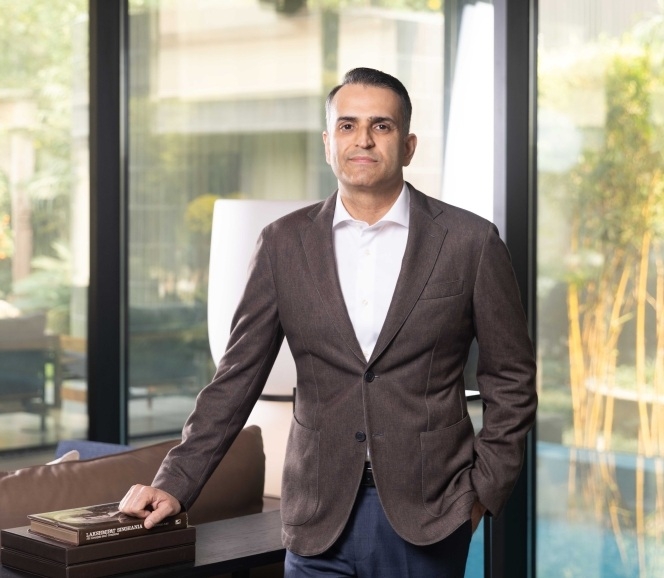
JK Tyre & Industries, one of the leading tyre manufacturers in the country, is targeting double-digit growth in FY2027 as demand across commercial vehicles, passenger cars and replacement markets remains encouraging. However, sustaining profitability amid escalating input costs and elevated freight rates will be a key challenge in the second half of the financial year.
Anshuman Singhania, Managing Director, JK Tyre & Industries, expects demand to remain stable through the coming quarters (Q3 and Q4), supported by healthy commercial vehicle order books and continued traction in the OEM channel. While passenger vehicle demand could moderate, the company expects commercial tyre sales to maintain their growth momentum.
“We are very optimistic going ahead that demand would be quite stable,” Singhania said during the Q2 earnings call, adding that JK Tyre was targeting double-digit growth in the commercial vehicle segment for the full year.
Record revenue, margin pressures
In Q2 FY2027, JK Tyre reported its highest-ever consolidated quarterly revenue of INR 48.50 billion, registering 20 percent YoY growth. Consolidated EBITDA rose 28 percent sequentially to INR 3.43 billion, with an EBITDA margin of 7.1 percent, and profit after tax stood at INR 600 million.
Domestic sales increased 32 percent YoY, driven by 65 percent growth in OEM sales following the implementation of GST 2.0. Export sales grew 14 percent sequentially despite geopolitical uncertainties and uneven demand across international markets.
The company stated its growth was broad-based, with OEM volumes increasing 76 percent in truck and bus radial (TBR) tyres and 35 percent in passenger car radial (PCR) tyres. The tubeless tyre portfolio grew 25 percent YoY against estimated industry growth of 10 percent, while tipper tyre sales increased 20 percent compared with industry growth of 11–12 percent. Sales in the two- and three-wheeler category rose approximately 85 percent, primarily driven by scooters. Replacement sales also grew 20 percent YoY.
The strong revenue performance has nevertheless coincided with significant cost inflation. Raw material prices and logistics expenses have risen, limiting the extent to which higher volumes have translated into improved profitability.
Pricing response to cost inflation
Raw material costs increased approximately 9 percent sequentially in Q2, taking the cumulative increase over the preceding six months to around 30 percent, according to Singhania. The company anticipates a further 4–5 percent increase in its raw material basket in Q3.
JK Tyre has responded with successive price increases. Prices were raised by approximately 4–5 percent in Q1 and a further 7 percent sequentially in Q2, taking the cumulative increase during the first half of FY2027 to around 11–12 percent. A further increase of 4–5 percent is planned for Q3, subject to market conditions.
“The raw material increase is putting a lot of pressure on margins. But we are steadily increasing our prices to pass through,” Singhania said.
The timing of price realisation remains critical. OEM pricing is partly linked to input cost indices, allowing adjustments to be incorporated through contractual mechanisms. In the replacement market, price increases have been implemented more gradually over the past two quarters.
Elevated container freight rates, compounded by higher fuel costs, are adding to the burden. Singhania said the company was working to offset these increases through pricing and operational efficiencies, but the extent of recovery would depend on market conditions and consumer sensitivity.
Management expects margins to improve through better OEM mix, price indexation and manufacturing efficiencies, although it has not quantified the anticipated recovery.
Premium tyres strengthen product mix
The increasing contribution of premium passenger car tyres is another important element of JK Tyre’s strategy. The company is seeing stronger traction in tyres with rim sizes of 16 inches and above, reflecting the fitment of larger wheels across a wider range of new vehicle models.
The share of these tyres in JK Tyre’s passenger car OEM mix rose to approximately 40 percent in H1 FY2027, compared with 35 percent in FY2026. Singhania also indicated that 16-inch-and-above tyres now account for around 27 percent of the company’s overall mix, including the aftermarket.
Furthermore, JK Tyre also secured 10 OEM approvals during the year, eight of which involved models requiring tyres in the 16-inch and above category. These include the Maruti Suzuki Brezza, Mahindra Thar, Renault Duster and Nissan Tekton and MG Tomahawk, cited Singhania.
“The market is growing, but our sales is growing at a faster rate,” Singhania said, highlighting the opportunity created by new vehicle introductions and increasing adoption of larger rim sizes.
The shift towards premium products offers scope to improve product realisation and strengthen the overall sales mix. Sustaining this growth, however, will depend on securing further OEM programmes and meeting replacement demand as the installed vehicle base expands.
Capacity and export opportunities
JK Tyre is proceeding with its capacity expansion plans despite near-term profitability pressures. Singhania confirmed that the ongoing INR 11.30 billion expansion programme would not be deferred. The previously announced INR 50 billion capital expenditure programme is also progressing through its initial phase.
The investments are expected to support domestic requirements and create additional capacity for export markets. While domestic OEM and replacement demand remains a priority, the company sees considerable headroom for international growth.
Exports increased 14 percent sequentially in Q2, with Latin America and Africa providing encouraging demand opportunities. Some markets in Asia and Europe, however, have softened amid geopolitical uncertainty and broader market challenges.
JK Tyre intends to continue serving established markets across Latin America, the Middle East, Southeast Asia and Africa, alongside a limited presence in Europe.
As the company enters the second half of FY2027, Singhania’s growth outlook remains supported by commercial vehicle demand, OEM traction and premiumisation.
The key test will be converting this momentum into sustainable earnings. As Singhania stated, further price increases, operational efficiencies, a richer product mix and additional capacity are expected to help drive growth, although the pace of margin recovery will ultimately depend on raw material prices, freight costs and the industry's ability to absorb higher prices.
Michelin Taps Long-Time Executive Tanguy Léon-Pflieger For Expanded DACH Leadership Role
- By TT News
- November 26, 2026
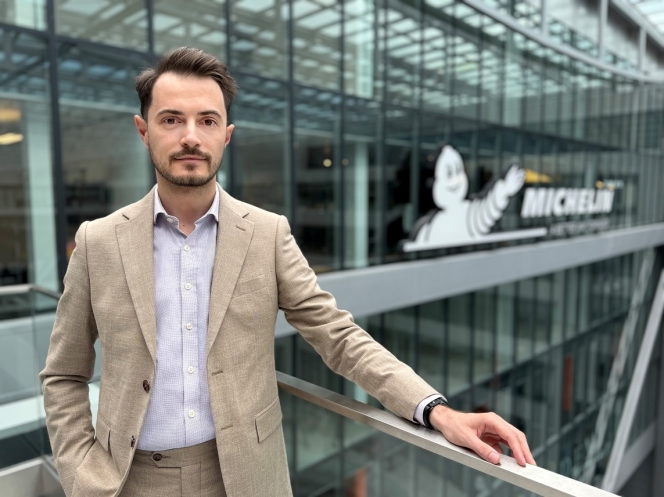
Michelin has appointed Tanguy Léon-Pflieger to the newly created role of Commercial Director Michelin DACH, effective January 2027. He will simultaneously serve as Managing Director for the region, overseeing the Michelin Group’s business across Germany, Austria and Switzerland. In this capacity, he will report directly to Victoire de Lajudie, President of Michelin’s Western Europe Region.
Léon-Pflieger brings extensive experience within Michelin to the position. Since July 2025, he has held the role of Vice President Sales B2C for passenger cars, motorcycles and bicycles in Northern Europe. Before that, he served as Managing Director of Michelin Suisse SA. He has been with the mobility company since 2017, working across sales and supply chain functions in Germany, East Africa and the Michelin headquarters in Clermont-Ferrand.
The Commercial Director DACH position forms part of a broader organisational restructuring of Michelin Europe into two regions: Western Europe and Northeast Europe. The new structure is designed to shorten decision-making channels, bring the company closer to customers and markets and enhance overall competitiveness.
Léon-Pflieger said, “I look forward to the challenges in this new position and the new area of responsibility as Commercial and Managing Director. I appreciate the close cooperation with the highly motivated international teams. Together, we are on a very good path to further strengthen the relationship with our customers, to make the high quality of our products, solutions and services more visible and to further expand our market share in the premium segment.”
Siemens Tire Day 2026 Spotlights The Future Of Digital And Software-Defined Tyre Manufacturing
- By TT News
- November 26, 2026
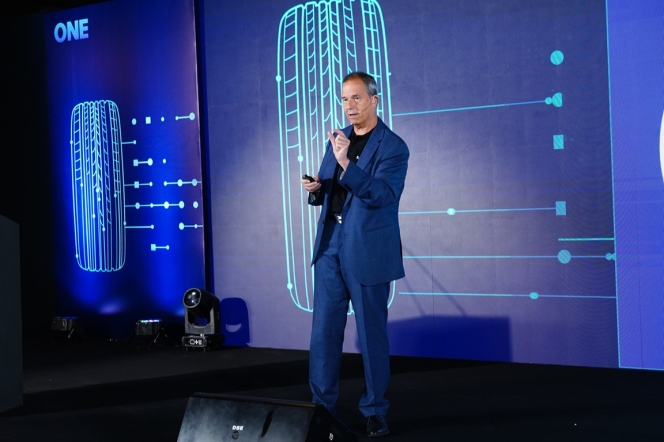
As tyre manufacturers navigate growing demands for productivity, flexibility, quality and sustainability, digitalisation is increasingly connecting every stage of manufacturing, from machine design and engineering to production, maintenance and workforce development. Against this backdrop, Siemens Tire Day 2026, held recently in Chennai, brought together tyre manufacturers, machine builders, technology specialists and automation partners to explore how an integrated technology ecosystem can help accelerate the industry's digital transformation.
Moving beyond individual technology demonstrations, the event showcased Siemens' OneTech approach, bringing together industrial software, automation, electrification, industrial edge computing, AI-enabled asset intelligence, networking and cybersecurity. A key focus was how tyre manufacturers and machine builders can increasingly engineer and validate production systems in the virtual world before implementing them physically.
Siemens demonstrated Digital Enterprise software for design, simulation and virtual commissioning, highlighting how virtual prototyping can help manufacturers identify engineering issues earlier, accelerate commissioning and reduce time-to-market. On the production floor, virtual PLC (vPLC) and Siemens Industrial Edge demonstrated the evolution towards more software-defined automation. By enabling applications and computing capabilities to run closer to manufacturing operations, this approach can combine the responsiveness required by industrial environments with greater software flexibility.
Another focus area was equipment reliability and asset performance. Senseye Predictive Maintenance and Eigen demonstrated how AI, predictive analytics and industrial data can help manufacturers identify emerging equipment issues earlier and move maintenance strategies from reactive intervention toward more predictive operations. Siemens also showcased WinCC Unified and SIMATIC S7-1200-based HMI solutions, illustrating how contemporary visualisation and operator interfaces can give production teams greater transparency and control over manufacturing processes. As factories become increasingly connected, the convergence of IT and operational technology also makes resilient industrial networks and cybersecurity critical. Tire Day therefore included technologies and approaches for industrial communications, networking and cybersecurity, alongside solutions for safe and reliable electrical distribution.
The event brought Siemens' broader ecosystem into the conversation, spanning motion and instrumentation, Siemens Electrical Products and SITRAIN, the company's industrial training offering. Channel and technology partners Newton Engineering, Multiquadrant Industrial Controls, Prolim, Smart Controls and Trimasys Control showcased their capabilities, demonstrating the wider ecosystem required to turn digital manufacturing concepts into plant-floor solutions.
Linglong Tire Taps Goodyear Veteran Michele Davì To Lead European OTR Expansion
- By TT News
- November 25, 2026

Linglong Tire has named Michele Davì as Europe Business Development Director OTR, effective 16 November, as the company accelerates its strategy to strengthen its footprint in the European Off-the-Road (OTR) tyre market. In the role, Davì will oversee commercial strategy, distribution network development and business expansion for the core OTR division across Europe, working closely with product, marketing and technical teams as Linglong continues to expand its presence in the competitive European OTR tyre market.
Davì brings more than 25 years of international tyre industry experience, having spent over 25 years at Goodyear in senior positions of increasing responsibility across the TBR and OTR businesses, most recently leading the European OTR replacement business. His industry expertise is further complemented by his background with leading construction and agricultural equipment manufacturers, having served as Marketing Director and Aftersales Manager at J.C. Bamford Excavators (JCB) Italia.
Davì said, "I am very much looking forward to my new role at Linglong Tire and to leveraging my more than 25 years of industry experience to achieve ambitious goals together with my colleagues across Europe. Our top priority will be to develop our distribution network and expand the business across Europe by capitalising on the highly competitive quality of Linglong products, optimising existing customer relationships, developing new partnerships and further strengthening our market position in the OTR segment.”
Jeff Hughes, Sales Director Specialty Tires for the EMEA region, said, “I am delighted to have Michele on board with his wealth of experience; he will continue to build the Linglong Off Highway Tire business in Europe with additional focus on Radial OTR and Giant OTR.”
Comments (0)
ADD COMMENT