

TBC Corporation Names Bill Schafer Chief Revenue Officer As Rodger Smith Retires
- By TT News
- April 16, 2026

TBC Corporation, one of North America’s largest marketers of automotive replacement tyres through wholesale and franchise operations, has announced the appointment of Bill Schafer as Chief Revenue Officer for TBC Wholesale. This leadership change follows the planned retirement of Rodger Smith, who will remain with the organisation until December 2026 to support a seamless handover.
Since joining TBC in March 2024, Schafer has concentrated on expanding the company’s wholesale operations. He brings three decades of experience from Michelin, where he directed business to business sales, distribution and logistics across North America while managing a team of over 600 people. His background positions him well to drive revenue growth in his new role.
Smith, a 45-year veteran sales executive with diverse industry expertise, has been instrumental at TBC since his arrival in 2020. He led strategic efforts such as strengthening the national sales organisation and launching Supply Chain as a Service. His continued presence through late 2026 ensures that his knowledge and initiatives will carry forward under Schafer’s leadership.
Don Byrd, President and Chief Executive Officer, TBC Corporation, said, “Bill and Rodger previously partnered to lead TBC’s wholesale strategy and reinforce TBC’s mission of being the distributor of choice in the markets we serve. Our focus is clear: TBC will continue to drive value-creating solutions for our customers in the mobility and automotive industry through exceptional service, a diverse product portfolio and innovative solutions.”
Apollo Tyres Appoints Abhineet Kothari As India Business Head For Vredestein
- By Nilesh Wadhwa
- November 02, 2026

Chennai-headquartered tyre major Apollo Tyres has appointed Abhineet Kothari as India Business Head – Vredestein Tyres, effective November 2026. In his new role, Kothari will be responsible for strengthening the presence and expanding the business of Vredestein, Apollo Tyres’ premium tyre brand, in the Indian market.
His appointment follows his tenure as Marketing Head, India and South-East Asia, at Apollo Tyres, where he led the company's marketing function after previously serving as Category Head – Passenger Vehicles.
In his new role, Kothari will focus on building the Vredestein brand, expanding its market presence and strengthening its positioning in India's premium passenger vehicle tyre segment.
Kothari brings over 13 years of experience across marketing, brand management, category leadership, sales and business management. Prior to joining Apollo Tyres in April 2024, he spent two years at Paytm as AVP – Payments, where he headed the profit and loss responsibility for the Recharge and Bill Payments business. He was also involved in brand marketing and communications for Paytm's mobile gaming business, First Games.
Prior to Paytm, Kothari spent nearly nine years with Castrol, holding various roles across category management, brand management and regional sales. His assignments included Category Manager, Senior Brand Manager, Regional Sales Manager and Brand Manager.
He began his professional career in the maritime sector as a Marine Engineer Officer with Shell Shipping, serving aboard very large crude carriers (VLCCs) and very large gas carriers (VLGCs) between 2007 and 2011.
Kothari holds an MBA in Marketing and Operations from the Management Development Institute (MDI), Gurgaon, and a bachelor's degree in Marine Engineering from Jadavpur University.
His appointment comes as Apollo Tyres continues to develop Vredestein's positioning in India's premium tyre market, leveraging the brand's European heritage and premium product portfolio to address evolving consumer preferences.
Kraton Names Seasoned HR Executive Brian Rea As CHRO
- By TT News
- October 30, 2026

Kraton Corporation, a global producer of speciality polymers and bio-based chemicals derived from pine wood pulping byproducts, has named Brian Rea as Chief Human Resources Officer. The appointment strengthens the company's leadership team as it continues to prioritise workforce development and organisational effectiveness.
Rea joins Kraton with extensive international experience in human resources leadership across multi-site manufacturing businesses. His background spans talent and succession planning, organisational transformation, labour relations, employee engagement, safety and change management. His appointment underscores Kraton's dedication to employee growth and well-being while building an organisation positioned for long-term success.
Romi Yoon, Chief Strategy Officer, Kraton, said, “We are excited to welcome Brian to Kraton’s executive leadership team. His extensive experience leading human resources across global manufacturing organisations makes him a great fit for Kraton. I look forward to his contributions as we continue to strengthen our organisation and position Kraton for the future.”
Rea said, “I am excited to join Kraton and work alongside its immensely talented global team. I look forward to helping further shape the culture, strategy and goals that will lead Kraton into the future. I am grateful to the Kraton leadership team for the opportunity to serve our employees.”
Ironical Conundrum
- By Gaurav Nandi
- October 30, 2026
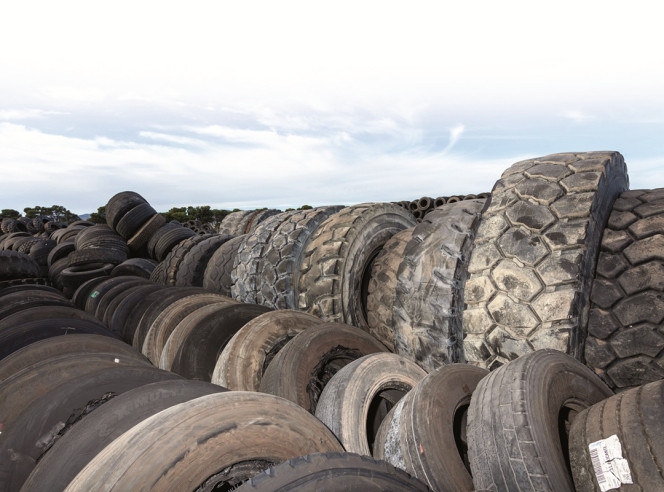
Spain has built a mature system for managing end-of-life tyres, but recycling them is only half the circularity equation. Tratamiento Neumáticos Usados (TNU) Chief Operating Officer Javier De Jesus Landesa says the bigger challenge is creating demand for recovered materials. With retreading production declining, recycled materials struggling for stable outlets and pyrolysis economics dependent on downstream markets, Royal Decree 712/2025 faces a crucial test of answering whether stronger regulation can translate Spain’s waste-management capacity into commercially viable circular markets for recovered tyre materials.
Europe is reportedly one of the most mature markets for circularity objectives within the tyre industry. It is a market characterised by regulations, awareness, cross-country collaboration to tackle end-of-life tyres (ELT) disposal and consumption of recovered materials.
However, on the Southwestern side of the continent, especially Spain, things seem to be ironical. The country’s integrated management system for used tyre treatment, popularly known as Tratamiento Neumáticos Usados (TNU), managed nearly 99,000 ELTs in 2025.
The main purpose of this organisation is responding responsibly to the sources of ELTs and managing their recycling effectively. This is generally done through reusing and recycling.
The numbers stated above is 7.4 percent more than the previous year. TNU handled 42,910 collection requests and provided services to 5,510 collection points. Of the total managed, 9.94 percent went to preparation for reuse, 42.91 percent to material recovery and 47.15 percent to energy recovery.
Despite these numbers, the recyclable materials market faces a conundrum, which is quite ironical considering the global market’s pent-up demand for such products. Speaking to Tyre Trends exclusively, TNU Chief Operating Officer Javier De Jesus Landesa said, “The main challenge is demand for the materials we recover.”
He added, “Spain has been working with Extended Producer Responsibility for almost two decades. We have a well-established collection system, a network of authorised waste managers and sufficient industrial capacity to process the tyres generated. The problem comes afterwards. We can recover recycled rubber, steel and textile fibres through new technologies, but those materials need a market.”
The organisation can even finance and organise collection, ensure proper management and guarantee traceability, but it cannot create commercial demand for recovered materials.
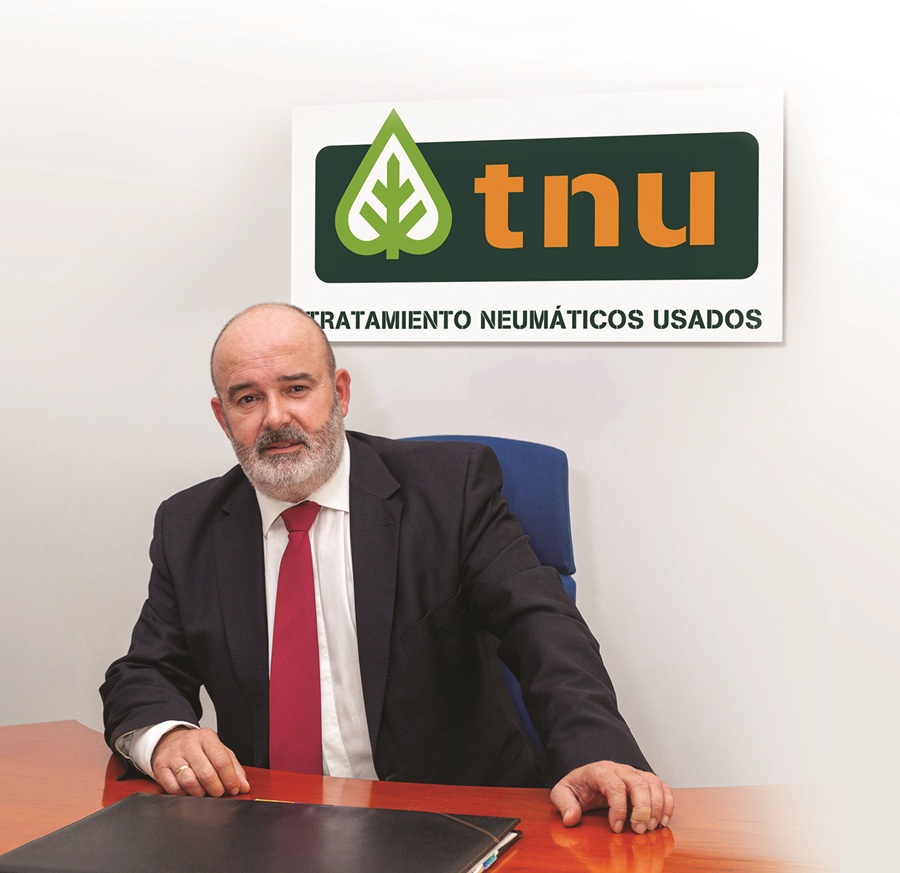 Javier De Jesus Landesa, Chief Operating Officer, TNU
ROYAL DECREE
Spain’s Royal Decree 712/2025, passed on 27 August 2025, introduced changes in the country’s policy governing ELTs. According to Landesa, the most significant change leaned towards traceability and the quality of information.
“The new Royal Decree introduced stricter requirements regarding tyres placed on the market, their collection, treatment and final destination. We need increasingly accurate information and must be able to demonstrate what actually happens to those tyres,” he said.
And this affects the entire chain including producers, importers, waste managers and Producer Responsibility Organisations.
Despite these efforts, tyre reuse numbers aren’t seeing a fast uptick. The foremost reason, according to Landesa, is that despite the prohibition laid down in Article 17.1(a) of Royal Decree 712/2025, the separation, sorting and sale of ELTs by collection points continues to take place. “In our view, greater environmental inspection and enforcement by the competent regional authorities is needed,” he stated.
This results in a limited real availability of tyres that could have a second life. For a tyre to be prepared for reuse or for a casing to be retreaded, it must enter the authorised management system and remain in suitable condition.
In 2025, within the 9.94 percent managed by TNU for preparation for reuse, 4.69 percent corresponded to second-use tyres and 5.25 percent to retreading.
In addition, the regulation establishes a minimum target of 15 percent by weight for preparation for reuse starting in 2025. This 15 percent target remains the baseline minimum through the subsequent milestone years of 2030 and 2035.
And on the focus on traceability, the industry is still adapting. “Our position is quite clear. We want more traceability but less bureaucracy. Following the approval of the Royal Decree, we carried out a nationwide information campaign aimed at producers and waste managers and are continuing to provide extensive guidance to such members, explaining the regulatory changes, new obligations and how they should be applied in practice,” Landesa said.
MATERIAL INGESTION
In 2023, Spain produced 84,160 tonnes of recycled rubber, 37,776 tonnes of steel and 17,614 tonnes of textiles from ELTs.
Approximately 54 percent of the rubber was used for artificial turf and bases; 35 percent went to playgrounds, sports surfaces and safety flooring; 9 percent to moulded components and rubber products and only 2 percent to bituminous mixtures.
Furthermore, granulate will no longer be placed on the European Union market as infill material for new artificial turf pitches from October 2031.
This means that the industry needs to find and develop new applications. “We cannot ask the sector to recycle more and then fail to ensure viable outlets for those materials,” said Landesa.
Public procurement can be an important tool for large scale material ingestion as public expenditure represents around 14 percent of the European Union’s GDP.
“We have a regulatory basis, but the need is to translate it into actual public procurement specifications and turn that intention into demand,” he said.
He also noted that price cannot be the only criterion for competing with virgin raw materials. If circular economy is genuinely promoted, then public procurement must also take into account the use of recycled materials and the environmental benefits of replacing virgin raw materials.
Hence, Green Public Procurement can be decisive not only in meeting environmental objectives but also in generating stable demand for recycled rubber and reducing the consumption of virgin raw materials.
Pyrolysis also has an important role to play for the recycling industry. However, chemical recycling requires significant investment and its outputs must meet requirements for industrial use.
TNU has worked on this route for years and partnered with Greenval Technologies in 2021 on plants using technology developed with the Spanish National Research Council (CSIC). The main technical and production challenges have largely been overcome.
“The bigger challenge is demand. Tyre pyrolysis oil has a clearer market, while recovered carbon black lacks stable demand from tyre manufacturers. Achieving end-of-waste status for qualifying pyrolysis products would also make them easier to market. Ultimately, even technologically successful plants need stable markets for their outputs to remain economically viable,” said Landesa.
SECOND LIFE
Landesa notes that electric vehicle tyres demand more caution from the industry owing to greater weight. The demands around wear, efficiency and noise are also driving changes in tyre designs, materials and compounds.
However, at end-of-life, EV tyres still contain recoverable materials such as rubber, steel and textile fibres. The same applies to retreading as an EV tyre can be retreaded if its casing remains suitable.
“Recycling and retreading industries have adapted to previous changes in tyre technology and can do the same with EVs. However, EV tyres will introduce new considerations, and it is premature to conclude that they will inherently be less suitable for retreading,” said a confident Landesa.
Eco-design should therefore consider not only first-life performance but also retreadability, extended tyre life and eventual recycling. Regulations already require corporate prevention plans to include measures supporting longer tyre life, reuse and recycling.
As EV tyres evolve, their design should not unnecessarily restrict retreading when the casing remains technically suitable.
Nonetheless, the current retreading landscape of the country paints a gloomy picture. The problem is primarily economic and not a shortage of suitable casings.
Spanish and European retreaders have the expertise to adapt production, but demand has fallen amid competition from low-cost imported new tyres and insufficient policy support.
In Spain, retread production has fallen 52 percent in 20 years, from 1,132,500 to 540,850 units annually, while plants have declined from 46 to 12 units.
This creates a contradiction wherein legislation prioritises extending tyre life before recycling, yet the industry doing precisely that continues to shrink.
“Supporting retreading would reduce raw-material consumption while preserving European industrial activity and employment. We need to change perceptions and look beyond purchase price. For fleets, cost per kilometre and the casing’s entire service life are more relevant. A good casing can be regrooved and retreaded, potentially more than once,” said Landesa.
Safety misconceptions also need addressing. Retreaded tyres must comply with UNECE Regulations Nos. 108 and 109 for passenger and commercial vehicles.
Policy can stimulate demand. Royal Decree 712/2025 calls for Spanish public administrations to promote retreads in public fleets and services wherever technically feasible. Tax incentives and subsidies could provide further support.
Landesa stated that technology is not the principal problem because retreading is already a mature and regulated industry. Challenges include ensuring suitable casings reach retreaders, tyre design, consumer perception, low-cost imports and public policy.
The principle is straightforward that if a casing can have another life, it should be reused before being destroyed for material recovery. He mentioned that looking at the total cost of ownership could revive the industry, particularly in professional transport.
“Fleets should consider total service-life cost rather than purchase price alone including mileage, maintenance, efficiency, casing life, regrooving and retreading. Extending casing life also delays the need to manufacture another tyre and reduces raw-material consumption. For fleets, therefore, cost per kilometre provides a more realistic measure of tyre economics,” he explained.
TOWARDS STABILITY
Landesa contended that policy measures could provide stability to the entire industry. “The problem is not unique to Spain. Europe needs to move from a policy focused on collection and recycling towards one that ensures recovered materials are actually used again and replace virgin raw materials,” he stated.
Royal Decree 712/2025 requires producers choosing a collective system to use it for all replacement tyres they place on the market, although they can switch systems under established conditions.
This should clarify responsibilities without eliminating competition. Producer Responsibility Organisations such as TNU will continue competing on service, efficiency, costs, technology and information quality. The key is ensuring everyone operates under the same obligations, rules and safeguards.
And for Landesa, there are three very clear priorities, namely market, enforcement and simplification.
“The first is creating a market for retreading and recycled materials. If we want to achieve targets set by the Royal Decree, then we need demand. Green Public Procurement must play a much greater role,” he noted.
The second is strengthening inspection and enforcement of flows taking place outside the authorised system. PROs must guarantee management, data and traceability, but inspection, enforcement and the fight against fraud are the responsibility of public authorities.
And the third is simplification and digitalisation. “We need greater traceability and better data, but we also need to eliminate duplication and review procedures that add administrative burdens without improving environmental outcomes,” said Landesa.
After almost 20 years, Spain has a mature system, an established network of waste managers and industrial capacity. And many of these challenges are shared across Europe.
Now it needs to take the next step by first making the most of tyres that can still have another life and then ensure that the materials recovered are actually used again.
Spain’s challenge is therefore shifting from managing tyre waste to creating an economy capable of absorbing what that system recovers. Collection, traceability and processing capacity alone cannot deliver circularity if retreading continues to contract and recycled materials struggle to find stable markets.
Royal Decree 712/2025 strengthens the regulatory framework, but its real test will be whether procurement, enforcement and industrial demand can turn recovered materials back into commercially viable products.
UPM Picks Global HR Veteran Sangeeta Pandey For Top Human Resources Role
- By TT News
- October 29, 2026

Material solutions company UPM has named Sangeeta Pandey as its new Executive Vice President, Human Resources. She will join the Group Executive Team and report directly to Massimo Reynaudo, President and CEO. Based in Helsinki, Finland, Pandey will take up the position on 1 January 2027.
Bringing extensive international HR experience to her new role, Pandey holds a Master of Science in Executive Coaching, an MBA in Human Resources and a Bachelor of Science in Chemistry. She previously served as an Independent Executive Advisor & Coach and worked at Metro AG from 2018 to 2025, most recently as Senior Vice President, Global Talent & Organisational Development, overseeing Global HR Centers of Expertise for over 100,000 people across more than 30 countries. Between 2009 and 2018, she held several senior leadership positions at AkzoNobel, including Global Director, Talent, Culture, Learning & Development. She has also worked in senior HR roles at Mahindra & Mahindra, Xerox and Bharat Petroleum/Bharat Shell.
Pandey succeeds Riitta Savonlahti, who has reached her contractual retirement age after leading UPM's human resources function since 2004. Savonlahti will remain in her role and on the Group Executive Team until the end of 2026, leaving the company in the first quarter of 2027 following a successful transition to her successor.
Reynaudo said, "Sangeeta joins us with over 30 years of broad HR leadership experience across Europe, Asia and the Americas and strong business acumen. Her experience in large, complex and multicultural organisations provides a strong foundation to support UPM's strategy and people agenda.
“On behalf of the entire company and the Group Executive Team, I would like to thank Riitta for the significant impact she has had in the strategic transformation of UPM during the past two decades. Her vision, dedication and determination has been instrumental to UPM's performance-led, value-based and human-centric leadership and company culture.”

Comments (0)
ADD COMMENT