

The Tyre Giant That Doesn’t Want A Dark Factory
- By Sharad Matade
- October 13, 2026
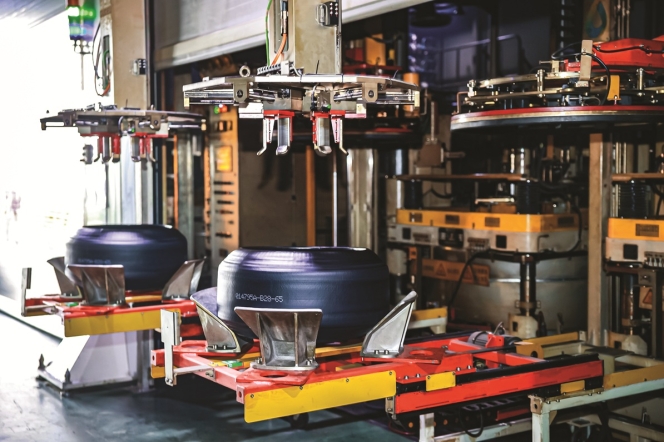
ZC Rubber, China’s largest tyre maker, is running 18 AI agents across its Hangzhou 5G plant. It insists the goal is smarter manufacturing, not emptier factory floors.
Walk into the industrial conversation about automation these days and ‘lights-out’ production tends to come up within minutes: factories with no people, no lighting and machines working in the dark. However, ZC Rubber, the Hangzhou-based group that ranks among the world’s top nine tyre companies, would like to correct that impression before it takes hold.
“We see this as a 5G Smart Factory, or Future Factory V2.0, rather than a ‘dark factory’. The goal is intelligent manufacturing, not simply removing people from the production process,” the company said in an interview.
That is a notable position from a company that has just put 18 AI agents to work across its production chain and reports defect rates well under half those of its earlier operations. It is also a considered one, and the details explain a good deal about how the world’s largest tyre market is approaching the factory of the future.
PEOPLE AT THE EXCEPTIONS
ZC Rubber’s division of labour is simple. Automation, AI and real-time data are steadily taking over what the company calls ‘repetitive and highly standardised operations.’ Its people are being moved towards engineering, process management, quality assurance and the handling of exceptions, meaning the unusual problems that no model has seen before.
“We will continue to increase automation, but fully unmanned production is not the goal,” ZC Rubber said. “It is about combining intelligent systems with human expertise.”
The same logic applies to the future. Asked whether lights-out production is on the roadmap, ZC Rubber was clear. “We do not see fully lights-out production as a goal in itself. Technology will be introduced where it brings clear improvements in quality, efficiency, safety and sustainability,” it said.
EIGHTEEN AGENTS, ONE PRODUCTION CHAIN
The scale of the AI deployment is considerable. Since June 2025, ZC Rubber has introduced 18 AI agents across the full production chain. Their use ranges from AI-assisted formulation and virtual simulation to equipment maintenance, production scheduling and quality control. According to the company, they have helped shorten tyre development cycles by 50 percent and lifted production efficiency by 50 percent.
Where does the value come from? Not from any single stage, the company suggests. “The biggest value comes from using AI to analyse production data, optimise process parameters and support faster decision-making across the manufacturing process,” it said. ZC Rubber does not currently publish a stage-by-stage breakdown of the gains.
INSPECTION AND THE DEFECT RATE
Quality control is where the company’s numbers are most striking. Its latest AI-based visual inspection systems, it says, can achieve a defect detection rate of close to 100 percent, improving both the speed and the consistency of inspection. That matters most in high-volume passenger car radial (PCR) output, where human inspectors face the twin problems of fatigue and sheer throughput.
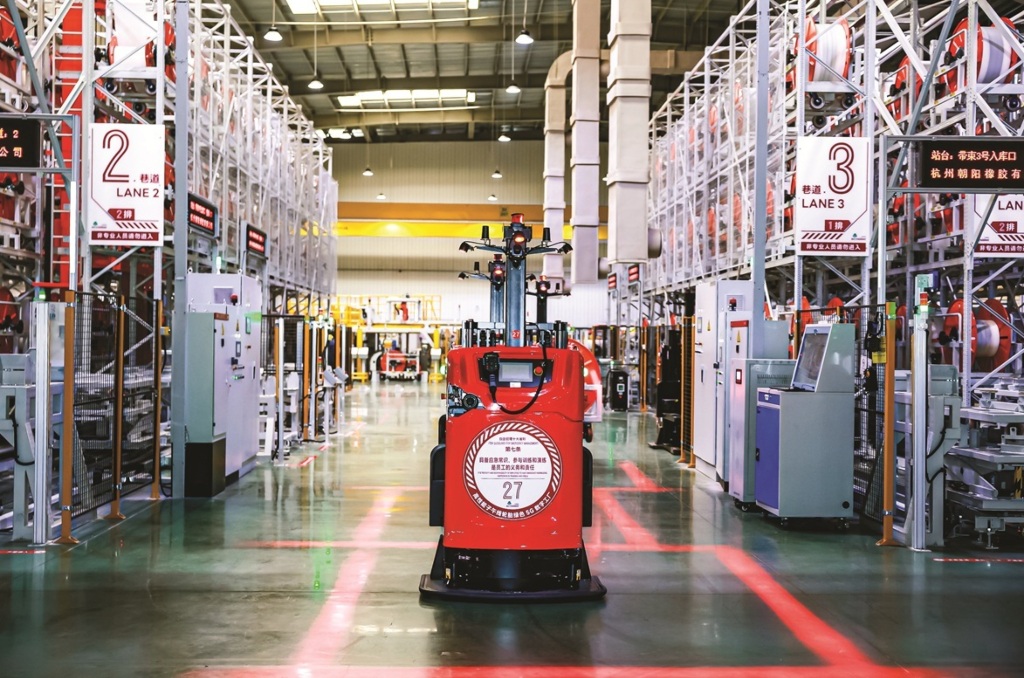 Zooming out, the company says AI and digital quality control across its smart manufacturing system have cut its product defect rate from 1.2 percent to 0.5 percent.
HOW THE SYSTEMS TALK TO EACH OTHER
“Thousands of sensors collect production data in real time, while 5G connects equipment, quality inspection and logistics systems,” the company said. The APS+MES system pulls production, quality and logistics information into one place ‘so operations can be monitored and adjusted quickly’. AI and big data analytics then help staff spot problems and make faster production decisions.
AN EARLIER SET OF NUMBERS, UPDATED
ZC Rubber’s earlier claims of a 15 percent efficiency gain, up to 40 percent lower defect rates and a 5 percent cut in energy use make one notice that the latest figures are considerably better. The company is candid about why. “Those figures reflect an earlier stage of our smart factory development,” it said.
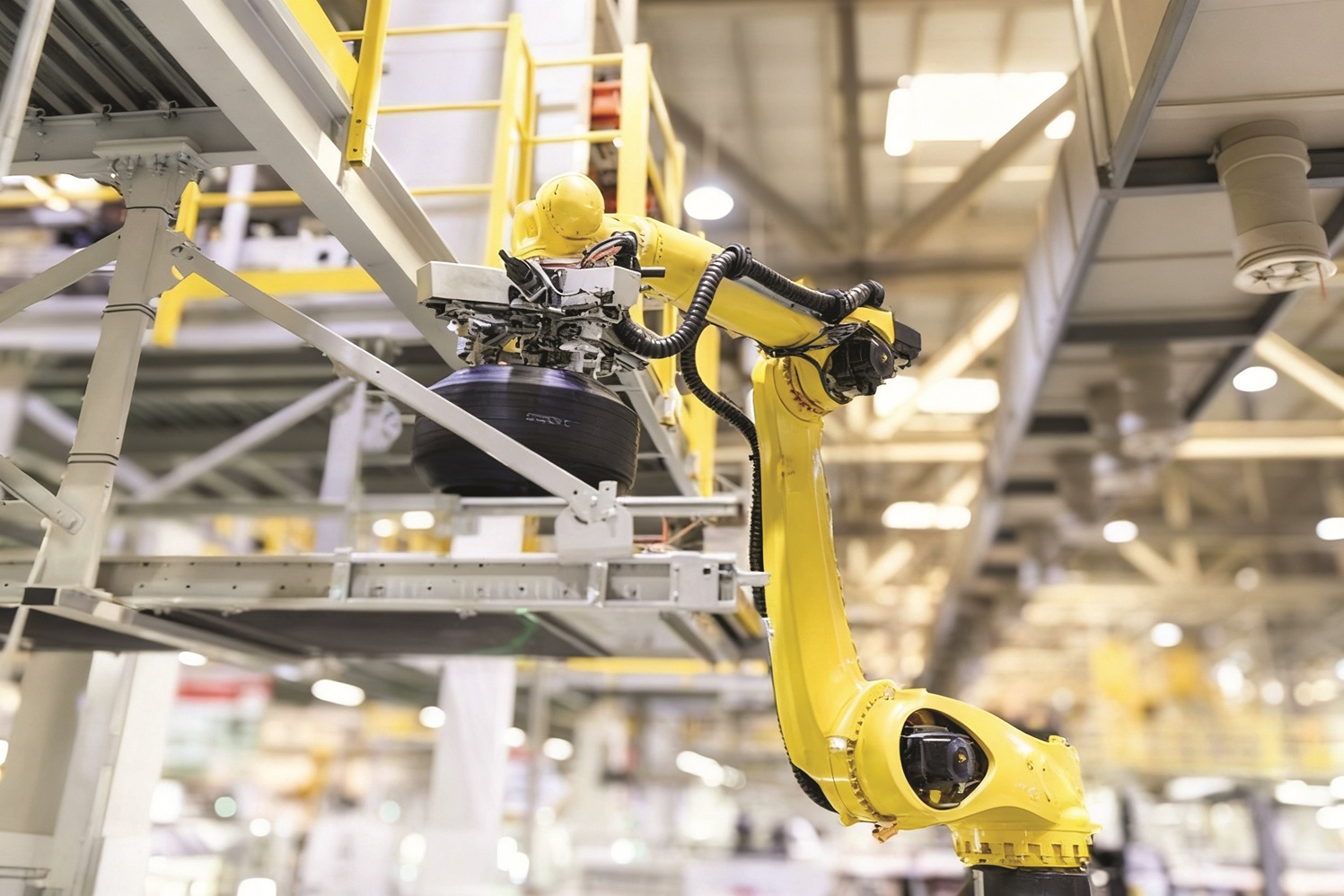
The current numbers, for the 5G Smart Factory, are a 50 percent improvement in production efficiency, defect rates down from 1.2 percent to 0.5 percent and a 10 percent reduction in overall energy consumption.
As for which technology deserves the credit, ZC Rubber declines to rank them. “We do not break down the improvement by individual technology,” it said, naming instead the key components: AI-based process control, automated inspection, intelligent logistics, APS+MES production management and data-driven quality control.
ENERGY, MEASURED VALVE BY VALVE
The energy figure is worth a closer look, because it comes from a fairly granular system. ZC Rubber’s energy management combines 5G, IoT, big data, AI and digital-twin technologies. Smart sensors, smart meters and smart valves feed real-time data into a central energy platform, while AI supports analysis and operational optimisation.
The division of labour among the technologies is neat. “5G provides the connectivity, while AI, big data and digital twins help turn the data into better energy-management decisions,” the company said.
TWO PLATFORMS AND A DIFFERENT STARTING POINT
The manufacturing story is inseparable from the development story. ZC Rubber runs two proprietary technology platforms: the X-Tech System, primarily for truck and bus radial (TBR) tyres, and the Phecda Tech System, primarily for PCR tyres. Each integrates compound formulation, tyre structure, process engineering, simulation, testing and intelligent manufacturing within a single development framework.
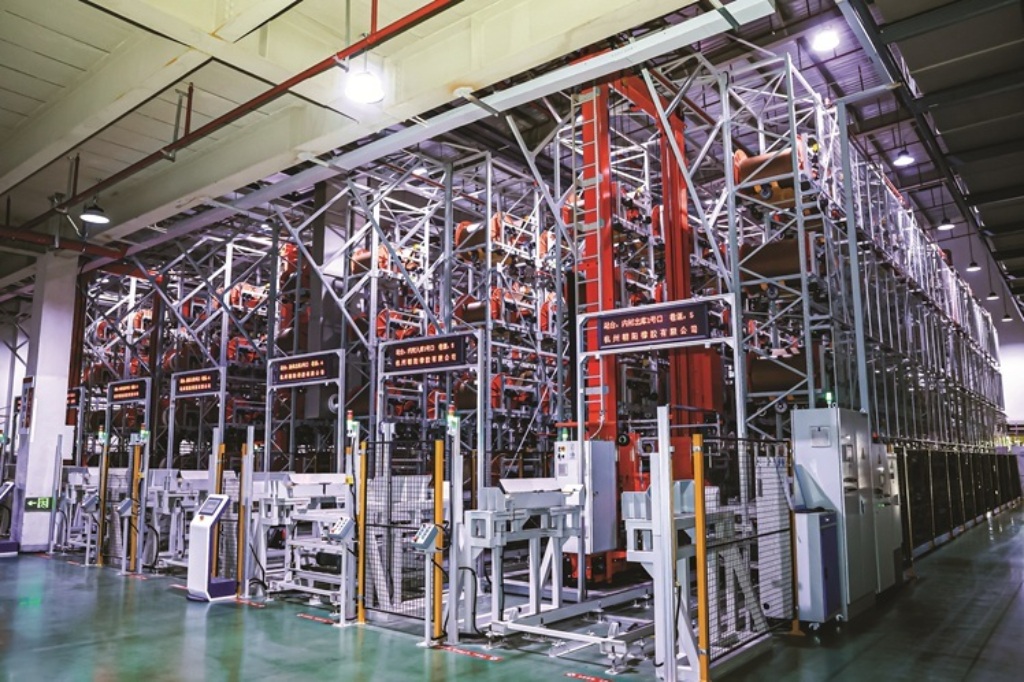
Their defining feature is what the company calls the Forward-development Approach. Traditional development, it explains, “often starts from an existing product and improves it through repeated design and testing cycles”. ZC Rubber starts elsewhere: with the target performance, whether that is vehicle characteristics, duty cycle, climate, road conditions or customer requirements. The compound, tyre structure and manufacturing process are then built around those targets. “This shifts the workflow from repeated iteration to a more integrated, target-driven development process,” the company said.
That, it argues, is where the halving of development time comes from. The 50 percent reduction reflects ‘a more integrated digital development process’, combining engineering expertise with simulation, AI-assisted tools and closer links between R&D, testing and manufacturing. AI lets engineers evaluate more design options against defined performance targets, and virtual simulation cuts out unnecessary physical iterations.
How tightly these platforms are wired into live production data has not been shared publicly. X-Tech and Phecda, the company said, connect R&D, manufacturing and validation within an integrated development process, but the detailed real-time data architecture behind them ‘is not something we currently disclose publicly’.
Henry Shen, ZC Rubber’s Senior Vice President, has made the wider point in the context of the group’s recent State recognition. “Our objective is not simply to develop an individual material, tread pattern or manufacturing process,” he said. “X-Tech and Phecda are complete development systems that connect user requirements with simulation, materials, tyre engineering, manufacturing and validation.”
THE STATE PRIZE
That recognition is significant. ZC Rubber, together with Harbin Institute of Technology, has been awarded the Second Prize of China’s State Science and Technology Progress Award for a project titled ‘Key Technologies and Green Intelligent Manufacturing of High-Performance Tires’. It is one of the country’s highest state-level honours for scientific and technological innovation, and ZC Rubber says it is the only Chinese tyre manufacturer in the past decade to win it at the Second Prize level or above.
The company backs the claim with spending. In 2025, it invested around RMB 1.54 billion (approximately USD 226 million in R&D, equal to 3.43 percent of annual revenue, according to its annual report. The award, it says, recognises technologies that have ‘progressed beyond laboratory research into industrial application’.
GLOBAL FOOTPRINT
ZC Rubber has built a truly global footprint, combining a strong manufacturing base in China with an expanding network of operations across Europe, the Americas, Southeast Asia and beyond. In China, the company operates through multiple sites, including its headquartered in Hangzhou and facilities in Tianjin, Chaoyang, Jiande, Qingquan, Yonggu, Anji and Jintan, supported by dedicated units for recycling technology and automotive aftermarket services in Hangzhou.
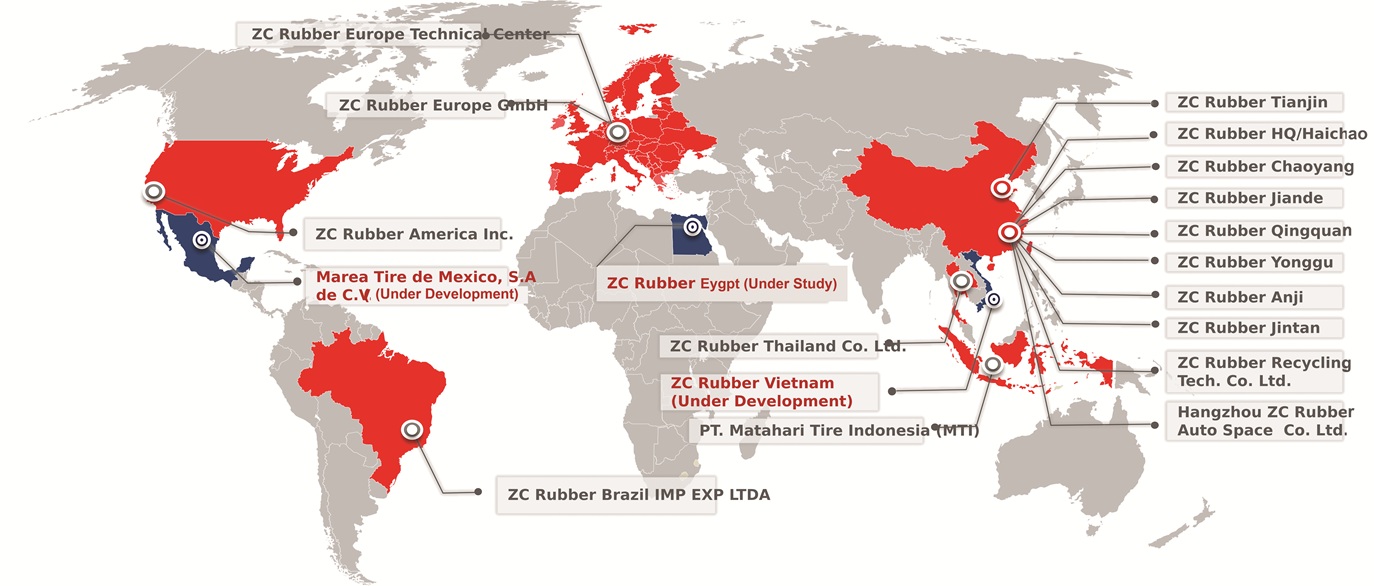
Beyond China, ZC Rubber has established a European presence through ZC Rubber Europe GmbH and its Europe Technical Center, alongside ZC Rubber America Inc. in the United States, ZC Rubber Brazil IMP EXP LTDA in South America and ZC Rubber Thailand Co. Ltd. and PT. Matahari Tire Indonesia (MTI) in Southeast Asia.
The company is also preparing for further expansion, with new projects under development in Vietnam and Mexico (Marea Tire de Mexico, S.A. de C.V.) and a feasibility study underway in Egypt. Together, these locations allow ZC Rubber to serve customers closer to their markets, strengthen supply chain resilience and combine local insight with global technical expertise.
CUSTOMISATION WITHOUT THE PENALTY
The forward-development model has a commercial payoff: tyres tailored to where and how they will be used. Asked whether the platforms allow genuine mass customisation, including regional climates and EV-specific requirements, ZC Rubber answered ‘to a significant degree’.
“X-Tech and Phecda allow us to develop tyres around specific climates, road conditions, vehicle applications and performance targets, including EV-specific requirements,” it said. On the factory floor, flexible production lines adjust output as product mix and orders change. The company does not disclose a separate efficiency figure for customised production, though ‘the goal is clear: to increase product flexibility while keeping production efficient’.
The regional examples are concrete. In Asia, X-Tech underpins the X-Elite Truck Tyre Series. In Europe, it is applied to the WESTLAKE Gen II commercial lineup, with a focus on fleet efficiency, performance and regulatory requirements. Phecda sits behind the WESTLAKE ZuperAce Z-007 and GOODRIDE Solmax 1 passenger tyres, and technologies from both platforms have been applied across ARISUN’s full TBR and PCR ranges for the Americas.
“International markets do not have identical requirements,” Shen said. “A tyre developed for European highway fleets, Southeast Asian transport operations or passenger vehicles in the Americas must respond to different vehicles, roads, climates and customer priorities.”
WHAT COMES NEXT
Much of the technology commonly billed as next-generation is already in service at ZC Rubber. Automated logistics, AI-based visual inspection, process optimisation, digital simulation and virtual testing are all in use. Digital twins are applied in areas such as energy management, and a broader digital-twin virtual factory is part of the next-stage plan.
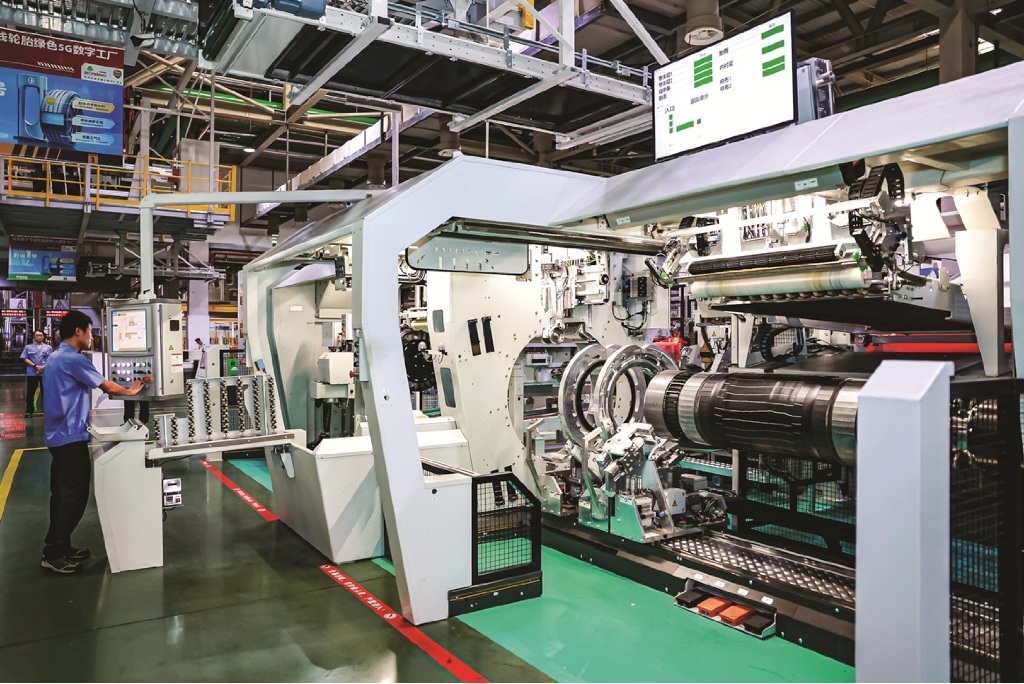 The company frames the coming three years as a period of deepening rather than reinvention: more smart-factory applications, more AI and industry-specific models and close attention to emerging technologies such as humanoid robotics ‘as they mature’.
That phrasing may be the most revealing thing about ZC Rubber’s approach. It is chasing results rather than headlines. As the company itself puts it, the launch of the Hangzhou plant marks ‘a new opportunity and starting point’, and its stated ambition is to become a world-leading tyre company with higher standards. Whether the lights stay on, it seems, is the least of its concerns.
Balancing Growth & Margins
- By Nilesh Wadhwa
- November 27, 2026
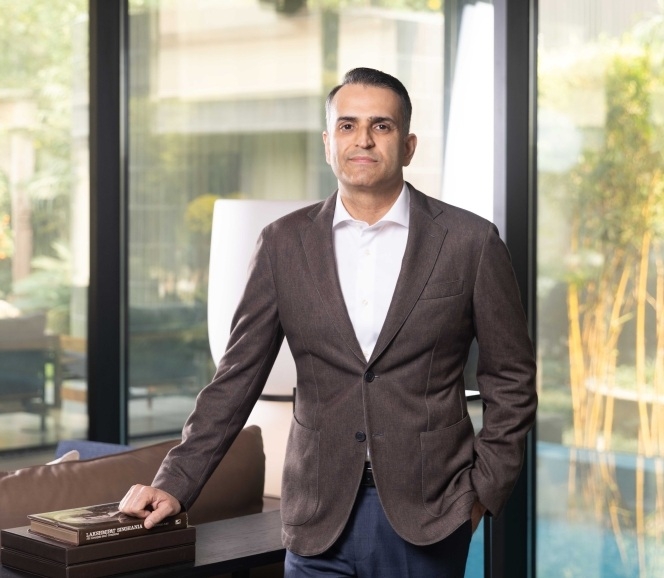
JK Tyre & Industries, one of the leading tyre manufacturers in the country, is targeting double-digit growth in FY2027 as demand across commercial vehicles, passenger cars and replacement markets remains encouraging. However, sustaining profitability amid escalating input costs and elevated freight rates will be a key challenge in the second half of the financial year.
Anshuman Singhania, Managing Director, JK Tyre & Industries, expects demand to remain stable through the coming quarters (Q3 and Q4), supported by healthy commercial vehicle order books and continued traction in the OEM channel. While passenger vehicle demand could moderate, the company expects commercial tyre sales to maintain their growth momentum.
“We are very optimistic going ahead that demand would be quite stable,” Singhania said during the Q2 earnings call, adding that JK Tyre was targeting double-digit growth in the commercial vehicle segment for the full year.
Record revenue, margin pressures
In Q2 FY2027, JK Tyre reported its highest-ever consolidated quarterly revenue of INR 48.50 billion, registering 20 percent YoY growth. Consolidated EBITDA rose 28 percent sequentially to INR 3.43 billion, with an EBITDA margin of 7.1 percent, and profit after tax stood at INR 600 million.
Domestic sales increased 32 percent YoY, driven by 65 percent growth in OEM sales following the implementation of GST 2.0. Export sales grew 14 percent sequentially despite geopolitical uncertainties and uneven demand across international markets.
The company stated its growth was broad-based, with OEM volumes increasing 76 percent in truck and bus radial (TBR) tyres and 35 percent in passenger car radial (PCR) tyres. The tubeless tyre portfolio grew 25 percent YoY against estimated industry growth of 10 percent, while tipper tyre sales increased 20 percent compared with industry growth of 11–12 percent. Sales in the two- and three-wheeler category rose approximately 85 percent, primarily driven by scooters. Replacement sales also grew 20 percent YoY.
The strong revenue performance has nevertheless coincided with significant cost inflation. Raw material prices and logistics expenses have risen, limiting the extent to which higher volumes have translated into improved profitability.
Pricing response to cost inflation
Raw material costs increased approximately 9 percent sequentially in Q2, taking the cumulative increase over the preceding six months to around 30 percent, according to Singhania. The company anticipates a further 4–5 percent increase in its raw material basket in Q3.
JK Tyre has responded with successive price increases. Prices were raised by approximately 4–5 percent in Q1 and a further 7 percent sequentially in Q2, taking the cumulative increase during the first half of FY2027 to around 11–12 percent. A further increase of 4–5 percent is planned for Q3, subject to market conditions.
“The raw material increase is putting a lot of pressure on margins. But we are steadily increasing our prices to pass through,” Singhania said.
The timing of price realisation remains critical. OEM pricing is partly linked to input cost indices, allowing adjustments to be incorporated through contractual mechanisms. In the replacement market, price increases have been implemented more gradually over the past two quarters.
Elevated container freight rates, compounded by higher fuel costs, are adding to the burden. Singhania said the company was working to offset these increases through pricing and operational efficiencies, but the extent of recovery would depend on market conditions and consumer sensitivity.
Management expects margins to improve through better OEM mix, price indexation and manufacturing efficiencies, although it has not quantified the anticipated recovery.
Premium tyres strengthen product mix
The increasing contribution of premium passenger car tyres is another important element of JK Tyre’s strategy. The company is seeing stronger traction in tyres with rim sizes of 16 inches and above, reflecting the fitment of larger wheels across a wider range of new vehicle models.
The share of these tyres in JK Tyre’s passenger car OEM mix rose to approximately 40 percent in H1 FY2027, compared with 35 percent in FY2026. Singhania also indicated that 16-inch-and-above tyres now account for around 27 percent of the company’s overall mix, including the aftermarket.
Furthermore, JK Tyre also secured 10 OEM approvals during the year, eight of which involved models requiring tyres in the 16-inch and above category. These include the Maruti Suzuki Brezza, Mahindra Thar, Renault Duster and Nissan Tekton and MG Tomahawk, cited Singhania.
“The market is growing, but our sales is growing at a faster rate,” Singhania said, highlighting the opportunity created by new vehicle introductions and increasing adoption of larger rim sizes.
The shift towards premium products offers scope to improve product realisation and strengthen the overall sales mix. Sustaining this growth, however, will depend on securing further OEM programmes and meeting replacement demand as the installed vehicle base expands.
Capacity and export opportunities
JK Tyre is proceeding with its capacity expansion plans despite near-term profitability pressures. Singhania confirmed that the ongoing INR 11.30 billion expansion programme would not be deferred. The previously announced INR 50 billion capital expenditure programme is also progressing through its initial phase.
The investments are expected to support domestic requirements and create additional capacity for export markets. While domestic OEM and replacement demand remains a priority, the company sees considerable headroom for international growth.
Exports increased 14 percent sequentially in Q2, with Latin America and Africa providing encouraging demand opportunities. Some markets in Asia and Europe, however, have softened amid geopolitical uncertainty and broader market challenges.
JK Tyre intends to continue serving established markets across Latin America, the Middle East, Southeast Asia and Africa, alongside a limited presence in Europe.
As the company enters the second half of FY2027, Singhania’s growth outlook remains supported by commercial vehicle demand, OEM traction and premiumisation.
The key test will be converting this momentum into sustainable earnings. As Singhania stated, further price increases, operational efficiencies, a richer product mix and additional capacity are expected to help drive growth, although the pace of margin recovery will ultimately depend on raw material prices, freight costs and the industry's ability to absorb higher prices.
Michelin Taps Long-Time Executive Tanguy Léon-Pflieger For Expanded DACH Leadership Role
- By TT News
- November 26, 2026
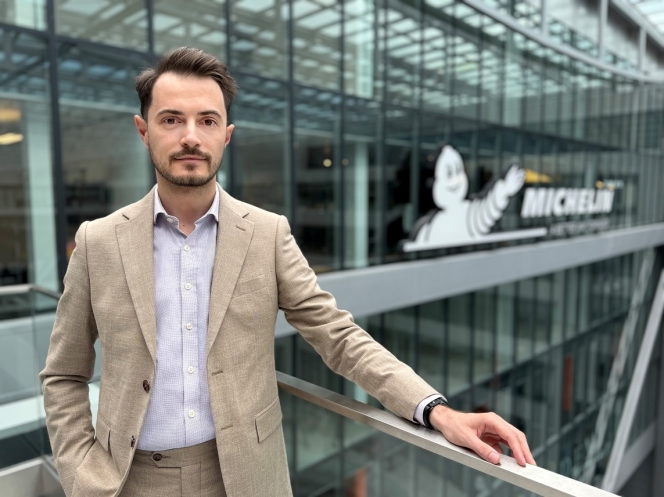
Michelin has appointed Tanguy Léon-Pflieger to the newly created role of Commercial Director Michelin DACH, effective January 2027. He will simultaneously serve as Managing Director for the region, overseeing the Michelin Group’s business across Germany, Austria and Switzerland. In this capacity, he will report directly to Victoire de Lajudie, President of Michelin’s Western Europe Region.
Léon-Pflieger brings extensive experience within Michelin to the position. Since July 2025, he has held the role of Vice President Sales B2C for passenger cars, motorcycles and bicycles in Northern Europe. Before that, he served as Managing Director of Michelin Suisse SA. He has been with the mobility company since 2017, working across sales and supply chain functions in Germany, East Africa and the Michelin headquarters in Clermont-Ferrand.
The Commercial Director DACH position forms part of a broader organisational restructuring of Michelin Europe into two regions: Western Europe and Northeast Europe. The new structure is designed to shorten decision-making channels, bring the company closer to customers and markets and enhance overall competitiveness.
Léon-Pflieger said, “I look forward to the challenges in this new position and the new area of responsibility as Commercial and Managing Director. I appreciate the close cooperation with the highly motivated international teams. Together, we are on a very good path to further strengthen the relationship with our customers, to make the high quality of our products, solutions and services more visible and to further expand our market share in the premium segment.”
Siemens Tire Day 2026 Spotlights The Future Of Digital And Software-Defined Tyre Manufacturing
- By TT News
- November 26, 2026
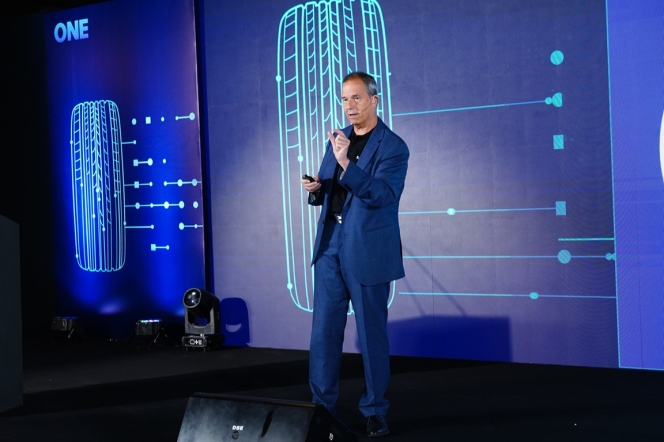
As tyre manufacturers navigate growing demands for productivity, flexibility, quality and sustainability, digitalisation is increasingly connecting every stage of manufacturing, from machine design and engineering to production, maintenance and workforce development. Against this backdrop, Siemens Tire Day 2026, held recently in Chennai, brought together tyre manufacturers, machine builders, technology specialists and automation partners to explore how an integrated technology ecosystem can help accelerate the industry's digital transformation.
Moving beyond individual technology demonstrations, the event showcased Siemens' OneTech approach, bringing together industrial software, automation, electrification, industrial edge computing, AI-enabled asset intelligence, networking and cybersecurity. A key focus was how tyre manufacturers and machine builders can increasingly engineer and validate production systems in the virtual world before implementing them physically.
Siemens demonstrated Digital Enterprise software for design, simulation and virtual commissioning, highlighting how virtual prototyping can help manufacturers identify engineering issues earlier, accelerate commissioning and reduce time-to-market. On the production floor, virtual PLC (vPLC) and Siemens Industrial Edge demonstrated the evolution towards more software-defined automation. By enabling applications and computing capabilities to run closer to manufacturing operations, this approach can combine the responsiveness required by industrial environments with greater software flexibility.
Another focus area was equipment reliability and asset performance. Senseye Predictive Maintenance and Eigen demonstrated how AI, predictive analytics and industrial data can help manufacturers identify emerging equipment issues earlier and move maintenance strategies from reactive intervention toward more predictive operations. Siemens also showcased WinCC Unified and SIMATIC S7-1200-based HMI solutions, illustrating how contemporary visualisation and operator interfaces can give production teams greater transparency and control over manufacturing processes. As factories become increasingly connected, the convergence of IT and operational technology also makes resilient industrial networks and cybersecurity critical. Tire Day therefore included technologies and approaches for industrial communications, networking and cybersecurity, alongside solutions for safe and reliable electrical distribution.
The event brought Siemens' broader ecosystem into the conversation, spanning motion and instrumentation, Siemens Electrical Products and SITRAIN, the company's industrial training offering. Channel and technology partners Newton Engineering, Multiquadrant Industrial Controls, Prolim, Smart Controls and Trimasys Control showcased their capabilities, demonstrating the wider ecosystem required to turn digital manufacturing concepts into plant-floor solutions.
Linglong Tire Taps Goodyear Veteran Michele Davì To Lead European OTR Expansion
- By TT News
- November 25, 2026

Linglong Tire has named Michele Davì as Europe Business Development Director OTR, effective 16 November, as the company accelerates its strategy to strengthen its footprint in the European Off-the-Road (OTR) tyre market. In the role, Davì will oversee commercial strategy, distribution network development and business expansion for the core OTR division across Europe, working closely with product, marketing and technical teams as Linglong continues to expand its presence in the competitive European OTR tyre market.
Davì brings more than 25 years of international tyre industry experience, having spent over 25 years at Goodyear in senior positions of increasing responsibility across the TBR and OTR businesses, most recently leading the European OTR replacement business. His industry expertise is further complemented by his background with leading construction and agricultural equipment manufacturers, having served as Marketing Director and Aftersales Manager at J.C. Bamford Excavators (JCB) Italia.
Davì said, "I am very much looking forward to my new role at Linglong Tire and to leveraging my more than 25 years of industry experience to achieve ambitious goals together with my colleagues across Europe. Our top priority will be to develop our distribution network and expand the business across Europe by capitalising on the highly competitive quality of Linglong products, optimising existing customer relationships, developing new partnerships and further strengthening our market position in the OTR segment.”
Jeff Hughes, Sales Director Specialty Tires for the EMEA region, said, “I am delighted to have Michele on board with his wealth of experience; he will continue to build the Linglong Off Highway Tire business in Europe with additional focus on Radial OTR and Giant OTR.”
Comments (0)
ADD COMMENT