

NEXEN TIRE EYES EXPANSION IN NORTH AMERICA
- By Sharad Matade
- February 23, 2021
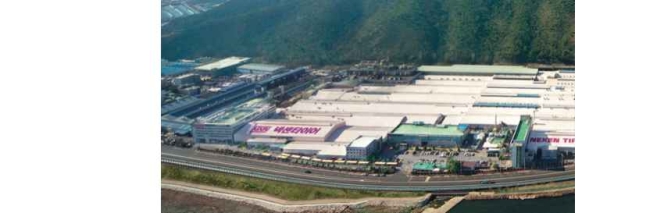
In his new role, Han will look after the company’s strategic direction and operations in the US and Canada and will provide support to the headquarters in Seoul for the company’s North American original equipment sales and the US-based technical centre in Richfield, Ohio.
Han will also provide direction on the company’s short- and long-term goals regarding operational and sales strategies.
Han is taking up new responsibilities while the whole global economy and the manufacturing industry are recovering from the pandemic impact. Han said his immediate priorities are fully understanding the North American market and getting to know the company’s customers in the United States.

“One of my priorities is to ensure our dealers that the company is supporting them in the best possible ways to navigate through the pandemic and thrive well beyond. The pandemic has also affected overall supply chain stability, causing some shortages as we assess variances in supply and demand. We will be focused on stabilising these variances to ensure quality products are delivered to customers in the time frames they need,” Han said.
Before accepting his new role as CEO, Han was Nexen Tire Corporation’s Global Marketing Vice President.
COVID 19 spread has turned the tyre business upside down. Priorities of manufacturers and end consumers have changed. Nexen Tire America is closely working with its customers to understand the requirements and support their business. “Obviously, the pandemic has affected all of our businesses from manufacturer to distributor to retail base, and we aim to be a resource of tools to help us all come out of this past year stronger than ever,” said Han.
Due to the pandemic digitalisation has got a further boost, and the company is focusing on offering digital resources. “Consumers are attentive on digital solutions to adhere to social distancing recommendations,” Han pointed out.
 Brand strengthening
Han also worked as the president of Nexen Tire Italia for 7.5 years after working at Nexen Tire’s global headquarters in Korea from 2005-2011. Han has spent a considerable time of his career in the developing market. Now in the developed market, where the Nexen Tire brand is relatively young, Han will have a larger task strengthening its brand. “The Nexen brand has had time to mature in many parts of the Asian market, and by that, I mean there is higher brand awareness and brand loyalty amongst our customers. Nexen Tire is still a young brand here in the States, so we still have many opportunities to build our brand strength in this market,” explained Han.
Not only with the homegrown brands, but Nexen Tire also has competition from the Asian tyre companies, which are aggressively expanding their business in North America. Han said the company would continue building on its current strategies and relationships with the company dealer network to increase its market share in North America.
Research and Development, and customised solutions to meet the local demand play an important role in gaining the local market share. Nexen Tire has already established a global R&D network headed by its main R&D centre in Yangsan, Korea, along with its R&D facilities in the U.S., China, and Germany to develop future-oriented innovative products.
“While we have a legacy of strong partnerships with our Korean based R&D teams, Nexen Tire America has also developed an R&D centre in Ohio to focus on American and Canadian market R&D initiatives. This will ensure we are focused on North American market needs and we are prepared to meet these demands,” said Han.
This year, Nexen Tire aims to launch new products which are currently under development. It plans to announce details at the 2021 SEMA show.
Dealers are an integral part of the tyre business. Dealers are quite vocal and active in the developed nations compared to the developing countries. Nexen Tire will focus on strengthening its relationship with its dealers. “We currently have very strong relationships with our dealer base and will continue to strengthen these bonds in the future. Our strategies include being an integral partner to their growth in the ways of marketing, sales, customer service and product innovation.”
 New Mobility
Connected, Autonomous, Shared, and Electric mobilities are going the course of the automotive and the tyre industry is no exception. Sensing the future trends, tyre companies are heavily investing from R&D to production and distribution to meet future mobility. Nexen Tire is currently and consistently analysing and researching potential opportunities in the EV space. “Electric cars and mobility services are the waves of the future, and Nexen strives to stay at the forefront of these trends,” said Han.
Last year in September, Nexen Tire announced it will supply tyres for a new model of the electric car maker Canoo, a US startup company.
Canoo plans to launch the world’s first subscription-based electric vehicle (EV) plans. Under its business model, Canoo will use a membership model to sell its EVs. The company unveiled its first EV model in 2019 and plans to launch it in 2022 commercially.
Nexen Tire will supply its Rodian GTX EV Tyre, an electric vehicle version of Nexen Tire’s all-season premium SUV tyre Roadian GTX which offers electric vehicles’ requirements as tyre safety, durability and low noise. “We are also researching technologies for smart tyres to ensure we meet market demands and the future of mobility,” said Han.
Nexen Tire has also formed a strategic partnership with Plug and Play, the world’s largest corporate innovation platform and startup accelerator, to pursue innovative collaborations in the tyre and mobility industries.
With this partnership, Nexen Tire will seek to partner with the next wave of the most promising technologies in the tyre and mobility industries. This should also enable Nexen Tire to realise its ‘open R&D’ philosophy, offering collaboration and partnerships, especially to firms in the tyre technology field, the company had said.
Talking on the challenges, Han thinks the challenges in business are relatively constant. He added that the Nexen Tire aims to ensure sales increase year over year in a very dynamic and changing environment, including tariffs, global pandemics, and oversupply. “We prepare ourselves for these obstacles and opportunities by remaining fluid and shifting with the market as it requires,” said Han.
- Association of Natural Rubber Producing Countries
- ANRPC
- World Elastomer Technology and Engineering Forum
- Natural Rubber
ANRPC Secretary-General Presses Natural Rubber Agenda At WETEF 2026
- By TT News
- September 19, 2026
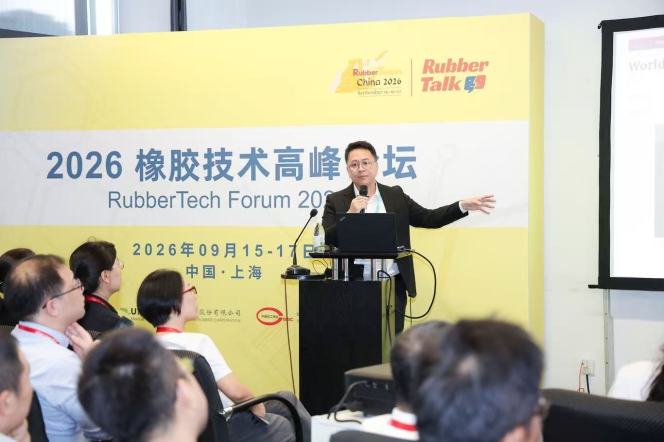
Dr Suttipong Angthong, Secretary-General of the Association of Natural Rubber Producing Countries (ANRPC), was a distinguished speaker at the World Elastomer Technology and Engineering Forum (WETEF) in Shanghai from 13 to 16 September 2026. Co-organised with RubberTech China, the event attracted over 100,000 professional visitors, industry leaders, scholars and executives from dozens of countries.
His participation delivered strategic benefits for ANRPC and its members by raising natural rubber's profile amid global discussions dominated by synthetic elastomers and advanced materials. Aligning with WETEF's eco-friendly manufacturing focus, he promoted climate-positive practices, traceability and environmentally sound processing methods.
The forum also created direct dialogue channels with major consuming markets and international technical institutions, strengthening trade synergies. It provided valuable insights into breakthrough elastomer science, helping member nations adapt to shifting international market demands.
Kuraray Marks Centennial With ¥9.9 Million Donation To International Organisations
- By TT News
- September 19, 2026

Kuraray Co., Ltd. has contributed JPY 9,896,480, roughly USD 64,000, to four international nonprofit organisations. The funds were generated through employee participation in ‘100 Challenge’, a global initiative tied to the company’s centennial observances.
The World Food Programme received JPY 2,804,003, while UNICEF was granted JPY 2,474,120. WaterAid obtained JPY 2,405,394 and WWF was allocated JPY 2,212,963. Each organisation’s share corresponded directly to points accumulated by Kuraray Group staff.
The Group marked its 100th anniversary in June 2026, adopting ‘Possible starts here’ and a related brand story as the guiding concept for its centennial activities. While honouring those who built its first century, Kuraray is pursuing diverse efforts intended to shape the next 100 years, with employees worldwide at the centre. The company seeks to connect staff across departments, countries and languages, fostering unity and connection.
A dedicated app called ‘100 Challenge’, inspired by younger employees, formed one such effort. Participants completed 100 in-app tasks, earning points that supported social contribution activities. The app provided a shared experience regardless of location or role, with individual efforts contributing to both a commemorative mosaic artwork and charitable donations. By combining small individual challenges, the initiative illustrated how personal actions can generate meaningful collective impact, reflecting long-held Kuraray Group values.
TyreSafe And Staffordshire Police Join Forces To Boost Road Safety
- By TT News
- September 19, 2026
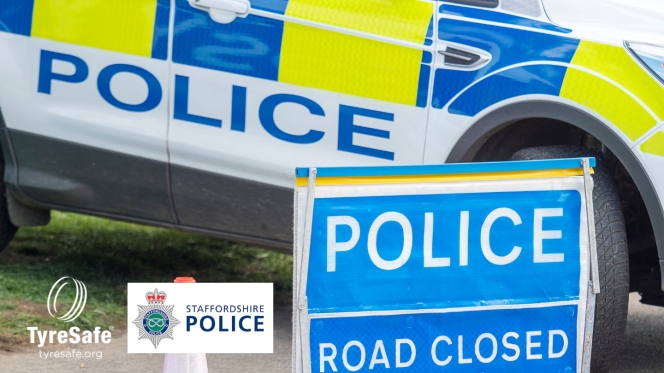
TyreSafe has entered a new partnership with Staffordshire Police, reinforcing a joint commitment to improve road safety and reduce fatalities and serious injuries across the county. The collaboration aims to highlight the critical role tyres play in protecting road users by encouraging simple, regular checks of pressure, tread depth and overall condition.
The value of this preventative approach was recently demonstrated during a multi-agency enforcement operation at the DVSA Vehicle Inspection Site in Doxey. Held on 25 August, Operation Doxey involved Staffordshire Police, West Mercia Police, DVSA, Datatag, the Forensic Collision Investigation Unit and TyreSafe. Inspectors directed 30 vehicles into the site, covering leisure vehicles, towing vehicles, light commercial vehicles and goods vehicles.
Seven tyre and wheel-related defects, mechanical risks and pressure discrepancies were identified. These included a tyre cut through to the cord, which received an immediate prohibition notice, a tyre running roughly 30 percent below recommended pressure, an overweight light commercial vehicle with a nail embedded in a tyre and all four tyres underinflated, a significant rear axle pressure imbalance, a missing wheel nut and an 11-year-old tyre. Leisure vehicle owners generally showed good tread awareness, though pressure maintenance remained an issue, while commercial vehicles presented several preventable defects.
Staffordshire has one of UK’s statistically safest road networks, yet serious collisions remain a concern, particularly on single carriageways. Rural bends, changing speed limits and limited visibility add risk, while motorcyclists and vulnerable road users are disproportionately affected. Common factors include failing to look properly, misjudging speed or path and driving too fast or carelessly. TyreSafe now works with over 260 organisations, and this partnership encourages Staffordshire motorists to make tyre checks routine.
Stuart Lovatt, Chairman, TyreSafe, said, “We are delighted to welcome Staffordshire Police as a TyreSafe partner. While Staffordshire has a strong road safety record, every serious collision has potentially devastating consequences for those involved, their families and their communities. The recent Operation Doxey enforcement activity demonstrates exactly why preventative vehicle maintenance matters. Across just 30 vehicles, inspectors identified a number of serious tyre and wheel defects, including a tyre cut to the cord, significantly incorrect tyre pressures, an embedded nail, a missing wheel nut and a tyre that was 11 years old.
“These findings are a powerful reminder that problems are not always obvious from behind the wheel. Simple checks before a journey can help identify issues before they become a danger on the road. Different roads present different challenges, particularly rural and single carriageway roads where the consequences of losing control or being unable to stop safely can be especially severe. Road safety requires a collective effort, and partnerships such as this are incredibly important. By combining the reach and expertise of Staffordshire Police with TyreSafe’s specialist knowledge and campaigns, we can help more road users understand the simple but crucial role their tyres play in keeping themselves and others safe.”
Police Sergeant Adam Van de Sande, Staffordshire Road Crime – Proactive & Harm Reduction Team, said, “Keeping people safe on Staffordshire’s roads requires everyone to play their part. We are committed to working with partners to reduce the number of people killed and seriously injured on our road network. Operation Doxey demonstrated the value of partnership working, with officers, vehicle examiners and road safety specialists able to identify a range of defects and safety issues before those vehicles continued their journeys.
“Vehicle safety is an important part of that responsibility, and tyres are fundamental to a vehicle’s ability to stop, steer and maintain grip. We are pleased to be working with TyreSafe to raise awareness and encourage motorists to make regular tyre checks part of their routine vehicle maintenance. Our message to road users is simple: don’t wait for something to go wrong. Take a few minutes to check your vehicle and make sure it is ready for the road.”
- AZuR Network
- German Award for Sustainability Projects
- Tyre Retreading
- Retreading: Climate Protection on Wheels
AZuR Wins German Award For Sustainability Projects 2026 For Tyre Retreading Project
- By TT News
- September 19, 2026
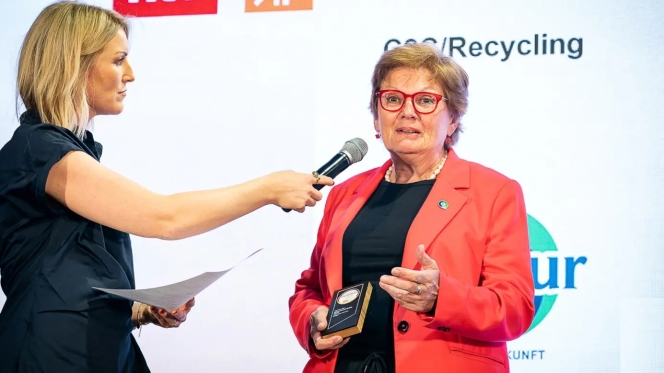
The AZuR Network has been honoured with the German Award for Sustainability Projects 2026 in the C2C/Recycling category for its ‘Retreading: Climate Protection on Wheels’ project. The recognition highlights the network's efforts to expand tyre retreading across Germany and Europe, thereby extending the useful life of tyres. Retreading works by reusing a suitable used tyre casing and applying a fresh tread, keeping a substantial share of the original tyre in circulation.
A life cycle assessment commissioned by AZuR and carried out by the Fraunhofer Institute UMSICHT compared retreaded tyres with equivalent new ones. Under the conditions examined, producing a retreaded truck tyre generated roughly 135 kilogrammes less greenhouse gas emissions, a reduction exceeding 60 percent. The process also reuses considerable portions of the existing tyre casing, reinforcing its environmental advantages.
The jury underscored the project's scalability and its relevance to the industry. Official documentation further noted the political integration of the topic as a key strength, with the EU taxonomy confirmation in 2025 representing a tangible milestone. The award places AZuR among well-known companies and innovative projects, including a climate protection cooker initiative in Cameroon, a capsule-free coffee system and a mental health awareness campaign.
Knauf secured first place in the same category with its circular gypsum supply chain, while Schmitz Cargobull led the Mobility and Logistics Solutions category. Other first-place winners included DEKRA, Hansgrohe, Pfleiderer Germany and SBRS. Presented by DISQ with ntv and DUP UNTERNEHMER under Brigitte Zypries' patronage, the 2026 edition saw 433 nominations, with 46 organisations recognised across 19 categories on 17 September in Berlin.
Christina Guth, Network Coordinator, AZuR, said, “This award belongs to our entire network. Retreading only works when many stakeholders collaborate along the value chain – from certified end-of-life tyre recyclers, tyre manufacturers and retreaders to retailers and fleet operators, all the way to academia. The award highlights the potential of using high-quality tyres for longer and keeping their casings in circulation.”

Comments (0)
ADD COMMENT