

USTMA Publishes 2025 End-of-Life Tire Market Report
- By TT News
- October 29, 2026
The U.S. Tire Manufacturers Association (USTMA) has published its 2025 End-of-Life Tire Market Report, continuing a biennial series begun in the early 1990s. With over 30 years of figures on tyre generation, destination markets and stockpiles, the study stands as the nation's most thorough accounting of what happens to tyres after they leave the road.
Of the 273 million tyres retired nationwide in 2025, some 79 percent were absorbed by end-use markets. Only lead-acid batteries surpass tyres as a recycled and reclaimed material; paper, aluminium, glass and PET plastic all trail behind. The result is that valuable rubber stays in productive circulation rather than accumulating in landfills.
Abandoned and illegal stockpiles shrank to roughly 42.1 million tyres, compared with about 48 million two years earlier – a 12 percent drop in that span and a 96 percent fall from the billion-tyre high of 1990. Colorado's cleanup effort accounted for much of the gain, eliminating over 12 million tyres, while New Jersey and Pennsylvania recorded large reductions. North Carolina, Tennessee and Delaware cleared their stockpiles entirely, and land disposal declined nearly 11 percent to 779 thousand tonnes.
Tyre-derived fuel stayed the biggest outlet, taking about 1,317 thousand tonnes, with ground rubber just behind at roughly 1,201 thousand tonnes. Cement kilns consumed about 5 percent more, reaching 821 thousand tonnes – 62 percent of all tyre-derived fuel – as carbon-reduction mandates and the fuel's biogenic nature enhance its appeal. Reclamation applications expanded by roughly a tenth.
Most declines arose from forces outside the industry's influence. Pulp and paper mill shutdowns halved nothing less than 40 percent of that outlet, while revised Michigan energy rules trimmed utility boiler demand by about 22 percent. Synthetic turf continues yielding ground to cork, coconut husk and olive pit infill; moulded and extruded goods eased from a 2021 high; and energy price swings have shifted tyre-derived fuel's competitiveness. Exports, however, climbed 270 percent since 2023 – from 253 thousand tonnes to 936 thousand tonnes – making them the third-largest outlet, driven by India's rapid growth and sustained fuel shipments to Japan and South Korea. USTMA urges exporters to confirm that receiving markets are environmentally sound and economically viable.
Near-term investments include Tire Recycling Foundation-backed environmental product declarations, wider chip seal use, advances in dry-process rubber-modified asphalt and pavement funding. Kentucky devoted over USD 1.16 million in 2025 to nine county rubber-asphalt projects, and California opened USD 6.57 million in grants for fiscal 2025–26. Pyrolysis is now quantifiable as it reaches commercial scale, and the Tire Recycling Foundation is growing into a platform for education, research and demonstration. State-level stockpile figures accompany the report on the ELT Report page of the association’s website.
Anne Forristall Luke, president and CEO, USTMA, said, “This report gives a picture of a market in transition. Stockpile cleanup continues, and 79 percent of end-of-life tyres reached end-use markets. At the same time, several domestic markets contracted, and the rise in exports shows strong demand for this material outside the US Together, those trends tell us our markets still depend on a handful of large industrial outlets, and that market development has to be the priority. The data points to where the work is needed, and much of that work is already underway.”
Amelia Chucholowski, Associate Director, Sustainability and Recycling Policy, USTMA, said, “International demand further demonstrates that this material has real value, but our priority is domestic circular end-use markets, because a tire processed here supports a US recycler, US jobs and US infrastructure. That includes ensuring that domestic processors have adequate feedstock. We’re watching it closely and working with our global partners both to understand what’s driving this trend and to report it transparently.
“The work that actually grows these markets is underway right now, and almost none of it shows up in a 2025 market report. Read this report as a snapshot of 2025. What we’re building now will be measured against in the future. State programmes have built one of the country’s great recycling success stories. 96 percent of the tyre stockpiles that existed in 1990 are gone, and the lesson is clear: when states fund their programmes, enforce the rules and invest in markets, results follow. The next chapter is about markets. The more states invest in uses like rubber-modified asphalt, the more tires become roads, products and energy here at home.”
Mitas Enters Chinese Agricultural Tyre Market With Official Brand Ceremony
- By TT News
- October 29, 2026
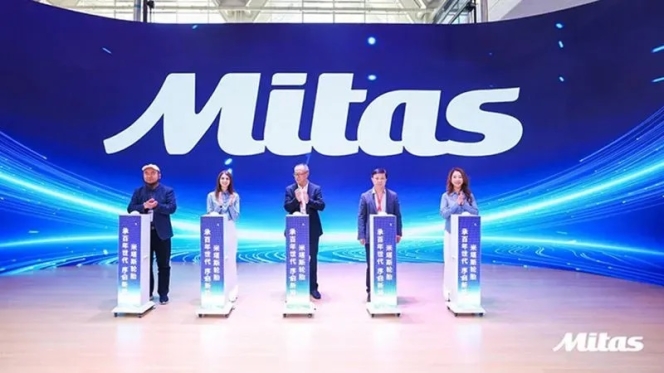
Mitas marked its entry into Chinese agriculture with an official brand ceremony held on 27 October at the National Exhibition Center in Tianjin, during CIAME 2026, the China International Agricultural Machinery Exhibition. Customers, partners and industry figures attended the event, which introduced the international tyre maker and its agricultural portfolio to the local market.
Bringing close to 100 years of tyre manufacturing experience and enduring ties with farmers and equipment builders around the world, the company presents Chinese customers with a commercially available international option built on proven agricultural knowledge, technology and dependability. The dedicated exhibition booth featured the HC 2000 and SFT CHO. The former, a VF tractor tyre, delivers high load capacity at low inflation pressure alongside efficient traction and diminished soil compaction, achieved through a large contact patch and even load distribution. The latter, engineered for demanding cyclic-load duties, pairs high load capacity and low inflation pressure with a broad footprint for gentle ground handling. Both models demonstrated the brand's dedication to proven engineering and high-value performance for contemporary agriculture.
Going forward, the company plans to strengthen its Chinese footprint by collaborating closely with equipment manufacturers, distributors and farmers, deepening understanding of local applications and addressing the evolving requirements of Chinese agriculture.
Roberta D’Agnano, Global Marketing Director Mitas at Yokohama TWS, said, “Entering the Chinese market means bringing the strength of an established international brand to a new customer base. Mitas combines nearly a century of agricultural expertise with proven tyre technology and a clear focus on dependable performance. Our ambition is to establish Mitas as a reliable partner for Chinese farmers, distributors and equipment manufacturers, offering solutions that help them get the most from their machinery.”
- PRINX CHENGSHAN
- Agricultural Tyres
- Tractor Tyres
- Harvester Tyres
- China International Agricultural Machinery Exhibition
PRINX CHENGSHAN Showcases Tractor And Harvester Tyre Solutions At CIAME 2026
- By TT News
- October 29, 2026
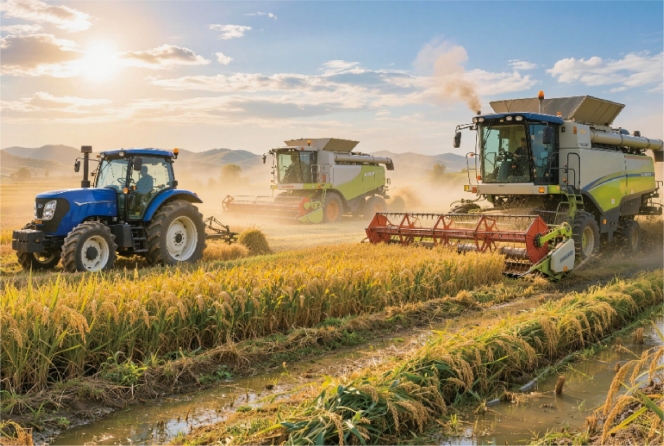
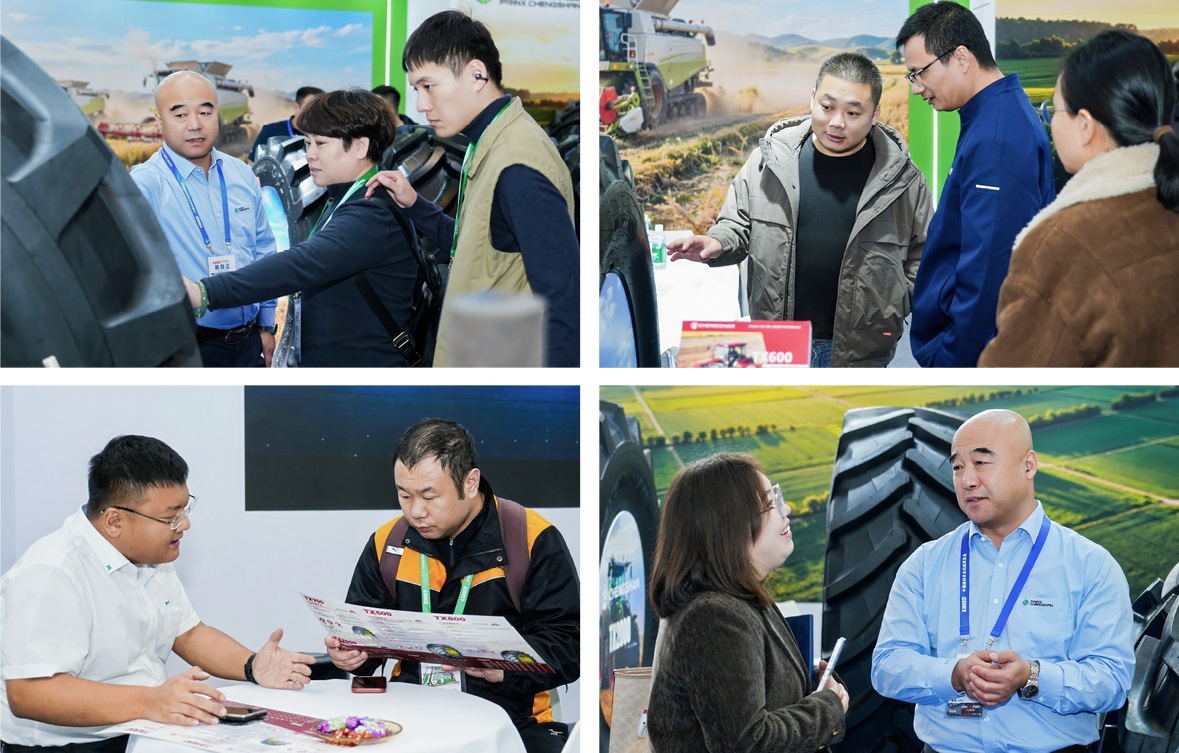
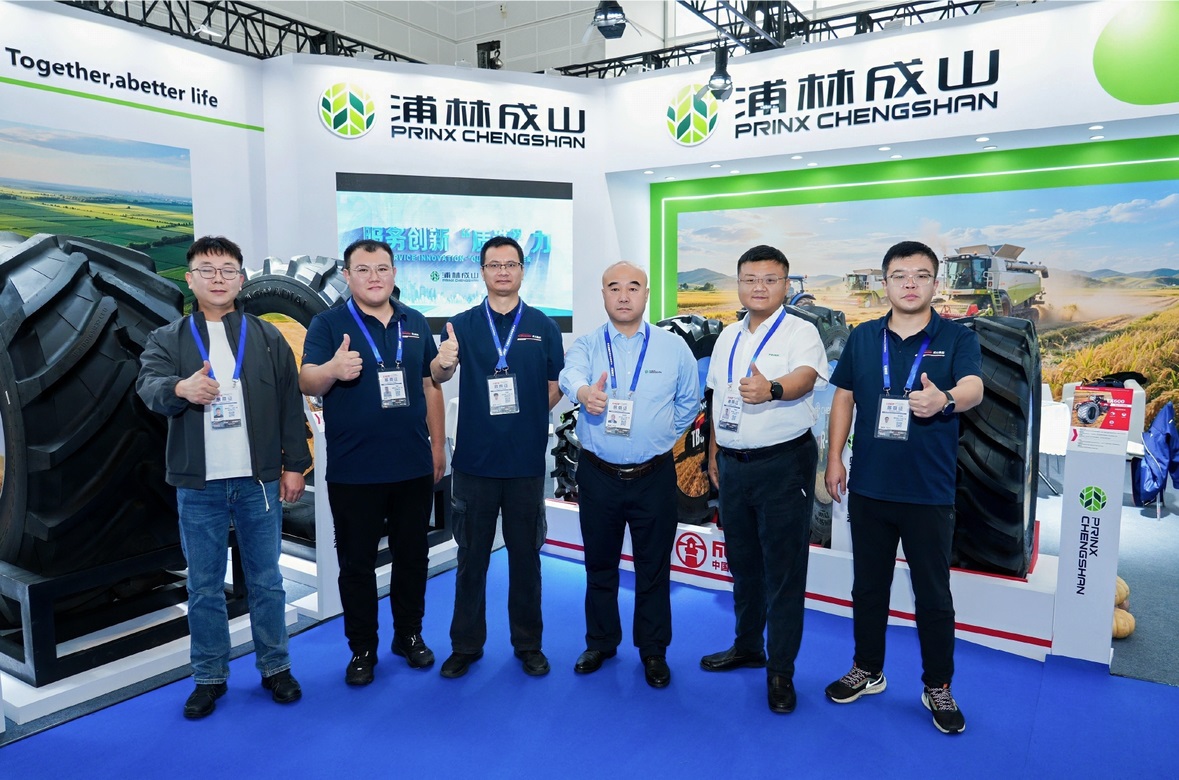
PRINX CHENGSHAN showcased a lineup of agricultural tyres under its Chengshan brand at the 2026 China International Agricultural Machinery Exhibition (CIAME 2026) in Tianjin on 26 October. The display featured tyre solutions tailored to modern agricultural needs, with emphasis on large-scale field cultivation and fall harvesting applications.
Rising performance demands across smart, high-end and environmentally sustainable farming have prompted the company to steadily expand its research and development investment in agricultural tyre applications. PRINX CHENGSHAN has built a comprehensive portfolio for large agricultural machinery, including tractors and combine harvesters, delivering integrated solutions for varied operating conditions along with service support spanning the entire product life cycle.
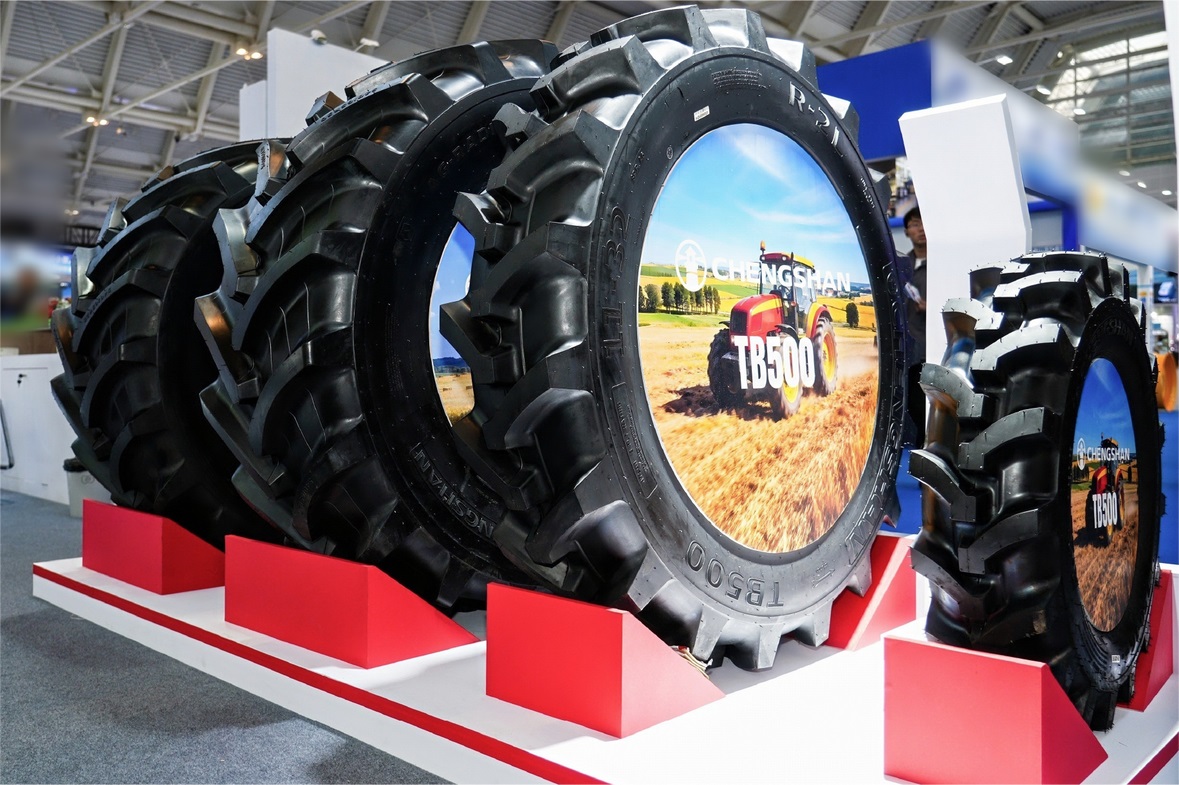
The TX600 and TX700 radial tyres, intended mainly for tractors, each offer distinct advantages. The TX600 pairs large tread blocks with a proprietary cut- and puncture-resistant rubber compound, ensuring stable driving, dependable handling and puncture resistance during high-speed transfers between work areas. The TX700 employs a high-strength carcass and belt construction to deliver strong load capacity and traction, even in muddy, difficult fields.
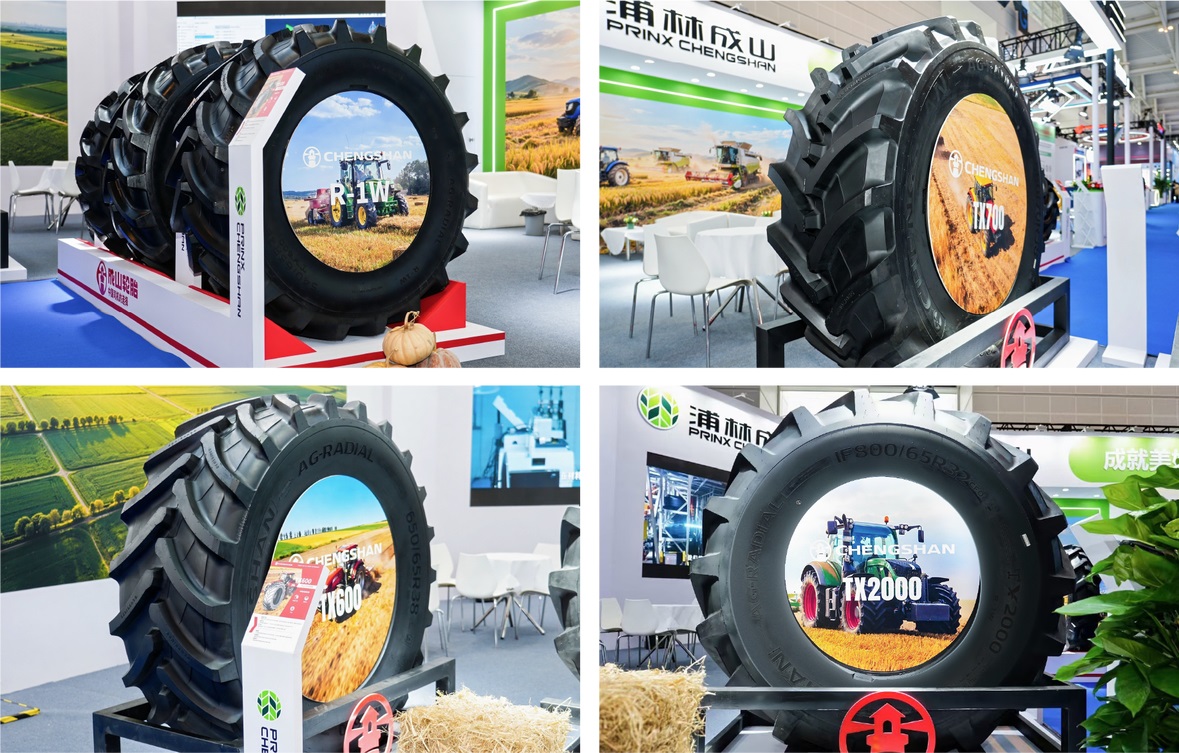
For combine harvesters, the TX2000 raises load capacity by 20 percent through high-flexion characteristics, while its low inflation pressure and larger contact patch lessen soil compaction, reconciling efficient operations with farmland protection. The TB500 bias-ply tyre, a notable addition to the tractor range, features a deep tread and large, robust blocks for excellent traction, wear resistance and puncture resistance, sustaining stable, slip-resistant performance in mud and gravel.
Looking ahead, PRINX CHENGSHAN plans to continue advancing agricultural tyre innovation, targeting the evolving requirements of modern equipment and practical field challenges. The company aims to collaborate closely with partners throughout the agricultural machinery supply chain to enhance the quality and efficiency of modern farming and support a stronger agricultural sector and greater food security in China.
Apollo Tyres Launches Vredestein Traxion 95 For Row-Crop Farmers And Contractors
- By TT News
- October 29, 2026
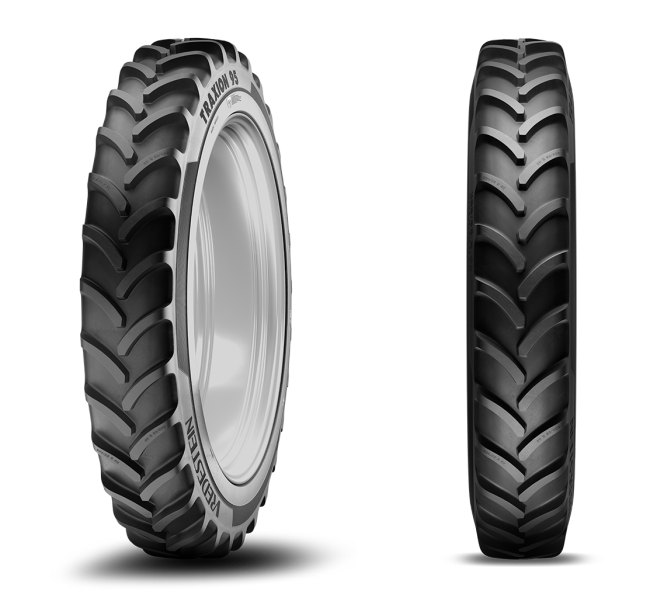
Apollo Tyres Ltd has unveiled the Vredestein Traxion 95, a row-crop tractor tyre designed specifically to carry the advantages of Traxion technology into that segment. According to the company, the product offers strong grip, effective self-cleaning and extended service life, allowing farmers and contractors to get more from their equipment and working hours across the season.
Like other products in the Traxion range, the tyre uses angled lugs set apart at varying intervals, a layout intended to transfer power efficiently and hold traction in difficult ground. The uneven spacing also helps the tread shed soil as it rolls, supporting steady output between crop rows, while the tread pattern and robust rubber compound are claimed to improve operator comfort and lengthen tyre life. Spraying, fertilising and similar crop-care duties are among the tasks the tyre is built to handle reliably.
Vredestein has earned a solid agricultural reputation for grip, longevity and comfort since launching its first Traxion tyre in 1997. The Traxion 95 is scheduled to reach the market in Autumn 2026 in six popular sizes: 230/95 R32 TL 128D, 270/95 R32 TL 136D, 230/95 R36 TL 130D, 300/95 R46 TL 148D, 230/95 R48 TL 136D and 270/95 R48 TL 144D.
Yves Pouliquen, Vice President, Commercial EMEA, Apollo Tyres Ltd, said, “The launch of the Traxion 95 marks another important step in the evolution of the Traxion family. Users can now benefit from proven Traxion technology in a dedicated row-crop tyre that increases productivity between every row.”
Nexen Tire Earns EcoVadis Gold For Third Straight Year, Climbs To Top 2%
- By TT News
- October 29, 2026
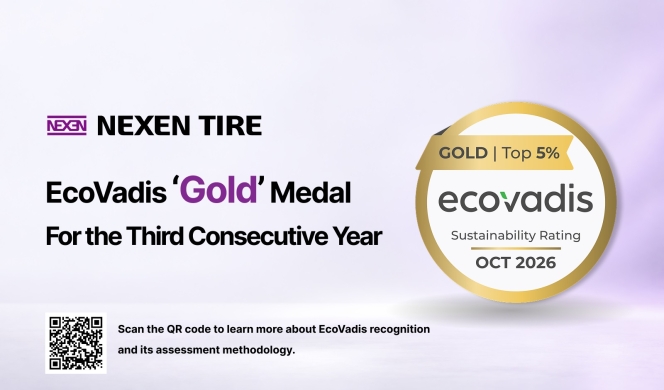
NEXEN TIRE has secured a place in the top 2 percent of companies globally in the 2026 ESG assessment conducted by EcoVadis, a sustainability rating agency headquartered in France. The achievement represents the third consecutive year the tyre manufacturer has earned a Gold Medal, improving from its top 3 percent ranking a year earlier. The company posted balanced scores across all four assessment categories, with environmental performance standing out as its strongest area.
Environmental management capabilities drew particular praise, including greenhouse gas emissions disclosure spanning all scopes and environmental management systems operating across global sites. NEXEN TIRE has committed to a Science Based Targets initiative-approved goal of cutting Scope 1 and 2 emissions by 58.8 percent by 2034 relative to 2023 levels. Recognition also came for broadening labour and human rights management systems worldwide, while sustainable procurement efforts earned positive marks for supplier code of conduct revisions, supply chain ESG due diligence and ESG awareness training for procurement staff.
Ethics recorded the largest improvement among assessed areas. The company maintains policies and implementation systems addressing anti-corruption, conflict of interest prevention and information security, and its expanded information security activities across global sites drew a stronger evaluation this year. EcoVadis, established in 2007, has assessed over 150,000 companies in 185 countries, awarding Platinum to the top 1 percent, Gold to the top 5 percent, Silver to the top 15 percent and Bronze to the top 35 percent.
The rating carries commercial weight, as global automakers use EcoVadis assessments when selecting suppliers. With ESG performance requirements across supply chains intensifying, especially in Europe, the result is expected to strengthen NEXEN TIRE's competitive position in original equipment tyre supply.
John Bosco (Hyeon Suk) Kim, CEO, NEXEN TIRE, said, “Maintaining the Gold rating for three consecutive years indicates that our sustainability management system is functioning effectively. We will continue to improve our ESG management practices in a systematic manner and contribute to sustainable mobility.”

Comments (0)
ADD COMMENT