

By Ertugrull Bahan, Senior Tyre Expert
 Electric cars will surely be more on board than in recent decades. They are becoming more popular, more commercial, the market volume of the middle and upper classes will increase more than today. The inconsistencies associated with high sales costs and a short battery charge distance are generally overlooked. Brand popularity depends mainly on entry price and customer service.
New brands for the production of electric cars will appear on the market. The manufacture of high-tech electric cars becomes easier and more convenient because fewer transmission components are used than conventional cars. However, the spectrum and capacity of AI determine the comfort of mobility. Solid software support for brand awareness will therefore be more dominant than the physical parts of the vehicle.
Low weight and cheaper batteries
Humanity must still be patient with flying cars! Next generation cars will be purely electric, so the total load will always be borne by wheels and tyres.There is still a space where the weight of electric cars can be reduced with lighter and additive manufacturing features. However, these are not yet completely possible for industry.The battery of an electric car is today the heaviest part of the vehicle and weighs around 500 kg. The weight of the batterywill determine the all aspects of the electric car.Due to the total body weight, todayelectric car tyres are not light load tyres and their size depends on the total weight of the car. New lighter battery technologies will shape future electric cars and their tyres. Technical reasons point to tall tire sizes with a rim size of 19 inches and more with a smaller cross-sectional width and stiffer sidewall for electric car tyres.
Electric car manufacturers must plan long distances on a single charge anyway. Any successful design of vehicle parts therefore aims for low energy consumption. Higher battery weight, more braking energy and larger brake pedals hinder this goal. The regenerative ability feature braking and driving downhill are therefore on the table and the preference for a working electric car.
Quieter, lighter, easier to grip tyres
It is reasonable for automakers to expect energy efficient electric car tyres.In this regard, the tyres should have less rolling resistance, but should also contain a rubber composition that manages the current torque of the electric motors. The high torque and weight of the heavy vehicle challenge optimal performance. Better grip, lower rolling resistance and better tyre wear performance require opposite directions of the magic triangle. The use of silica-silane has already been carried out with conventional tyres. This means that the structure and material of electric car tyres have a unique des ign and must be different from conventional car tyres.
Electric cars offer a quiet driving experience, so any noise source other than the low-noise electric drive train is annoying to the driver. A larger outside diameter with a stiffer sidewall and a high inflation and cavity are disadvantageous for a better noise level. If a shallow skid depth is used for better pattern noise, wear resistance will decrease. However, a high instantaneous torque mainly requires better tyre wear. Because other performance parameters are balanced during the development phase, including wet and dry traction, life is not easy for tire manufacturers as they need of many newsizes after the spread of electric vehicles in all segments. All bring us the concept of "active tyres" also referred to as "intelligent tyres," which means that all necessary services are available in good time if necessary. However, this is a completely new and challenging area, consisting of the possibilities of non-air-filled tyres and the use of nano-additives in traditional blends. Otherwise, electric car tyres will also be a mixture of today's technologies. They will be the best possible compromise for the most important parameters.
New technologies, government incentives to prevail
Other technological developments for powerful tyres for electric cars will prevail.Developing foam layer technologies for tire noise reduction is one alternative for quit tyres. Previous foam filled tyres as alternative to run-flat technologies will be on scene for the purpose of lowering the tire and road noise for a better riding performance of an electric car and its tyres.
Around 2 million electric car sales is expected to reach to ten times more in ten years in overall world and electric car volume reaches 530 total million market volume in 20 years. Many countries will ban diesel engine and limit gasoline fuel car sales. Governments will play major roles shaping the global market with incentives. 30% less noise and 20% less rolling tyres will be average technology and requirements of next tire labeling requirements. Future tyres will be anyhow more technological. Caching up all has to be started by better power of will and imagination.
Continental EcoContact 7 S Approved As Original Equipment For Volvo EX60
- By TT News
- October 16, 2026
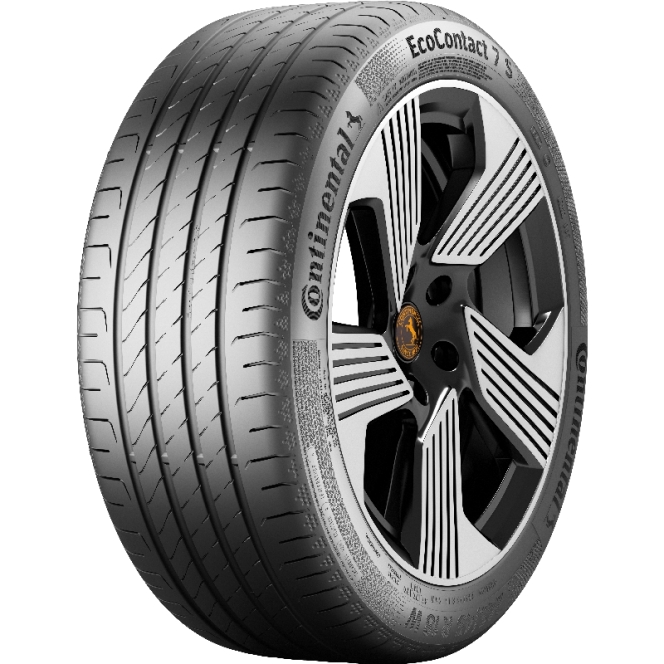
Continental has secured original-equipment approval for the fully electric Volvo EX60, with its EcoContact 7 S tyre line homologated across numerous countries worldwide. Approval covers the sporty summer tyre for the electric SUV. Two fitments were sanctioned: 235/55 R20 for the front axle and 255/50 R20 for the rear axle.
Both approved versions carry an integrated rim protector, a reinforced sidewall area that lowers the risk of rim damage from accidental curb contact. This protective feature strengthens the sidewall zone, guarding the wheel rim against unintended impacts during everyday driving situations.
A sporty summer tyre, the EcoContact 7 S targets low rolling resistance, high mileage and minimal rolling noise. Its optimised compound and construction cut energy consumption, and the sportier S variant of the EcoContact 7 also stresses wet grip and handling for a direct, responsive feel, bearing an EV-compatible sidewall logo identifying electric vehicle suitability.
A golf-inspired principle boosts efficiency: Aerodimples, tiny sidewall indentations mimicking a golf ball's surface, reduce air turbulence behind the tyres, so less energy keeps the vehicle moving. A specially tuned tread pattern also curbs rolling noise, especially at low urban speeds, cutting noise pollution for pedestrians and nearby residents.
AZuR Launches European Tyre Pressure Day To Extend Tyre Life
- By TT News
- October 13, 2026
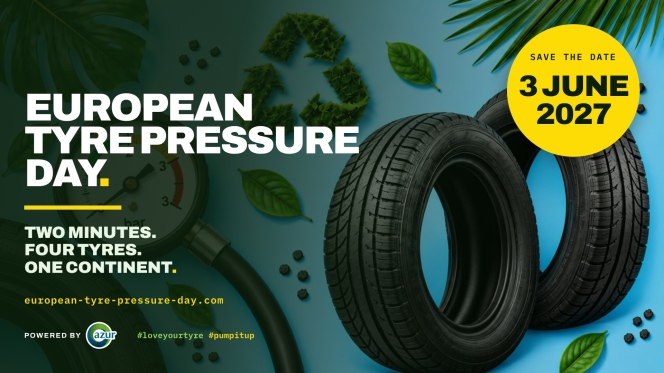
The Alliance Future Tyres (AZuR) will hold the first European Tyre Pressure Day on 3rd June 2027, calling on motorists, businesses and public institutions across Europe to check their vehicles’ tyre pressure to reduce waste and extend tyre life.
More than 90 AZuR partners will take part, with garages, car washes, fleet operators, universities and municipalities also invited to join the initiative. Registration is open, according to the organisation’s announcement on 13 October 2026.
The campaign highlights the role of tyre pressure in preserving the casing, the structural part of a tyre that can remain suitable for reuse or retreading even when the original tyre is no longer in service.
An analysis by REGOM, using automated identification and sorting technology at an industrial used-tyre collection site in France, examined 59,349 tyres in June 2026 with at least 3mm of remaining tread. Of these, 12,738 were considered suitable for reuse. The other four-fifths were rejected despite having sufficient tread, with the condition of the casing determining whether they could be reused.
“We have spent years working to make sure a new cycle begins at the end of a tyre’s life. But the most effective lever comes before that — and it lies with every single one of us,” says Anna-Maria Guth, Network Coordinator of AZuR. “That is why we are starting with ourselves. On 3 June our partners will check the pressure on their own vehicles, in their own yards and staff car parks. If you take part yourself, you do not have to persuade anyone,” adds Guth.
“Every tyre contains valuable raw materials whose production requires energy, know-how and resources. From a circular economy perspective, we should therefore value this material and energy effort for as long as is technically and safely possible,” said Marjolein Groeneweg, Global Marketing And Sustainability Director For Synthetic Rubber at Synthos and a Member of AZuR’s Reduce & Reuse project group.
Low tyre pressure can also increase fuel consumption. The German motoring organisation ADAC estimates that it can raise consumption by as much as 0.3 litres per 100km. At an annual mileage of 15,000km, that would amount to about 45 litres of additional fuel.
The campaign will cover cars, vans, lorries, trailers, buses, agricultural machinery and bicycles. Participants can register their locations on a European campaign map, while schools, clubs and municipalities can apply for free campaign materials.
AZuR has worked since 2020 to promote a circular economy for tyres, bringing together more than 90 partners across manufacturing, repair, retreading, collection and materials recovery.
Pirelli Develops Bespoke P Zero R Tyre For New Official FIA F1 Safety Car
- By TT News
- October 05, 2026
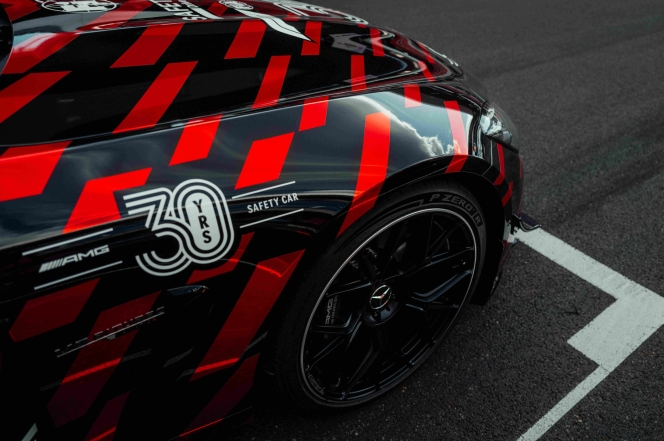
Pirelli has introduced the P Zero R, an ultra-high-performance tyre created specifically for the Mercedes-AMG GT 63 PRO 4MATIC+, unveiled as the first Official FIA F1 Safety Car fitted with fully variable all-wheel drive. The tyre blends qualifying-level dry performance with precise steering response while maintaining safe wet handling and was engineered to deliver consistent performance during Formula 1 Safety Car deployments, where precision, reliability and control are essential.
The dual-compound tread and tread pattern details, developed through virtualisation, allow high performance in both dry and wet conditions. Co-developed with Mercedes-AMG engineers in Affalterbach and refined using virtual simulation models central to Pirelli's development process, the compounds, land-to-groove ratio and tread channel widths work in synergy with the vehicle's suspension geometry and camber. This optimises the contact patch, maximising grip and steering precision while enhancing high-speed stability without sacrificing wet performance.
The project forms part of Pirelli's role as Formula 1's sole tyre supplier since 2011, a position recently confirmed by the FIA and Formula 1 and extended through to 2028. The relationship stretches back to the inaugural race in 1950, and Pirelli has accompanied the championship's technical evolution, reaching 500 Grands Prix in 2025. Experience gained on track, including in extreme conditions, gives Pirelli a laboratory for innovation whose findings also feed into road tyre development.
Designed to put the power of its 4.0-litre twin-turbo V8 engine onto the road, the 21-inch P Zero R supports an engine producing 450 kW (612 hp) and 850 Nm of maximum torque. The car offers high performance and drivability thanks to the fully variable AMG Performance 4MATIC+ all-wheel-drive system, which demands tyres capable of coping with rapid load transfers while letting the car exploit its dynamic potential.
Extensive testing at the Nürburgring and Nardò involved AMG brand ambassador and Official FIA F1 Safety Car Driver Bernd Mayländer and other experienced Safety Car drivers, who praised the tyre's consistency and grip across a wide range of conditions. The first P Zero R developed specifically for a Mercedes-AMG, it confirms a longstanding collaboration built on co-development from the earliest stages of vehicle development, resulting in more than 150 fitments. The tyre carries the MO1 sidewall marking, identifying it as specifically developed for this model.
The previous Official FIA F1 Safety Car from the Affalterbach performance and sports car brand, the Mercedes-AMG GT Black Series, which served from 2022 to 2026, also ran on Pirelli P Zero tyres. The latest milestone in the partnership came at the Nürburgring Nordschleife, where the Mercedes-AMG CLA 45 4MATIC+ fitted with Pirelli P Zero Trofeo RS tyres set a record of 7:32.070 minutes, claiming the title of fastest vehicle in its segment on the legendary German circuit.
Continental Secures Two Porsche OE Approvals for Panamera, Cayenne
- By TT News
- September 29, 2026
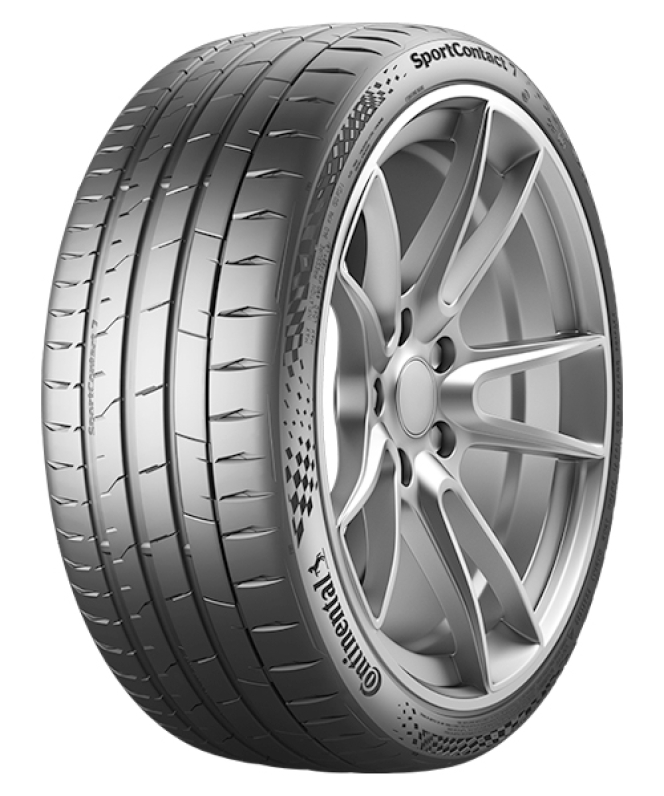
Continental has secured two fresh original-equipment approvals from Porsche. Both the SportContact 7 and the newly introduced SportContact 7 Force have been sanctioned for the Panamera G3 II, while the WinterContact TS 860 S is recommended by Porsche for the Cayenne E4 in colder conditions. The approvals cover 21- and 22-inch sizes bearing XL markings that denote greater load capacity.
The SportContact 7 serves as a summer tyre engineered for highly responsive and precise handling. Its tread design and rubber formulation deliver strong grip and brief braking distances on dry and wet surfaces alike, ensuring notable stability at elevated speeds. The SportContact 7 Force, meanwhile, represents a high-performance extension of Continental's summer range.
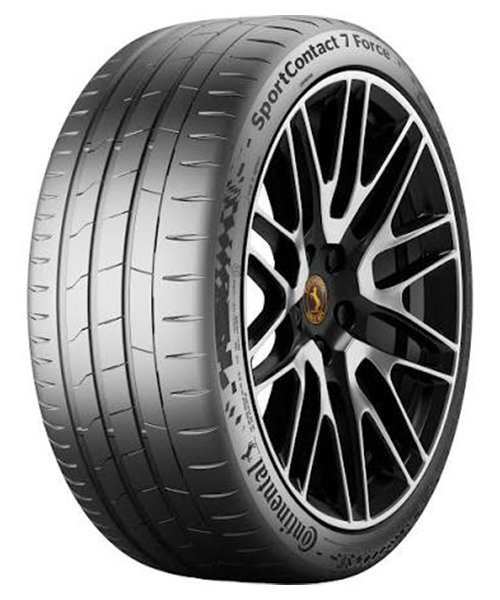
Developed as a specialised variant of the SportContact 7, the Force version addresses elevated performance and stability requirements. An adaptive tread pattern paired with a refined rubber compound allows for more accurate handling and efficient power transfer under extreme conditions. It blends track-derived capability with suitability for daily driving.
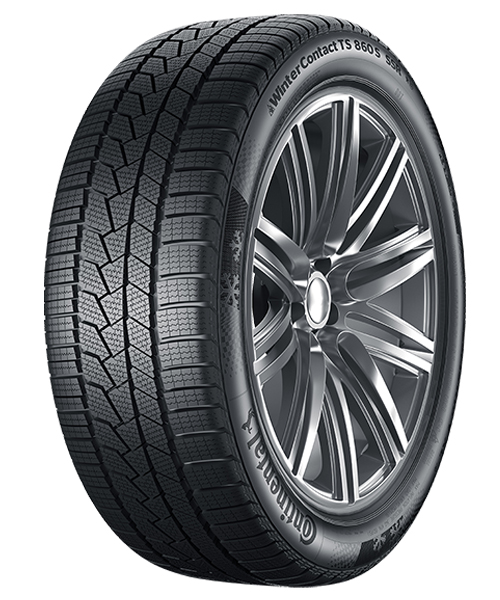
For the Cayenne E4, the WinterContact TS 860 S has been tailored to high-powered, handling-oriented SUVs. It offers short braking distances and precise dry-road handling, alongside solid snow performance for dependable control and stability. Its low rolling resistance may also help extend electric vehicle range.

Comments (0)
ADD COMMENT