Maxxis Unveils Enhanced Gravel Tyre Range with New HYPR-X Compound

Maxxis Unveils Enhanced Gravel Tyre Range with New HYPR-X Compound

Cycling tyre manufacturer Maxxis is set to upgrade its gravel tyre portfolio by introducing its new HYPR-X compound.

The new formulation combines technology from two existing Maxxis compounds: the low-rolling-resistance HYPR for road cycling and the race-winning MaxxSpeed for mountain biking applications.

According to Maxxis, the enhanced versions of its Receptor, Reaver, Rambler, and Ravager models will deliver “19 per cent better cornering traction and 25 per cent less rolling resistance” compared to their predecessors.

Technical improvements extend beyond the new compound. Maxxis implemented a stronger nylon material for the 120 TPI casing to increase tread durability. Sidewalls will incorporate the company’s EXO Protection technology to guard against cuts and abrasions. All models will be tubeless-ready.

The company has also refreshed the aesthetic design of these tyres, featuring updated branding on hot patches with grey and orange accents. In line with sustainability initiatives, the new range will ship in recyclable paper packaging, reducing plastic waste.

The phased rollout begins with the Reaver and Rambler models in 700X45C size, with additional sizes becoming available throughout the next three months. The Ravager and Receptor range is scheduled for release in the third quarter of 2025.

Maxxis has directed customers to contact local dealers or visit their website for information on availability as products are released throughout the year.

Tyre

Britain’s tyre industry has entered 2026 with unexpected momentum driven by a sharp rebound in replacement demand and a growing wave of electric vehicles entering their first tyre replacement cycle. But beneath the stronger sales lies an industry confronting profound structural challenges. From the rapid rise of low-cost Asian imports and persistently high energy costs to the erosion of domestic manufacturing capacity and shortcomings in end-of-life tyre management, the sector is being forced to redefine its future. British Tyre Manufacturers’ Association Chief Executive Dareen Lindsey opined that while premium manufacturers have remained resilient, Britain’s long-term competitiveness will hinge on strengthening circularity, supporting remanufacturing, enforcing fair trade and adapting to a mobility landscape increasingly shaped by automation, electrification and connected transport.

Britain’s tyre industry entered 2026 on a stronger footing than many expected, buoyed by a sharp rebound in replacement tyre demand and an accelerating shift towards electric vehicles (EVs).

According to data by British Tyre Manufacturers’ Association (BTMA), the replacement tyre market has moved firmly into recovery, with the first half of 2026 pointing to the strongest replacement market performance in several years.

The recovery has been led by the following consumer categories: car tyre volumes rose by 24 percent, SUV fitments by 31 percent and light truck tyres by a striking 44 percent, lifting the combined consumer segment 27 percent above a weak first half last year.

Truck tyre volumes grew a more modest 2.5 percent in line with the gentle recovery in freight activity, while motorcycle and scooter volumes were broadly flat at a positive 1.6 percent. The smaller specialist categories moved against the trend, with agricultural volumes down 21 percent and earth mover down 9 percent.

Some of this headline growth reflects the downward restatement of the 2025 baseline and the unwinding of last year’s destocking, but even allowing for that, the underlying picture is one of genuine recovery in sell-in demand.

Despite the latest figures, BTMA Chief Executive Darren Lindsey told Tyre Trends that manufacturers face mounting pressure from low-cost Asian imports, stubbornly high domestic energy costs and a manufacturing landscape that continues to lose ground to overseas competitors.

“The industry’s immediate recovery should not distract policymakers from the structural issues reshaping Britain’s tyre market. While premium manufacturers have largely retained their position, value brands are being squeezed between an expanding budget segment and increasingly sophisticated global competition,” stated Lindsey.  

At the same time, Britain’s long-term competitiveness will depend not only on defending domestic manufacturing but also on embracing remanufacturing, circularity and next-generation mobility technologies.

“We had an exceptional year in 2025 from a sales perspective,” Lindsey said. “More encouragingly, 2026 has started even better.”

Part of that growth reflects a natural correction in the replacement market. Throughout much of 2025, distributors and dealers deliberately reduced inventory levels, particularly within the passenger car segment. That strategy could only continue for so long before replacement demand returned.

The result has been a significant recovery in purchasing activity.

“We’ve seen around 29 percent growth in passenger car tyres during the first quarter of 2026,” Lindsey said, adding that second-quarter figures are expected to confirm whether the momentum has continued.

EVs PUSHING MARKET

One of the biggest forces behind this recovery is Britain’s accelerating adoption of electric vehicles.

Government incentives have steadily increased EV ownership over recent years, with roughly one in every four new vehicles sold in UK now fully electric. Many of the remainder are plug-in hybrids, creating an expanding parc of electrified vehicles that is beginning to enter its first replacement tyre cycle.

“The vehicles sold three years ago are now reaching the point where owners need replacement tyres,” Lindsey explained.

For premium manufacturers, this has proven advantageous. Unlike traditional replacement buyers who may experiment with alternative brands, EV owners have generally opted to replace worn tyres with the same homologated products originally fitted by vehicle manufacturers.

Rather than developing entirely separate EV-specific product lines, manufacturers are increasingly redesigning their broader portfolios around higher load capacities.

“As a result, manufacturers are producing more extra-load tyres that can serve both conventional vehicles and EVs,” Lindsey said.

He sees no significant emergence of domestic companies entering the EV tyre market independently. Instead, established premium manufacturers continue to dominate this rapidly growing segment through their longstanding relationships with vehicle manufacturers and their ability to meet increasingly demanding performance standards.

HOURGLASS ECONOMICS

While premium manufacturers have demonstrated resilience, the wider market is undergoing profound structural change.

Lindsey describes the current landscape as an ‘hourglass’ market. At the top, premium brands remain relatively stable, supported by technological leadership, strong OE relationships and consumer confidence.

At the opposite end, budget tyres, primarily imported from Asia, continue gaining market share through aggressive pricing.

Caught in between are mid-tier value brands, which increasingly struggle to differentiate themselves.

“The premium segment remains relatively strong,” Lindsey said. “The middle-value brands are being squeezed, while the budget segment continues to grow.”

This shift reflects changing consumer purchasing behaviour as much as global manufacturing economics.

Budget tyres have become increasingly attractive during a period of rising living costs, while premium manufacturers continue to compete on technology, safety, durability and whole-life performance.

The companies suffering most are those occupying the middle ground, where price competition has intensified but brand differentiation remains limited.

TRADE MEASURES

Trade remedies introduced against Chinese truck tyres were designed to counter alleged dumping and create fairer competitive conditions.

According to Lindsey, however, the measures have simply redirected manufacturing rather than reducing imports. “We’ve seen production move from China into countries such as Thailand and Vietnam,” he said.

Consequently, imports of truck tyres from both countries have risen sharply across Britain and continental Europe.

The challenge, he argues, lies less with the trade remedies authority than with the speed at which manufacturers relocate production.

Trade investigations frequently require 9 to 12 months to complete. By the time authorities conclude their investigations, production has often shifted again, making enforcement increasingly difficult.

“It isn’t necessarily a failure of the authorities,” Lindsey noted. “Production simply moves elsewhere before investigations conclude.”

This pattern is not unique to Britain.

Across Europe, manufacturers are experiencing similar market dynamics as Asian producers establish manufacturing capacity outside China while continuing to supply European markets, noted Lindsey.

COST DISADVANTAGE

Although Britain’s trade remedies authority remains actively engaged in investigating unfair trade practices, Lindsey believes the country’s greatest competitive disadvantage lies elsewhere.

“High industrial energy costs have become one of the defining challenges facing British manufacturing over the past decade. I genuinely believe high energy prices have been one of the biggest factors behind the decline of UK manufacturing,” Lindsey said.

Manufacturing costs in Britain can exceed those of some European competitors by more than one-third before comparisons are even made with Asia.

“Those cost disparities make it increasingly difficult to attract new investment or expand existing production facilities. The government has introduced various energy support mechanisms and incentives to help manufacturers, but accessing those programmes often requires navigating complex administrative processes,” he added.

Moreover, public funding remains finite. “It’s not just the tyre industry competing for support,” Lindsey observed. “Steel, ceramics and many other manufacturing sectors are facing exactly the same challenges.”

The situation is particularly stark within truck tyres. Britain no longer manufactures new truck tyres domestically, relying instead on retreading and remanufacturing operations.

Passenger car tyre production continues, but much of that output serves original equipment vehicle manufacturers operating within Britain, where local supply offers important logistical advantages.

Beyond those niches, Lindsey sees rebuilding lost manufacturing capacity as increasingly difficult. “Once manufacturing leaves, it doesn’t simply come back,” he warned.

GLARING ISSUES

If the UK tyre industry is navigating one immediate challenge, it is the relentless influx of low-cost imports. If it faces a longer-term test, however, it lies in how Britain manages millions of end-of-life tyres each year.

For Lindsey, this is one of the industry’s most pressing concerns and one where Britain still has considerable work to do. “It’s not something I’m particularly proud of when it comes to UK’s actions,” he admitted.

Around 70 percent of UK’s exported waste tyres have historically been shipped to India, where, according to Lindsey, a significant proportion ultimately enters illegal pyrolysis operations rather than environmentally compliant recycling facilities.

Nevertheless, he believes Britain has a responsibility to ensure its own waste does not contribute to unsafe or environmentally damaging practices overseas.

Working alongside Tyre Recovery Association, the BTMA has been engaging with UK’s Department for Environment, Food and Rural Affairs (Defra) and the Environment Agency to strengthen oversight of waste tyre exports while also maintaining close dialogue with Indian authorities.

Although new measures introduced during the previous year were intended to tighten controls, Lindsey said the early results have been disappointing.

One of the industry’s biggest concerns centres on the Annex VII documentation that accompanies every shipment of exported waste tyres. The paperwork is designed to record the intended destination of each shipment and should ultimately be signed and returned to UK authorities once the tyres arrive at legitimate recycling or recovery facilities.

In practice, however, the system is failing. According to Lindsey, fewer than 20 percent of Annex VII forms are returned.

That leaves authorities without confirmation that approximately 80 percent of exported shipments actually reached their declared destinations.

“We simply don’t know whether those tyres ended up at environmentally responsible facilities that protect both the environment and public health,” he said.

The BTMA believes improving traceability is essential not only to eliminate illegal disposal routes but also to restore confidence in Britain’s waste management system.

KEEPING VALUE AT HOME

Lindsey argued that Britain should focus less on exporting waste and more on creating domestic industries capable of extracting value from end-of-life tyres.

“The solutions should create UK jobs, support the circular economy, respect the environment and deliver better outcomes for the industry,” he said.

That philosophy underpins the BTMA’s growing emphasis on remanufacturing and retreading.

The association’s Remanufacturing Conference, held ahead of the Tyre Recovery Association’s September event, aims to examine why Britain’s truck tyre retreading sector has declined so dramatically.

Only one in four truck tyres in Britain is now remanufactured. A decade ago, the figure stood closer to one in every two. Lindsey believes the decline cannot be attributed to a single cause.

“Ultra-low-cost imported tyres have reduced the financial incentive to retread. Consumer behaviour has evolved. Distribution channels have changed. Government policies have yet to provide meaningful incentives, while the industry itself must also ask whether it has done enough to communicate the economic and environmental benefits of remanufacturing,” he stated.  

Government procurement represents another missed opportunity. Britain operates one of the country’s largest publicly funded vehicle fleets, yet Lindsey questions whether those vehicles routinely use remanufactured tyres.

“The honest answer is they don’t know,” he said. “And if they don’t know, then they’re probably not.”

Several European countries have already incorporated remanufactured products into public procurement policies, requiring roughly 30–35 percent of certain purchases to consist of remanufactured goods.

Lindsey believes similar policies could significantly reduce Britain’s environmental footprint while supporting domestic industry.

BETTER ENFORCEMENT

The broader issue of imports extends beyond price alone. Lindsey accepts that many Asian manufacturers now produce technically advanced tyres in highly sophisticated facilities.

“There are some very good products entering Europe,” he acknowledged. The concern is ensuring that every imported tyre genuinely complies with the safety, durability and performance standards it claims to meet.

He believes stronger market surveillance is essential. “We’re absolutely in favour of competition,” Lindsey said. “But it has to be fair competition.”

Premium manufacturers operate under stringent regulatory obligations while investing heavily in research, development, testing and future legislation.

Newer manufacturers frequently benefit from those advances without carrying the same historical investment burden.

Raw material costs remain broadly similar across the industry. Natural rubber, synthetic materials and petroleum-derived inputs are available to everyone.

The real competitive differences increasingly stem from labour costs, energy costs and manufacturing scale.

In some instances, Lindsey argued, imported tyres appear to reach European markets at prices below what domestic manufacturers require simply to produce them.

Where that occurs, anti-dumping measures become a legitimate policy response, he believed. At the same time, consumers often judge tyres solely on purchase price rather than lifetime operating costs.

That is particularly significant in the truck tyre market, where durability, fuel efficiency and retreadability can dramatically reduce total operating costs over the life of the tyre.

Premium truck tyres are intentionally engineered for multiple lives through remanufacturing. Some lower-cost alternatives are not. “They consume all those raw materials and are simply discarded after their first life,” Lindsey said. “That isn’t a like-for-like comparison.”

The industry therefore carries its own responsibility to better educate customers about lifecycle value rather than initial purchase price alone.

MANUFACTURING GAP

Technology is transforming manufacturing just as rapidly as it is reshaping mobility. Lindsey acknowledged that many of today’s Asian tyre plants rank among the world’s most advanced industrial facilities.

Highly automated production lines, robotics, automated material handling systems and so-called ‘dark factories’ have significantly reduced manual labour while dramatically increasing production efficiency.

“If Europe had the opportunity to start again from scratch, we’d probably build very similar facilities,” he said.

The challenge is that European manufacturers continue operating substantial legacy production assets that cannot simply be abandoned overnight. Instead, the industry must modernise gradually while continuing to utilise previous investments.

Automation has unquestionably narrowed the manufacturing gap between premium manufacturers and emerging competitors. Whether it has closed the quality gap remains another matter.

Quality, Lindsey argued, can only be demonstrated through rigorous testing and consistent compliance with increasingly demanding regulations. Premium manufacturers also continue investing heavily in research, innovation and the development of future industry standards.

NEXT COURSE

Looking ahead, Lindsey believes the industry’s biggest transformation may have little to do with tyres themselves.

Instead, it concerns mobility. Future manufacturers will increasingly sell mobility solutions rather than standalone products.

“Consumers may gradually move away from vehicle ownership towards subscription-based transport services. In that environment, tyre purchasing decisions shift from individual motorists to fleet operators and mobility providers,” said Lindsey.

He added that premium service providers will naturally specify premium vehicles and premium tyres. Lower-cost mobility services will prioritise affordability. The tyre industry therefore becomes part of a broader mobility ecosystem rather than an isolated manufacturing sector.

Britain’s willingness to embrace emerging technologies also positions it at the forefront of autonomous transport. UK remains among the few countries permitting autonomous vehicle testing on public roads and Lindsey expects commercial vehicle platooning to become a reality within the foreseeable future.

“Rather than operating individual trucks with individual drivers, fleets may increasingly deploy connected convoys of 10, 15 or even 20 vehicles travelling together under coordinated autonomous control,” he stated.

For tyre manufacturers, that evolution represents opportunity rather than threat. “Highly automated transport systems will require intelligent, connected tyres capable of delivering consistently reliable performance under far more demanding operating conditions,” he noted.

Fleet operators, Lindsey believes, are unlikely to entrust those applications to unproven products.

Ultimately, Britain’s tyre industry stands at a crossroads. The market is recovering, electrification is creating new replacement opportunities and technological innovation continues to reshape manufacturing and mobility.

Yet those opportunities co-exist with structural challenges ranging from manufacturing competitiveness and energy costs to import pressures, circular economy obligations and global supply chain shifts.  

Continental Secures Original Equipment Tyre Supply For New Audi Q3

Continental Secures Original Equipment Tyre Supply For New Audi Q3

Continental has secured original equipment tyre supply for the new Audi Q3 compact SUV, delivering a comprehensive portfolio engineered for diverse seasonal demands. The German manufacturer’s approvals encompass a full range of summer, all-season and winter tyres, spanning wheel diameters from 17 to 20 inches to suit varying driver preferences and regional climates.

For warm-weather performance, Audi has approved the EcoContact 6 Q summer tyre, which prioritises energy efficiency through a specialised rubber formulation and an optimised tread pattern that lowers rolling resistance. This model also demonstrates reduced acoustic emissions and dependable stopping power on both wet and dry pavement and is available for the Q3 in 18-, 19- and 20-inch variants.

Addressing the need for year-round versatility, the ProContact TX10 all-season tyre offers balanced traction across changing weather conditions, including reliable wet braking and moderate snow grip. This tyre is specifically certified for the United States and Canadian markets and comes in the same 18- to 20-inch range as its summer counterpart.

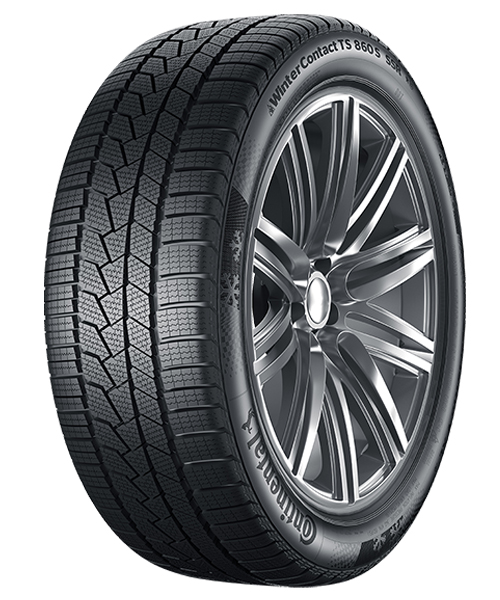
For harsh winter environments, the WinterContact TS 870 P is recommended, featuring a novel tread design and pliable rubber compound that maintains flexibility in freezing temperatures. This winter tyre ensures secure handling and short braking distances on snow and ice, and is homologated for the Audi Q3 in 17- and 19-inch sizes.

Yokohama Expands OE Tyre Supply To Nissan Models In Japan And China

Yokohama Expands OE Tyre Supply To Nissan Models In Japan And China

Yokohama Rubber has begun supplying original equipment tyres for two Nissan Motor Co., Ltd. models in Japan and China, as it pushes to increase the share of higher-value products under its mid-term strategy.

The group said it is supplying its ADVAN V61 tyres for the new Elgrand premium minivan, launched in Japan in July 2026. The tyres, sized 235/60R18 103H, are positioned as premium summer products within Yokohama’s flagship ADVAN range, combining fuel efficiency, handling stability and low noise for both urban and long-distance driving.

Nissan’s Elgrand is equipped with the third-generation e-POWER hybrid system, e-4ORCE all-wheel control and Intelligent Dynamic Suspension, alongside the ProPILOT driver assistance system, aimed at enhancing ride comfort and driving performance.

Separately, Yokohama Rubber is supplying ADVAN dB V553 tyres as original equipment for the N6 plug-in hybrid sedan produced by Dongfeng Nissan Passenger Vehicle Company, a joint venture between Nissan and Dongfeng Motor Corporation. The model was launched in China in December 2025 and uses tyres sized 225/50R18 95V.

The ADVAN dB V553 has been developed as a premium comfort tyre, with an emphasis on sustained quietness and wet performance over its lifespan. The tyre also carries Yokohama’s “E+” marking, indicating suitability for electrified vehicles.

The N6 features a plug-in hybrid system combining a 1.5-litre engine with a 155 kW electric motor and a 21.1 kWh battery, delivering an electric driving range of 180 km and fuel consumption of 2.79 litres per 100 km. The vehicle also includes a digital cockpit powered by Nissan OS and driver assistance technologies.

Bridgestone To Supply BATTLAX Racing Tyres For Next-Gen Kawasaki Ninja ZX-10R

Bridgestone To Supply BATTLAX Racing Tyres For Next-Gen Kawasaki Ninja ZX-10R

Bridgestone Americas has secured an original equipment supply agreement with Kawasaki Motors, Ltd., providing its premium BATTLAX RACING STREET RS121 tyres for the newly released Ninja ZX-10R Supersport model. This collaboration positions the tyre as a key component for Kawasaki’s flagship motorcycle, which is renowned as a championship-calibre machine designed for professional racing and high-performance enthusiasts.

The latest Ninja ZX-10R represents a continuous evolution in Supersport engineering, retaining its World Superbike Championship-proven foundation while achieving improved emission standards and enhanced circuit potential. Its newly integrated large winglets contribute to heightened front-end feel during cornering, while refined chassis geometry offers superior controllability, collectively pushing the boundaries of rider capability.

Developed under the ‘From Circuit to Street’ philosophy, the BATTLAX RACING STREET RS12 stands as the pinnacle of dry grip performance within Bridgestone’s road-legal tyre portfolio. Leveraging endurance racing-derived technologies, the tyre features a novel compound and tread pattern combination that sustains high grip over multiple laps, ensuring consistent circuit performance. This design provides dependable safety and confidence for riders navigating everything from spirited dry-road riding to demanding track sessions.

Kawasaki’s selection of this tyre followed a rigorous evaluation, confirming its ability to match the motorcycle’s formidable power through superior dry grip and stable cornering. By delivering this tailored tyre solution, Bridgestone aims to continue supporting Kawasaki’s commitment to rider value across its diverse model lineup.