

TATNEFT to help Kazakhstan to build tyre production plant
- By Sharad Matade
- December 30, 2020
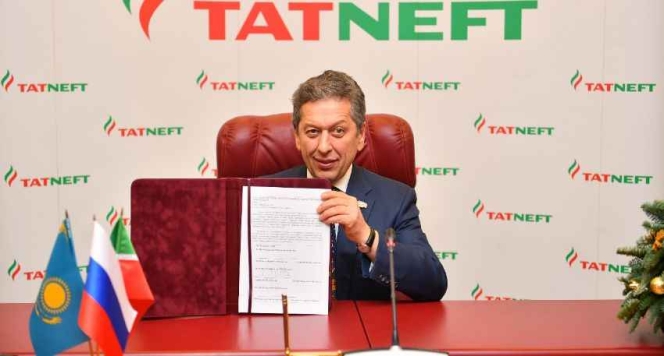
TATNEFT and the Government of the Republic of Kazakhstan signed an agreement on the principles of participation in the development of the mechanical engineering industry of the Republic of Kazakhstan.
The document was signed by Roman Sklyar, Deputy Prime Minister of the Republic of Kazakhstan, and Nail Maganov, General Director of PJSC TATNEFT, Andrey Lavrentyev, Chairman of the Board of Directors of JSC Allur Group of Companies and Directors of the companies participating in the joint venture TOO KamaTyresKZ.
The agreement contains measures of state support for the project to create a modern high-tech production of automobile tyres in the Republic of Kazakhstan, including co-financing of the project, the provision of tax preferences, as well as the implementation of a set of measures to protect the tyre products market in the Republic of Kazakhstan and support the domestic manufacturer, as well as a number of measures to protect the rights and interests of TATNEFT as a foreign investor.
The TATNEFT and Allur joint project implementation provides for the construction of one and the only factory in Kazakhstan for the production of passenger car, light truck and commercial vehicle tyres with a capacity of 3 million passenger and light truck tyres and 500 thousand commercial vehicle tyres per year. Taking into account related industries the start of production in 2022 will create more than 1,150 jobs.
The car tyres will be sent to the primary assembly of cars produced in Kazakhstan, the secondary market, as well as for exporting to neighbouring countries.
The document was signed in the elaboration of the Agreement of Intent on the implementation of a project for the production of automobile tyres within the territory of the Republic of Kazakhstan, which was earlier concluded between PJSC TATNEFT and JSC Allur Group of Companies, as well as an investment agreement between TATNEFT, Allur Group of Companies and Akimat of Karaganda region of the Republic of Kazakhstan.
Nail Maganov, General Director of PJSC TATNEFT, “Our joint project to create a tyre production in Kazakhstan is successfully developing. A huge amount of work has been done Since signing the Investment Agreement in September this year: the engineering design work is underway, tenders for the main technological equipment are being arranged. We are planning to go to the construction site in the spring.
We have signed an agreement today aimed at creating a favourable investment climate and protecting the rights and interests of investors in the Republic of Kazakhstan. I am sure that this agreement will become an incentive for further large-scale strategic partnership in other areas, including the involvement the development of high-viscosity oil fields, using equipment, materials and technologies developed in Tatarstan.
A common understanding of the developing industrial cooperation between Kazakhstan and Tatarstan importance is the key to the success of our cooperation and allows us to solve the most diverse and complex tasks at the highest technological and organizational level".
- Association of Natural Rubber Producing Countries
- ANRPC
- World Elastomer Technology and Engineering Forum
- Natural Rubber
ANRPC Secretary-General Presses Natural Rubber Agenda At WETEF 2026
- By TT News
- September 19, 2026
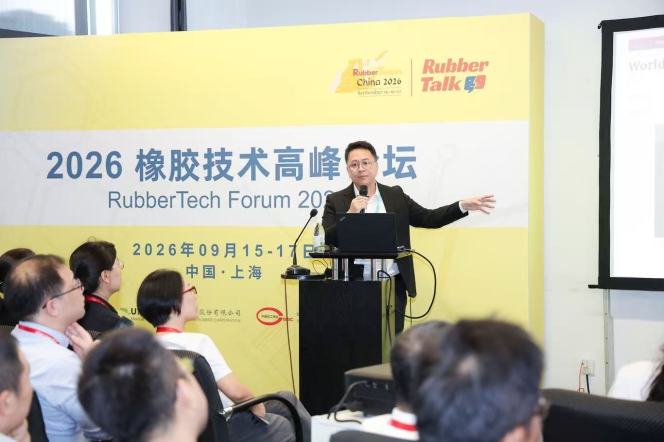
Dr Suttipong Angthong, Secretary-General of the Association of Natural Rubber Producing Countries (ANRPC), was a distinguished speaker at the World Elastomer Technology and Engineering Forum (WETEF) in Shanghai from 13 to 16 September 2026. Co-organised with RubberTech China, the event attracted over 100,000 professional visitors, industry leaders, scholars and executives from dozens of countries.
His participation delivered strategic benefits for ANRPC and its members by raising natural rubber's profile amid global discussions dominated by synthetic elastomers and advanced materials. Aligning with WETEF's eco-friendly manufacturing focus, he promoted climate-positive practices, traceability and environmentally sound processing methods.
The forum also created direct dialogue channels with major consuming markets and international technical institutions, strengthening trade synergies. It provided valuable insights into breakthrough elastomer science, helping member nations adapt to shifting international market demands.
Kuraray Marks Centennial With ¥9.9 Million Donation To International Organisations
- By TT News
- September 19, 2026

Kuraray Co., Ltd. has contributed JPY 9,896,480, roughly USD 64,000, to four international nonprofit organisations. The funds were generated through employee participation in ‘100 Challenge’, a global initiative tied to the company’s centennial observances.
The World Food Programme received JPY 2,804,003, while UNICEF was granted JPY 2,474,120. WaterAid obtained JPY 2,405,394 and WWF was allocated JPY 2,212,963. Each organisation’s share corresponded directly to points accumulated by Kuraray Group staff.
The Group marked its 100th anniversary in June 2026, adopting ‘Possible starts here’ and a related brand story as the guiding concept for its centennial activities. While honouring those who built its first century, Kuraray is pursuing diverse efforts intended to shape the next 100 years, with employees worldwide at the centre. The company seeks to connect staff across departments, countries and languages, fostering unity and connection.
A dedicated app called ‘100 Challenge’, inspired by younger employees, formed one such effort. Participants completed 100 in-app tasks, earning points that supported social contribution activities. The app provided a shared experience regardless of location or role, with individual efforts contributing to both a commemorative mosaic artwork and charitable donations. By combining small individual challenges, the initiative illustrated how personal actions can generate meaningful collective impact, reflecting long-held Kuraray Group values.
TyreSafe And Staffordshire Police Join Forces To Boost Road Safety
- By TT News
- September 19, 2026
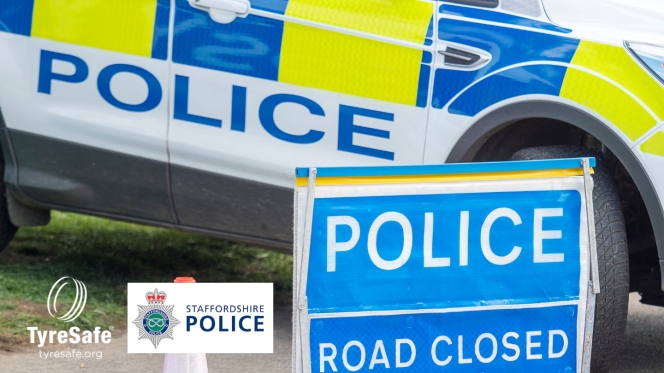
TyreSafe has entered a new partnership with Staffordshire Police, reinforcing a joint commitment to improve road safety and reduce fatalities and serious injuries across the county. The collaboration aims to highlight the critical role tyres play in protecting road users by encouraging simple, regular checks of pressure, tread depth and overall condition.
The value of this preventative approach was recently demonstrated during a multi-agency enforcement operation at the DVSA Vehicle Inspection Site in Doxey. Held on 25 August, Operation Doxey involved Staffordshire Police, West Mercia Police, DVSA, Datatag, the Forensic Collision Investigation Unit and TyreSafe. Inspectors directed 30 vehicles into the site, covering leisure vehicles, towing vehicles, light commercial vehicles and goods vehicles.
Seven tyre and wheel-related defects, mechanical risks and pressure discrepancies were identified. These included a tyre cut through to the cord, which received an immediate prohibition notice, a tyre running roughly 30 percent below recommended pressure, an overweight light commercial vehicle with a nail embedded in a tyre and all four tyres underinflated, a significant rear axle pressure imbalance, a missing wheel nut and an 11-year-old tyre. Leisure vehicle owners generally showed good tread awareness, though pressure maintenance remained an issue, while commercial vehicles presented several preventable defects.
Staffordshire has one of UK’s statistically safest road networks, yet serious collisions remain a concern, particularly on single carriageways. Rural bends, changing speed limits and limited visibility add risk, while motorcyclists and vulnerable road users are disproportionately affected. Common factors include failing to look properly, misjudging speed or path and driving too fast or carelessly. TyreSafe now works with over 260 organisations, and this partnership encourages Staffordshire motorists to make tyre checks routine.
Stuart Lovatt, Chairman, TyreSafe, said, “We are delighted to welcome Staffordshire Police as a TyreSafe partner. While Staffordshire has a strong road safety record, every serious collision has potentially devastating consequences for those involved, their families and their communities. The recent Operation Doxey enforcement activity demonstrates exactly why preventative vehicle maintenance matters. Across just 30 vehicles, inspectors identified a number of serious tyre and wheel defects, including a tyre cut to the cord, significantly incorrect tyre pressures, an embedded nail, a missing wheel nut and a tyre that was 11 years old.
“These findings are a powerful reminder that problems are not always obvious from behind the wheel. Simple checks before a journey can help identify issues before they become a danger on the road. Different roads present different challenges, particularly rural and single carriageway roads where the consequences of losing control or being unable to stop safely can be especially severe. Road safety requires a collective effort, and partnerships such as this are incredibly important. By combining the reach and expertise of Staffordshire Police with TyreSafe’s specialist knowledge and campaigns, we can help more road users understand the simple but crucial role their tyres play in keeping themselves and others safe.”
Police Sergeant Adam Van de Sande, Staffordshire Road Crime – Proactive & Harm Reduction Team, said, “Keeping people safe on Staffordshire’s roads requires everyone to play their part. We are committed to working with partners to reduce the number of people killed and seriously injured on our road network. Operation Doxey demonstrated the value of partnership working, with officers, vehicle examiners and road safety specialists able to identify a range of defects and safety issues before those vehicles continued their journeys.
“Vehicle safety is an important part of that responsibility, and tyres are fundamental to a vehicle’s ability to stop, steer and maintain grip. We are pleased to be working with TyreSafe to raise awareness and encourage motorists to make regular tyre checks part of their routine vehicle maintenance. Our message to road users is simple: don’t wait for something to go wrong. Take a few minutes to check your vehicle and make sure it is ready for the road.”
- AZuR Network
- German Award for Sustainability Projects
- Tyre Retreading
- Retreading: Climate Protection on Wheels
AZuR Wins German Award For Sustainability Projects 2026 For Tyre Retreading Project
- By TT News
- September 19, 2026
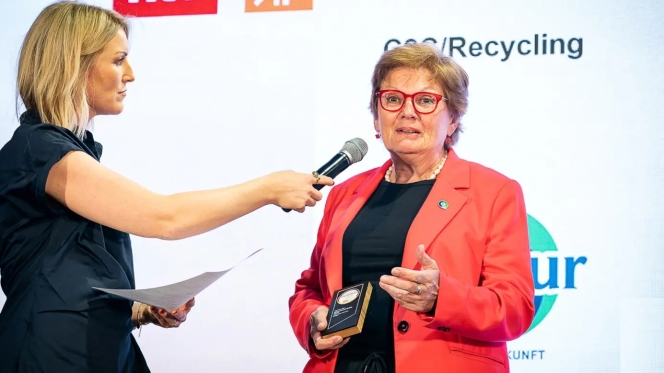
The AZuR Network has been honoured with the German Award for Sustainability Projects 2026 in the C2C/Recycling category for its ‘Retreading: Climate Protection on Wheels’ project. The recognition highlights the network's efforts to expand tyre retreading across Germany and Europe, thereby extending the useful life of tyres. Retreading works by reusing a suitable used tyre casing and applying a fresh tread, keeping a substantial share of the original tyre in circulation.
A life cycle assessment commissioned by AZuR and carried out by the Fraunhofer Institute UMSICHT compared retreaded tyres with equivalent new ones. Under the conditions examined, producing a retreaded truck tyre generated roughly 135 kilogrammes less greenhouse gas emissions, a reduction exceeding 60 percent. The process also reuses considerable portions of the existing tyre casing, reinforcing its environmental advantages.
The jury underscored the project's scalability and its relevance to the industry. Official documentation further noted the political integration of the topic as a key strength, with the EU taxonomy confirmation in 2025 representing a tangible milestone. The award places AZuR among well-known companies and innovative projects, including a climate protection cooker initiative in Cameroon, a capsule-free coffee system and a mental health awareness campaign.
Knauf secured first place in the same category with its circular gypsum supply chain, while Schmitz Cargobull led the Mobility and Logistics Solutions category. Other first-place winners included DEKRA, Hansgrohe, Pfleiderer Germany and SBRS. Presented by DISQ with ntv and DUP UNTERNEHMER under Brigitte Zypries' patronage, the 2026 edition saw 433 nominations, with 46 organisations recognised across 19 categories on 17 September in Berlin.
Christina Guth, Network Coordinator, AZuR, said, “This award belongs to our entire network. Retreading only works when many stakeholders collaborate along the value chain – from certified end-of-life tyre recyclers, tyre manufacturers and retreaders to retailers and fleet operators, all the way to academia. The award highlights the potential of using high-quality tyres for longer and keeping their casings in circulation.”

Comments (0)
ADD COMMENT