

Breaking Barriers: Humaira Mushtaq’s Journey From Jammu & Kashmir To The World’s Race Tracks
- By TT News
- January 07, 2025
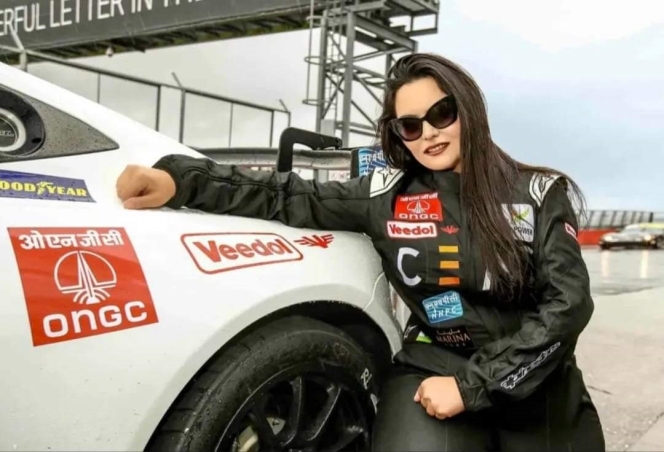
Humaira Mushtaq’s passion for motorsport began long before many of us could even ride a bike. Growing up in the culturally rich and traditionally conservative region of Jammu & Kashmir, where women rarely took the wheel, Humaira’s love for cars set her on a path few could have imagined. But for her, racing was not just a sport – it was a calling.
A natural instinct for racing
“I grew up in a traditional Muslim family where you don’t typically see women driving, let alone racing,” says Humaira. “But from as early as I can remember, I was drawn to cars.” She remembers receiving her first toy car at the age of four, which ignited a lifelong obsession. While most girls her age were playing with dolls, Humaira was spending her days with the boys, zooming around on toy cars. Recognising his daughter’s passion, her father, a motorsport enthusiast himself, built her a custom go-kart track. “I spent hours there practicing. It just felt natural,” she recalls.
By the age of five, Humaira was competing in professional Go-Karting championships, quickly moving through the ranks to single-seaters, Formula racing, saloons, touring cars and even occasionally drifting. What started as a pastime became a lifelong pursuit.
The memory of a father’s belief
Though motorsport was not widely accepted for women in her community, Humaira's father stood firmly by her side, supporting her against societal norms. “My father was my biggest supporter. Even when people questioned my dreams, he was there, building tracks for me and taking me to races,” she shares.
Tragically, she lost her father when she was just 13, a few days before her 14th birthday. But even in his final moments, he encouraged her to continue racing. “His last words to me were, ‘Don’t stop racing. You have this rare talent that not many have. Reach out to the world and create an example’.” It was this powerful message that fuelled Humaira’s drive to prove that women can excel in motorsport, despite the odds.
Balancing education and racing dreams
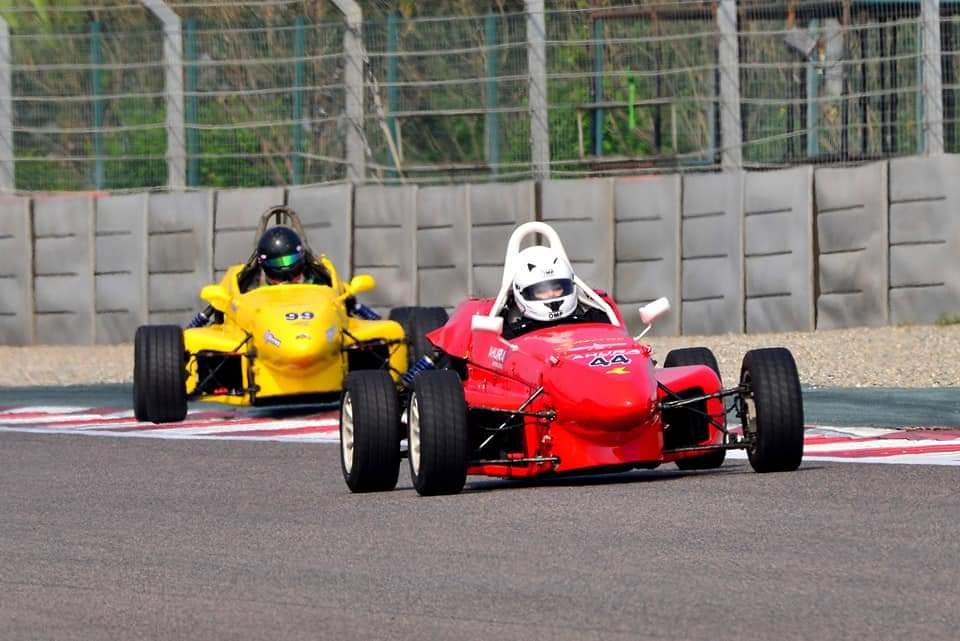
Though her heart was set on motorsport, Humaira’s academic journey took an unexpected turn. “I excelled in science and English as a student,” she explains. “My mother encouraged me to pursue a medical career, and I agreed to finance the initial years of my education in exchange for getting into medical school.” Despite excelling in her studies, Humaira’s heart remained with racing. “I didn’t want to work a desk job. My passion was in motorsport, and I worked hard to balance both.”
Endurance racing: Pushing limits
Having competed in a variety of racing formats, Humaira is particularly drawn to endurance racing. “Endurance racing challenges you not just physically but mentally and emotionally too. It’s about resilience and strategy, not just speed,” she says. The long, demanding races force drivers to push their limits while balancing physical endurance with mental focus. Humaira thrives in this environment, using both physical training and mental exercises such as meditation and visualisation to prepare herself for each race.
In endurance racing, managing factors like terrain, tyre wear and race strategy is crucial. “Choosing the right tyre can be a game-changer,” she notes, emphasising the need for tailored tyre options. “Different terrains and weather conditions mean the tyre that works on one track may not work on another. It’s a science.”
A historic achievement: Representing India at the British Endurance Racing Championship
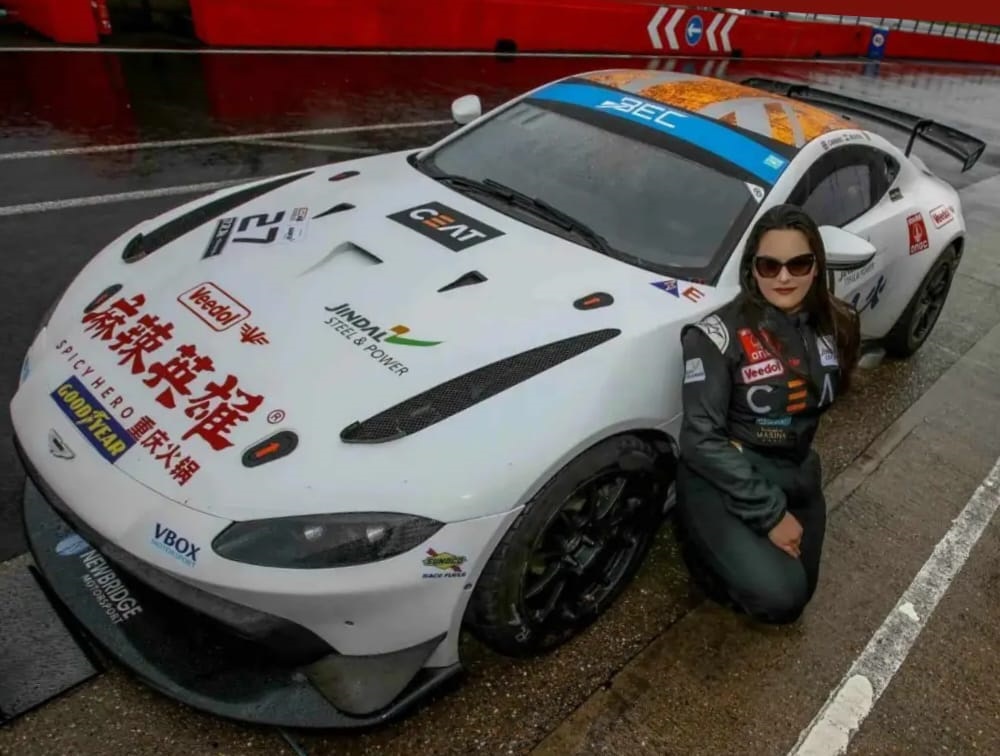
Humaira’s biggest breakthrough came when she became India’s first female representative at the British Endurance Racing Championship. “Representing India felt surreal, but it was also a huge responsibility,” she recalls. Racing for Aston Martin, Humaira not only broke barriers in a traditionally male-dominated field, but she also proved that women could compete at the highest levels of motorsport. Despite initial scepticism from some of her male teammates, Humaira earned their respect with her skill and determination on the track.
Looking ahead: The road to the future
As she looks to the future, Humaira is poised for more international racing opportunities, with upcoming races in London, Spain and Dubai. But it’s not just about racing for her – it’s about making a statement for women everywhere.
“My advice to young girls who want to pursue a career in racing is to stay focused, determined and unafraid of obstacles,” she says. “Motorsport may be a male-dominated field, but talent, dedication and self-belief are what really count. Don’t let anyone tell you what you can or cannot do – just keep pushing forward.”
Humaira Mushtaq’s journey from the streets of Jammu & Kashmir to the world’s race tracks is a testament to the power of passion, perseverance and belief. As she continues to break barriers and set new records, she remains an inspiring figure for future generations of women in motorsport.
KraussMaffei Names Ren To Lead Extrusion Unit Alongside China Role
- By TT News
- September 08, 2026
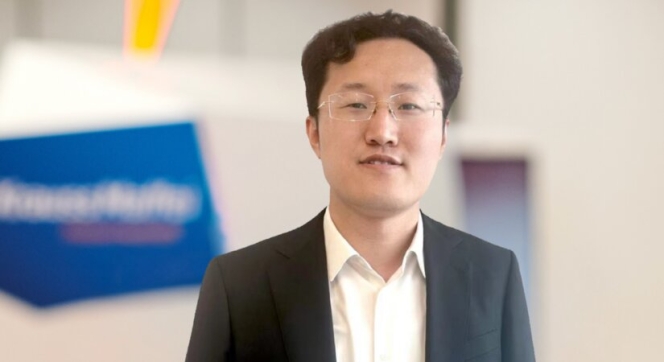
KraussMaffei has appointed Xinting Ren as Managing Director of its extrusion business, effective 1 September, 2026, combining the role with his existing leadership of the group’s China operations.
Ren succeeds Ralf Benack, who left the company at his own request on 31st August , ending a tenure of about two years.
The company said the dual appointment is intended to strengthen integration between its extrusion activities and international operations.
Ren has led KraussMaffei China for the past three years, overseeing cross-technology activities in the Chinese market. Before joining the group, he held several management roles in the chemical industry, including Assistant General Manager at KraussMaffei Company Limited, now operating as Sinochem Equipment Technology Qingdao Co., and most recently served as general manager of Shanxi China Coal Pingshuo Energy Chemical Co., Ltd.
Benack took over leadership of KraussMaffei Extrusion in 2024 and was responsible for the group’s global extrusion business. During his tenure, the company focused on operational processes and customer orientation, reducing delivery times and further developing the Technology Center at its Laatzen site.
The facility now offers 26 pilot lines for development and customer projects, and the company said it also expanded its extrusion technology portfolio.
From September, responsibility for the extrusion business and management of the China business will be combined under Ren’s leadership.
Nokian Tyres Launches Summer Tyre With Top EU Label Ratings Across Range
- By TT News
- September 08, 2026
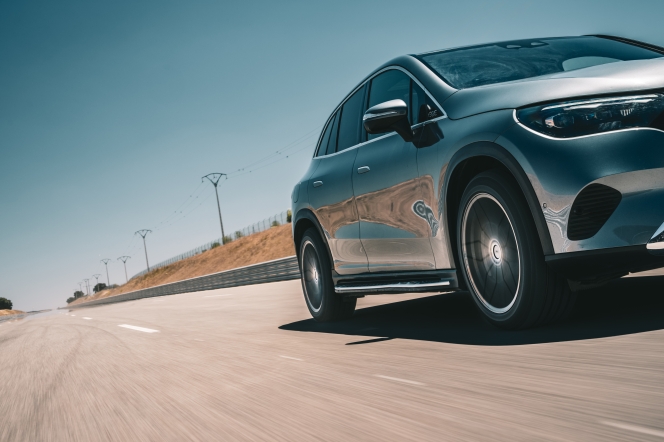
Nokian Tyres plc has introduced a new premium summer tyre, the Powerproof E, designed for Central and Southern European markets, with A-class ratings in all three European Union tyre label categories across its full range.
The company said the tyre achieves top grades for rolling resistance, wet grip and external rolling noise, reflecting a development approach aimed at balancing efficiency, safety and comfort within a single product.
“Whether the priority is maximizing range and efficiency or achieving confidence and comfort in wet conditions, drivers should not have to compromise on safety. The new Nokian Tyres Powerproof E is designed to deliver outstanding performance in the areas that matter most to drivers,” said Tommi Alhola, Senior Vice-President for Passenger Car tyres in Central Europe.
Samu Lepistö, development manager at the company, added: “Achieving A-class ratings in all three EU tire label categories across the entire range is a significant result. These characteristics are all important to today's drivers yet improving one can often affect another. Nokian Tyres Powerproof E was developed to deliver balanced performance across all three areas.”
The tyre incorporates what the company calls Motion Control Technology, combining tread design, compound development and structural engineering to support efficiency and wet-weather performance.
Depending on size, between 40.9 percent and 42.8 percent of the tyre’s material content consists of recycled and renewable inputs, including rice husk ash, recycled carbon black and recycled steel.
Production takes place at the group’s factory in Oradea, Romania, which opened in 2024 and operates with zero direct carbon dioxide emissions, powered by renewable energy.
The Powerproof E is designed for passenger cars, sport utility vehicles and crossover vehicles, including electric, hybrid and internal combustion models. It will be available in sizes ranging from 16 to 20 inches for the 2027 summer season in Central and Southern Europe.
Frank Buntinx Takes Helm As Managing Director Of Continental Tire Canada
- By TT News
- September 08, 2026
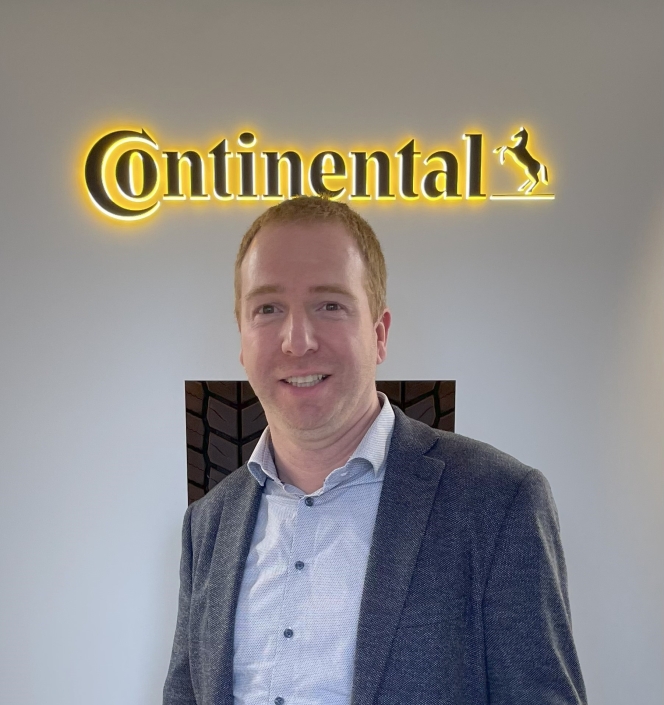
Continental Tire Canada has appointed Frank Buntinx as its new Managing Director, effective 17 August 2026. In this executive capacity, he assumes comprehensive oversight of the organisation’s entire Canadian tyre portfolio, which encompasses passenger and light truck vehicles, commercial truck lines and specialised tyre segments. His leadership will guide the strategic direction and operational performance across these diverse business units.
A native of Belgium, Buntinx brings over two decades of tenure with Continental, having commenced his career there in 2003 within logistics and supply chain management. Over the years, he has accumulated a broad commercial skillset through successive roles in marketing, pricing strategy, business analytics, fleet operations and sales. His professional trajectory later elevated him to senior leadership positions in the Benelux region, where he directed marketing efforts and subsequently headed Fleet Solutions and Truck Tires, thereby acquiring multifaceted management expertise.
This transatlantic appointment signifies a pivotal career transition for Buntinx, offering him the chance to infuse the Canadian market with an international vantage point. His arrival is anticipated to bolster Continental’s regional presence, leveraging his extensive cross-functional background to navigate the complexities of the domestic tyre industry and drive organisational growth.
“I am truly excited to join Continental Tire Canada and begin this new chapter. Continental has built a strong business and reputation in the Canadian market, and I look forward to working alongside our talented team to build on that success, strengthening Continental's position while supporting the growth and success of our customers,” said Buntinx.
Dunlop To Exit Karting Tyre Segment By 2027
- By TT News
- September 07, 2026
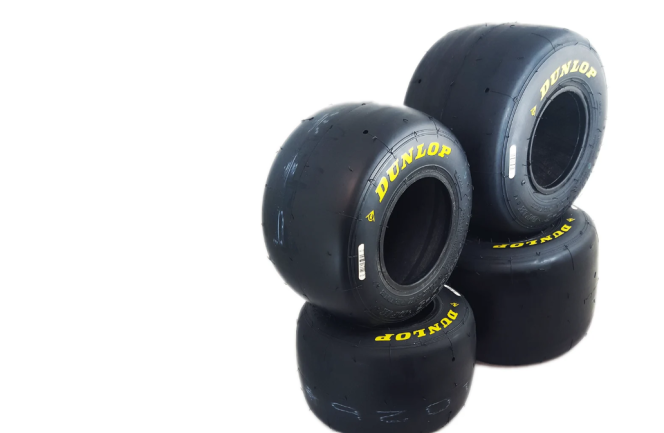
Sumitomo Rubber Industries, Ltd., which operates the Dunlop brand, will discontinue the supply of karting tyres by the end of 2027 as part of a strategic review of its business and allocation of management resources.
The company said it would continue supplying products to existing customers until December 31, 2027.
Dunlop has produced karting tyres since 1976, supplying products homologated by the Commission Internationale de Karting-FIA (CIK-FIA), under the Fédération Internationale de l’Automobile, as well as tyres accredited by the Japan Automobile Federation.
The company said its products had supported a wide range of users, from recreational drivers to young drivers aiming to compete at higher levels, and had contributed to the development of karting participation.
It added that the decision followed a review of its medium- to long-term management strategy and changes in the business environment.
The group said it would continue to contribute to motorsport activities, while expressing appreciation to customers and organisations that had supported its karting tyre business.

Comments (0)
ADD COMMENT