

Cabot Builds Momentum On Water Stewardship And Climate Action In CDP 2025 Assessment
- By TT News
- February 19, 2026
Against a backdrop of tightening disclosure standards and rising investor scrutiny, Cabot Corporation has delivered another year of measured progress on environmental performance. In its 2025 disclosure to CDP, the company improved its Water Security rating to A- while maintaining a solid B score on Climate Change, extending a multi-year trajectory of incremental gains. In this interview-based feature, Jaimee Farrin, Senior Director, Global Sustainability, outlines how disciplined execution, technological innovation and a focus on transparency are shaping Cabot’s approach to climate action and water stewardship.
In 2026, Cabot Corporation reported improved environmental performance in its latest disclosure to CDP, reinforcing a multi-year trend of progress across climate and water stewardship.
 The company received an A- rating for Water Security and a B rating for Climate Change in CDP’s 2025 assessment. The Water Security score marks an improvement from a B in 2024, exceeding both global and industry averages, while the Climate Change rating was maintained year on year, alongside improvements in subcategories such as climate risk disclosure, value chain engagement and industry collaboration.
CDP evaluated more than 24,800 companies globally in 2025, covering roughly two-thirds of global market capitalisation, using a scoring scale ranging from D (Disclosure) to A (Leadership).
Cabot positions the results as validation of a long-term sustainability strategy anchored in transparency, operational discipline and continuous improvement. As Jaimee Farrin, Senior Director, Global Sustainability at Cabot Corporation, explains: “Through our commitment to operate responsibly, conserve resources and develop innovative performance materials, we will be relentless in our pursuit of solving sustainability challenges and achieving our net zero ambition.”
Transparent reporting remains a central pillar of this approach. Farrin notes that CDP is one of the environmental and governance disclosure platforms Cabot prioritises, both for reporting and for evaluating performance. She adds, “As part of our ongoing efforts, we are dedicated to transparent reporting, including our climate actions, opportunities and progress.”
CLIMATE CHANGE
On climate change, Cabot has set a 2030 goal to reduce Scope 1 and 2 greenhouse gas emissions intensity by 15 percent through process innovation. To progress towards this target, the company is pursuing a comprehensive strategy encompassing renewable energy transition over time, efficiency improvements, investment in breakthrough decarbonisation technologies and the use of alternative feedstocks and advanced energy recovery solutions.
One of the company’s most prominent climate-related innovations is its regenerated carbon technology, developed under the EVOLVE Sustainable Solutions platform. Farrin highlights the role this technology plays in advancing circularity in the tyre industry. She says, “Cabot’s regenerated carbon technology is one of the innovative strategies the company is leveraging to reduce its environmental impact.”
Reclaimed carbon, produced through the pyrolysis of end-of-life tyres, has historically been limited to very low loadings (<10%) in rubber applications due to poor reinforcing properties. Farrin explains that Cabot’s patented regeneration technology addresses this limitation by improving surface characteristics, enabling tyre manufacturers to use higher levels of reclaimed carbon with performance comparable to virgin carbon black.
“Today, we have demonstrated that the technology enables the use of reclaimed carbon content up to 30 percent; however, as we look forward, we are continuously evaluating ways to increase sustainable content while delivering in-rubber performance,” explains Farrin.
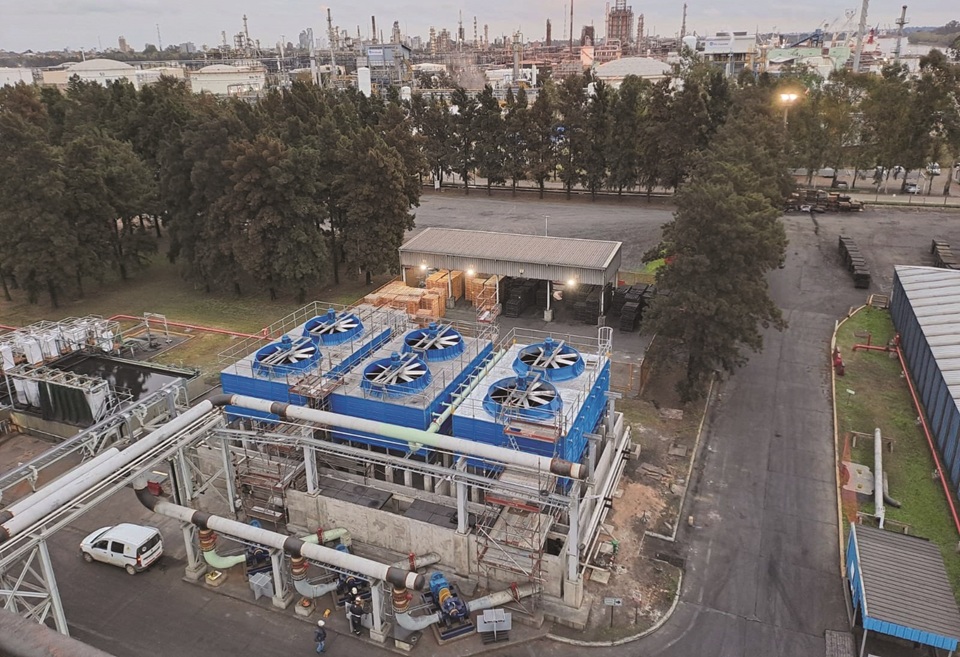
Energy efficiency and recovery also form a critical part of Cabot’s climate strategy. The company has implemented energy recovery systems at many facilities worldwide, including 13 reinforcing carbon plants, capturing and reusing heat generated during production to offset electricity and steam typically supplied by the grid and natural gas combustion.
Farrin underlines the strategic significance of these systems, noting, “This opportunity has influenced Cabot’s strategy as we have recently unveiled a new 2030 energy goal – to export 250 percent of the energy Cabot imports, reconfirming the importance of driving even further improvements in the years ahead.”
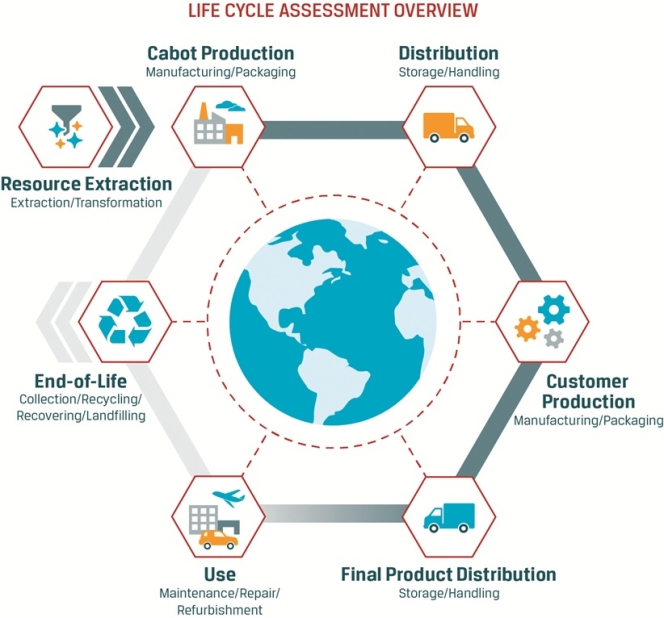
Beyond direct operations, Cabot continues to strengthen collaboration across its value chain. The company uses Product Carbon Footprints (PCFs) and Life Cycle Assessments (LCAs) to substantiate
sustainability benefit claims and is actively working with the International Carbon Black Association to support the standardisation of PCFs across the industry. In parallel, Cabot is engaging with tyre customers to explore joint approaches to improving product life-cycle impacts.
WATER SECURITY
Water stewardship has emerged as a defining area of progress. All Cabot sites globally are expected to identify and pursue water conservation opportunities aligned with local risk conditions. These measures include reducing water consumption in production processes, reusing and recycling water, harvesting rainwater and sourcing grey water from external providers where feasible.
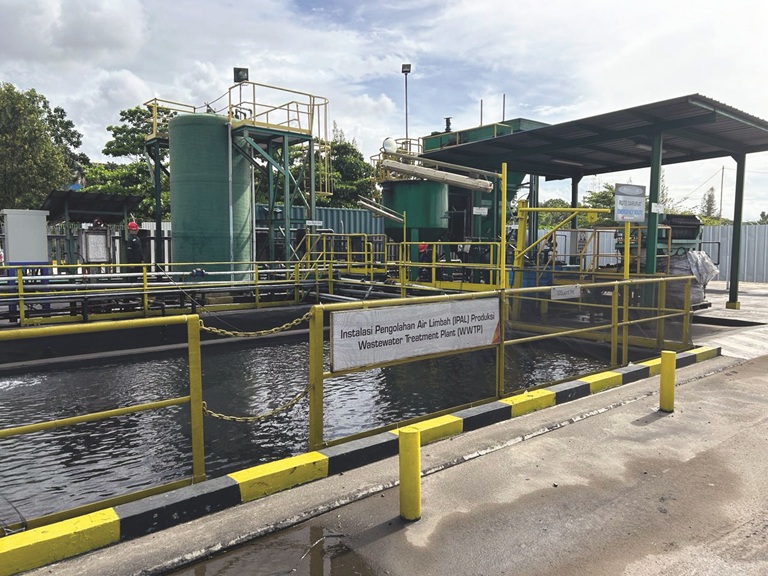
The company-wide focus on annual water balance and risk assessments, enhanced data collection and targeted investment has delivered measurable results. As Farrin notes, these efforts contributed directly to the improvement in Cabot’s CDP Water Security score from B in 2024 to A- in 2025.
At the operational level, Cabot’s reinforcing carbons facility in Altamira, Mexico, has implemented improvements to the recovery and reuse of treated water and identified opportunities to optimise scrubber water discharge, reducing future water consumption in production.
Looking ahead, Cabot has set a 2030 water goal to reduce freshwater withdrawal intensity by 10 percent at sites located in water-stressed areas. Farrin emphasises the broader implications of this focus. She says, “Focusing on freshwater withdrawal in water-stressed areas is crucial to sustaining ecosystems, minimising business risks from operational disruptions and allowing sustainable development for communities.”
Further water conservation and wastewater recycling projects are currently under evaluation across Cabot’s global network to support this target.
Summarising the company’s progress, Farrin concludes: “We are proud of the progress we have made in advancing our sustainability strategy and remain steadfast to our commitment to responsible environmental stewardship, transparency and continuous improvement.”
Cabot Names Steve Delahunt As Interim CFO
- By TT News
- September 16, 2026

Cabot Corporation has named Steve Delahunt, currently Vice President and Corporate Treasurer, to assume the Chief Financial Officer role on an interim basis starting 1 October 2026. He will hold the position while Cabot continues searching for a permanent finance chief.
The interim appointment follows the previously disclosed leadership transition in which Erica McLaughlin, Executive Vice President, Chief Financial Officer and Head of Corporate Strategy, will become President and Chief Executive Officer on the same date. McLaughlin succeeds Sean Keohane and will relinquish her CFO duties at that time.
Delahunt brings over three decades of finance and treasury experience, including nine years leading Cabot's investor relations function through January 2026. As Corporate Treasurer, he oversees global treasury operations, capital markets strategy, liquidity management, banking relationships, risk management and pension investments. He has been central to Cabot's capital allocation, financing, investor engagement and strategic growth initiatives, as well as strengthened shareholder relations during his investor relations tenure.
McLaughlin said, “Steve is a highly respected finance leader with deep knowledge of our business, strong relationships across our global organisation and a proven track record of disciplined financial leadership. As we continue executing our strategy and building on our strong financial position, Steve’s experience, judgment and understanding of our business make him exceptionally well suited to lead our finance organisation while the Company conducts its search for our next Chief Financial Officer.”
JK Tyre Launches New Off-The-Road Tyres For Construction And Mining Sectors
- By TT News
- September 15, 2026
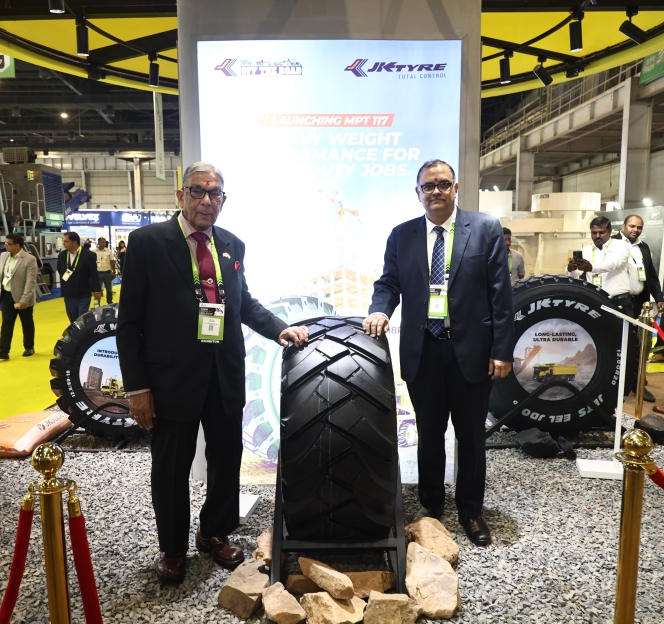
JK Tyre & Industries Ltd has launched four new off-the-road (OTR) tyre products for construction, material handling and mining applications, as the company expands its portfolio in performance-focused segments.
The products were unveiled at BAUMA CONEXPO INDIA 2026, held at the India Expo Centre in Greater Noida, and are designed to improve durability, load-carrying capacity, traction and operational efficiency in demanding conditions.
The new range includes tyres for self-loading concrete mixers, backhoe loaders, telehandlers and mining tippers. JK Tyre said the additions are intended to meet evolving requirements across India’s construction, infrastructure and mining sectors.
Srinivasu Allaphan, Director of Sales And Marketing at JK Tyre & Industries Ltd, said: “India’s infrastructure and industrial growth is creating a growing need for high-performance, reliable and application-specific mobility solutions. At JK Tyre, we are committed to developing OTR solutions that address the specific needs of our customers and the demanding conditions in which their equipment operates. Our latest range combines durability, reliability and performance to help customers maximise equipment uptime and operational efficiency. As we continue to strengthen our premium OTR portfolio, we remain committed to delivering solutions that create value for our customers and support the growth of India’s construction, infrastructure and mining sectors.”
The company said the MPT 45 tyre pattern has been developed for traction and stability in mixed terrain, while the MPT117 range is designed for construction and material-handling operations, with a focus on grip and durability. A separate JDO XD tyre has been introduced for mining tippers, with reinforced construction aimed at resisting cuts and abrasions.
JK Tyre said the products were developed with Indian operating conditions in mind and are intended to improve machine performance and reduce operating costs in demanding applications.
The group added that the launch supports its expansion in off-the-road tyres across construction, mining and specialised industrial segments.
Ascenso To Invest USD 100 Million To Expand Mining Tyre Manufacturing In India
- By TT News
- September 15, 2026
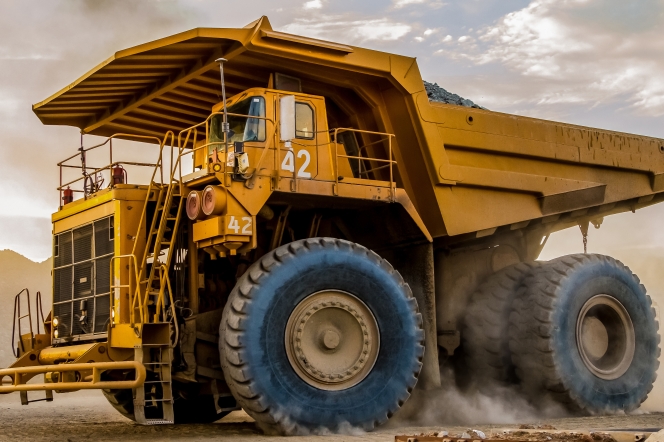
Ascenso Tyres will invest USD 100 million to build manufacturing capability for large mining tyres in India, as the company seeks to expand its presence in the domestic off-the-road (OTR) segment.
The investment will support the development of all-steel radial tyre production at Ascenso’s Indian facility, including manufacturing infrastructure, product development and engineering capacity. The move comes as India’s mining sector scales up output of coal, iron ore and critical minerals, driven by government initiatives to boost domestic production.
Ascenso said the expansion would allow it to produce tyres of up to 49 inches, with larger sizes under development. The company stated that large-format mining tyres in India have historically been sourced from overseas manufacturers, with limited domestic production capability.
The group has begun deploying field application engineers across key mining regions to work directly with operators, monitoring tyre performance and feeding data into research and development.
Yogesh Mahansaria, Managing Director of Ascenso Tyres, said: “India's mining sector is scaling up like never before, and the equipment that powers it needs tyres that can match that ambition. Building this capability in India, for India as well as the rest of the world, has been central to our thinking from the start. Our US$100 million investment is about building world class radial mining tyre engineering and manufacturing capability within the country, not simply adding capacity. We want Indian mining operators to have access to global standard performance without having to look overseas for it, and we intend to compete on that performance, not on price alone.”
Dhaval Nanavati, Chief Executive of Ascenso Tyres, added: “Over the past four years, our foundation in Agriculture, Forestry and Construction taught us how important it is to stay close to customers on the ground, and that is exactly the approach we are bringing to mining. We are placing field application engineers directly in India's key mining belts, from the coalfields of Jharkhand and Odisha to the iron ore regions of Chhattisgarh and Karnataka, so that we can respond to real operating conditions as they happen. Reaching 49-inch giant mining tyres, engineered here in India, is a significant milestone, not just for Ascenso but for what Indian manufacturing is capable of in this space. We see this as the start of a long-term commitment to mining customers in India and around the world.”
The company said its radial OTR portfolio, launched in 2023, would expand through to 2027 and 2028, with additional sizes and applications across mining and earthmoving equipment.
KraussMaffei Names Ren To Lead Extrusion Unit Alongside China Role
- By TT News
- September 08, 2026
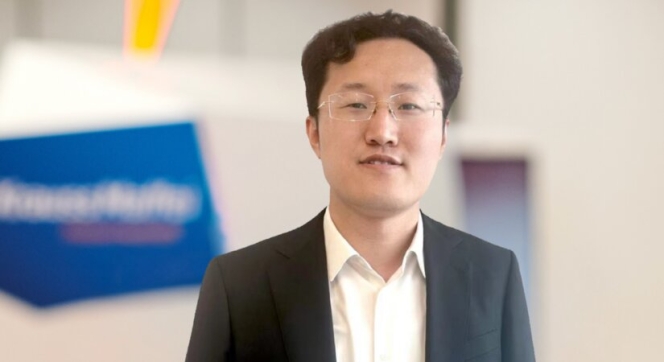
KraussMaffei has appointed Xinting Ren as Managing Director of its extrusion business, effective 1 September, 2026, combining the role with his existing leadership of the group’s China operations.
Ren succeeds Ralf Benack, who left the company at his own request on 31st August , ending a tenure of about two years.
The company said the dual appointment is intended to strengthen integration between its extrusion activities and international operations.
Ren has led KraussMaffei China for the past three years, overseeing cross-technology activities in the Chinese market. Before joining the group, he held several management roles in the chemical industry, including Assistant General Manager at KraussMaffei Company Limited, now operating as Sinochem Equipment Technology Qingdao Co., and most recently served as general manager of Shanxi China Coal Pingshuo Energy Chemical Co., Ltd.
Benack took over leadership of KraussMaffei Extrusion in 2024 and was responsible for the group’s global extrusion business. During his tenure, the company focused on operational processes and customer orientation, reducing delivery times and further developing the Technology Center at its Laatzen site.
The facility now offers 26 pilot lines for development and customer projects, and the company said it also expanded its extrusion technology portfolio.
From September, responsibility for the extrusion business and management of the China business will be combined under Ren’s leadership.


Comments (0)
ADD COMMENT