

- Global Tyre & Rubber Conference
- GTRC
- VMI Group
- Mike Norman
- Arun Mammen
- ATMA India
- MRF
- Viksit Bharat 2047
- Peter Haan
- VM Tire
- Siemens AG
- Latha Chembrakalam
- AutoAscend
- Ian Wilson
- HF Group
- Sanjay Chatterjee
- Dr Gerard Nijman
- KraussMaffei
- Nicola Fedele
- Rodolfo Comerio
- Karsten Jung
- Troester
- Sarvana Kumar S
- Troester India
- Ravin Kurian
- MRF
- Dr Robert Hula
- Vipo
- Robert Thomas Irwin
- The Steelastic Company
- C Harimohan
- Yokohama OHT
- Colin Clarke
- Schill+Seilacher
- Struktol
- Ralph Boehm
- Kuraray Europe
- Dr Roberto Blanco Trillo
- Allnex
- Srikanth Chakravarthy
- Eonix
- Zenith Steel Group
- Dr Sujith S Nair
- CEAT
- Marcel Berkers
- Harsh Vardhan
- Apollo Tyres
- Unnikrishnan P K
- Dr Shaun Immel
- Ametek
- MicroPoise
- Lubos Hodal
- Pragnesh Mori
- Michael Mueller
- ZF
- Dr Sarat Ghosh
- Birla Tyres
- Anil Nair
- Aki Nurminen
- Black Donuts
- Priyank Potnis
- Planex
- Regom
- Nikhil Puri
- Ramanan Balasubramnian Venkat
- Ascenso Tyres
GTRC 2026 Charts The Road Ahead
- By Bhushan Mhapralkar
- August 31, 2026
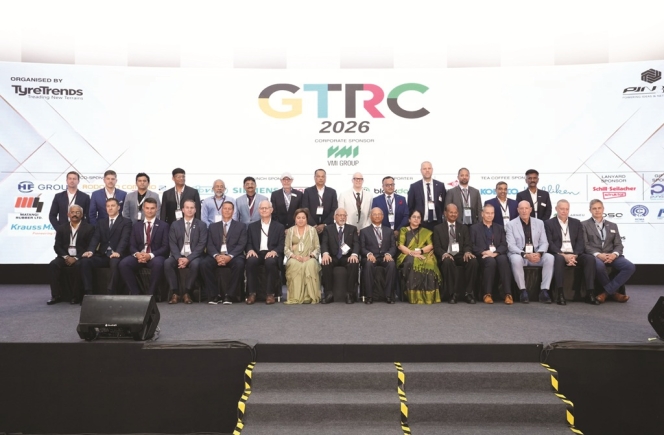
All industry leaders. One roof. One vision.
Around 400 stakeholders from the global tyre and rubber industry converged on Chennai for the third edition of the Global Tyre and Rubber Conference (GTRC), held over two days on 17 and 18 June 2026. Against a backdrop of geopolitical strain, an accelerating shift to electric vehicles and the steady thrust on artificial intelligence into every layer of manufacturing, the gathering offered an unusually candid read on where the sector stands – and how anxious and ambitious it has become about what comes next.
Mike Norman, Chief Commercial Officer of VMI Group, called it a special moment for the industry, pointing to geopolitical disruption, rising competition from China, regulatory upheaval, the EV transition and the arrival of AI as forces reshaping the business. “This is a special event for the tyre and rubber industry. The times are difficult and there are disruptions – geopolitical in nature – that are a matter of concern and underline the changing nature of the business,” he said, adding that “the technological advancements are creating new opportunities to improve efficiency, quality and performance.”
CHANGE OF TYRE MANUFACTURING ERA
The conference’s most sweeping remarks came from Arun Mammen, Chairman of ATMA India and Vice Chairman & Managing Director of MRF, who argued that growth in the sector will not simply arrive – it must be built through bold investment, scientific rigour and the courage to transform, in step with India’s Viksit Bharat 2047 ambitions.
Mammen’s central claim was structural: for more than a century, tyre engineering has rested on three pillars – durability, grip and cost. “That era is ending. The convergence of sustainability imperatives and autonomous, shared and electric vehicles megatrends are forcing a complete reimagination of what a tyre must be,” he said.
He argued that electric vehicles demand a fundamentally different tyre – one engineered for ultra-low rolling resistance to preserve range – and that this requirement collides with Indian road realities, where only about three percent of the network qualifies as national highway. That gap, he said, calls for India-specific innovation and a regulatory framework that does not trade away safety in the pursuit of sustainability.
Mammen went further, describing a future in which the tyre itself becomes intelligent. “The tyre of tomorrow will no longer be a passive mechanical component, it will be an intelligent system embedded with sensors, TPMS that will enable real-time tracking of pressure, temperature, wear, road friction, predictive maintenance and optimised fleet performance that saves lives,” he said, adding that unlocking this potential would depend on deep, sustained collaboration between OEMs and tyre manufacturers.
On the factory floor, Mammen said Industry 4.0, AI, IoT and digital twins are transforming tyre manufacturing through process optimisation and predictive quality control. He also highlighted the shift from steam-based curing to electric and induction systems, with green hydrogen emerging as a future option.
On raw materials, Mammen noted the growing need to reduce dependence on petroleum-derived inputs. He highlighted India’s natural rubber expansion, with four major tyre companies helping establish 200,000 hectares of plantations, alongside a broader push towards bio-based materials, recycled content and a circular economy.
Mammen also pointed to renewed interest in retreading and the need for more resilient, localised supply chains, including domestic production of advanced manufacturing equipment. He concluded that India’s tyre industry now has an opportunity to lead the sector’s next phase of transformation.
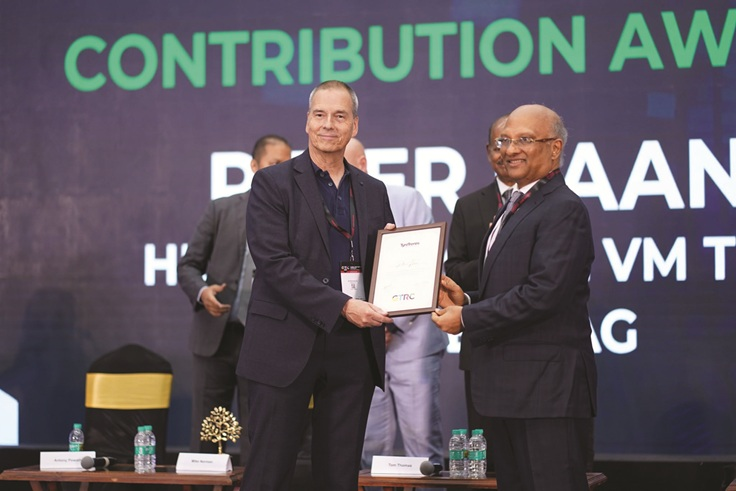
Peter Haan, Head of Global VM Tire at Siemens AG, a visionary tyre veteran who has played a transformative role in advancing automation, digitalisation and technological innovation in the global tyre industry, received the Tyre Trends Lifetime Contribution award. “I would like to thank my dear friends in the Indian tyre industry, my partners and customers because I learned over the years that it is all about partnership,” he said in accepting it.
SESSION ONE: BUSINESS & EMERGING TRENDS
The opening panel, moderated by Latha Chembrakalam, CEO of AutoAscend, brought together Mammen, Norman and Ian Wilson, CEO of HF Group.
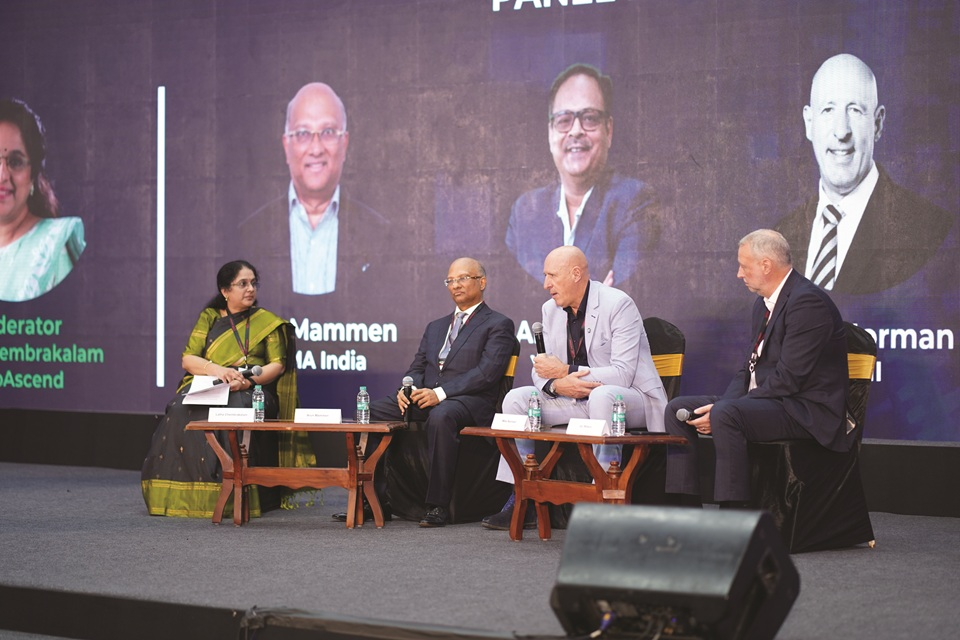
Mammen described a tyre industry facing sustainability pressure, the EV transition and raw-material constraints simultaneously – a convergence upending the economics of a capital-intensive business, since EVs change the game entirely. Building new facilities takes time and heavy capital, he said, arguing for a balance between existing plants and advanced new ones, and realistic targets for green tyres given that EVs demand an entirely new specification, technology and material set. Staying close to markets matters amid geopolitical shifts, he added: global technology matters more than global manufacturing footprint, and sophistication in tyre machinery will require more data analysts, cybersecurity specialists and other skilled talent.
Norman described China as a non-legacy market that has become a major disruptor, forcing costly upgrades to technology and facilities. “We are taking a platform approach for our machines right from the development stage to ensure scalability and retrofitting,” he said. EV adoption, he noted, is outpacing the industry’s ability to keep up, though VMI’s machines already handle the lighter, tougher tyres EVs require; cell-style manufacturing may help, even if it complicates large-scale short runs, making flexibility and modularity essential. He warned that scarce skilled manpower will push more automation and, in turn, more complex machinery, and that legislation – fast-arriving – is being underestimated.
Wilson pointed to Chinese auto OEMs building greenfield facilities in Africa as a signal of changing demand. “Chinese auto OEMs are setting up greenfield facilities in Africa, indicating a demand and change for tyre makers,” he said, adding that “new tech developments like AI are set to enhance tyre development and production.” Replacing steam curing with electric systems, he added, could bring significant improvement, alongside attention to the energy efficiency of recyclability; lower rolling resistance in EV tyres is also reshaping how silica is used in compounding.
Sanjay Chatterjee, Director General of ATMA, used his address – ‘Indian Tyre Industry – Towards a Resilient and Atmanirbhar Tomorrow’ – to cite Prime Minister Narendra Modi’s remark that Indian tyre exports crossed INR 273.12 million in the last fiscal year despite headwinds, reaching more than 172 countries. “Robust tyre production and growth, natural rubber production, ERP regime and other regulations are driving Indian economic growth,” he said.
SESSION TWO: MANUFACTURING EXCELLENCE
Chaired by V K Misra, Technical Director of JK Tyre & Industries, this session opened with Dr Gerard Nijman of KraussMaffei Extrusion posing a pointed question in his talk, ‘50 Years Of Tyre Component Extrusion: Did The Piggyback Multiplex Head Reach The End Of Life?’ He explained that multiplex and rollerhead lines use a piggyback configuration to produce roughly seven to eight components, but that drawbacks – limited flexibility, capped head pressure, hydraulic dependence, poor accessibility, an over-engineered locking concept and difficulty swapping heads – mean that “it is therefore necessary to question whether it has reached the end-of-life.”
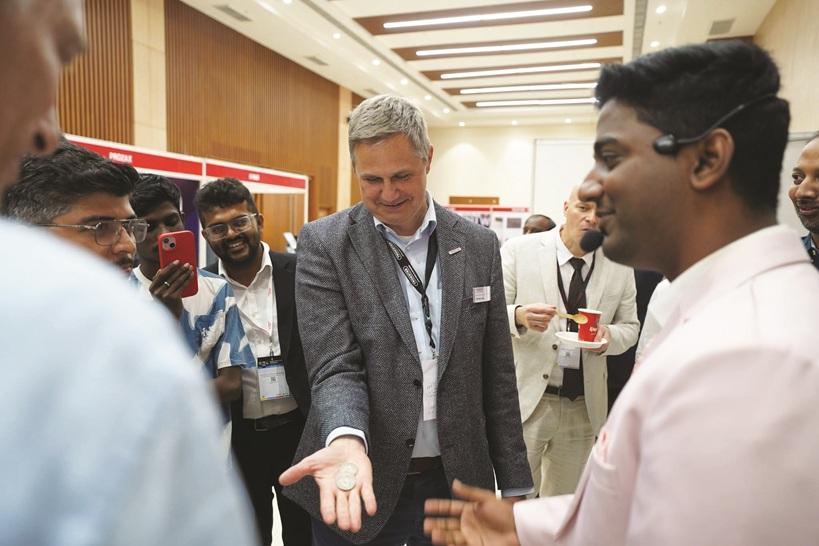
Nicola Fedele, Managing Director and Board Member at Rodolfo Comerio, described calendering as “the heartbeat of tyre production,” adding: “There are innovations (friction-free lamination) and breakthroughs (less material use and fast change over time) in the global tyre market that is worth USD 256 billion.” He said eliminating the accumulator from the calendering process delivers superior quality control and a basis for automation.
Karsten Jung of Troester GmbH & Co. KG addressed EV mobility as a megatrend driving stiffer, higher-silica compounds. “An acquisition (SC OTOMASYON) made last year is helping push automation, involving an autobook system, truck tyre spraying line and more,” Jung said. Saravana Kumar S, Managing Director of Troester India, described the company’s regional push on extrusion performance. “Much regarding regional integration is being done in terms of extrusion performance, including refurbishment, retrofitting etc.,” the MD of Troester India said.
SESSION THREE: ADVANCEMENTS IN TYRE MANUFACTURING
Chaired by Ravin Kurian, Senior GM of Product Development at MRF, this session started with the presentation of Dr Robert Hula of Vipo a.s. on bead and apex solutions, which he called among the most important components in a tyre since its inception. “Precision manufacture as a new standard is paving way for intelligent bead manufacturing and predictive maintenance process with the use of greener materials,” he said.
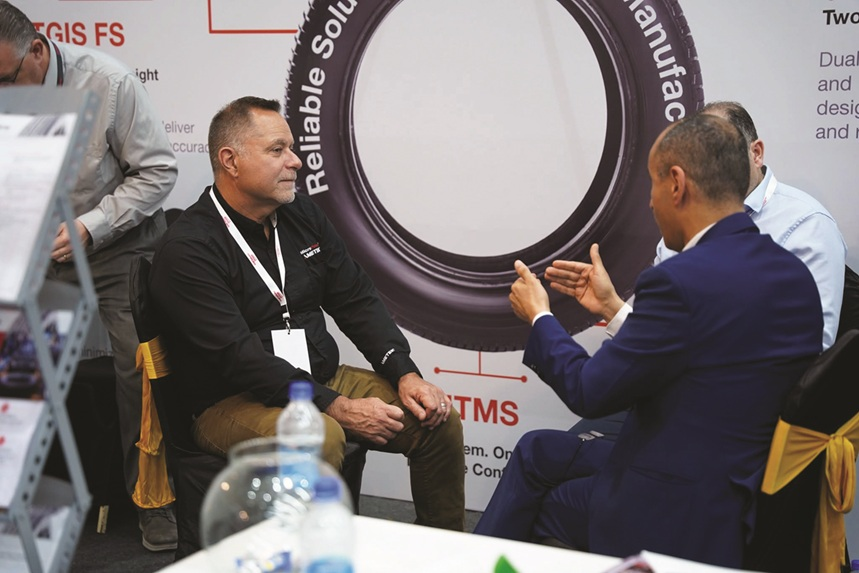 Robert Thomas Irwin, Vice President of Sales & Marketing at The Steelastic Company, traced the industry’s evolution from bias to radial to EV to high-performance and premium tyres. “The shift from bias tyre to radial tyre to an EV tyre to a high-performance and premium tyre is creating a need to integrate extrusion tech with conventional calendaring,” he said, citing quicker changeovers, reduced work-in-process, better traceability and labour optimisation as benefits.
SESSION FOUR: GOING GREEN & SUSTAINABLE
This session, chaired by C Harimohan, Head of Corporate R&D (Materials and Compounding) at Yokohama OHT, opened with Colin Clarke of Schill+Seilacher (Struktol), Director – Technical Sales, Schill+Seilacher (Struktol) GmbH, who argued that emerging vehicle concepts, energy-efficiency demands and higher load-bearing requirements are driving major shifts in compounding formulations. “The use of resins is increasing relative to oils in certain applications and products such as Struktol VP 1831 are witnessing growing demand as they provide excellent Silica dispersion and superior metal release,” he said.
Ralph Boehm, Senior Manager, Kuraray Europe GmbH, described the company’s liquid rubber as “a reactive plasticiser that reduces Mooney viscosity while maintaining high quality and performance,” noting two new silane-modified butadiene rubber grades suited to silica-based tread compounds and truck-and-bus radial tyres for summer and winter use.
Dr Roberto Blanco Trillo, Global Business Development Manager, Allnex, discussed sustainable cord adhesion. “The Allnex Alvonol PN870 resin enhances rubber-brass adhesion and enables excellent cord adhesion without cobalt and resorcinol to be a truly sustainable solution,” he informed.
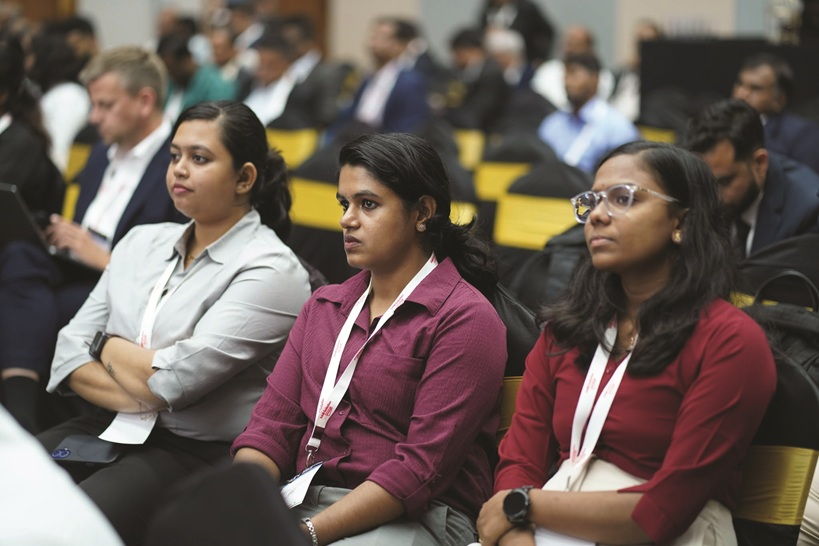 Srikanth Chakravarthy, Managing Director of Eonix, representing China’s Zenith Steel Group, described it as operator of the world’s largest steel-cord facility. “The Zenith Steel Group in China has the biggest steel cord facility in the world with continuous capex. It is highly competitive with strong economies of scale and focusing on efficiency through vertical integration, making steel cords. It is investing in highest level of automation, making steel cords through intelligent manufacturing encompassing six plants.”
DAY TWO, SESSION FIVE: AI INTEGRATION IN THE TYRE INDUSTRY
Dr Sujith S Nair, Vice President of R&D at CEAT’s Centre of Excellence, chaired this session. In his presentation on the subject ‘In the tyre market, evolution never stops’, Marcel Berkers, VP Global Sales Tyre & Rubber, VMI Group, framed technology evolution as fundamentally about smarter machines enabling efficient use of material and energy. “The practical approach of VMI is lowest cost-per-tyre within spec,” Berkers said.
Peter Haan argued that AI in the tyre industry still has considerable distance to travel, with challenges spanning shop-floor integration and scaling across visual quality inspection, anomaly and object detection, automation programming, process optimisation and predictive maintenance – challenges he said Siemens’ shop-floor AI industrial suite is designed to democratise and scale.
Harsh Vardhan, Global Head of Digital Innovation at Apollo Tyres, spoke on industrial AI’s path from automation to autonomy. “Continuous RoIs are being registered as humans and AI collaborate,” he said, adding that “AI is set to be a force multiplier in terms of business value, CFT collaboration process, governance fusion, AI and deep-tech diffusion, and RoI.” He noted Apollo has assembled a dedicated team to integrate and scale AI, with the real competition now centred on scale versus speed – measured in cycle-time reduction and energy savings.
SESSION SIX: THE ART OF TESTING
This session, chaired by Unnikrishnan P K, Global Head of R&D Tyre Testing at Apollo Tyres, featured Dr Shaun Immel of Ametek’s MicroPoise Measurement Systems on autonomous tyre-defect detection through X-ray image analysis. “The processing works in real plants with most X-ray machines using AI and deep learning to find defects and classify a tyre objectively,” he said, citing faster setup for new defect types, clearer colour-coded visualisation of tyre structure and improved air-bubble detection that lowers misclassification and cost.
Informing that his company has over 480 installations and offers offline profile inspection (with high precision for tyre companies using laser sensor), online profile inspection, extrusion (non-contact and high precision inspection suitable for tread) and width sensor for non-contact and high precision width measurement, Lubos Hodal, Head of Sales Department, Micro-Epsilon, said on the subject ‘New technology in tyre inspection’ that they also have mould inspection system for curing, avoiding noise and blind spots; letter completeness inspection during curing; final finishing solutions such as a central marking line, colour marks on sidewall and tread and retrofit programmes for PCR and TBR. Pragnesh Mori, Managing Director of Micro- Epsilon India, said, “We are designing measuring systems and software through our Indian assembly facility in Pune. The application team there works with the European team to develop new solutions.”
Michael Mueller, Senior Sales and Key Account Manager, ZF, addressed high-speed uniformity measurement and its bearing on quality and comfort in R&D and virtual tyre development. “High speed uniformity measurement marks a new trend in terms of comfort that includes typical HSU tests, the properties gained, the effect of speed ramp versus constant speeds, resonant frequency and different road conditions,” he said. He also said that ZF developed an advanced 2026 HSU solution accounting for tyre noise, vehicle weight, road conditions, user expectations and virtual simulation.
SESSION SEVEN: SUSTAINABILITY WAY FORWARD
Chaired by Dr Sarat Ghosh, Vice President of R&D and Technology at Birla Tyres, this session opened with Anil Nair of HF Group on electrical tyre curing. Curing demands are rising alongside tyre size, he said, and EV tyres in particular require low rolling resistance, spurring innovation. “The USP of electric curing is independent control, a key advantage in terms of de-coupling temperature from pressure. The electric curing press promises higher profit,” he said.
Aki Nurminen of Black Donuts spoke on manufacturing costs, describing cost as historically a unit-economics problem, now increasingly shaped by raw materials, maintenance, fixed costs and depreciation. “Boiling down to sustainability, cost and market reality where about 90 percent of the 600 tyre industries globally are over 19 years old, the implications in terms of automation or the lack of it, the lack of efficiency and how the new entrants are taking advantage of better tech that ensure lower costs are beginning to show up in an addressable market for tyres that is growing,” he said, noting Black Donuts’ Nemus bio-based pre-mix filler.
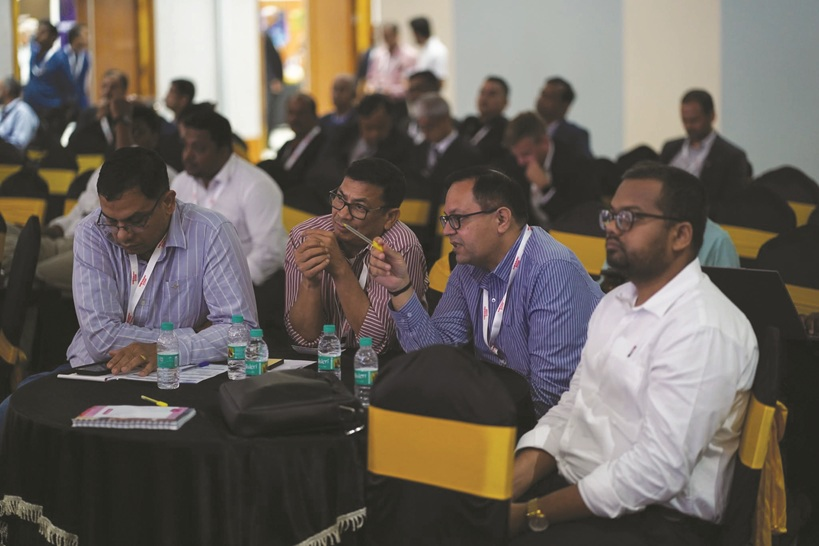 Priyank Potnis of Planex, the Indian partner of Regom, addressed circularity and traceability for end-of-life tyres. “Regom’s technology identifies tyre specs for end-of-life tyres, including automatic evacuation of a good tyre,” he said, adding that the company has developed two machines supporting traceability, circularity and ESG compliance amid the disposal of an estimated three million tonnes of end-of-life tyres under a rapidly evolving regulatory landscape.
SESSION EIGHT: PROCUREMENT UNDER PRESSURE
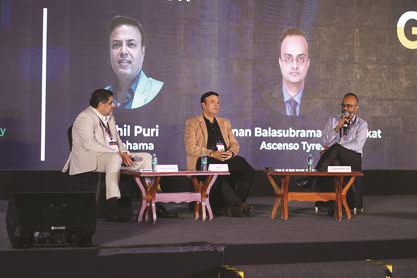
The closing panel, moderated by Chakravarthy, brought together Nikhil Puri, Senior Vice President of Direct Procurement at Yokohama, and Ramanan Balasubramanian Venkat, Vice President of Procurement at Ascenso Tyres, to discuss the pressures facing tyre-maker procurement teams.
“Retaining control over the supply chain remains a constant challenge, necessitating a need for pro-active engagement, both internally and externally, with various stakeholders to ensure agility and responsiveness,” Venkat said. AI and data-driven analytics increasingly shape procurement decisions, he added, though the open question is how much reliance those tools warrant given how quickly situations can shift in ways analytics may not anticipate. He described India’s tyre ecosystem as uniquely positioned given the investment underway, arguing the industry needs a long-term perspective, close collaboration and a supplier base both locally rooted and globally capable – while flagging the shortage of natural rubber as reason to accelerate adoption of greener, sustainable alternatives.
 “Dividing into pre-Covid and post-Covid eras as supply chains underwent a real litmus test leading to a fundamental shift in mindset, forcing companies to go back to the drawing board and rethink their sourcing strategies, reliance on a sole supplier has been largely abandoned and new relationship built to enhance resilience,” Puri said. The ability to modify supply chains at short notice, he added, became a critical post-pandemic capability, driving regional diversification, stronger risk management and mapping of vendors’ own supply chains, with AI now positioned to take procurement further – including predicting disruptions such as weather events.
Puri also pointed to digital twins as improving understanding of container load capacity and logistics efficiency, and suggested AI combined with augmented reality could further improve warehouse operations. He framed India’s position as a sweet spot, backed by a young population and strong growth potential, pointing to the country’s diversification of crude-oil sourcing as an example of a broader ‘glocal’ strategy – one that includes friend-shoring, or sourcing from trusted, friendly nations to build more resilient supply chains.
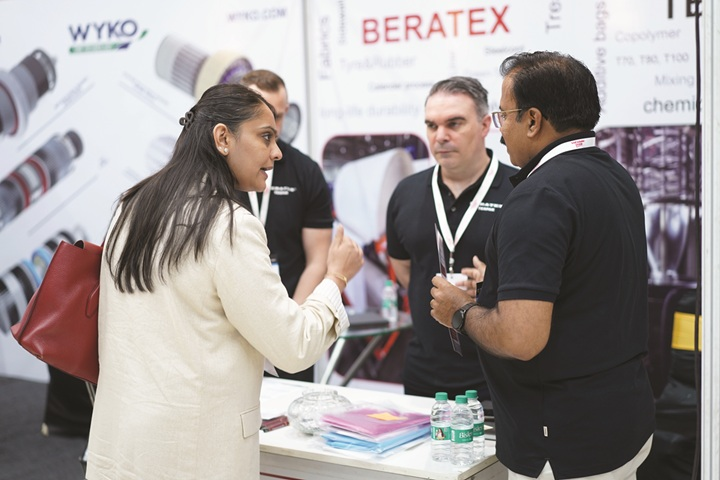
Not only the conference delegates but GTRC also witnessed a significant increase in the exhibitors’ participation. The exhibition area consisted of 37 stalls, with some of the participating companies taking multiple booths and some of them sharing them with their overseas principles. The response was overwhelming and marked a surge over the last edition of the conference, cementing the GTRC as a global tyre event.
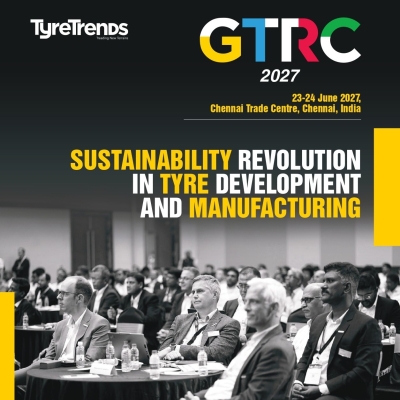
Conference chairman Tom Thomas closed proceedings by thanking speakers, delegates and stakeholders and acknowledged the event’s sponsors. The next edition of GTRC will be held on 23–24 June 2027 at the Chennai Trade Centre in Chennai, India.
Jacques Fourie Named President Of Bridgestone Canada
- By TT News
- October 16, 2026
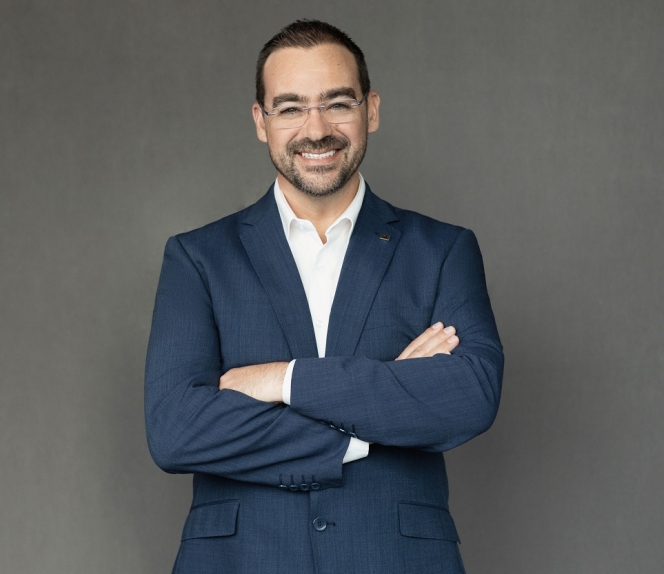
Bridgestone has named Jacques Fourie as President, Canada, a newly created position underscoring the market’s strategic value to the company. Operating from Mississauga, he will oversee Canadian strategy, commercial activities and long-term growth, with full end-to-end accountability.
The dedicated in-country leadership structure is intended to accelerate decision-making, improve coordination and bring the business closer to customers and teammates. Bridgestone said the role reinforces its commitment to stronger leadership and accountability across Canada.
Fourie joined Bridgestone in 2019 and most recently led its Africa Middle East region from Dubai. He previously spent 15 years at Cummins in finance, sales, operations and executive roles, including leading Cummins Rocky Mountain. He holds an Honours Bachelor’s Degree in Finance and Accounting from the University of Pretoria.
Robert Johnson, Group President, North America, Bridgestone West, said, “Canada is an important market for Bridgestone, with strong potential for continued growth. Jacques brings extensive international leadership experience, a strong customer focus and a proven ability to build successful businesses and teams. His understanding of the North American market makes him well positioned to lead our Canadian business and strengthen the value we deliver to our customers across the country.”
Fourie said, “Canada is a dynamic and strategically important market with significant opportunities ahead. I am honoured to take on this role and look forward to working closely with our customers, partners and teammates across the country. Together, we will build on the strengths of the Canadian business, deepen our customer relationships and position Bridgestone for sustainable, long-term growth.”
Competitive Aggression
- By Gaurav Nandi
- October 15, 2026
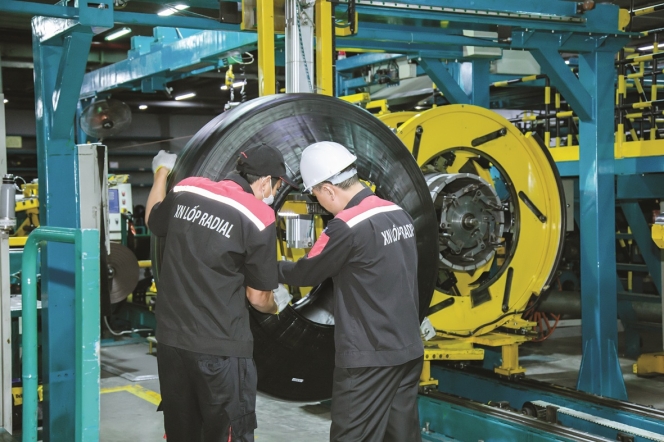
Vietnam’s growing role as a global tyre manufacturing base is creating new opportunities for domestic producers, but breaking into established international markets remains difficult. Da Nang Rubber Joint Stock Company is expanding exports and production capacity while confronting larger Chinese rivals on price and established global manufacturers on technology, distribution and brand strength. General Director Le Hoang Khanh Nhut tells Tyre Trends that competing globally will require Vietnamese manufacturers to move beyond cost advantages and demonstrate quality, operating efficiency and long-term customer value.
Southeast Asian tyre manufacturers have evolved as an aggressive competitor in the global tyre race. Tyre makers from China, Vietnam, India, Thailand etc. are constantly competing for a share of the bigger pie. While one nations tyre manufacturer competes on price advantage, another competes on quality.
The tyre manufacturing scene in Vietnam resonates quality and pricing in the global stage. But that is not the end of the story. On one hand, many manufacturers from other countries are leveraging the strategical importance of Vietnam for pushing products into international markets.
And on the other hand, trade tariffs and anti-dumping duties are creating hurdles for such companies. “Trade defence measures, anti-dumping actions, rules of origin and tariff changes have become ongoing factors in export management,” said Da Nang Rubber Joint Stock Company (DRC) General Director Le Hoang Khanh Nhut during an exclusive interaction with Tyre Trends magazine.
He confidently stated that DRC closely monitors each market to select appropriate products, pricing structures, distribution partners and production plans while ensuring that origin documentation, technical compliance and trade compliance are properly standardised.
“Trade barriers can increase costs and risks, but they can also create opportunities when customers seek to diversify their supply sources beyond a single country. The pre-requisite is that Vietnamese companies maintain transparency regarding origin, control their supply chains and retain genuine competitiveness,” he quipped.
Explaining the current situation within the country’s broader market economics, a confident Nhut averred that Vietnam’s expanding infrastructure, logistics network and export connectivity are creating favourable conditions for tyre manufacturers operating in the country.
He added that the country was investing heavily in highways, transportation and logistics infrastructure. That development is supporting both domestic demand and the country’s ambitions to become a manufacturing and distribution hub for global markets.
For DRC, the expansion of Vietnamese tyre manufacturers into global markets will depend less on competing solely on price and more on leveraging manufacturing experience and product quality.
Asked how Vietnamese manufacturers could compete with Chinese tyre makers, which often operate with larger research and development budgets, Nhut said, “The strategy is to focus on experience and quality rather than entering a price-led competition. We don’t follow the price competitively like Chinese companies.”
STRATEGIC PLACEMENT
International markets, especially Europe and America, are crucial to Vietnamese tyre manufacturers including DRC. The company states that the US is an established and important export market.
In April 2024, DRC signed an export agreement with Oceanside One Trading covering Brazil and the US with the stated aim of increasing exports to those markets.
Europe is strategically important but not one of its mature core markets yet. The company’s 2024 annual report explicitly states that it aims to increase its market share in Europe.
Nonetheless, the local market assumes a similar importance for the company. “The domestic market remains a strategic foundation for us. It is where the brand has been built over several decades. We have an extensive distribution network here and the market helps us maintain a balanced production volume,” said Nhut.
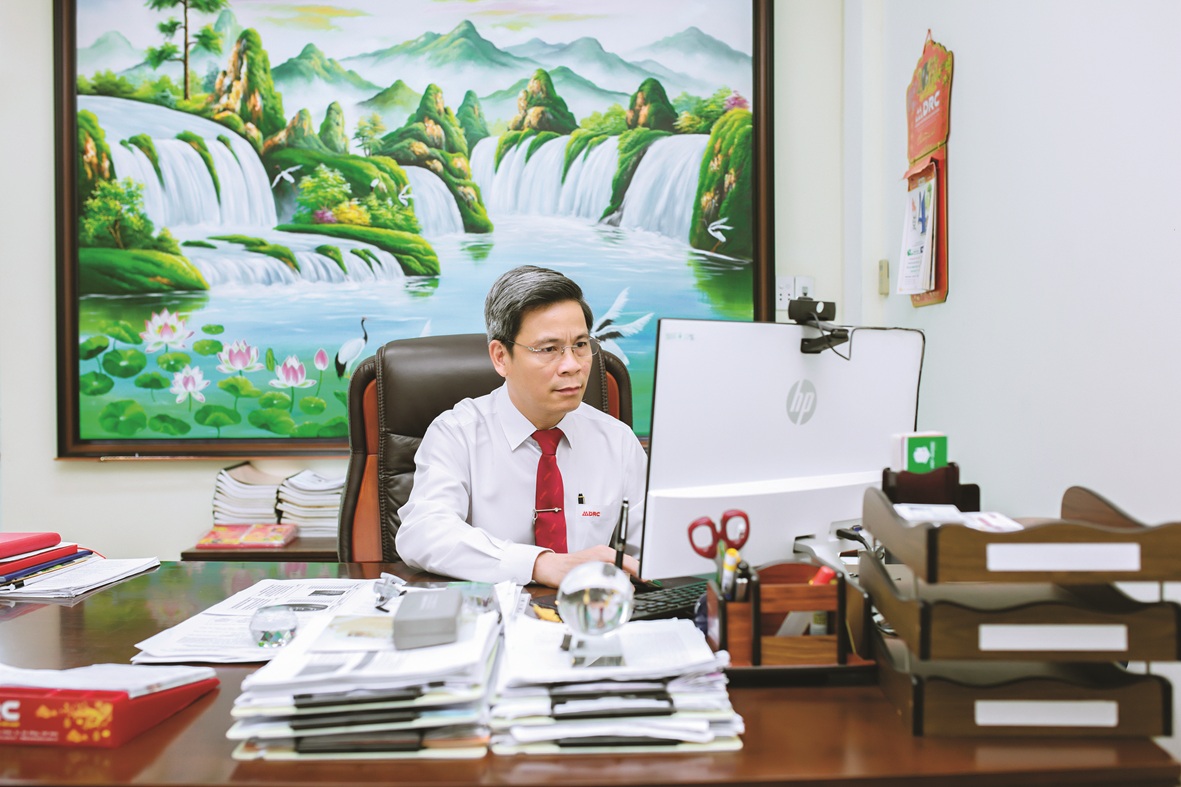 Le Hoang Khanh Nhut, General Director, Da Nang Rubber Joint Stock Company (DRC)
However, the challenges include periods of weaker purchasing power, strong competition from imported products and FDI-based companies and pricing pressure. “Unlike many export markets, Vietnam has a fragmented distribution structure; customers are price-sensitive but also place strong importance on durability, product availability and warranty response time,” explained Nhut.
On the broader spectrum of market-linked business advantages, the country has become a manufacturing base for many international tyre manufacturers. “Vietnam has several practical advantages including a favourable location for exports, access to many markets through FTAs, an increasingly skilled technical workforce and a developing supporting-industry ecosystem,” stated Nhut.
DRC perceives these advantages are complemented by accumulated manufacturing experience, a domestic brand, an established workforce and a production management system that is being modernised.
“However, we still face disadvantages in terms of economies of scale, the degree of self-sufficiency in strategic raw materials, logistics costs, supply-chain depth and resources available for foundational technologies compared with China, Thailand, Indonesia or India. These areas need to be addressed through focused investment and supply-chain integration,” he noted.
INTERNATIONAL TUSSLE
DRC’s manufacturing operations are based in Da Nang, where it operates separate facilities for different tyre categories. Nhut cited production covering passenger car tyres, motorcycle and bicycle tyres, agricultural tyres, OTR products and other categories.
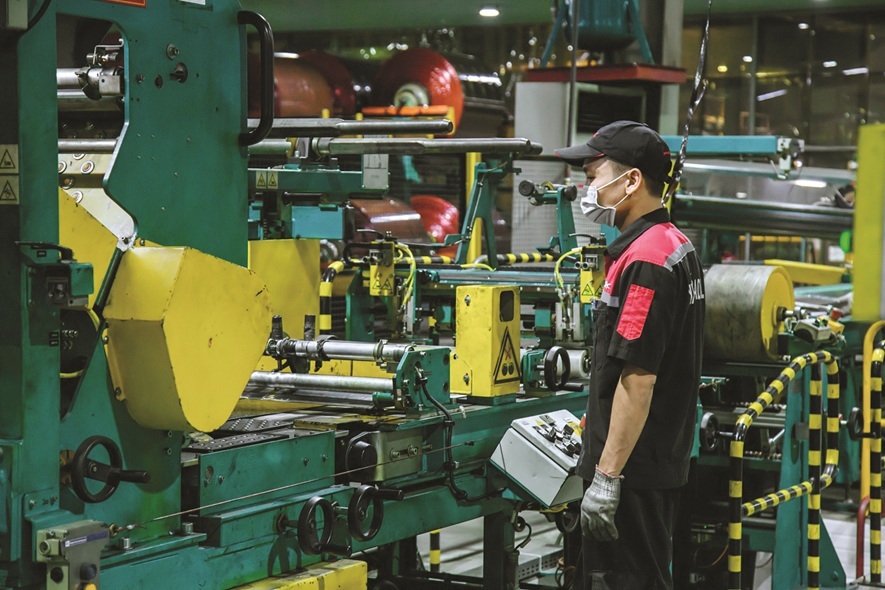
The chief executive estimated its overall production at around five million tyres. And in recent years, its international business has seen clear growth in both scale and geographical reach.
By the end of 2024, export turnover had exceeded USD 100 million, and its products are currently present in more than 50 countries and territories including markets with high standards such as the US, Europe, Japan, South Korea and Brazil.
“Our focus remains on strengthening markets where we already have a solid foundation, particularly in the Americas and developed markets, while selectively expanding into regions with significant room for growth,” contended Nhut.
He added that demand is shifting towards greater emphasis on consistent quality, durability, operational efficiency, reliable supply and technical compliance. Therefore, exporting is no longer simply about selling products but about building the capability to serve markets over the long term.
Nonetheless, Chinese tyre companies are a much stronger competitor in international markets for Vietnamese counterparts. Explaining how DRC navigates the challenge of competing head-to-head with Chinese tyre markets, Nhut said, “The expansion of Chinese tyres has intensified price competition in the replacement market, particularly in mainstream segments. This has created direct pressure on selling prices and margins across the industry.”
“We do not compete solely on price and focus on consistent quality, durability, technical service and real-world operating efficiency to retain customers. The market has indeed become more challenging, but it also creates opportunities for manufacturers that demonstrate product lifecycle value, consistently meet delivery commitments and reliable after-sales support,” he added.
GLOBAL STRONGHOLD
According to Nhut, DRC’s strongest international growth opportunities are in segments where it already has capabilities and credibility that include radial truck and bus tyres, industrial and agricultural tyres and speciality tyres.
“The expansion of radial truck tyre capacity to one million tyres per year is an important step in increasing our ability to serve the market. At the same time, we need to continue shifting our product mix towards higher-value products with higher technical requirements, durability and specialisation,” he added.
Product lines for next-generation vehicles and technical rubber products are also focus areas for the company. It also does not consider expanding the product portfolio to be an objective in itself. It must be aligned with research and developmental capabilities, investment efficiency and market demand.
The investment sentiment within the country’s tyre industry is also seeing heightened demand. It has attracted significant investment and substantially increased production capacity.
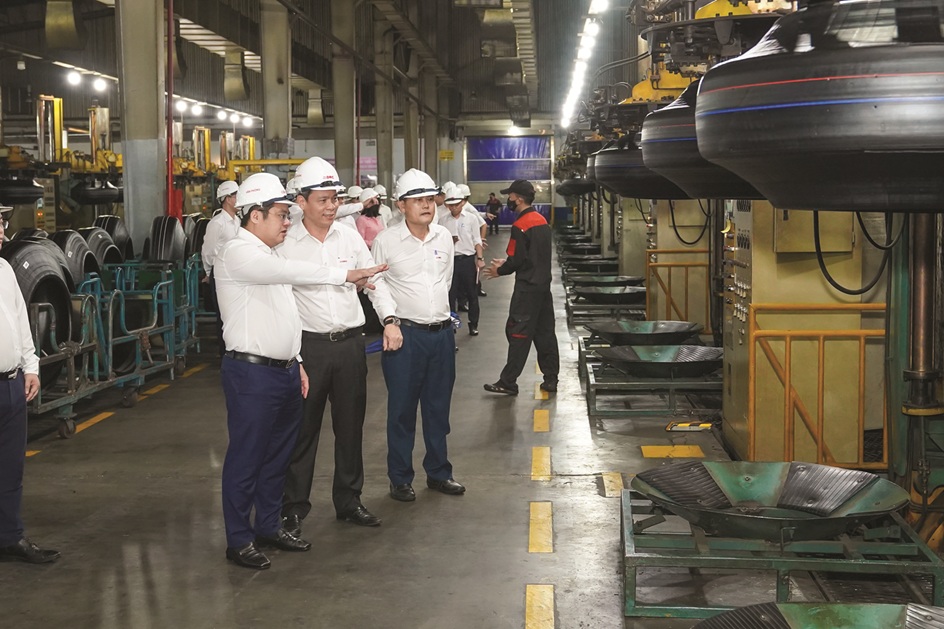 But the additional investment in Vietnam’s tyre industry is both an opportunity and a source of pressure, said Nhut.
“The opportunity lies in improvements to the supply chain, technical workforce, logistics services and Vietnam’s attractiveness as a manufacturing base. The pressure comes from greater competition for skilled labour, raw materials, customers and quality standards,” he added.
The company, however, views the current situation as a driving force to improve productivity, enhance quality and penetrate its own brand deeper into markets.
And to become a major name in the global tyre market, the company needs to shift from a mindset of exporting products to building a brand and the capability to serve international markets, contended an excited Nhut.
“The focus should be on maintaining consistent quality; investing in research and development; green manufacturing technologies; developing higher value-added segments; building sufficiently strong distribution and after-sales networks in key markets; applying international standards in
quality, ESG, trade compliance and data management and strengthening global human resources capabilities,” added the executive.
Expanding radial production capacity is necessary, but ultimately, success lies in DRC’s ability to build long-term trust in quality, operating efficiency and responsibility towards customers worldwide, noted the executive.
PERSISTENT HURDLES
The biggest challenge for DRC is competing with groups that have significantly greater scale, larger research and development budgets, distribution networks and purchasing power for raw materials.
According to Nhut, Chinese companies have advantages in terms of price and speed. Japanese, Korean and European companies are strong in technology, branding and OEM relationships, while Indian companies have scale advantages in certain segments.
He further noted that DRC’s strengths lie in its longstanding experience in radial truck, bias, agricultural and speciality tyres; its flexibility in responding to market needs; proven quality in many demanding markets and manufacturing base in Vietnam.
However, scale remains a limitation when it comes to long-term research and development investment, rapidly expanding after-sales networks, maintaining regional inventories and increasing global brand recognition.
“We cannot compete with multi-national groups in terms of the scale of research and development spending. Therefore, our approach is to focus resources on issues that have a direct impact on customers and production efficiency,” explained Nhut.
He added, “Our priorities include tyre structure and rubber compound design to improve durability, reduce heat generation, enhance load-carrying capability and improve fuel efficiency. Optimisation of radial products, development of products for emerging needs such as electric vehicles, high-speed tyres and specialty products as well as automation, digitalisation, traceability and green manufacturing are also priorities.”
The company also places strong emphasis on strengthening its engineering team, technical cooperation and shortening the cycle from testing to commercialisation.
Customers are increasingly evaluating tyres based on total cost of ownership rather than simply the initial purchase price. And to convince international fleets and distributors, DRC needs to speak through operating data rather than relying solely on catalogues.
“We are increasing real-world testing and monitoring mileage, wear, fuel consumption, incident rates and reusability or recyclability depending on the product line. Based on this data, we work with distributors to provide technical advice, clear warranty policies and rapid feedback,” stated Nhut.
The objective of the company is to help its customers see a product with a reasonable purchase price that lasts longer, operates more consistently and reduces vehicle downtime to create greater value over its entire lifecycle.
The company has a retreading facility and stated that some casings can be retreaded two or three times.
FORWARD PATH
Nhut expects Southeast Asian tyre manufacturers to continue expanding their presence in global markets.
“Over the next 3–5 years, significant room for growth lies in replacement markets with demand for radial truck tyres, agricultural, industrial and speciality tyres as well as among customers seeking a stable and diversified source of supply outside traditional manufacturing centres,” said Nhut.
The Americas, selected European markets, the Middle East, Africa and Latin America all need to be approached selectively based on trade conditions and service capabilities, he added.
The factors limiting faster expansion include the need to build distribution networks, inventory, after-sales support and local technical certifications together with working capital requirements, foreign-exchange risks, logistics and trade barriers.
“These are long-term investments and cannot be pursued at the expense of sustainable growth,” noted Nhut.
Asked how manufacturers from Vietnam and other Asian markets could position themselves against established European tyre makers, DRC said its focus would be on expanding its market presence rather than retreating from competition with larger international manufacturers.
The current situation in Vietnam reflects a broader shift in the tyre manufacturing landscape, with Asian producers increasingly seeking opportunities in overseas markets while established manufacturers face changing cost structures and production strategies.
Vietnam’s emergence as a competitive tyre manufacturing base gives DRC a platform for international expansion, but geography, trade access and manufacturing costs alone will not secure a global stronghold.
The bigger test is whether the company can translate rising capacity and decades of production experience into stronger technology, distribution, after-sales support and brand recognition.
As competition intensifies and trade barriers multiply, DRC’s global ambitions will increasingly depend on proving lifecycle value rather than simply offering another competitively priced alternative from Asia.
HF Group Receives Continental Supplier Award For Service And Maintenance
- By TT News
- October 14, 2026
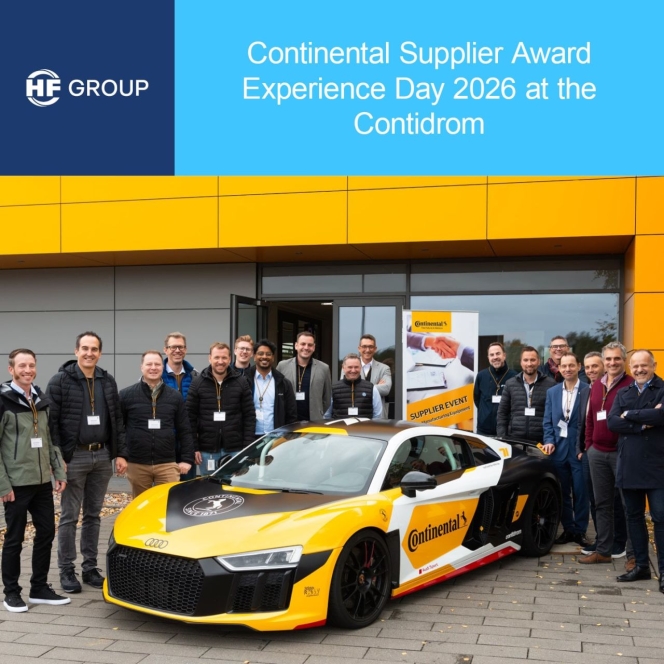
HF Group has received Continental’s Supplier Award for Tyre Manufacturing Equipment 2025 in the Service, Maintenance & Repair category, recognising its work delivered during the year.
The award acknowledges the contribution of HF Group’s mixing and curing teams across multiple deliveries, service assignments and engineering projects undertaken with Continental in 2025.
To mark the recognition, Continental invited the award winners to an Experience Day at its Contidrom test facility near Hanover on recently. The event gave attendees an opportunity to experience Continental’s tyre technology and drive on the test track.
HF Group was represented by André Arends, Garlef Dombrowski, Florian Droege and Peter Hummel.
The company thanked Continental for the award and recognised the expertise and collaboration of its teams in delivering the work.
Hidden Cost In Tyre Plants: How The Rubber Moves
- By Gaurav Nandi
- October 14, 2026
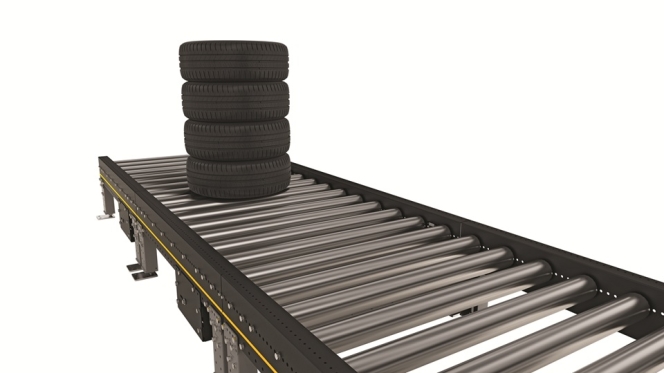
Interroll’s Gianmichele Piciocco argues that some of the largest efficiency gains in tyre manufacturing lie in the interfaces between machines, not only in the machines themselves.
Tyre manufacturers invest heavily in the best building machines and the fastest curing presses. The systems that connect them, however, are often specified late, inherited from earlier projects and seldom revisited, according to Gianmichele Piciocco, Global Strategic Business Development Manager at Interroll.
“Material flow is the backbone of the entire tyre industry,” Piciocco tells Tyre Trends. In his experience, engineers select and position process equipment first, and transport follows. The consequences emerge later, in energy consumption, maintenance stoppages and the cost of expansion. He argues that ‘we have always done it this way’ becomes a design constraint in its own right once technology, product mix, energy costs and safety expectations have changed. The examples that follow point to two closely connected areas: system optimisation during design and expansion, and lifecycle optimisation during operation.
THE LAYOUT TRAP
Piciocco says the pattern is consistent across the tyre manufacturers he advises. “In many cases, the layout initially proposed does not fully match what is ultimately implemented, often to contain the initial investment,” he says. Soon after start-up, plants may find that they need more buffer capacity, or that future expansion was not fully considered. With no floor space left, the remedy for material flow is often inclines, declines and additional levels, which can significantly increase costs.
 The alternative is far cheaper if raised early. “At the design stage, and with possible expansion in mind, it is worth asking whether small changes in machine positioning could support more effective and flexible material flow,” he says.
The issue is especially relevant in India, where sustained market growth does not always mean new greenfield plants. Expansion often happens inside operating sites, where new capacity must coexist with several generations of equipment from multiple vendors. Without a common architectural logic, each extension can add another component family, control standard and maintenance practice, increasing complexity and the potential for integration and compatibility problems.
REOPENING THE BELT QUESTION
Green-tyre transfer illustrates how convention hardens into constraint. Uncured rubber is soft and contamination-sensitive, and belt conveyors have long been the default because a continuous surface supports the tyre and certified belt materials address contamination. Piciocco does not dismiss that logic. He argues it should no longer be treated as absolute.
Left on widely spaced rollers, a green tyre can begin to deform during relatively short stops, and contact with the wrong material can degrade quality after curing. One approach being evaluated by Interroll combines closely spaced rollers, software that keeps them ‘skating’ when the line stops and transfer materials selected to meet contamination requirements. Where a roller solution suits the application, he says, component cost can be materially lower than a belt’s. Because a belt is a continuous element, maintenance work can also take longer and be more complex.
The larger benefit, he argues, is commonality. The same families of rollers, drives and transfer modules can serve both pre-cure and post-cure sections, reducing the spare parts a plant holds and the skills its teams must learn. “Who is interested in saving money in the life cycle of the plant? The user,” he says.
SAVING ENERGY BY DESIGN
Piciocco says moving from conventional 400-volt drive systems to zoned 24/48-volt roller conveyors can reduce energy use, with savings of up to 50 percent in some applications. The low-voltage architecture can also simplify installation and maintenance and reduce exposure to hazardous voltages at machine level, subject to applicable safety standards. The advantage, he stresses, comes chiefly from the on-demand, zoned operating principle, in which only the zones a product needs are active, rather than from voltage alone.
Another example concerns a leading tyre producer that wanted a more compact layout within an existing plant while retaining sufficient buffer capacity and scope for future expansion. The initial conveyor concept required several accumulation loops, curves, inclines and declines, making both engineering and installation relatively complex.
“Working together, we proposed a solution comprising a motorised ascending spiral, an overhead bridge and a gravity spiral for the descent,” Piciocco says. “Each spiral has a footprint of roughly three metres in diameter. At a height of about 7.5 metres, the motorised spiral can provide buffer capacity for approximately 25 to 40 tyres, depending on their dimensions.”
The configuration provided the required buffer in a very compact footprint, with fewer powered components and a cleaner, more modular installation. Its cost was in line with, or slightly above, the conventional solution. Piciocco says the question he put to the customer’s technology director was simple: “Are you thinking about today, or the next 10 years?”
GROWING WITHOUT REBUILDING
A brownfield expansion is not simply a matter of adding more metres of conveyor. New sections must fit existing space, controls and maintenance organisation while the plant keeps running.
Interroll’s modular platforms, including the MCP range, are built from standard modules. RollerDrive EC5000 units, managed by MultiControl electronics, form a highly scalable and energy-efficient material handling system.
In a conventional centralised architecture, adding zones can require additional I/O, cabling and software changes. In a decentralised system, expansion means adding a module and an Ethernet connection. Independently controlled zones can also absorb small cycle-time differences and micro-stoppages without passing every interruption down the line. Upgrades follow the same logic. The 24-volt EC5000 versions rated at 20 and 35 watts with Analogue Interface (AI) can be used as replacements for the earlier EC310, supporting a more straightforward maintenance approach and the extension of existing installations.
ROUTING WITHOUT OVER-ENGINEERING
Not every route variation calls for a sorter. When tyres must be directed to testing, quality inspection, rework or the next process, Interroll’s position is that a modular conveyor backbone with targeted transfers and diverters often gives a better balance of performance, footprint and cost than a sorter built for distribution logistics. Further downstream, particularly after warehousing, higher volumes and more destinations can justify a dedicated sorter such as the company’s MC-S range.
Piciocco’s warehouse example shows the risk of getting this wrong. A large operator that stacks and stores tyres with considerable automation then needs a separate, costly sorting system to retrieve and route them. In this part of the process, he says, a solution such as Interroll’s MC-S can provide the required throughput with a more efficient layout and a significantly smaller footprint.
CONTINUITY INTO DOWNSTREAM HANDLING
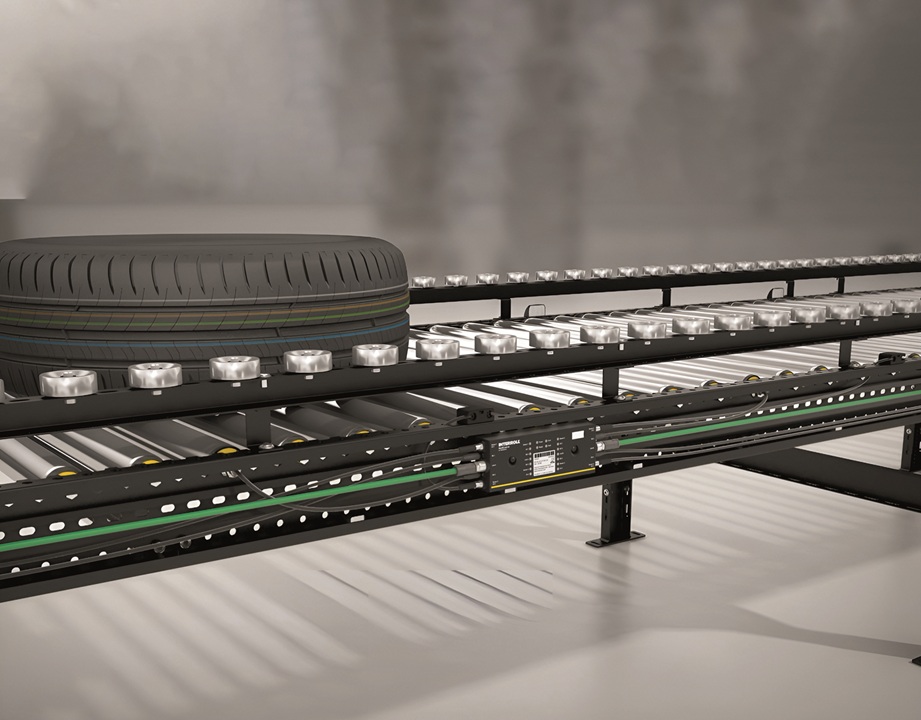
Where load and duty allow, the same architecture can extend past the individual tyre. A 24/48-volt modular pallet conveyor, the MPP platform, can handle a load of up to 500 kilogrammes per metre while retaining decentralised control and zero-pressure accumulation. Rollers of 60 millimetres in diameter allow a closer pitch and more support points, which, after application validation, can reduce vertical undulation when handling tyre stacks.
Piciocco is careful not to make continuity a dogma. Above the platform’s operating envelope, robust 400-volt heavy-duty conveyors remain the correct choice.
FROM REACTION TO PLANNING
Maintenance is where Piciocco sees the most overlooked cost. When total cost of ownership and plant availability are considered, he says, maintenance and stoppage-related costs can account for around 10 to 15 percent of the overall cost associated with material flow in some applications, including labour, spare-parts inventory and lost production during downtime. “Maintenance is often treated as something that simply happens. It should not be. Much of it can be avoided,” he says.
Connected drives, such as the RollerDrive EC5000 BI with MultiControl, make more than 100 parameters available, including operating hours, cycle counts, temperature, system status and error type. If the torque required by a motor rises progressively, the system can flag an abnormal trend before it develops into a stoppage and give the maintenance team a stronger basis for planning an inspection.
Without that information, a failed motor can cause a prolonged stoppage while crews identify the source and check whether the spare part is available. With an early warning, maintenance can schedule the intervention; for an accessible RollerDrive with the spare available, replacement can take less than an hour. Piciocco calls this preventive rather than predictive maintenance. The data does not replace maintenance expertise, but it gives teams a stronger factual basis for decisions, and standard components make diagnostics and training common across the plant.
GLOBAL STANDARDS, LOCAL EXECUTION
A shared catalogue alone does not make a standard, Piciocco says. It also needs consistent selection criteria, spare-parts strategies and support after start-up. Interroll has production, engineering and service capabilities across the world’s main industrial regions, allowing global standards to be supported by local execution. Its life-cycle offering includes structured maintenance programmes, dedicated stock of critical components, periodic audits and staff training, scaled to how critical the application is.
He applies the same logic across markets. Using a smartphone as an analogy, Piciocco says the same platform can be used in a basic configuration or with more advanced functionality, depending on a plant’s needs and technological maturity. A manufacturer can therefore retain common components, diagnostics and training across sites while adapting the level of automation to local conditions.
That flexibility extends to how far automation should go. Speaking for himself, not Interroll, Piciocco says not every producer needs a dark factory. The appropriate level of automation depends on volumes, product mix, process maturity and available skills. “If people do not understand how the technology works, you can have the best technology in the world, but it will not be used properly and may even become a limitation,” he says.
REAL ISSUE
Asked what single mindset shift the industry needs, Piciocco did not hesitate. “Interface,” he says. “The machines are already quite optimised. The problem is how we serve the machine.” As individual machines become increasingly optimised, the interfaces between them play a growing role in improving productivity, simplifying maintenance, reducing energy consumption and enabling future expansion.
“Material flow should not be the last part of the engineering process,” he adds. “If it is considered earlier, we can contribute to a solution that supports optimisation of the entire plant.”

Comments (0)
ADD COMMENT