

KENDA Europe Announces Specialty Business Expansion in DACH Region
- By TT News
- April 28, 2025

KENDA Europe has announced plans to expand its speciality business operations across Germany, Austria, and Switzerland (DACH region), with implementation set to begin in June 2025.
Following its recent strategic realignment revealed at The Tire Cologne 2024, the company will establish a dedicated stock facility near Hamburg to supply specialty products directly to regional distributors.
“This is a natural and strategic development driven by our commitment to being closer to our customers. In a partnership, being there matters, and our goal is to be present, accessible, and supportive of our customers. Strengthening our presence in the DACH region is about more than logistics; it’s about empowering our distributors and creating the conditions for long-term mutual growth,” said Christian de Wit, Sales Director of KENDA Europe Specialty.
The initiative will initially focus on specialty products, including trailer tyres, turf, small industrial and agricultural vehicles, ATV and UTVS, and forklifts. The company plans to eventually transform KENDA GmbH into a central European warehouse for specialty products, with potential future expansion to include additional product lines such as powersports.
The company indicated it would share further details with partners as the June launch approaches.
BKT Pushes For Regulatory Intervention To Lift India’s Retreading Rate
- By Gaurav Nandi
- October 29, 2026
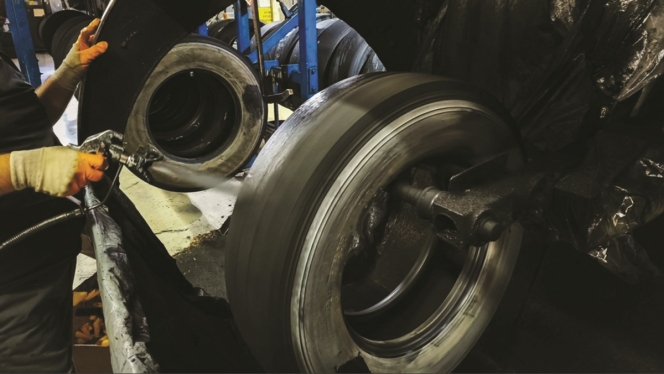
India’s retreading industry remains caught between its economic potential and structural neglect. Despite commercial vehicle tyres being designed for multiple lives, low casing preservation, rampant overloading, fragmented retreading operations and limited policy attention continue to restrict adoption. Balkrishna Industries Senior President & Director – Business Development and Strategy Satish Sharma believes regulation rather than incentives alone could change that trajectory. He argues that stronger enforcement and casing management could eventually push India’s retreading rate towards 90 percent.
Balkrishna Industries Ltd (BKT) has called for regulatory intervention to expand tyre retreading in India, arguing that market forces alone are unlikely to unlock the potential for extending commercial vehicle tyre life.
Speaking to Tyre Trends, BKT Senior President & Director – Business Development and Strategy Satish Sharma said that India could substantially increase the proportion of tyres receiving a second or subsequent life if policymakers create a supportive regulatory environment and enforce restrictions on commercial vehicle overloading.
“Obviously, to my mind, it needs government intervention. Regulatory intervention is a must to make this flourish,” told Sharma.
He said stakeholders across the tyre and retreading industries need to come together to develop an appropriate policy framework rather than pursue isolated initiatives. While stopping short of prescribing the exact structure of such regulation, Sharma said the fundamental objective should be to make retreading mainstream while tackling overloading, which damages casings and reduces their suitability for subsequent lives.
“The simplistic thing is a mandate that retreading is to be done and the corollary point is that overloading has to be checked,” he said.
 Sharma estimated that only around 20–30 percent of the potential retreading opportunity is currently being realised in India and said the proportion could ultimately reach around 90 percent. However, he acknowledged that such a transition would have to take place gradually.
He argued that commercial vehicle tyres are designed to deliver multiple lives, but poor operating practices can destroy casings before they reach the retreading stage. Despite improvements in India’s road infrastructure, Sharma said retreading has not progressed correspondingly.
POTENTIAL CAUSE
According to Sharma, overloading sits at the centre of the problem. Excessive loads can damage not only tyre casings but also vehicles, components and road infrastructure, undermining the economics of extending tyre life.
Sharma said stricter enforcement against overloading could itself provide a major stimulus for retreading without requiring the government to initially introduce financial incentives.
“I think incentives could be phase two. The trade will just flourish if you do the right thing, have good regulation and create the right environment,” he stated.
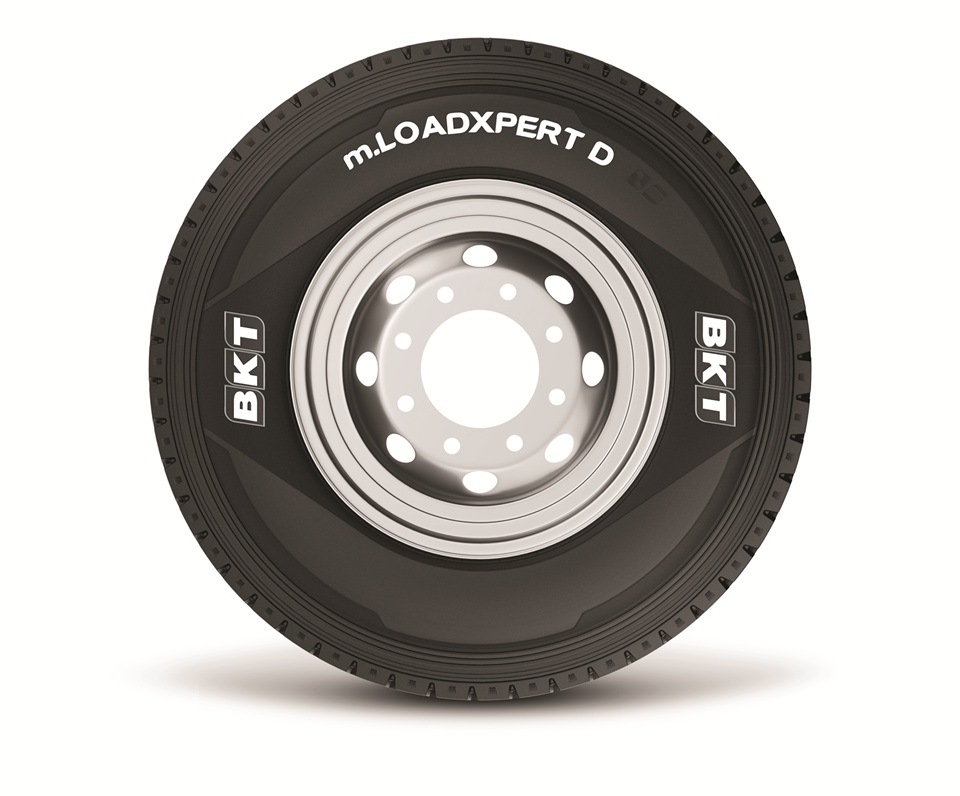
The call comes as BKT expands into India’s commercial vehicle radial tyre market. The company does not intend to enter the retreading business directly, Sharma said, but views retreading as an integral part of the commercial tyre lifecycle.
BKT has consequently spearheaded its ‘Save the Casing’ programme aimed at helping fleet operators preserve tyre casings during their first life so they remain suitable for retreading. The initiative involves working with end users to identify and avoid operating practices that can prematurely damage casings. “Once they are done with that, we will guide them to go for a retread and get the next life of the product,” Sharma said.
Beyond operating practices, Sharma identified fragmentation as another obstacle facing India’s retreading sector. He characterised much of the industry as cottage-scale with relatively few large, quality-conscious branded operators.
He also questioned recent changes to India’s GST structure. Sharma said new tyres previously attracted 28 percent GST compared with 18 percent for retreading, giving retreading a 10-percentage-point tax advantage. With the rates now aligned at 18 percent, he argued that the previous incentive has disappeared.
“Whatever little incentive was there has also been taken away,” Sharma said, describing the change as potentially an oversight that policymakers could reconsider.
SUPPORTING INFRASTRUCTURE
However, Sharma maintained that neither technology nor technical expertise is the fundamental constraint on the industry’s development. Modern inspection technologies such as shearography can identify internal casing defects, while experienced operators already possess considerable expertise in manually determining whether casings are suitable for another life.
“Casing inspection remains critical. Shearography detects internal defects including trapped air and separations that may not be apparent during conventional inspection. However, the relatively high cost of such equipment means it may remain beyond the reach of many smaller retreaders,” he noted.
He sees the challenge as creating an ecosystem that rewards casing preservation, improves operating practices and gives retreading greater prominence within transport economics.
Sharma also linked the case for retreading with India’s dependence on imported crude oil and rubber. Extending tyre life reduces the requirement for new material and could therefore deliver benefits beyond individual fleet operating costs, he argued.
Retreading also carries a measurable resource advantage. By extending the life of an existing casing, the process reduces the need for fresh inputs and energy-intensive production. Industry estimates suggest that each retreaded tyre can save around 57 litres of oil and 44 kilogrammes of natural rubber, while avoiding roughly 136 kilograms of carbon emissions compared with a new tyre. In that sense, retreading is not just a cost lever for fleets but a straightforward way to improve resource efficiency across the tyre lifecycle.
With tyre prices having increased in recent months, Sharma said the economics of extracting additional life from a casing are becoming increasingly relevant to transport operators.
Sharma also sees an opportunity to improve not only the number of tyres being retreaded but the quality of casings entering the retreading ecosystem. He said the condition of a casing at the end of its first life depends significantly on how the tyre has been operated, with driving behaviour, loading and road-related damage influencing whether it can be used again.
“The casing must come out clean. The wear should be uniform. It should not have irregular, patchy wear,” Sharma said, adding that road abuse and improper repairs can further compromise its suitability for retreading.
PRESENT AVENUES
He nevertheless reiterated that India already possesses considerable human expertise in casing inspection. Experienced operators at retreaders, fleet accounts and casing dealers can manually assess whether a tyre remains suitable for another life.
“If you were to educate them, invest in their training, like the skill programmes that the Government of India is running, that ecosystem can be developed,” Sharma said.
He estimated that experienced casing inspectors can achieve a 95–96 percent success rate in determining whether a casing can be retreaded. Sharma also highlighted the classification of casings into different quality grades, arguing that better tyre management during the first life could improve the economics of subsequent retreading.
“Even if, let’s say, 30 percent of retreading has happened, but if through our programme the C casing can become an A casing, for example, that itself will improve the economics,” he said.
Sharma believes a stronger market could eventually encourage greater investment and consolidation in what remains a fragmented retreading industry. Once businesses recognise a viable commercial opportunity, he expects entrepreneurs to invest in modern retreading facilities and build larger operations.
“There is no dearth of entrepreneurship which will go bigger and get into putting state-of-the-art retreading plants across the length and breadth of the country,” he said, adding that the underlying technology is already well understood.
Sharma pointed to international markets where an established casing supply chain allows retreaders to procure used casings rather than operate solely on a job-work model in which a fleet sends its own casing for retreading and receives the same tyre back.
Such a model, he suggested, could eventually support branded retreaded products in India, with companies sourcing suitable casings, processing them and offering finished retreaded tyres independently.
Sharma said such products can be offered at around half the cost of a new tyre, strengthening the commercial case for building a more organised retreading ecosystem.
For BKT, the objective is not to compete with retreaders but to make the casing and the value embedded in it a more important consideration throughout a commercial tyre’s operating life.
“Retreading needs to be popularised in our country. It will benefit multiple stakeholders. It is good for consumers, the government, transporters and for the tyre industry as well,” Sharma said.
BEYOND RETREADER’S LENS
Sharma believes the debate around retreading needs to move beyond the commercial interests of retreaders and be considered in the wider context of resource utilisation, road infrastructure and transport efficiency.
“Don’t just look at it from a retreader’s lens. Look at why retreading is important,” he said.
According to Sharma, extending the useful life of a tyre casing can reduce the requirement for fresh resources while allowing transporters to extract greater value from an asset already in operation.
He questioned the consistency of promoting recycling and sustainable material use while failing to adequately encourage the reuse of tyre casings that are already designed for multiple lives.
Sharma also linked the issue to India’s broader transport ecosystem, arguing that overloading prematurely consumes resources embedded not only in tyres but across commercial vehicles.
“There are bushes, axles, wheels – and everything is getting impacted. We are talking about recycling in one place and we are destroying the metals and other resources of the planet which can get an extended life,” he said.
This, according to Sharma, is why changing operating behaviour is more important initially than providing financial incentives. He argued that voluntary change has not occurred at the required pace and regulation will therefore have to play a role.
“You have to change behaviour now by regulations,” he said.
Sharma also challenged the industry to reconsider the apparent contradiction between sustainability commitments and the relatively limited attention paid to retreading. While tyre manufacturers increasingly discuss recycled, natural and biodegradable materials in new products, he questioned whether extending the useful life of existing products has received comparable attention.
For BKT, that makes retreading a wider resource-efficiency proposition rather than simply an alternative tyre market. Sharma described it as a ‘low-hanging fruit’ capable of benefiting transporters, tyre companies, government and end users simultaneously.
The challenge, he argued, is getting the subject discussed beyond the relatively small retreading community and into the wider tyre, automotive and policymaking ecosystem.
“It just needs enough contemplation and discussion and conversation in the right rooms, right corridors of power,” Sharma said.
India’s retreading challenge, therefore, is less about technological capability than creating conditions in which preserving a casing makes economic and operational sense.
BKT’s intervention puts regulation and overloading at the centre of that debate; meanwhile, its own casing programme tests whether manufacturers can influence tyre use beyond the first life.
Moving from today’s limited adoption towards Sharma’s 90-percent ambition, however, will require more than advocacy as policymakers, tyre makers, retreaders and fleet operators will need to turn resource efficiency into routine operating practice.
Goodyear Names Jerome Rouquet As CFO From December
- By TT News
- October 28, 2026

Goodyear Tire & Rubber Company has appointed Jerome Rouquet as Chief Financial Officer, effective 1 December 2026, as the US tyre maker seeks to improve operational performance and maintain financial discipline.
Rouquet will report to Chief Executive Mark Stewart and join the company’s senior leadership team. He currently serves as CFO of Visteon Corporation, where he oversees global financial activities.
Before joining Visteon in 2020, Rouquet held senior finance positions at Tenneco and Federal-Mogul. At Federal-Mogul, he served as CFO, chief accounting officer and controller.
"This is an important addition to our leadership team," said Stewart. "Jerome combines deep financial expertise with a proven ability to help organizations improve performance and navigate transformation. As we continue building momentum and executing our long-term strategy, his leadership and experience will help position Goodyear for success."
Rouquet’s experience spans financial strategy, operational performance, investor relations and public-company finance. His appointment supports Goodyear’s focus on operational improvement, financial discipline and capital allocation to increase shareholder value.
He holds a Master of Business and Management from Institut Supérieur de Gestion in Paris and completed the International Business Management Program at the Manhattan Institute of Management in New York.
Scott Deakin, who has served as interim CFO, will remain in the role until Rouquet joins the company and will support the transition.
Dunlop Tires North America Appoints Robert Liu As AVP Of Product Management
- By TT News
- October 27, 2026

Dunlop Tires North America (DTNA), a Sumitomo Rubber Industries, Ltd. subsidiary, has appointed Robert Liu as Assistant Vice President of Product Management. Liu brings more than three decades of varied experience in the tyre and automotive sectors to guide the Dunlop and Falken brands through their next stage of product innovation and expansion.
Liu started his career as a simulation engineer at General Motors before spending 27 years at Continental Tire, where he held positions in Product R&D, Sales and Product Management. He also completed a five-year expatriate assignment in Shanghai, leading Product Management and R&D for Asia-Pacific, and most recently directed R&D for the American region with a focus on replacement Passenger Light Truck tyres. In his new role, Liu will lead product development, overseeing PLT and Truck & Bus Radial products with a skilled Product Management team.
Ken Hsu, Vice President – Marketing, DTNA, said, “We are excited to welcome Robert to our team. His extensive experience and proven leadership in the tyre industry align perfectly with our goals for innovation and growth. We believe his insights will greatly benefit our product strategies as we move forward.”
Policy Changes A Priority
- By Gaurav Nandi
- October 27, 2026
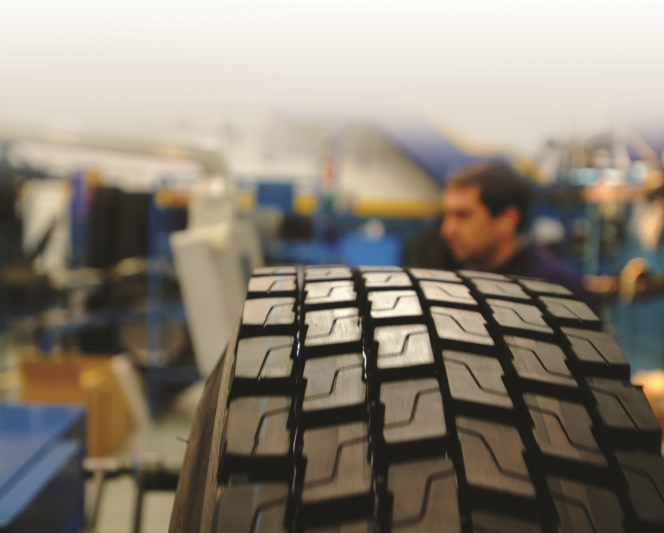
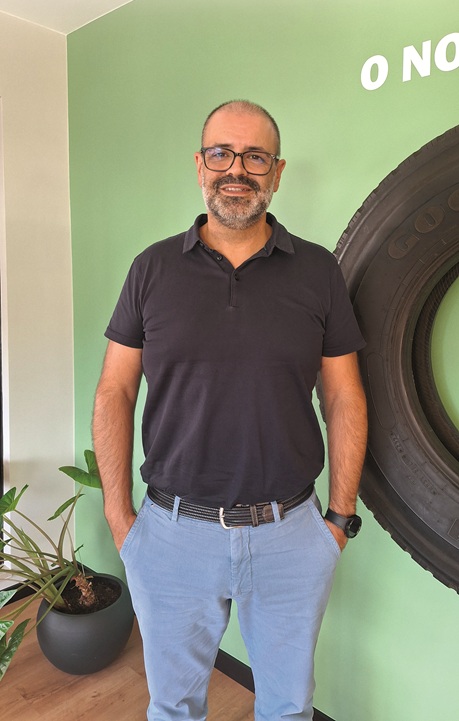
Portugal’s retreading industry is caught between its established technical capabilities and a market increasingly shaped by low-cost new tyres, regulatory shifts and price-driven purchasing. Associaçao de Recauchutagem de Pneus (ARP) President David Laureano speaks to Tyre Trends about the necessary changes, current state of the industry and how to rebuild confidence and create conditions for investment.
Are policy changes necessary to create a level playing field for retreaders?
I consider policy changes a priority for boosting Portugal’s retreading sector and plan work on four fronts. The first is to review the environmental and economic treatment of retreading so that charges and incentives acknowledge the extension of tyre service life.
The second is to strengthen enforcement of compliance obligations for all operators placing tyres on the market. The third is to introduce criteria regarding lifecycle costs, performance and circularity in public procurement, enabling the participation of technically suitable retreaded solutions.
The last is to facilitate company access to instruments for industrial modernisation, energy efficiency, training and innovation. These measures should be developed in collaboration with public entities and other sector stakeholders. Policy quality improves when those who manufacture, use and manage tyres participate in their formulation.
 What are the ARP’s priorities under your leadership?
My priority is to strengthen a unified voice for the sector while respecting the diversity of the companies that comprise it. Building trust among users by demonstrating the quality of domestic retreaders. I want to contribute to an association that stays close to its members and is capable of gathering reliable data, fostering knowledge sharing and presenting well-founded proposals to public authorities.
I also view it as essential to bring the fleet industry, educational institutions and technology partners closer together. We can collaborate on training, research and the dissemination of best practices, thereby strengthening the sector’s collective capacity. The change I would like to see in the market is a more informed purchasing decision, one that recognises tyre performance and the value of extending its service life.
What role can retreading play in reducing raw material consumption and waste?
Retreading preserves a significant portion of the tyre structure by utilising a technically sound casing and enables a new cycle of use. This reduces the need for materials required to manufacture an entirely new structure and postpones the casing’s end-of-life.
Realising this potential requires effective management across the entire value chain including initial selection, maintenance, timely tyre removal and casing inspection. Benefits must be measured rigorously. Savings depend on the tyre type, process and usage conditions; therefore, we must communicate substantiated results rather than applying a single percentage figure to every situation.
What hinders greater acceptance by fleets and consumers?
Doubts regarding quality and safety persist, alongside insufficient information about the industrial process. The perception of poor quality was already among the obstacles identified in the sector characterisation study conducted by Valorpneu in 2019. Trust is built through transparency that requires explaining casing selection, production controls, traceability and the tyre’s suitability for its intended use.
There are specific United Nations regulations for retreading, namely Regulations No. 108 and No. 109. Under these regulations, all operators are required to conduct tests on the tyres they produce, and the tests are identical to those performed on new tyres. The sector also needs to make results more visible through fleet monitoring and comparable usage data.
We cannot focus solely on sales as after-sales service is crucial for building trust and ensuring continuity with the end customer, whether they are transport companies or private individuals.
How can retreading be better integrated into circular economy and sustainability policies?
Retreading should be considered right from the initial tyre selection. This entails prioritising casings designed for extended use, ensuring proper maintenance and establishing systems to evaluate their utilisation. Valorpneu specifically identifies extending service life, the potential for reconstruction and the segregation of tyres with retreading potential as preventive measures.
We would like to see this logic translated into specific objectives and indicators such as how many casings are utilised, how many usage cycles are achieved and how much resources are preserved. These results would help guide incentives and purchasing decisions.
What is the current state of the tyre retreading industry in Portugal?
Portugal possesses a retreading industry with experience, technical expertise and close ties to its customers. Its presence is particularly significant in the heavy-vehicle tyre market. However, it is a sector that needs to strengthen its position.
Commercial pressure challenges companies to demonstrate the product’s value over its lifespan, particularly in a market where the purchase price is a decisive factor. Our ambition is to unite the sector to transform existing industrial capacity into a stronger market presence driven by quality, information and constructive institutional representation.
What is the impact of low-cost imported tyres on retreaders?
Pressure from low-cost tyres is a key concern, one that has also been highlighted in ARP’s public communications. When the decision focuses solely on the initial price, it becomes harder to highlight the value of durability, technical support and the potential to reuse the casing for further service cycles.
Geographic origin alone does not determine a tyre’s quality. We advocate for competition based on verifiable criteria regarding safety, performance, compliance with environmental obligations and lifecycle costs. There is also the issue of continuity as retreading relies on the availability of suitable casings. Therefore, the choice of a new tyre should also take into account its retreadability potential.
Which segments show the highest demand?
Heavy vehicles form the sector’s core base. Road freight transport is therefore a central market, and we see opportunities to strengthen our presence among passenger transport and service fleets, tailored to the specific demands of each operation. There are also specialised applications.
Retreading data for 2024 covers commercial, agricultural, industrial and civil engineering tyres, among other categories. While these figures characterise the activity, they should not be confused with domestic market demand shares. Our goal is to work with each segment to identify where retreading offers a technically sound and economically advantageous solution.
How do regulatory uncertainty and capacity expansion affect investment?
An industrial facility invests with a multi-year horizon. Equipment, training and process improvements require confidence in future operating conditions. When rules or charges change, projects tend to be re-evaluated, complicating investment and expansion decisions.
A concrete example of a shift in the economic landscape is the Ecovalor (environmental fee). In 2025, the Valorpneu schedule indicated a zero Ecovalor for domestically retreaded tyres placed on the market. In 2026, it introduced a specific schedule with a 10 percent bonus, and for the heavy-duty category, the indicated rate is EUR 8.07 per tyre, plus VAT.
We believe that changes of this nature must be accompanied by dialogue with the sector, an assessment of their impact and predictability. Companies need to understand how their environmental contribution will be valued before committing to new investments.
How important is the total cost of ownership regarding demand?
It is fundamental. For a fleet, the purchase price is just one part of the equation. The assessment must include mileage, fuel consumption, maintenance, downtime and casing utilisation. Comparisons must be made under similar conditions regarding load, route, axle position and usage.
Retreading must demonstrate its value in this context through concrete results. I would like to see more long-term relationships between fleets and retreaders with records that allow for tracking cost-per-kilometre and improving decision-making over time. This benefits both parties.
Should retreading be recognised as a strategic industrial and environmental activity?
Yes. That is the vision I want to help affirm. It is an activity that brings together industrial production, technical expertise, transport services and resource preservation. This recognition must be reflected in industrial policies, investment instruments and purchasing decisions.
It must also be accompanied by the sector’s own commitment to quality, innovation and demonstrating its results. ARP aims to contribute to this effort alongside companies, fleets and public entities. We share a common interest in maintaining an industry capable of generating value in Portugal and making better use of the resources on which we all depend.
What is the outlook for the next three to five years?
I see growth potential, but that growth will depend on the conditions we are able to create. Increased fleet focus on operating costs, the need for efficient resource utilisation and industrial modernisation could create opportunities. To capitalise on them, we need suitable casings, customer trust and economic stability.
I would not venture a specific growth rate without a sufficiently solid statistical basis. Ambition must translate into concrete objectives by winning over users, increasing casing utilisation and strengthening corporate competitiveness.

Comments (0)
ADD COMMENT