

Yokohama Rubber Eyes Mexico As Gateway For Americas
- By Sharad Matade and Gaurav Nandi
- August 18, 2026
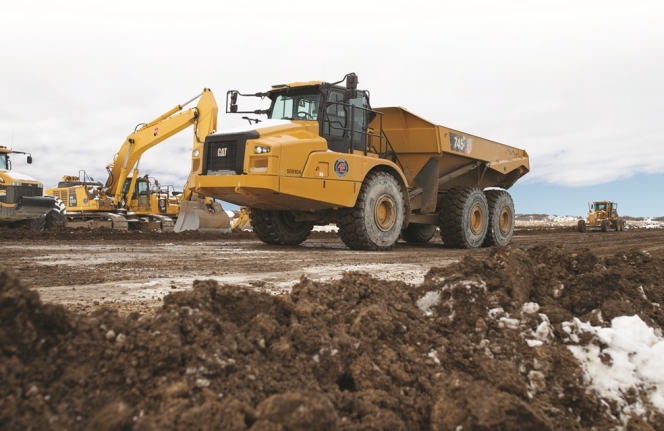
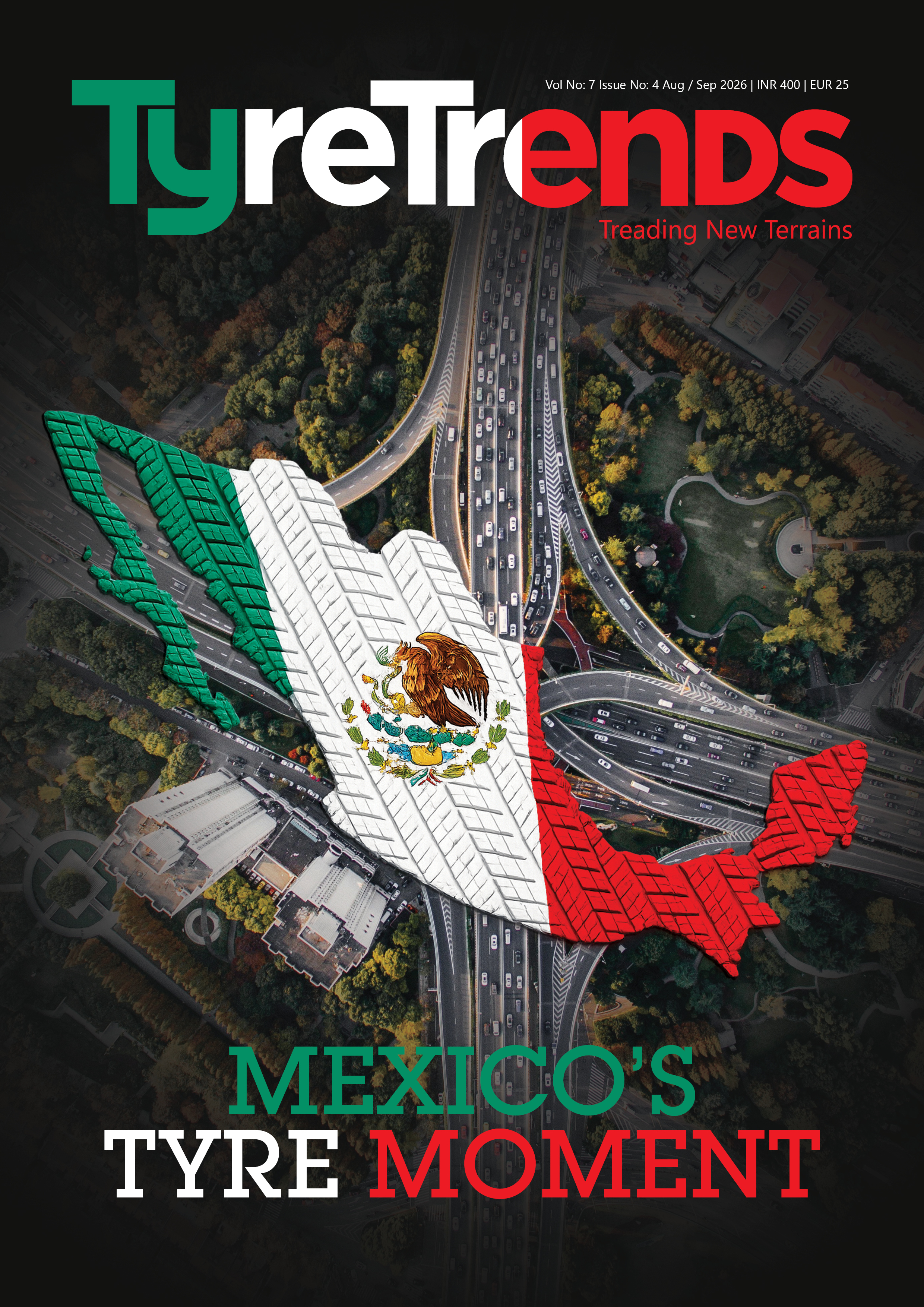
Yokohama Rubber Company’s decision to establish Mexico as the manufacturing hub for its Americas OTR operations signals more than a capacity expansion. It reflects a strategic overhaul of its global industrial footprint. As geopolitical uncertainties, tariff risks and supply-chain disruptions reshape manufacturing priorities, the company’s ‘local for local’ model seeks to position production closer to customers while strengthening resilience. The move also underlines its broader ambition to emerge as the world’s second-largest supplier of specialised mining and construction tyres.
Yokomaha Rubber Company is seeing Mexico as its gateway for Americas, especially its OTR tyre business. Mexico will serve as the production hub for Yokohama and Goodyear Off-the-Road branded products under its ‘local for local’ manufacturing strategy.
Yokohama Rubber will invest USD 115 million to build a mining and construction machinery tyre plant in Mexico as part of the second phase of expansion at its site, where a passenger car tyre plant is already under construction. The brownfield facility will have an annual production capacity of 10,650 tonnes (rubber weight), with construction due to begin in the third quarter of 2026 and production expected to start in the second quarter of 2028.
The company is also establishing a greenfield OTR tyre plant in Odisha, India, with an annual production capacity of 9,150 tonnes and a planned investment of USD 130 million. Production at the Indian facility is scheduled to begin in the third quarter of 2028.
The facility will supply OTR tyres across North and South America, complementing plants in Romania, India, Japan and the Czech Republic, while maintaining global quality standards supported by research and development centres in Japan and US.
Speaking to Tyre Trends¸ Yokohama OTR President Loic Ravasio said, “Mexico becomes the anchor of our Americas production, part of a broader move towards a ‘local for local’ model in which we manufacture OTR tyres in every major region, closer to the customers who use them. It joins a growing worldwide footprint that already includes Romania, India, Japan and the Czech Republic – every site held to the same quality benchmark backed by our research and development centres in Japan and US. For manufacturing specifically, Mexico’s role is to serve North and South America from one central site, putting product closer to mining, construction and infrastructure customers throughout the Americas.”
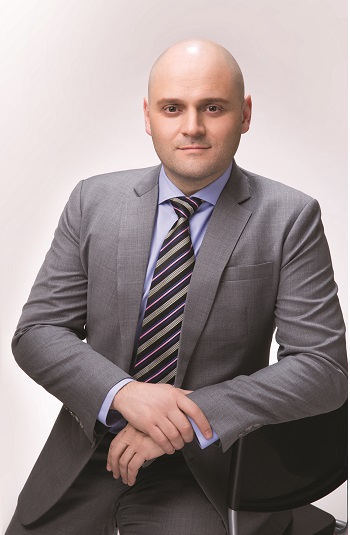 The plants in India and Mexico are sized and positioned for the regions they serve. These new facilities are part of the company’s transition from Goodyear-operated production to Yokohama-owned sites while also growing its total worldwide OTR capacity. Japan remains one of the company’s core production sites throughout, added Ravasio.
“Mexico’s plant and India’s greenfield plant will more than replace Goodyear plants capacity, allowing us to continue supplying our existing customers, supporting their growth, and also winning new customers with the additional capacity,” he added.
As for production responsibilities, the company’s goal is to produce tyres closest to the customers that need them. OTR plants are flexible and able to adapt to regional needs. “We’re not locking in specifics yet. We want to listen to customers and show them what the combined portfolio can do first and let that shape where things get built,” Ravasio said.
The Mexico manufacturing facility is being developed in Saltillo, Coahuila. Its centralised location for production and distribution across the entire Americas region will allow Yokohama to produce OTR tyres closer to its customers, shortening the lead time and improving responsiveness to customer requests.
“We’re building the Saltillo site to be state-of-the-art from day one including the technology and quality standards because we’re not planning only for today’s market, we’re planning for where our customers and this industry are heading,” said Ravasio.
MARKET ADVANTAGES
The acquisition of Goodyear’s OTR business has created optimum synergies for Yokohama Rubber Company as it is now leveraging the strengths of two complementary product portfolios, which lets it offer one of the most complete product ranges available and better meet the needs of its customers.
“Manufacturing, logistics, research and development synergies have all played their part, bringing procurement, production planning and engineering together from both organisations rather than running them in parallel. Together, that’s meant retaining the great majority of longstanding accounts from both sides and winning new customers we hadn’t worked with before,” said Ravasio.
 He added, “What’s really exceeded our initial expectations is the pace. We said we wanted to move quickly on capacity and within about a year of closing we’d already committed to three new or expanded plants across three continents. The two research and development centres working together have increased our capabilities to launch quicker new products and new technologies into the market. That pace shows real commitment to the OTR industry.”
Commenting on the advantages that Mexico offers the business, he noted that Mexico has a skilled, experienced manufacturing workforce and an established industrial supplier base. Its real advantage is geography as a single site here can efficiently reach customers across North America, Central America and South America, which is central to the company’s local-for-local approach.
Yokohama Rubber Company is also able to build on existing local relationships in the country, giving it a head start on talent and operational know-how as it brings the OTR plant online.
GROWTH DRIVERS
According to Ravasio, global infrastructure development in roads, rail and housing along with continued mining and construction activity continues to drive demand for OTR tyres across the Americas.
Mexico’s centralised location allows for shorter supply lines and tyres built closer to the mines and job sites that use them rather than shipped across oceans, which means less equipment downtime waiting on tyres.
“In a market where total cost of ownership (TCO) and not just tyre price drives the buying decision, minimising that downtime is one of the ways we compete,” he noted.
The Mexico plant is designed first and foremost to serve regional demand across the Americas. Nonetheless, the company’s global network is built for flexibility and the plant’s output can support other markets as needed to balance capacity across our worldwide footprint, said Ravasio.
The primary beneficiaries will be mining and construction operators across the Americas along with the infrastructure projects that depend on them. Yokohama Rubber Company’s priority is to better serve its customers, global or local, and to ensure business continuity.
Moreover, as competition toughens in the global OTR market, Yokohama Rubber Company seeks to secure the second spot in the list of world’s largest suppliers. Alluding to this, Ravasio said, “Our ambition is clear. We want to become the world’s second-largest supplier of specialised mining and construction tyres and the right manufacturing footprint is one part of how we get there alongside the same high-quality standards we’re building into every new site including Mexico.”
“Product quality and performance matter just as much and our research and development centres in Japan and US design tyres built specifically for this segment backed by services like tyre pressure management systems TPMS and EMTrack that give customers real-time visibility into tyre health and performance,” he added.
The target behind all of it is straightforward, which is to lower Yokohama customers’ TCO and help them run more competitive operations. Total cost of ownership matters more to OTR customers than any other measure and Yokohama Rubber Company is building everything including research and development, service tools and manufacturing around living up to its TCO leadership position in the market.
FIGHTING CHALLENGES
The plant is being built around modern, energy- and water-efficient lines with the digital process controls needed to hold consistent quality at scale. Producing closer to its customers also means less long-distance transportation of finished tyres and fewer transport-related emissions as a result.
Workforce training will be built around Yokohama Rubber Company’s current manufacturing standards and the plant’s operations will be measured against the environmental targets in its medium-term management plan.
Furthermore, this project is as much about people as it is about capacity. The company is leaning on local expertise and know-how in the region to build the Mexico manufacturing team paired with quality training grounded in its manufacturing experience from other parts of the world.
Hence, the site benefits from both perspectives from day one and creates meaningful skilled employment, directly at the plant and through the broader supplier network around it.
“It’s the same approach we’ve used successfully as we’ve expanded elsewhere. We invest in local talent, train heavily and hold everyone to the same standards we apply globally. Wherever we build, the people on the floor get the same training and hold the same standards as any other Yokohama site. That’s non-negotiable,” Ravasio said.
Alluding to tackling supply chain setbacks, the executive noted that producing closer to the customer is the clearest way to build resilience too as it reduces the company’s exposure to long cross-continental shipping routes and the risks that come with them, plus it helps mitigate the impacts of tariffs.
“Our plant in Mexico makes our overall industrial footprint stronger, which is what helps us weather supply-side setbacks rather than depending on any single site or transit lane. It also lets us react faster to swings in product trends and other unforeseen events because the people and the production capacity making that call are closer to where the need actually is. That kind of diversified, local-for-local footprint is deliberately designed to avoid the kind of supply shocks the industry has seen in recent years,” he added. And over the next five years, Mexico becomes one of the clearest proof points for the company’s local-for-local approach. “We expect continued growth from infrastructure and mining activity and customers pushing equipment harder, which raises the bar for durability and service as much as tyre technology. Regional manufacturing, closer partnerships with customers and the network we’ve built over the past year are how we intend to become the world’s second-largest supplier in the OTR industry,” Ravasio said.
Mexico’s emergence as the company’s Americas manufacturing hub represents a calculated investment in regionalisation rather than simple capacity addition. Whether this strategy translates into sustained market share gains will depend on execution, customer adoption and competitive pressures, but it firmly positions the company to respond faster to an increasingly demanding global OTR market.
Grismer Tire & Auto Service Appoints New CEO And CFO
- By TT News
- September 28, 2026
Grismer Tire & Auto Service, a tyre and automotive service centre operator backed by CenterOak Partners LLC, has named Chris Blanchette as Chief Executive Officer and Mark Hedstrom as Chief Financial Officer. The announcement marks a significant leadership transition for the portfolio company.
Blanchette arrives with over two decades of senior leadership experience in multi-site consumer services, specialising in operations, strategy and business development. He most recently served as Chief Executive Officer of Service Minds, a residential electrical, plumbing and HVAC services provider. His background also includes serving as Chief Operating Officer of QAS, which operates Valvoline Instant Oil Change locations, along with senior operational positions at Advance Auto Parts, Bridgestone Retail Operations and Best Buy.
Hedstrom brings more than three decades of finance expertise to his new role. He previously held the Chief Financial Officer position at W.S. Connelly & Co., a multi-regional specialty distributor, and has also served as Chief Financial Officer for several private equity-backed consumer and distribution companies.
Eric Holter, Managing Director, CenterOak, said, “Chris Blanchette brings highly relevant leadership experience in the automotive aftermarket. He has led complex, multi-location organisations and understands how to translate operational discipline into sustainable growth. Together, Chris and Mark add important depth to Grismer’s leadership team as the Company pursues expansion in existing and new markets.”
Blanchette said, “Grismer’s 90-year history and the trust it has earned with customers set the Company apart. I am excited to join a business with such a strong legacy and see significant
- International Rubber Conference
- Society Of Rubber Science And Technology Japan
- James Busfield
- Nobuyuki Tamura
- Bridgestone Corporation
- Japan Rubber Manufacturers Association
- Aichi International Exhibition Center
- Aichi Sky Expo
Japan To Host International Rubber Conference After Decade-Long Gap
- By TT News
- September 25, 2026
The International Rubber Conference (IRC) will return to Japan in November for the first time in a decade, with more than 271 technical presentations and over 117 exhibitors expected to take part.
The event, known as IRC 2026 Aichi, will be hosted by the Society of Rubber Science and Technology, Japan, alongside the Rubber & Elastomer Technical Exhibition in Aichi. It is scheduled to run from 2nd to 6th November, with the exhibition opening a day later and continuing until 6th November .
Held at the Aichi International Exhibition Center, also known as Aichi Sky Expo, the venue is located near Chubu Centrair International Airport and can be reached from Nagoya Station in about 28 minutes by train.
The conference programme will feature more than 271 presentations spanning rubber science, technology and industrial applications. Participants include James Busfield of Queen Mary University of London and Nobuyuki Tamura of Bridgestone Corporation, who also chairs the Japan Rubber Manufacturers Association. More than 400 delegates have already registered.
Running alongside the conference, the Rubber & Elastomer Technical Exhibition will host more than 117 exhibitors, ranging from raw material suppliers and machinery manufacturers to tyre makers and testing-equipment providers. The exhibition will be open to visitors free of charge.
The International Rubber Conference, first held in 1966, rotates annually across global host cities. The last event in Japan took place in Kitakyushu in 2016, with subsequent editions held in Haikou, Istanbul and Bangkok.
Pirelli Board Approves EUR 1 Billion US Investment Plan And Organisational Restructuring
- By TT News
- September 23, 2026
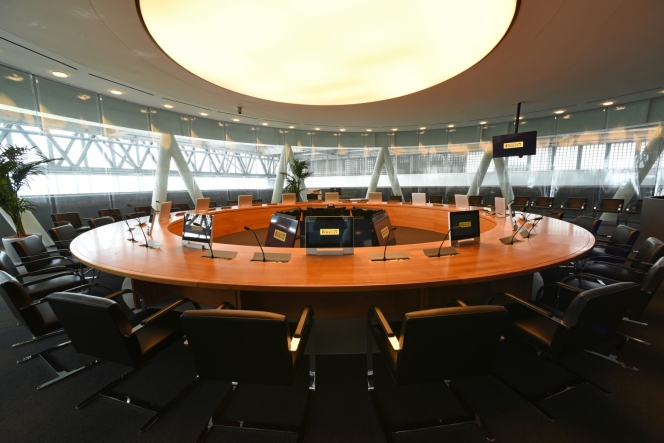
Italian tyre major Pirelli has announced a multi-year investment plan worth approximately EUR 1 billion (USD 1.2 billion) to expand its manufacturing facility in Rome, Georgia in the United States. The motion passed by majority vote, with board members Zhang Haitao, Xi Xiaohong and Wang Kun voting against the proposal.
The capital expenditure program, scheduled to begin in 2027 and will go through 2033, aims to expand annual production capacity at the Georgia site to six million tyres and create approximately 1,000 jobs.
The United States represents the largest market for high-value tyres globally, accounting for roughly 40 percent of global volumes. The project will be carried out in two phases without altering Pirelli's financial targets for 2026.
Phase one of the expansion will introduce modular robotised production systems based on Pirelli's Modular Integrated Robotised System technology, scaling annual output to three million tyres starting in 2028.
In phase two, the company will begin construction of an automated production facility to add three million units of annual capacity. The expanded plant will produce connected tyre systems, including Cyber Tyre technology, following market authorisation granted by the US Bureau of Industry and Security under Italy’s 2026 Golden Power Decree.
Alongside the investment decision, the board approved an organisational restructuring resulting in the immediate elimination of the Corporate General Management function. As part of the changes, Corporate General Manager Francesco Tanzi will step down from his executive role, maintaining an employment relationship through 31 December 2026 to facilitate the leadership transition.
Under the terms approved by the board and the Remuneration Committee, Tanzi will receive a severance payment equivalent to 13 months’ remuneration, payable by February 2027, alongside accrued rights under existing short-term and long-term incentive plans. He has agreed to a two-year non-compete covenant covering Pirelli's primary operating regions in exchange for 130 percent of his gross annual salary, paid in eight quarterly instalments. Following the end of his employment, Tanzi will provide advisory services under a two-year consultancy contract with an annual fee of EUR 350,000, plus non-monetary benefits valued at EUR 45,000.
Bridgestone Appoints Stefano Sanchini As President Of Europe Sales
- By TT News
- September 19, 2026
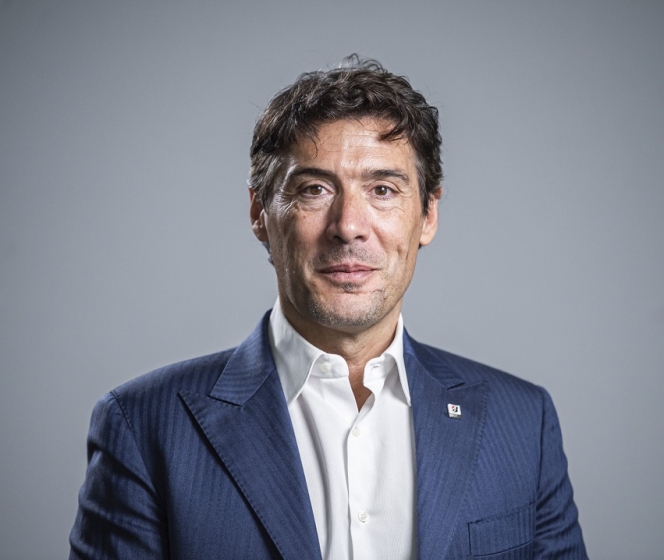
Bridgestone has announced a European leadership appointment aimed at sharpening customer focus, streamlining engagement across product groups and supporting its ongoing growth plans. Stefano Sanchini will become President, Europe Sales, effective 1 October 2026, leading the company’s European sales organisation across both Consumer and Commercial segments.
The expanded role unites sales activities spanning passenger car, truck and bus, agriculture, off-the-road, motorcycle and original equipment. Sanchini brings over 20 years of international leadership experience in the automotive and tyre sectors, with a career covering Europe, Middle East, Africa and India. Since joining Bridgestone in 2017, he has held several senior positions, including Managing Director of Bridgestone India.
Most recently, as Vice President for Consumer Replacement in Europe, he helped strengthen customer engagement, commercial performance, profitability and regional market growth. Bridgestone said the appointment underscores its commitment to customer relationships, commercial execution and simpler cross-market operations. Sanchini will pursue sustainable growth while developing capabilities and partnerships supporting the company’s long-term European strategy.
Mete Ekin, Group President EMEA, said, "Our customers increasingly operate across multiple product categories and expect a consistent experience wherever they engage with Bridgestone. By bringing our sales activities together under one European structure, we are creating a simpler, more connected organisation that will help us respond faster, collaborate more effectively and continue building strong partnerships with our customers."

Comments (0)
ADD COMMENT