

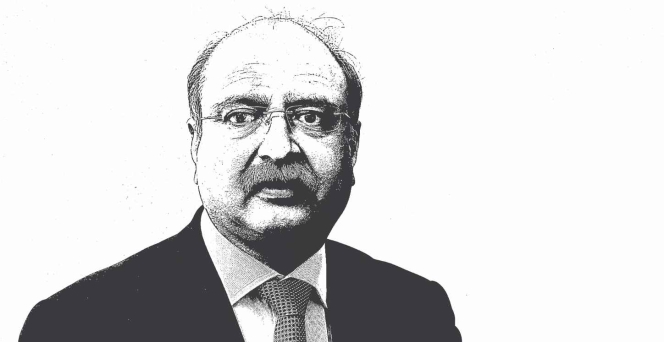
If the phrase was heavy, the package was heavier still. As big as Rs 20-lakh crore (with thirteen zeroes) package was announced by the Government for a self-reliant India. The package intends to help the country tide over the all-round economic disruption caused by the raging Covid-19 outbreak and a series of lock-downs. Besides the economic stimulus package which is 10% of India's GDP, PM also made a pitch for promoting local businesses.
As was the plan, the next few days witnessed Finance Minister Nirmala Sitharaman unveiling a slew of measures with the intention to help the Indian economy recover from the adverse impact of the coronavirus crisis. While the jury is still out about the direct stimulus of the economic package for the corporate sector, certain transformational and structural reforms have been introduced across several key areas, which certainly hold the potential to rebuild the Indian economy and pave the way for a sustained economic revival.
These include radical reforms in agricultural sector, redefinition of the micro, medium and small enterprises (MSMEs), key steps to revitalise the power sector, liberalisation of the coal and mining sectors and raising of the foreign direct investment (FDI) limit in defence manufacturing. These reform measures tried to address key pain points of the economy and to contribute towards enhancing India’s global competitiveness at a time when the world stands at a critical turning point.
However, what exactly Aatma Nirbhar means has been a subject of intense debate. Two leading lights that have been at the helm of affairs of Indian industry have shed appropriate light to make it sound cogent.
Amitabh Kant, the celebrated CEO of NITI Aayog made it very clear when he said Aatma Nirbhar Bharat is all about making India self-reliant to take the global competition head-on by achieving cost competitiveness through size and scale, quality and cutting edge technologies.
Achieving such lofty ideals is easier said than done and necessitate whole lot of policy enablers many of which have been cited by Kant himself including the need to provide industries with regular and cheap supply of power to boost competitiveness, identifying large land banks and equipping them with infrastructure, easing labour laws, timely land acquisition, environmental & other clearances and easy credit.
Some measures need special mention for instance efficiencies in the logistics sector - India’s port turnaround time is around 60 hours against that of China’s 20 hours and Korea’s 12 hours.
Union Minister for Commerce & Industry Mr Piyush Goyal hit the nail on the head when at Digital Summit organised by CII, he stated (through video conferencing of course) that Aatma Nirbhar Bharat was not just about greater self-reliance but also engaging with the world from a position of strength. India should be seen as a dependable partner and reliable friend in the world market, particularly when the global supply chains are undergoing a rejig, he stated. He specifically mentioned that India had a huge opportunity to promote indigenous production in the auto component sector.
And that brings us to India’s tyre sector which has been a less celebrated manufacturing success stories. As has been communicated earlier, a big chunk, nearly 20% of the domestic tyre production is exported to over 100 countries in the world. And these include discerning ones such as US and European countries. India has potential to increase exports of tyres significantly since domestic capacity is ahead of the demand curve. The quality of Indian made tyres is well established and that’s an added advantage when it comes to exports.
There is little doubt that Covid-19 has pressed the reset button and is likely to lead to a change in the world order. Perhaps that thought spurred the PM to state “Today it is the need of the hour that India should play a big role in the global supply chains”.
Tyre Industry is well aligned with the Government in its stated mission. However as shown by China, it is important to encourage domestic value addition by minimizing the raw material uncertainty and uncompetitive prices. For a sector like Tyre Industry, that will be true Aatma Nirbharta.
GRI Extends Pneumatic Tyre Warranty Coverage To 10 Years
- By TT News
- May 07, 2026
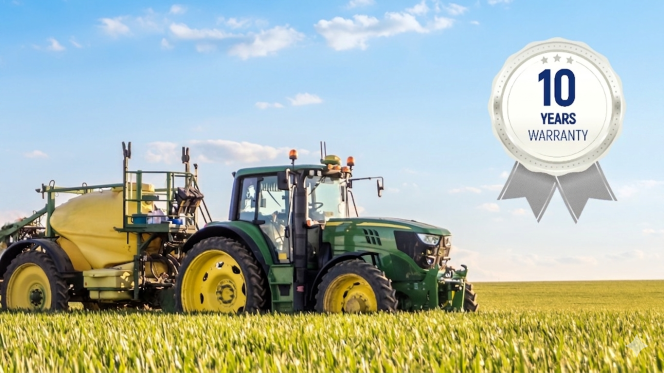
Sri Lanka-based GRI Tires has extended its limited warranty coverage for pneumatic tyres to up to 10 years, effective from 2026, as the specialty tyre manufacturer seeks to strengthen customer assurance across its agricultural, construction and material handling businesses.
The revised warranty policy applies to all GRI-branded pneumatic tyres manufactured on or after January 1, 2025, and covers customers in more than 80 countries. The company previously offered warranty coverage of up to seven years.
Under the updated policy, agricultural radial tyres will be covered for up to 10 years, while agricultural bias tyres will receive coverage of up to eight years. Construction, earthmover, industrial, material handling, port and mining tyres will be covered for up to five years, subject to terms and conditions.
GRI said warranty protection would cover qualifying defects, with credit issued on a pro-rated basis.
For qualifying failures occurring within the first three years, and where radial tyre wear does not exceed 20 per cent, customers will receive a full replacement credit.
The warranty applies exclusively to the original end-use purchaser.
“This enhanced 10-year warranty is more than a policy update — it is a statement of our conviction in the quality of every tire we manufacture,” said Barry Guildford, global commercial director at GRI.
“We build tires to perform in the most demanding conditions, and we stand behind them.”
Customers can submit warranty claims through authorised GRI dealers and distributors, or directly through the company’s customer support channels.
GNH Appoints Martin Rathke As Managing Director Of Nordmann Subsidiary
- By TT News
- May 07, 2026
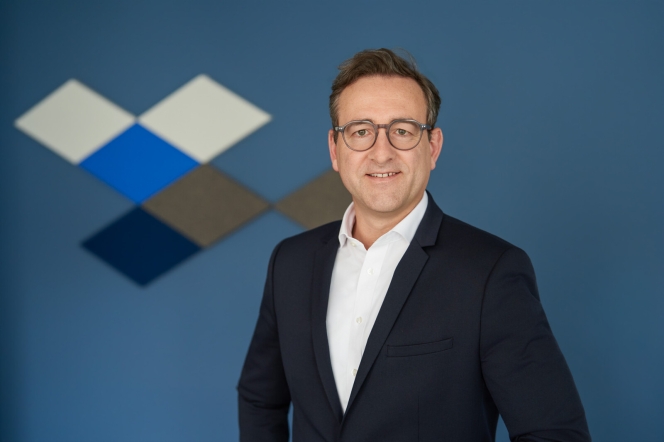
Georg Nordmann Holding Aktiengesellschaft (GNH) has appointed Martin Rathke as Managing Director of its subsidiary Nordmann (Nordmann, Rassmann GmbH), effective 1 May 2026. The move marks a strategic step in the company’s ongoing leadership development.
Rathke joins with considerable leadership experience and deep knowledge of international sales and distribution within the chemical distribution sector. His career includes years of service in a family-owned enterprise, where he held senior management roles with global responsibility. He will now share leadership duties with Ulrich Cramer, who remains in his position, and together they aim to form a closely aligned team to advance Nordmann’s strategic direction.
The joint leadership will focus on accelerating global expansion through targeted strategic, organic and inorganic growth while optimising existing operations and continuously refining the company’s portfolio strategy. Backed by the commitment of its shareholders, Nordmann seeks to strengthen its international presence and evolve into a global player in the chemical distribution industry.
Irina Zschaler, CEO of Georg Nordmann Holding Aktiengesellschaft, said, “Martin brings exactly the combination of entrepreneurial mindset, international experience and leadership strength that we value in our relationships and for our path to grow. Our collaboration is based on responsibility, integrity and the aspiration to create added value together for all involved and the entire group. We are therefore very much looking forward to welcoming our full Nordmann team.”
Linglong Tire Proposes $2bn Tyre Manufacturing Complex In Egypt
- By TT News
- May 07, 2026
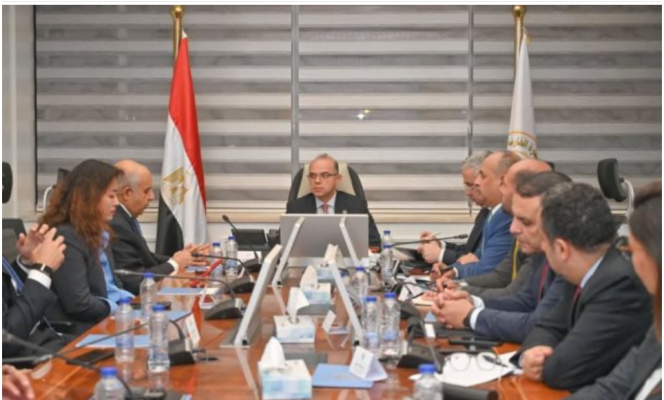
Shandong Linglong Tire has submitted a proposal to the Egyptian government to develop an integrated automotive tyre manufacturing complex in Egypt with planned investments of about USD 2 Billion, according to a media report.
The project, as per Egypt Torday, would be developed under the private free zone system in partnership with Fit & Fix and focus on producing tyres for passenger vehicles and heavy-duty trucks.
Mohamed Farid, Egypt’s Minister Of Investment And Foreign Trade, held discussions with company representatives regarding the proposed development, which is planned for Borg El Arab across an area of up to 3m square metres, added the report.
According to the proposal, the project would also include supporting industries such as rubber and carbon black production. About 90 per cent of output is expected to be exported, primarily to the US and Gulf markets.
Farid said attracting investments that support technology transfer and strengthen domestic manufacturing capabilities remained a priority for the Egyptian government. He added that expanding industrial capacity in sectors such as automotive components and tire manufacturing was important for increasing the value of Egyptian exports.
The minister said the free zone system was designed to simplify investment procedures and strengthen Egypt’s competitiveness in attracting foreign direct investment for industrial projects. He added that the private free zone framework offered incentives and operational flexibility to support exports and access to global markets.
The company said total investments were expected to reach USD 2 billion across different phases of development, subject to regulatory approvals and licensing requirements.
Sophie Li said Egypt’s geographic position and trade agreements made it an attractive regional manufacturing and export hub.
She added that the company planned to establish a fully integrated industrial complex using advanced production technologies in partnership with Nile Trade and Projects Company, with a focus on technology transfer and local industrial development.
Li said the company would continue working with Egyptian authorities to complete approvals and move the project towards implementation.
Galaxy Enters UTV & ATV Tyre Segment With Hulk PSX And Everest PSX
- By TT News
- May 06, 2026
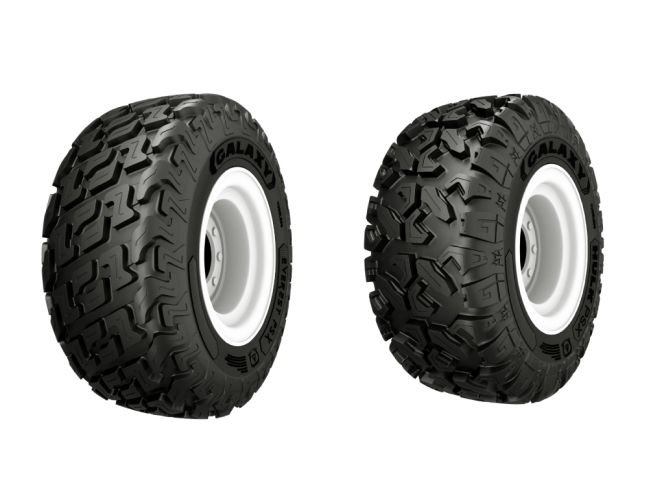
Yokohama ATG-owned Galaxy, a brand of tyres for construction, earthmoving and material handling, has entered the UTV and ATV segment with Hulk PSX and Everest PSX.
The company stated that the tyres are for use in the off-road segment and in utility applications, providing durability, life and traction across terrains. They are engineered to provide puncture resistance, stability and comfort for utility and recreational operations.
The Hulk PSX is for use off-road across terrains. It features a compound for tyre life and sidewalls for cut resistance. Radial construction is for performance, while shoulder blocks assist cornering and handling. It includes a tread design for traction and a tread-to-void ratio for wear resistance and stability. The model fits 12-inch and 14-inch rims to cater to UTV configurations.
On the other hand, the Everest PSX is suitable for utility applications, providing performance, durability and comfort. It offers resistance to cuts, chips and abrasions. Pattern continuity is for roadability and vibration reduction. The tyre provides traction and stability, including wet surface grip. It includes rim protection and puncture resistance for operations. The model is offered for 12-inch, 14-inch and 15-inch rims for UTV applications.
Dyutiman Chatterjee, Chief Technology Officer, Yokohama-ATG, said, “Building on its 100+ years legacy, Galaxy’s entry into the UTV/ATV category is a strategic step in strengthening its presence globally. These tyres are designed to meet the evolving needs of customers seeking performance, reliability and durability in extreme conditions.”
Comments (0)
ADD COMMENT