

Michelin Accelerates India Expansion To Tap Premium Passenger Car Tyre Market
- By Sharad Matade and Gaurav Nandi
- December 11, 2025
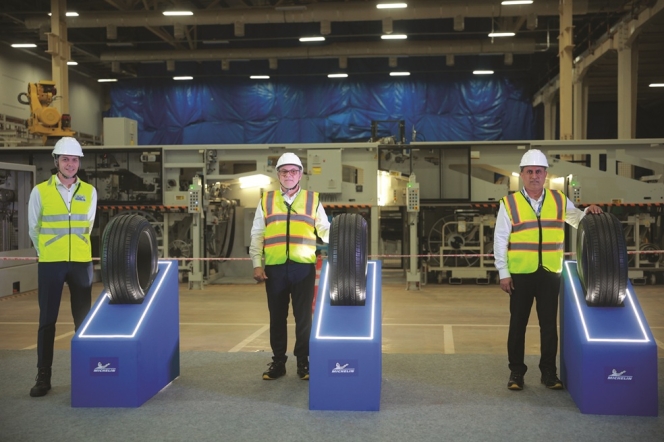
Michelin is turbocharged about India. The global tyre manufacturer has increased its investment in its Chennai plant to INR 6.86 billion, up from the INR 5.64 billion announced last September, as it prepares to manufacture premium passenger car tyres locally for the first time. The move comes as India’s automotive landscape undergoes a dramatic shift, with SUVs accounting for half of all new car sales and consumers increasingly willing to pay premium prices for safety and performance.
After more than a decade of producing only truck tyres in India and serving the passenger car segment through imports, Michelin is betting that the time is right to localise production. The company expects India’s premium passenger car tyre market to grow from 10-12 million units today to 17-18 million by 2030, driven by improving road infrastructure and evolving consumer preferences. With its first locally-made passenger car tyres – including the Primacy 5 and Pilot Sport ranges – expected to hit the market in the first half of 2026, Michelin is positioning India not just as a manufacturing base but as a centre of excellence for AI innovation, engineering talent and sustainable production across Africa, Middle East and beyond.
Last year, in September, Michelin had announced an investment of INR 5.64 billion in a brownfield expansion to produce passenger car radial tyres at its Chennai plant. Year-to-date, the company has already ramped up the figure to INR 6.86 billion, fuelled by its confidence in India’s passenger car market.
“We are bullish about India because of two major reasons. One is the transformation of the vehicle market itself, as last year, around 50 percent of new cars sold in India were SUVs. At the same time, road infrastructure is improving dramatically. That leads to the second factor that Indian consumers increasingly want bigger, safer cars with advanced safety features and they are willing to pay a premium for performance,” said Shantanu Deshpande, Managing Director at Michelin India.
Adding to Deshpande, Vitor Silva, President, Africa, India and Middle East (AIM), Michelin, said, “We see this as the perfect time for Michelin to complement that shift with tyres that deliver technology, safety, comfort and long-lasting performance. While we have been manufacturing truck tyres here for more than a decade, we will now also focus on passenger car tyres. Until now, we have been serving the segment largely through imports. But we believe the market dynamics have shifted and this is the right time to localise production.”
In line with this, the Chennai plant will also focus on premium passenger car tyres ranging from 16-inch to 22-inch sizes. According to Deshpande, the market is currently estimated at 10–12 million tyres and is expected to grow to 17–18 million by the end of the decade, making the investment not only timely but essential.
The plant will churn out its most advanced range – LTX Trail ST, Pilot Sport 4 SUV, Pilot Sport 5 and Primacy 5 tailored for the Indian market. The Michelin Primacy 5 will be the first tyre to roll out.
In the coming months, the tyres will undergo homologation and certification processes with BIS and other authorities. Once approved, the first Michelin passenger car tyres will be made available to Indian consumers. While no fixed deadline has been set, the commercial availability of these tyres is expected during the first half of the next year.
Michelin is structured into nine regions for business management purposes. Regarding India’s role in the wider region such as Africa, and the Middle East, operations have been designed to serve both as a production hub and a centre of excellence. The Indian facility will not only cater to domestic demand but will also strengthen Michelin’s position across the region through supply, innovation and talent development.
Its technology centre in Pune was described as one of the most important hubs for the group in the field of artificial intelligence (AI). In addition, strong capabilities in research and development, digital services, IT and corporate functions have been developed there.
India also has been positioned as a centre where talent is nurtured, contributing not only to Michelin globally but also to consumers worldwide through products designed locally.
“Tyres for North America and Europe have been designed in India and around a hundred AI proof-of-concept projects have been initiated, tested and are planned for eventual global deployment. The country is also a key source of raw materials for global operations. Michelin in India represents more than tyres, symbolising innovation, supply chain strength and talent development,” said Silva.
MANUFACTURING PROWESS
The Chennai plant, operational for 12 years, is among the most sustainable in India and globally of Michelin. It is a zero liquid discharge facility with 80 percent of water consumption recycled and 100 percent of waste reused.
By 2024, 45 percent of materials used to make tyres at the Chennai plant were renewable and recyclable, exceeding the global target of 50 percent by 2030. Forty-five percent of electricity comes from green sources, supported by infrastructure investments such as the 2022 solar facility.
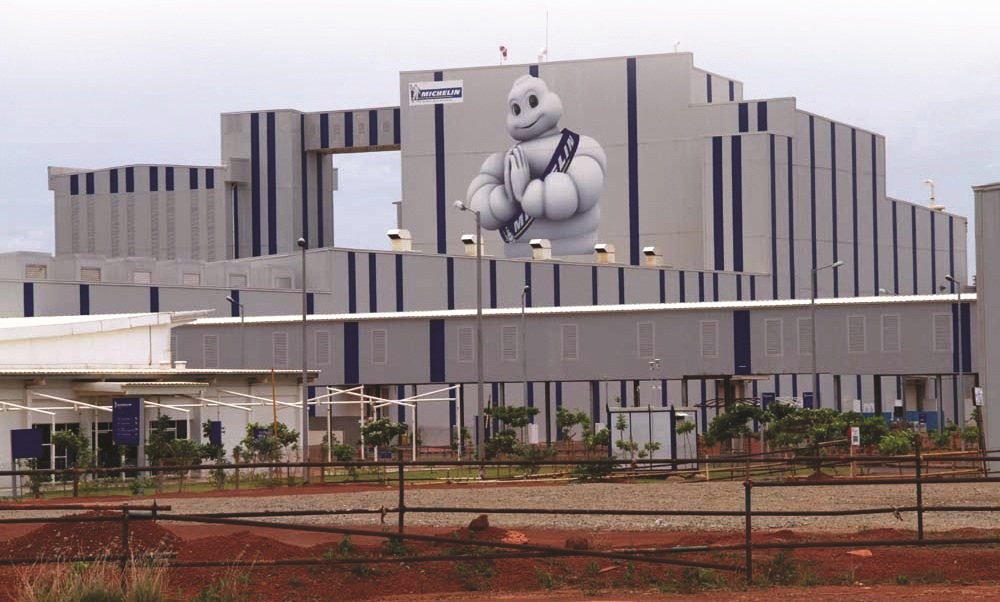 AI is integrated into daily operations, analysing machine performance, monitoring quality and supporting decision-making. These tools are accessible to both engineers and frontline operators.
Currently, the plant’s installed capacity is 54,000 tonnes with flexibility maintained to align production with fluctuating demand as tyre weights vary from 7–8 kilogrammes for 16-inch tyres to 15–16 kilogrammes for 22-inch tyres. Inventory constraints prevent storing six months’ worth of tyres, requiring production and demand to be closely synchronised.
“At Michelin, we homologate products based on the conditions of each region. That means the tyres made and sold in India are essentially the same as those sold globally but validated to perform in Indian conditions. So rather than a separate India-only tyre line, we bring world-class products that are equally well-suited to Indian roads,” contended Silva.
Flexibility has been built into the production lines, allowing a mix of products to be manufactured on the same machines.
Primary focus is given to serving the local market as the industry was regarded as highly complex. While some volumes may be exported and others imported, priority is assigned to the Indian market.
When asked about the impact of starting passenger car tyre production on the OEM segment, Deshpande explained that several large truck manufacturers, including Ashoke Leyland, Volvo, Mercedes and Scania, are already being served.
Regarding the passenger car segment, the focus has been on the replacement market. While several imported cars including the Hyundai Ioniq and multiple Mercedes-Benz models already come equipped with Michelin tyres, OEM engagement in this segment is planned for the future, though replacement currently remains the priority.
Commenting on raw material procurement from India, Silva stated that India is also leveraged as a supplier of raw materials for Michelin’s global factories. Carbon black, natural rubber and chemicals are procured locally. This approach emphasises not only production and services from Pune but also the utilisation of India’s industrial ecosystem to support the company’s worldwide supply chain.
Specific materials sourced from India include carbon black, chemicals, steel and other items, all of which must meet Michelin’s strict quality and pricing standards.
“Beyond materials, India also contributes significantly in terms of engineering. At the Chennai plant, a dedicated engineering division has been established to develop machines for our global operations. Certain machines are designed and manufactured in India before being shipped worldwide. Additionally, specific components for global operations are already being produced in India,” said Florent Chaussade, Executive Director, Michelin Chennai.
RETAIL SCOPE
Deshpande emphasised that the company’s focus extends beyond production to transforming the consumer buying experience. A state-of-the-art experience shop was recently inaugurated in Nashik. Premium retail environments are being ensured through clean shops, ample parking, advanced equipment and well-informed staff capable of clearly communicating Michelin’s superior value.
To strengthen the retail network, the Michelin Tyre Service (MTS) network is being expanded. Seventy-five MTS outlets currently operate across India, primarily in metro cities, with plans to establish Michelin Tyre Stores as the benchmark for tyre retail experience nationwide.
On online sales, the company’s approach is two-fold. “Pure e-commerce retail remains negligible in India, but the research online, purchase offline trend is significant. Efforts have been made to ensure accurate digital presence, guiding consumers on suitable tyres,
availability and recommended outlets. This strategy is aimed at aligning the online-to-offline journey with the premium performance of our products, recognising that Indian consumers are tech-savvy yet accustomed to traditional purchasing,” divulged Deshpande.
To communicate safety, comfort and performance to price-sensitive consumers, Michelin has launched a dealer digital programme, enhancing dealers’ online presence to provide accurate brand and outlet information.
Inside outlets, experience shops display simple ‘reasons to believe’, demonstrating value propositions such as lower rolling resistance and superior braking performance. Dealers and technicians are continuously trained to deliver consistent performance, comfort and safety.
“The approach is ongoing and comprehensive, combining digital engagement, premium retail environments, interactive demonstrations and continuous skill development to elevate both the product and the overall ownership experience,” Deshpande added.
MARKET WATCH
The company’s truck and bus radial (TBR) business in India has evolved in recent years to target customers and fleets that value total cost of ownership (TCO). The strategy is centred on tubeless truck tyres, particularly energy-efficient models.
“Around 60 percent of a fleet’s operating cost is fuel, and our Multi Energy Z + tubeless tyres are reported to save 8–10 percent in fuel compared with traditional tube-type radials, directly benefiting the fleet’s bottom line,” contended Deshpande.
He added, “Although the segment remains relatively small, leading coach operators are already 100 percent tubeless. New-generation fleet owners increasingly prioritise TCO and are driving the transition. Demanding fleets such as Delhivery, which operates trucks 16–17 hours daily, covering 20,000 km per month, choose us for reduced downtime, fuel savings and extended tyre life. Other major clients include ITS, DGFC and Best Roadways. In 2022, the Chennai plant produced India’s first four-star rated energy-saving tyre, marking a national milestone.”
Regarding market share, only 10–12 percent of trucks currently run on tubeless tyres, while the rest remain tube-type, explained the executive.
On the two-wheeler front, Michelin already sells locally manufactured tyres through outsourcing arrangements. Fastest growth is observed in the over 350 cc motorcycle segment driven by higher disposable incomes and improved infrastructure, mirroring the SUV boom in passenger cars.
When asked about India’s potential global role amid geo-political shifts including trade barriers, tariffs and overcapacity in countries such as China, it was stated that Michelin’s vision is to operate local-to-local wherever possible.
“The tyre supply chain is highly interconnected with nearly 200 materials used in a single tyre, making it impossible to source everything from a single location. Efforts are focused on reducing raw material intensity, increasing the proportion of renewable inputs and minimising environmental impact through green factories and cleaner materials,” concluded Silva.
Michelin’s India strategy integrates local manufacturing, sustainable practices and advanced consumer engagement to build long-term value.
Yokohama Europe Appoints Giuseppe La Iacona To Lead Southern Operations
- By TT News
- September 18, 2026
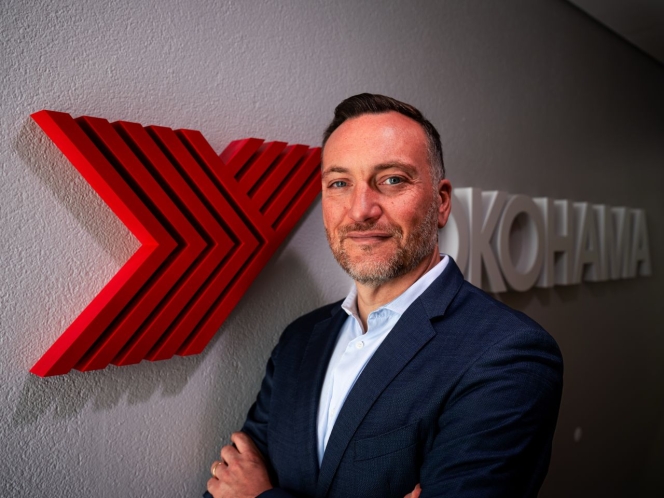
Yokohama Europe has appointed Giuseppe La Iacona to a series of senior leadership roles as the company seeks to strengthen its position across the region.
La Iacona joined the business on September 15 and will assume responsibility for supporting growth and organisational consolidation in the European market.
He brings more than 20 years’ experience in the tyre industry, spanning sales, marketing, business development, country management and international customer relations. He has held senior roles across several European markets, developing experience in managing local dynamics while driving cross-border business expansion.
Reporting to Takashi Maki, La Iacona has been appointed General Manager for southern Europe, where he will lead a newly created regional cluster covering Italy and France. The role is intended to improve coordination and operational synergies between the two markets.
He will also serve as Chief Executive of Yokohama Italia, with overall responsibility for the Italian subsidiary, alongside taking on the role of head of international customers. In that capacity, he will oversee the management and development of clients operating across multiple European markets, with the aim of creating a more consistent commercial approach and strengthening collaboration between subsidiaries.
His remit includes improving organisational alignment and fostering closer cooperation between markets and customers as the company expands its European operations.
“I am very pleased to welcome Giuseppe to YOKOHAMA Europe at an important stage in our development,” said Maki. “His extensive international experience, deep knowledge of the tyre industry and ability to work across different markets will be valuable assets as we continue to strengthen our European organisation and pursue sustainable growth.”
La Iacona said: “I am excited to join YOKOHAMA Europe and to contribute to the company’s next phase of growth in Europe. YOKOHAMA has a strong heritage, a distinctive brand and significant opportunities across the European market. I look forward to working closely with our teams, customers and partners across countries to further develop the business and strengthen our presence in the region.”
Özka Tyre Appoints Mehmet Yüksel As New Chief Operating Officer
- By TT News
- September 18, 2026
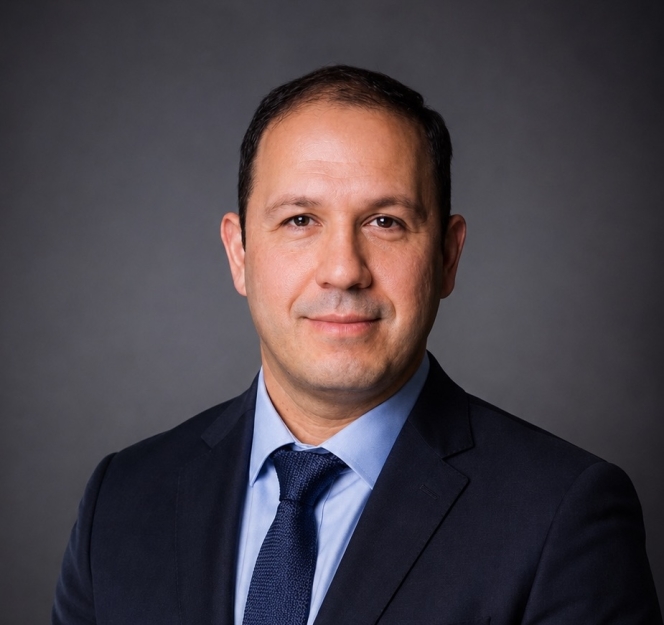
Özka Tyre, a prominent Turkish manufacturer of tyres for agricultural and construction equipment, has reinforced its leadership team as part of a broader push towards global expansion and technological modernisation in production. The company has appointed Mehmet Yüksel as its new Chief Operating Officer, bringing aboard an executive with extensive senior experience from Goodyear’s Luxembourg-based international organisation.
In his new role, Yüksel will oversee functions central to Özka’s production and operational strength. His responsibilities encompass production, quality, research and development, planning, investment and projects, electricity and maintenance, occupational safety and quality management systems, positioning him to steer critical areas of the company’s industrial performance.
Driven by investments and a focus on advancing its manufacturing strength, Özka continuously monitors shifts in the worldwide tire sector, particularly technological progress in Europe, and uses those insights to shape its future production infrastructure. As new investments prepare to elevate its output capacity and technical systems, the firm is simultaneously bolstering its organisational framework to sustain that transformation.
Cabot Names Steve Delahunt As Interim CFO
- By TT News
- September 16, 2026

Cabot Corporation has named Steve Delahunt, currently Vice President and Corporate Treasurer, to assume the Chief Financial Officer role on an interim basis starting 1 October 2026. He will hold the position while Cabot continues searching for a permanent finance chief.
The interim appointment follows the previously disclosed leadership transition in which Erica McLaughlin, Executive Vice President, Chief Financial Officer and Head of Corporate Strategy, will become President and Chief Executive Officer on the same date. McLaughlin succeeds Sean Keohane and will relinquish her CFO duties at that time.
Delahunt brings over three decades of finance and treasury experience, including nine years leading Cabot's investor relations function through January 2026. As Corporate Treasurer, he oversees global treasury operations, capital markets strategy, liquidity management, banking relationships, risk management and pension investments. He has been central to Cabot's capital allocation, financing, investor engagement and strategic growth initiatives, as well as strengthened shareholder relations during his investor relations tenure.
McLaughlin said, “Steve is a highly respected finance leader with deep knowledge of our business, strong relationships across our global organisation and a proven track record of disciplined financial leadership. As we continue executing our strategy and building on our strong financial position, Steve’s experience, judgment and understanding of our business make him exceptionally well suited to lead our finance organisation while the Company conducts its search for our next Chief Financial Officer.”
JK Tyre Launches New Off-The-Road Tyres For Construction And Mining Sectors
- By TT News
- September 15, 2026
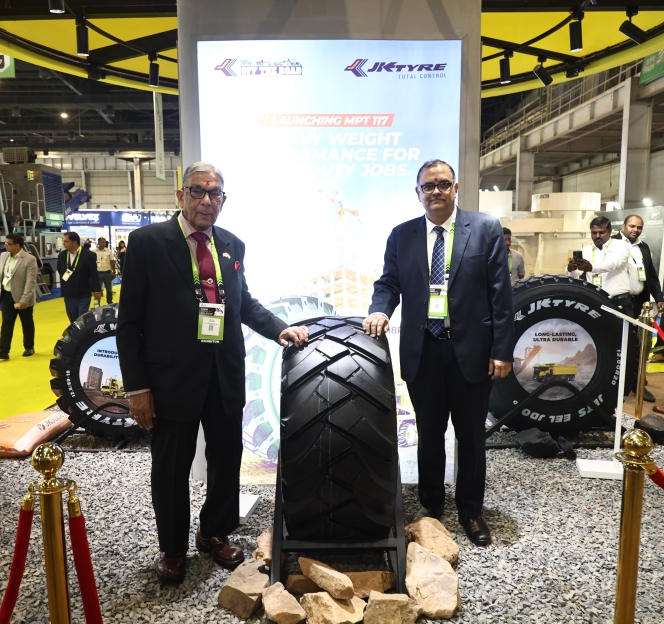
JK Tyre & Industries Ltd has launched four new off-the-road (OTR) tyre products for construction, material handling and mining applications, as the company expands its portfolio in performance-focused segments.
The products were unveiled at BAUMA CONEXPO INDIA 2026, held at the India Expo Centre in Greater Noida, and are designed to improve durability, load-carrying capacity, traction and operational efficiency in demanding conditions.
The new range includes tyres for self-loading concrete mixers, backhoe loaders, telehandlers and mining tippers. JK Tyre said the additions are intended to meet evolving requirements across India’s construction, infrastructure and mining sectors.
Srinivasu Allaphan, Director of Sales And Marketing at JK Tyre & Industries Ltd, said: “India’s infrastructure and industrial growth is creating a growing need for high-performance, reliable and application-specific mobility solutions. At JK Tyre, we are committed to developing OTR solutions that address the specific needs of our customers and the demanding conditions in which their equipment operates. Our latest range combines durability, reliability and performance to help customers maximise equipment uptime and operational efficiency. As we continue to strengthen our premium OTR portfolio, we remain committed to delivering solutions that create value for our customers and support the growth of India’s construction, infrastructure and mining sectors.”
The company said the MPT 45 tyre pattern has been developed for traction and stability in mixed terrain, while the MPT117 range is designed for construction and material-handling operations, with a focus on grip and durability. A separate JDO XD tyre has been introduced for mining tippers, with reinforced construction aimed at resisting cuts and abrasions.
JK Tyre said the products were developed with Indian operating conditions in mind and are intended to improve machine performance and reduce operating costs in demanding applications.
The group added that the launch supports its expansion in off-the-road tyres across construction, mining and specialised industrial segments.

Comments (0)
ADD COMMENT