

Hankook Tire Pilot Tests New Driving Optimisation Solution
- By TT News
- March 15, 2022
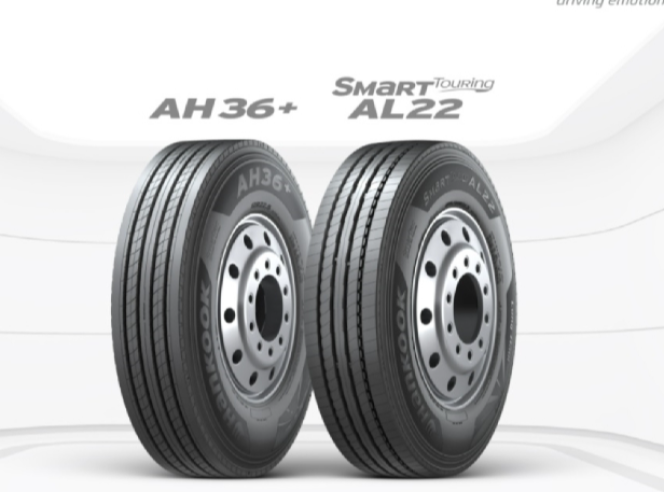
Hankook Tire pilot tested a new driving optimisation solution that aims to provide data analysis for fleet operators based on driving habit analysis.
Reducing the total cost of ownership (TCO) is particularly crucial when operating commercial vehicles such as trucks and buses and fleet owners are aware of the importance of maximising tyre performance including braking, wear-resistance and fuel use. It collects and analyses various data with a driving recorder, GPS and tyre sensor attached to vehicles, the company said in a release.
Hankook tested the solution with Korean transportation company EHWA Air and Travel Agency from July 2020 to September 2021. The pilot test was conducted on drivers of four regional buses that travel more than 7,000 km per month. Hankook monitored data and carried out analysis of each bus driver’s driving habits such as speeding, rapid acceleration and deceleration, braking and idling. Based on the result, Hankook created and delivered the improvement guide to EHWA Air and Travel Agency on driver training, tyre maintenance and vehicle management, the release said.
For example, the data analysis shows that there are more tyre wear out and fuel usage from increased braking time and where the engines left running idly. The biggest difference shown in the test data goes up to 20 percent drop in fuel efficiency meaning, avoiding frequent braking and engine idling can help TCO optimisation.
In addition, it was observed that tyre pressure commonly decreased in the winter season. Due to low temperatures, air pressure inside a tyre which normally is around 120 psi dropped to as low as 96 psi. The finding implies that tyre pressure inspection is a critical focus in winter, and that checking tyre pressure every two months can reduce fuel consumption.
The optimisation solution is beneficial not only in an economic aspect, but also in an environmental aspect, the company claimed.
Hankook will conduct more tests and studies for the solution prior to its official launch planned in 2024. It will also use the big data to be collected through the solution for high-quality tyre development.
Sooil Lee, President and CEO of Hankook Tire & Technology, said, “Fleet owners are particularly interested in improving cost efficiency in vehicle operation and maintenance but we understand it’s not easy to find the potential areas of improvement. Hankook Tire aims to tackle this issue and provide assistance with the solution. When it’s fully ready, it will greatly aid cost optimisation as well as sustainability innovation.” (TT)
Yokohama Rubber, dotData Partner On Human-In-The-Loop AI Agent For Manufacturing R&D
- By TT News
- October 15, 2026

The Yokohama Rubber Co., Ltd. and dotData, Inc. have announced joint development an AI agent to help engineers form hypotheses, interpret findings and make decisions in manufacturing R&D. Before full deployment, the initiative will validate the agent's required capabilities and technical feasibility.
The solution combines technical documents such as design specifications and experimental reports with engineers' accumulated expertise and features extracted from measurement data via dotData's Signal Intelligence technology. It will provide insights tailored to each project's objectives, circumstances and constraints.
The agent is not meant to produce a single correct answer. Operating in a human-in-the-loop framework where engineers retain decision-making authority, it will present multiple possibilities, perspectives and risks to broaden thinking and support professional development.
Manufacturing R&D generates diverse data through experiments, simulations, production and evaluation. Developing hypotheses requires specialised knowledge and context. Since new technology R&D rarely has one predetermined answer, abductive reasoning plays a key role. AI can add value by using data and organisational knowledge to widen engineers' perspectives rather than replace judgment.
The agent will explore measurement and experimental data patterns beyond factors engineers previously identified, combining quantitative insights with design documents and expert knowledge to reveal difficult-to-spot relationships. It will offer input from materials, design, analysis, production and evaluation perspectives, challenge existing hypotheses and raise questions about alternative interpretations and conditions. Engineers will then test hypotheses and feed results back into further dialogue, guiding Signal Intelligence processes so non-specialists can explore data features as needed.
Yokohama Rubber has advanced HAICoLab since 2020, using dotData as a foundational technology in tyre design and rubber mixing. This joint development expands those efforts, with engineers interpreting and evaluating the agent's suggestions using their own expertise rather than accepting them unquestioningly. The companies aim to transform R&D processes while strengthening engineers' creativity and judgment, establishing a new model for human-AI collaboration in manufacturing R&D.
Motoji Fujita, Head of Research & Advanced Development Division, The Yokohama Rubber Co., Ltd., said, “Since 2020, we have conducted research and development under the HAICoLab framework, drawing on the complementary strengths of people and AI to create a collaborative environment. We believe AI agents will give engineers access to perspectives beyond their own experience and enable them to evaluate hypotheses from multiple angles. Through this development initiative, we aim to advance our R&D capabilities while supporting the continued growth of our engineers.”
Ryohei Fujimaki, CEO, dotData, Inc., said, “Success in manufacturing R&D depends heavily on an organisation’s ability to connect its proprietary data and knowledge with AI. The quantitative context generated from data through automated Signal Intelligence provides a foundation for AI agents to engage engineers in practical, data-driven discussions. Together with Yokohama Rubber, which has many years of experience in advanced data utilisation, we intend to establish standards for using AI in highly specialised business domains.”
Bridgestone Deploys Easytrack At SR Technics Spain MRO Hub
- By TT News
- October 10, 2026
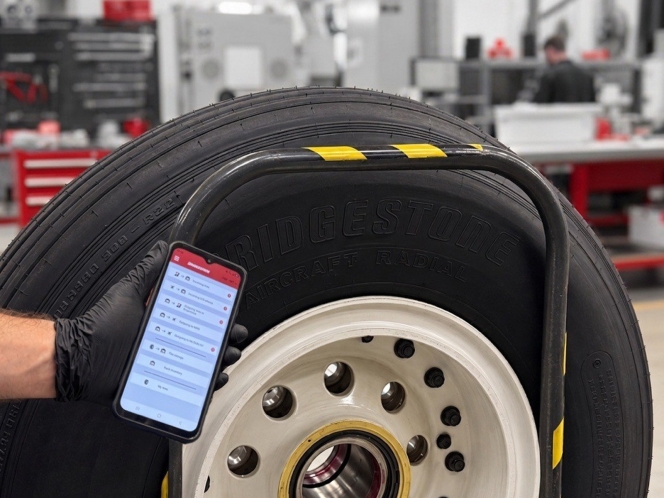
Bridgestone Aircraft Tire (Europe), a Bridgestone Corporation subsidiary, has announced the deployment of its ‘easytrack’ tyre management system at SR Technics Spain SAU, the tyre and wheel maintenance hub of global maintenance, repair & overhaul (MRO) provider SR Technics. The scalable digital platform is accessible on desktop and mobile devices.
Designed for airlines and MROs, ‘easytrack’ manages inbound and outbound tyre and wheel flows across single- or multi-site operations. It delivers real-time identification, tracking and documentation throughout each asset’s lifecycle. The project follows the solution’s first airline implementation in 2025, becoming its second customer rollout and first MRO application.
MRO providers handle large tyre and wheel volumes for multiple airlines, complicating operations. ‘easytrack’ simplifies asset management and improves traceability, accuracy, safety and productivity. At SR Technics Spain SAU, it digitalised paper-based processes, cutting processing time by 45 percent, reducing data-entry and identification errors and improving flow management across Palma de Mallorca and Madrid.
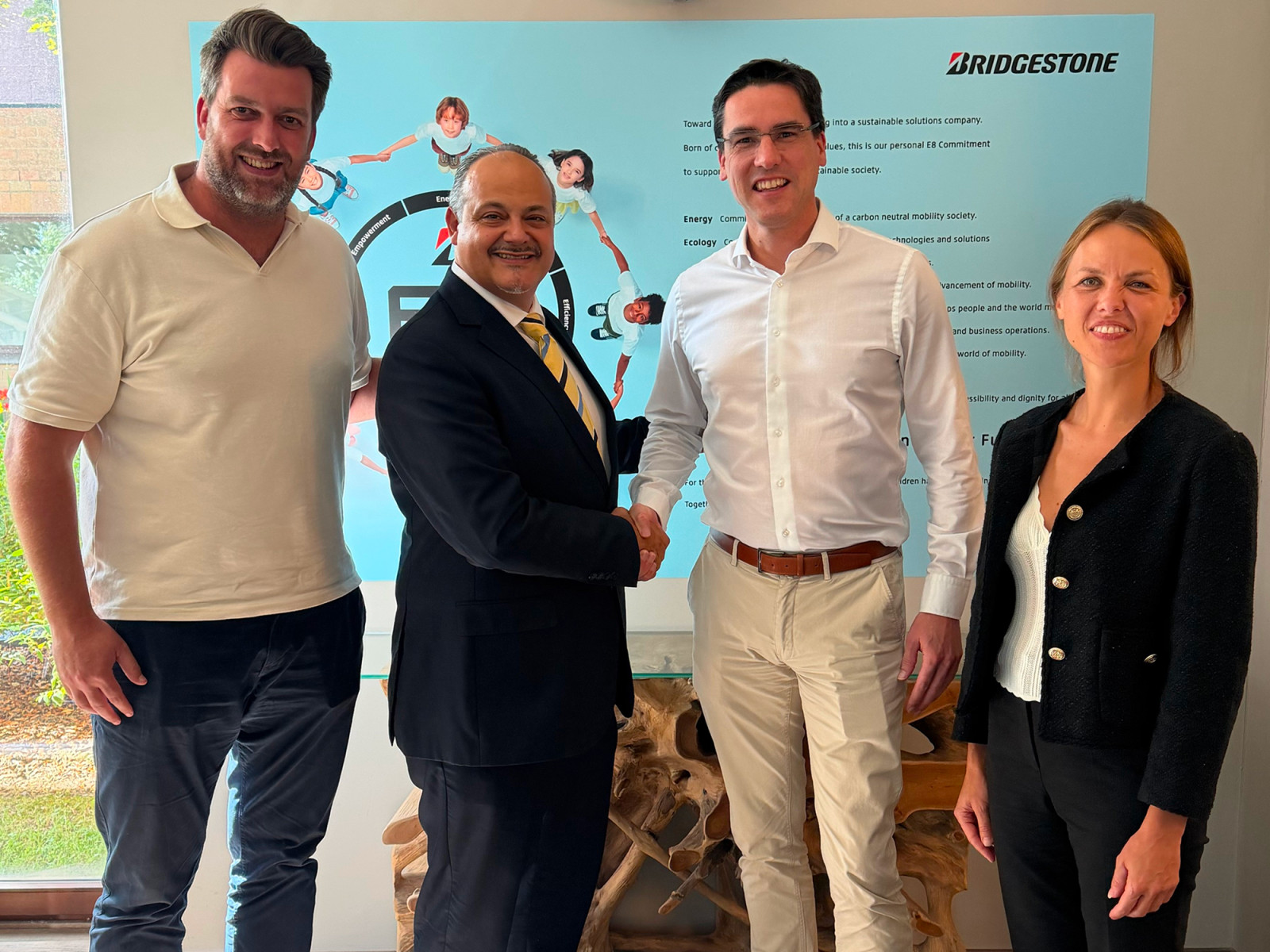
From left: David Sautois, ‘easytrack’ Product Manager, Bridgestone Aircraft Tire (Europe) S.A.; Antonio Colella, General Manager, SR Technics Spain SAU; Jean-Philippe Minet, Managing Director, Bridgestone Aircraft Tire (Europe) S.A.; Eugenie Baradzina, Commercial Director, SR Technics Spain SAU.
The results stem from a Bridgestone and SR Technics Spain SAU co-creation initiative built on long-standing partnership. ‘easytrack’ was adapted to support tyre and wheel combinations for the hub’s wheel and brake operations. Bridgestone’s expansion of airline and MRO solutions aligns with its E8 Commitment, emphasising efficiency and ecology.
Antonio Colella, General Manager, SR Technics Spain SAU, said, "The successful implementation of easytrack is a significant achievement for SR Technics Spain SAU and our teams in Mallorca and Madrid. From the very beginning, the collaboration with Bridgestone was built on trust, openness and a shared vision for innovation. Together, we have developed a solution that not only improves efficiency and traceability but also creates lasting value for our operations. We are proud to be the first MRO in the world to adopt this technology and look forward to continuing this journey with Bridgestone Corporation.”
Jean-Philippe Minet, Managing Director, Bridgestone Aircraft Tire Europe, said, “I’d like to thank SR Technics for their trust and another fruitful collaboration with Bridgestone. What the teams have jointly achieved is remarkable: co-creating through efficient teamwork and customising the Bridgestone easytrack application to digitise SR Technics tyre and wheel tracking operations. This is a brilliant example of how Bridgestone amplifies the value created at our partners.”
Michelin Connected Fleet And Doran Launch Integrated Tyre Management System
- By TT News
- September 09, 2026
Michelin Connected Fleet, a subsidiary of Michelin North America, has entered into a collaboration with Doran to integrate the latter’s tyre pressure monitoring hardware with its own Smart Predictive Tire solution. This combined offering is now accessible through the Platform Science Virtual Vehicle Marketplace, marking the first retail platform to host the integrated system.
The partnership merges Doran’s commercial tyre pressure and temperature monitors with Michelin’s predictive analytics software, creating a unified tyre management ecosystem. By fusing real-time sensor data with connected vehicle intelligence, the solution aims to enhance fleet visibility into tyre health, thereby enabling more informed maintenance scheduling and operational strategy. This development follows Michelin Connected Fleet’s recent launch of Smart Predictive Tire on the same marketplace, now broadening access to a fully bundled hardware-software package.
Utilising advanced data analytics, Smart Predictive Tire identifies emerging tyre issues through pressure and temperature readings, allowing fleets to pre-empt costly roadside failures and minimise unplanned downtime. Doran’s sensors supply the critical digital inputs that feed this predictive model, delivering comprehensive tyre oversight. The joint effort underscores both companies’ dedication to progressing connected fleet capabilities via synergistic hardware, software and data integration.
Willem Moore, President, Michelin Connected Fleet, said, "Doran provides the signal, and our Michelin Smart Leak algorithm helps translate tyre data into actionable insights that support informed maintenance decisions. By providing visibility into potential tyre conditions, fleets can evaluate issues sooner and take appropriate action based on their operational needs. Our focus is on delivering information that helps fleets manage their tyre assets more effectively and helps to support safe, efficient operations.”
Jim Samocki, President, Doran, said, “Fleets do not just need more data. They need accurate and reliable information that they can trust to reduce tyre-related repair and maintenance costs, improve uptime and keep vehicles operating safely. By combining Doran’s proven TPMS technology with Michelin’s Smart Predictive Tire solution, fleets can move beyond simply reacting to tyre issues and take a more proactive approach to tyre maintenance.”
Vicissitudes Of Mexican Retreading
- By Gaurav Nandi
- September 09, 2026
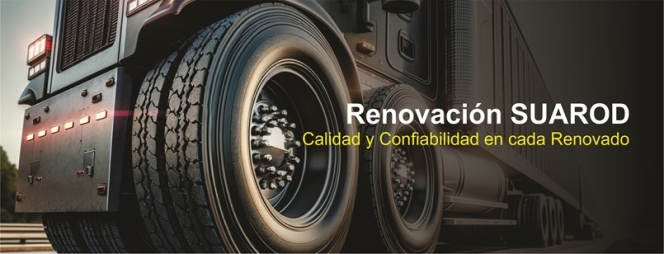
As freight operators across Mexico race to cut operating costs and meet increasingly stringent sustainability targets, tyre retreading is emerging as a critical tool for extending tyre life and reducing fleet expenses. Yet the industry’s growth is being tested by the influx of low-cost disposable imports, an expanding informal market and lingering misconceptions about retread safety. Against this backdrop, Renovacion Suarod is investing in advanced diagnostics, automation and lifecycle tyre management to position itself at the forefront of Mexico’s evolving retreading industry.
Mexican tyre retreader Renovacion Suarod is betting that rising demand for lower operating costs, improved fleet efficiency and corporate sustainability will accelerate the adoption of premium retreaded tyres even as the industry grapples with low-quality imports and the need to educate customers about the safety and performance of modern retreading technologies.
Speaking to Tyre Trends, Salvador Espinosa Perez, spokesperson and executive representative at Renovacion Suarod, characterised Mexico’s tyre retreading industry as entering a period of greater maturity and heightened competition.

“On one side, commercial fleet operators are facing increasing pressure to reduce operating expenses while meeting corporate sustainability targets. Those trends have renewed interest in tyre retreading as fleets seek to maximise tyre life and reduce environmental impacts,” he stated.
At the same time, the industry continues to face structural challenges.
One of the most significant concerns, according to Espinosa, is competition from the informal sector, where quality standards may not always match those of established retreaders.
Another challenge comes from increasing imports of inexpensive tyres that are often manufactured for single-use applications and lack the structural integrity required for multiple retreading cycles.
“The formal market in Mexico is resilient and moving steadily towards complete technical professionalisation,” Espinosa said.
The company, an authorised retreader for Industrias de Hule Galgo, has more than five decades of experience, investments in advanced manufacturing technology and digital inspection systems that have positioned it as a long-term partner for commercial fleet operators rather than simply a tyre supplier.
“Our history is synonymous with evolution, consistency and leadership in the Mexican market,” said the executive.
DEMAND DRIVERS
Espinosa identified three primary factors supporting demand for retreaded commercial tyres in Mexico.
The first is the growing adoption of circular economy principles. Companies across multiple industries are increasingly seeking measurable ways to reduce environmental footprint. Retreading extends the useful life of tyre casings, reducing waste generation and lowering raw material consumption compared with manufacturing new tyres.
The second driver is cost efficiency. “Commercial tyres represent one of the largest operating expenses for transportation fleets. By extending casing life through multiple retreading cycles, fleet operators can significantly reduce their total cost of ownership, making retreading an increasingly attractive financial proposition,” divulged Espinosa.
The third driver is the rapid growth of nearshoring. As manufacturing investment and cross-border freight activity continue expanding across North America, trucking fleets require highly reliable tyre solutions that maximise vehicle uptime and minimise interruptions along transport routes.
According to him, these factors collectively are reshaping purchasing decisions throughout Mexico’s commercial transportation sector.
RETREADING FOCUS
Founded more than 50 years ago, the company was established with the objective of providing a sustainable and efficient mobility solution for Mexico’s transport sector. Over the decades, it has expanded its operations by investing in modern production technology, implementing stringent quality-control procedures and developing services tailored to the operational demands of Mexico’s commercial transport industry.
According to Espinosa, these investments have enabled the company to build long-term relationships with some of the country’s largest fleet operators.
“Today, we are not merely a supplier but an indispensable strategic partner for transport operators,” he said.
Renovacion Suarod specialises primarily in retreading commercial tyres used in heavy-duty freight transportation, passenger transport fleets and off-the-road (OTR) applications.
The company uses the cold retreading or precured process, which Espinosa described as the benchmark for high-performance commercial fleets.
Unlike processes that require rebuilding an entire tyre, cold retreading preserves the structural integrity of the original tyre casing while replacing only the worn tread. A pre-vulcanised tread is applied to the inspected casing before being cured in an autoclave under carefully controlled pressure and temperature.
According to the him, the process allows the retreaded tyre to deliver mileage comparable to that of a new tyre while maximising the value of the original casing.
The company’s primary production facility is located in Metepec in the State of Mexico, a location that Espinosa says provides efficient access to the country’s major logistics corridors.
He added that the location enables faster response times and more efficient deliveries to customers throughout central Mexico and other regions.
The Metepec plant is equipped with modern production equipment and infrastructure capable of processing substantial monthly tyre volumes. It also maintains sufficient operational flexibility to accommodate increases in demand from major corporate fleets without sacrificing technical precision or product quality.
BEYOND RETREADING
Renovacion Suarod attributes much of its competitive position to its status as an authorised retreader for Industrias de Hule Galgo.
The partnership allows the company to use rubber compounds specifically formulated to perform under Mexico’s diverse road and operating conditions.
Espinosa said the company has shifted from offering conventional retreading services to providing complete tyre lifecycle management.
Rather than selling a single retread, the objective is to maximise the economic value of every casing throughout its usable life while delivering the lowest possible cost-per-kilometre for fleet operators.
Commercial fleet operators are also becoming increasingly sophisticated in how they evaluate tyre performance. According to Espinosa, purchasing decisions are no longer based simply on obtaining the lowest acquisition price.
Operators also demand greater predictability in maintenance planning. Rather than reacting to tyre failures, fleet managers want to know precisely when maintenance will be required in order to avoid unplanned roadside breakdowns and improve operational efficiency.
Fuel economy has likewise become a growing priority. “Fleet operators increasingly expect retreaded tyres to meet low rolling resistance requirements that contribute to lower fuel consumption and reduced operating expenses,” noted Espinosa.
INNOVATION GIVES QUALITY
Innovation remains central to improving retread performance, according to Espinosa. The company continues developing tread patterns and rubber compounds designed to dissipate heat more effectively, reduce irregular tread wear and improve traction on wet road surfaces.
Process innovation has also become an important focus. Renovacion Suarod has invested in increasingly precise vulcanisation procedures to ensure consistent product quality throughout the retreading process.
In addition, the company employs advanced bonding cushion technologies designed to strengthen adhesion between the casing and the replacement tread.
According to Espinosa, these technologies are intended to eliminate the risk of tread separation while improving long-term reliability.
Digitalisation is also becoming an increasingly important component of tyre inspection, retreading and fleet management.
Espinosa said the transformation begins before production even starts. At the company’s Metepec facility, every tyre casing undergoes a comprehensive digital inspection to determine whether it is suitable for retreading.
The company uses advanced inspection equipment and specialised software capable of performing predictive diagnostics before the casing enters the buffing or vulcanisation stages.
These technologies identify internal defects including micro-separations that cannot be detected through conventional visual inspection.
The resulting structural data is then linked with fleet operating requirements, allowing technicians to determine whether a casing can safely continue through the retreading process.
According to Espinosa, the objective is to deliver retreaded tyres that eliminate roadside failures by ensuring only structurally sound casings enter production.
STANDING ISSUE
Among the industry’s biggest concerns is the growing presence of imported single-use or disposable tyres. According to Espinosa, many of these products lack the internal structural characteristics required for safe retreading.
Because they cannot undergo multiple service cycles, they ultimately increase the volume of waste tyres entering disposal systems while limiting the environmental benefits associated with the circular economy.
Another major obstacle is public perception. Espinosa said the industry must continue educating fleet operators and the broader market to dispel longstanding misconceptions that retreaded tyres are inherently less safe than new products.
He argued that premium tyre casings retreaded under strict manufacturing standards can achieve safety and performance levels comparable to new tyres.
The challenge, he said, is replacing outdated assumptions with measurable technical data demonstrating the reliability of professionally retreaded products.
EXPANSION THROUGH AUTOMATION
Looking ahead, Renovacion Suarod plans to expand its manufacturing capabilities while further integrating automation throughout its operations.
The company intends to increase operational capacity and deploy additional technologies that improve the precision of casing diagnostics.
It also plans to strengthen relationships with commercial fleets pursuing ‘zero carbon’ initiatives, reflecting the growing importance of sustainability within the transportation industry.
Espinosa said the long-term objective is to reinforce the company’s reputation as a provider of technologically advanced retreading solutions while maintaining high levels of reliability across Mexico’s road transport network.
For Renovacion Suarod, the future of tyre retreading lies at the intersection of economic efficiency, technological innovation and environmental responsibility.
As commercial fleets increasingly seek to reduce operating costs while meeting sustainability objectives, the company believes modern retreading has evolved into a strategic fleet management tool rather than simply a maintenance service.
“We are driven by the technical expertise and commitment to sustainability that define us. We do more than just retread tyres; we extend the return on your investment and safeguard the future of mobility in Mexico,” Espinosa said.

Comments (0)
ADD COMMENT