

Majority Of Canadian Motorists Will Avoid US As They Plan Summer Road Trips: TRAC Survey
- By TT News
- May 07, 2025

Eighty-two percent of drivers in Canada want to take a day or overnight trip this summer, according to a recent Probe Research survey for the Tire and Rubber Association of Canada (TRAC). However, a majority of drivers are opting to remain in Canada rather than travel to the United States, highlights the survey.
The results of the study, which measures interest in road trips across borders and within provinces, show that only eight percent of Canadians currently have plans to cross the border, and 88 percent of them would prefer to travel inside Canada rather than travel to the United States. This year, 51 percent of drivers cancelled their scheduled road excursions to the United States. In Canada, 28 percent of respondents will drive to another region of the nation, while 69 percent want to travel by car inside their province.
The poll also brought to light the discrepancy between drivers' behaviour and their understanding of the significance of tyre care. Given the present financial strains, the majority of Canadian drivers (89 percent) concur that appropriate tyre inflation and maintenance are more advantageous than ever since they boost tyre longevity and improve fuel efficiency.
Carol Hochu, CEO, TRAC, said, “Our findings reveal that Canadian drivers need more education about how to do tyre maintenance right. This is especially true among younger drivers, who may be taking a road trip for the first time this summer. Proper tyre inflation and maintenance aren’t just safety measures – they’re economic ones. Improper tyre inflation – both underinflation and overinflation – increases fuel consumption, shortens tyre lifespan, and even increases the risk of tyre failure on poorly maintained tyres during long road trips. So, while Canadians are staying on Canadian roads this summer, they should check their tyres before embarking on a road trip adventure. It’s simple, easy, and helps keep drivers safe.”
Yokohama Rubber's Thai Subsidiary Earns Provincial CSR Honour
- By TT News
- September 18, 2026
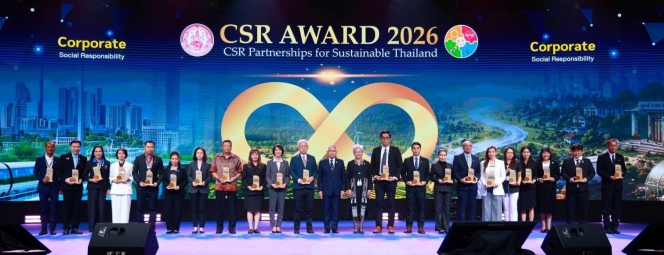
The Yokohama Rubber Co., Ltd. has announced that Y.T. Rubber Co., Ltd. (YTRC), its Thai subsidiary focused on natural rubber processing, earned the Outstanding Provincial-Level CSR Organization Award. The honour formed part of the ‘CSR Award 2026’ initiative run by Thailand’s Ministry of Social Development and Human Security, and the presentation took place on 22 August 2026.
Built around the idea of ‘CSR Partnerships for Sustainable Thailand’, the award programme highlights organisations demonstrating exemplary corporate social responsibility at provincial or metropolitan level throughout the country’s 76 provinces and Bangkok. A total of 92 recipients – among them YTRC, other firms and bodies chosen nationwide and provincial CSR centres – convened at IMPACT Challenger Hall in Nonthaburi Province to collect commemorative plaques.
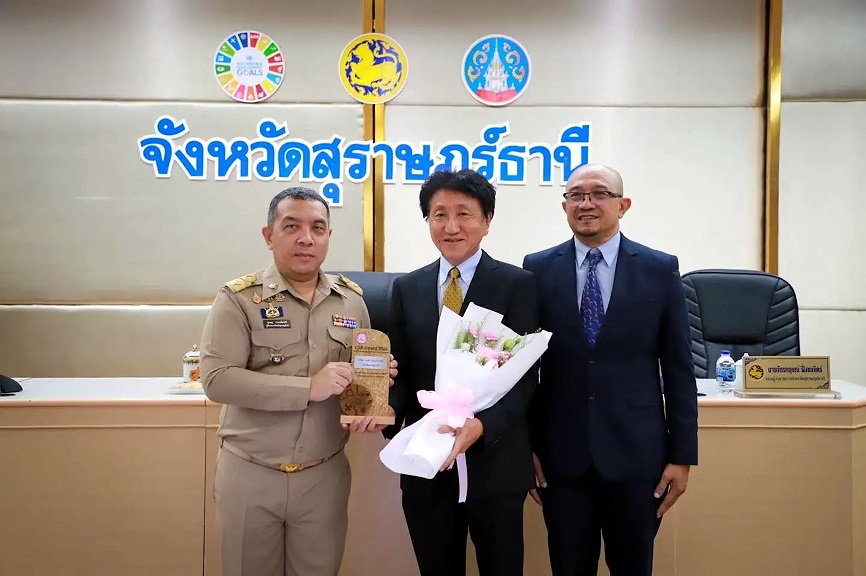
Governor Jumpot Wannachatsiri (left) presents flowers to YTRC Managing Director Noboru Takita (centre) and Department Manager Supachai Choosuwan at the Surat Thani Provincial Council.
YTRC, established in Surat Thani Province in 2008, has long pursued environmental preservation and dependable ties with nearby communities. Working with the Rubber Authority of Thailand (RAOT), it surveys natural rubber plantations and supplies management assistance to farmers, supporting sustainable procurement of the material. The company further backs agroforestry practices that give rubber farmers steadier incomes while partnering with the Surat Thani Provincial Office of Social Development and Human Security on efforts to nurture constructive community relations.
The recognition reflects YTRC’s continuous community-oriented CSR work and its notable local impact. A special event on 31 August saw the Surat Thani Provincial Council once more acknowledge those contributions, with the governor presenting a celebratory bouquet. Separately, the CSR Center of Surat Thani Province ranked among only nine centres nationwide to win the Outstanding Provincial CSR Promotion Center Award.
Hankook Unveils New Smart Control Winter Tyre Generation For Trucks
- By TT News
- September 18, 2026
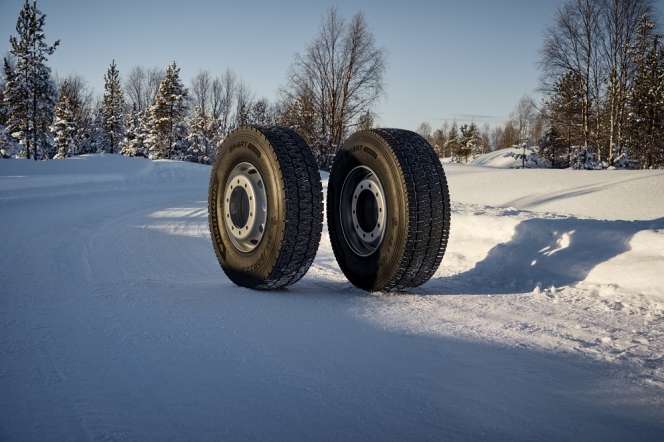
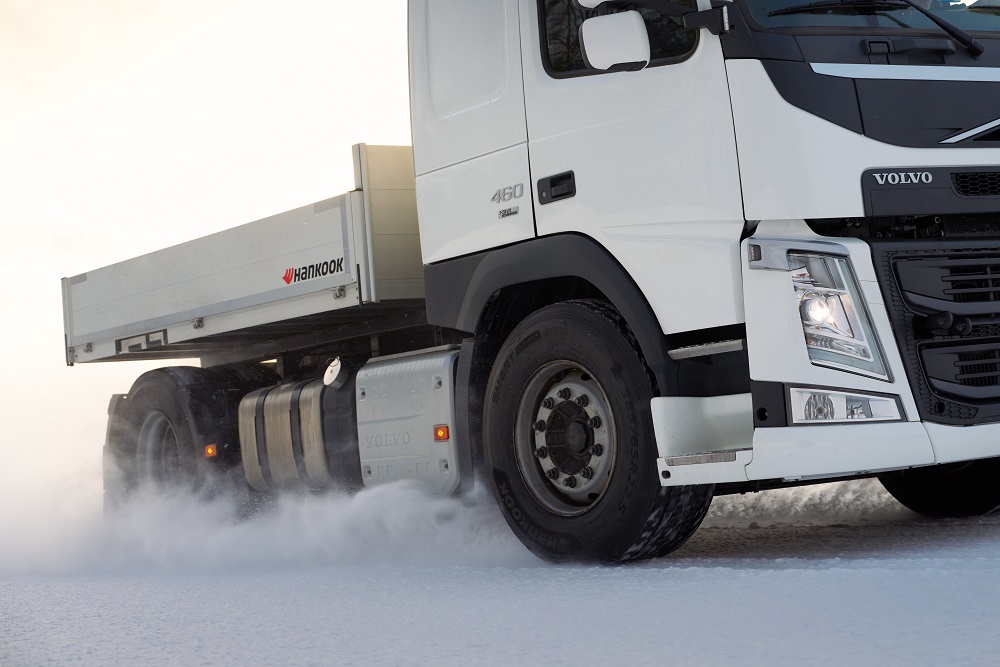
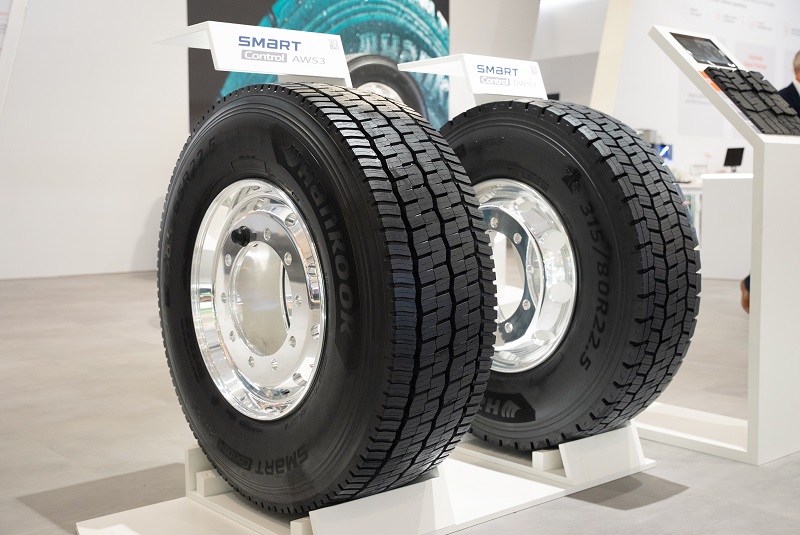
Hankook Tire has unveiled a new generation of winter tyres for trucks, introducing the Smart Control AW53 for steering axles and the Smart Control DW53 for drive axles. Designed for harsh winter conditions, these models will eventually replace the previous Smart Control AW02 and DW07 winter tyres. They combine high traction on snow and ice with strong cornering and braking performance, along with high mileage. The pair debuts at IAA Transportation 2026 in Hannover, where the company exhibits from 15 to 20 September at stand E09 in hall 11.
Development prioritised strong winter performance across the tyres' full lifespan. Hankook achieves improved winter traction through advanced technology and a blend of tread features. Zigzag grooves and 3D sipes add grip on snow and ice, while tie bars stiffen tread blocks, supporting precise handling and stable driving.
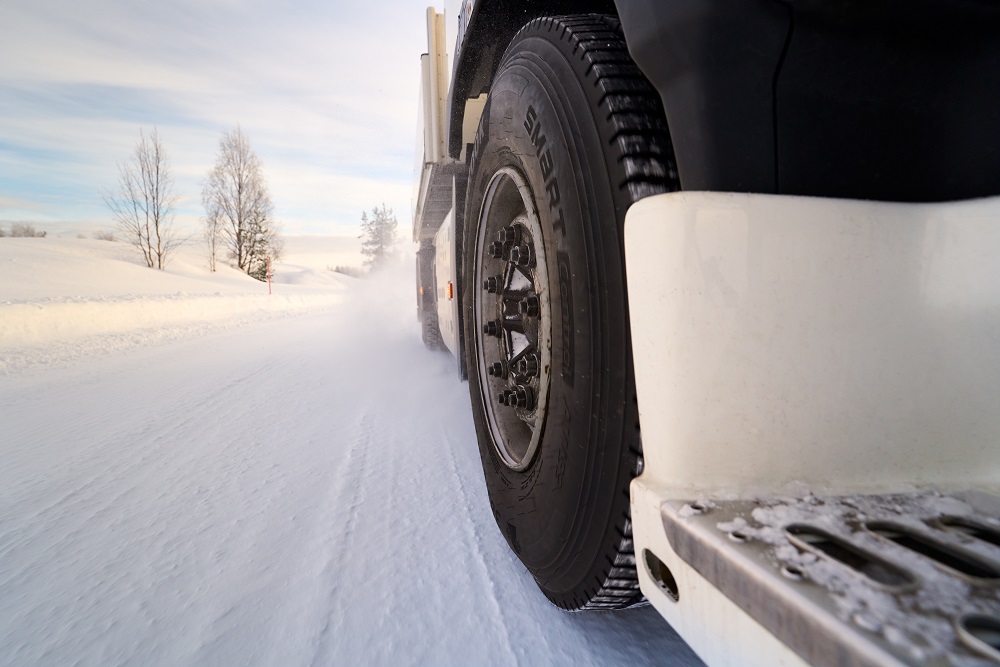
Internal testing at the UTAC Test Centre in Ivalo, Finland, showed the AW53 and DW53 outperforming the earlier AW02 and DW07 models. Braking on snow improved by 2.8 percent, acceleration by 4 percent and handling by 3.7 percent. Central to the design is Hidden Groove technology, in which extra tread grooves emerge as wear progresses, maintaining snow traction and wet grip even when well worn. At 40 percent wear, additional 3D sipes appear, increasing tread block stiffness and improving grip while lowering rolling resistance. At 70 percent wear, further concealed grooves enhance wet grip. Alongside self-regenerating sipes, this sustains winter performance across the service life and extends it by as much as 15 percent.
Stone ejectors in the main grooves and Y-shaped lateral grooves reduce stone retention and shield the tread and carcass from damage. A newly developed compound further contributes to balanced grip. At launch, the AW53 comes in size 385/65 R22.5 164K (158L), rated for 5,000 kg per tyre. The DW53 is offered in size 315/80 R22.5 (156/150L), with a maximum load of 4,000 kg per tyre for single fitments or 3,350 kg for twin fitments. More sizes are planned. All new Smart Control winter tyres carry the 3PMSF label and both can be regrooved and retreaded to extend their working life further.
Dunlop Motorcycle Europe Backs 43 Teams At Bol d'Or Season Finale
- By TT News
- September 18, 2026
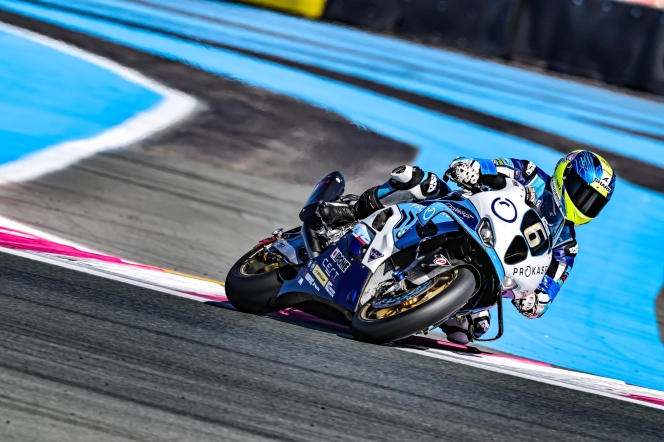
Dunlop Motorcycle Europe is set to back teams and riders contending for championship honours at the 2026 FIM Endurance World Championship (EWC) finale, the 89th Bol d’Or, held at Circuit Paul Ricard.
The tyre manufacturer will assist 43 teams in total, serving as exclusive tyre supplier to all 24 Superstock and 13 Production Trophy entrants. Five manufacturers will contest the Production Trophy’s second title, while six privateer squads in the open-tyre Formula EWC class have opted for Dunlop, among them the No. 6 ERC Endurance Team, which recorded a 1:52.173 best lap in Bol d’Or testing.
The season-closing 24-hour race poses a demanding mix of technical corners and fast stretches, notably the 1.8-kilometre Mistral Straight, alongside day-to-night running and traditionally changeable weather that may test both dry and wet KR allocations.
Dunlop will provide its established KR108 and KR109 slicks, plus a latest-generation medium front specification, developed as G2_01 VAL3 and validated with EWC teams in 2025 for improved durability and performance. The range targets single-lap speed and multi-stint longevity, with intermediate and wet tyres available for all conditions.
David Auerbacher, International Motorcycle Race Event Leader, Dunlop Motorcycle Europe, said, “We’re excited to return to Circuit Paul Ricard for the season finale, where both the Superstock and Production Trophy champions will be crowned. It’s been another strong season for Dunlop across all categories, as we celebrate five years as the exclusive tyre supplier to the Superstock Trophy and two years supporting the Production Trophy. Both categories have continued to grow and develop, while leading privateer teams also continue to choose Dunlop as they fight for wins and podiums in the Formula EWC class. We’re looking forward to an exciting season finale and are proud to support all the teams and riders as they battle for championship success at the biggest race of the EWC calendar.”
TRA Briefing Day 2026: MP Tessa Munt Attacks Government Policy Inaction On Waste Tyres
- By TT News
- September 18, 2026
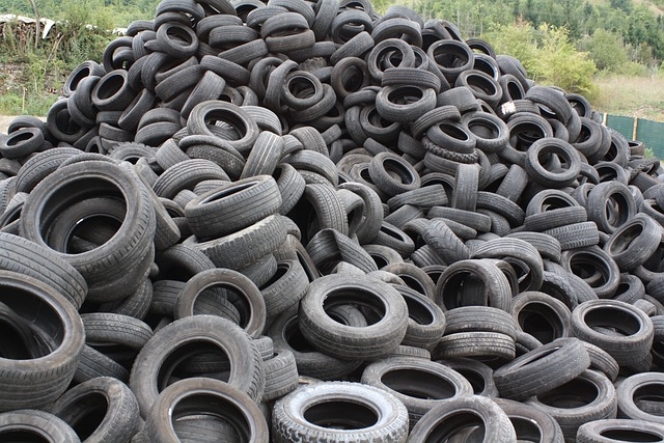
The Tyre Recovery Association convened its Briefing Day 2026 at Coombe Abbey Hotel in Warwickshire, drawing more than 100 senior figures from the UK tyre recovery, retreading, retail and manufacturing sectors alongside national regulators, parliamentarians and trade bodies. The event served as a platform to press for meaningful reforms covering tyre recovery, green procurement and domestic circular resilience.
Tessa Munt, the MP for Wells and Mendip Hills, delivered a keynote address that attacked the enduring disconnect between government policy rhetoric and industrial reality. Drawing on her parliamentary work regarding end-of-life tyre exports to India and her engagement with Somerset businesses, she condemned official inaction and set out four priority areas for reform, criticising a reliance on superficial slogans while domestic capacity lies stranded.
The MP highlighted what she described as a double standard, noting that the Environment Agency imposes strict Digital Waste Tracking on compliant domestic operators while granting misplaced goodwill and deadline extensions to non-compliant overseas exporters. Before the rules were diluted, proof-of-arrival compliance stood at just 20 percent. She further noted that more than 150,000 tonnes of licensed UK recycling and remanufacturing capacity remains entirely idle while raw waste is shipped abroad.
Her proposed reforms comprised the immediate statutory withdrawal of T8 exemptions to establish an audited permit regime, adoption of the Australian shred-only export model to end whole and baled tyre exports, instant revocation of export licences for brokers failing to supply timestamped and geotagged proof of delivery and mandatory green public procurement quotas for remanufactured tyres and rubberised asphalt. The RAC Foundation's Steve Gooding also addressed the conference, explaining that a modest 10 percent rubberised asphalt target in public highway contracts would absorb all idle UK crumb capacity, reduce road noise by three to five decibels and produce longer-lasting roads. Strong participation from the Tyre Recovery Association (TRA), the National Tyre Distributors Association (NTDA), the British Tyre Manufacturers' Association (BTMA) and the Imported Tyre Manufacturers Association (ITMA) underscored growing cross-sector unity.
Peter Taylor OBE, Secretary General, TRA, said, "The TRA Briefing Day proves that the British tyre recovery sector is united, highly innovative and ready to grow. Having around 100 key players and all four leading trade associations in one room shows that our industry is speaking with one voice. If the UK’s tyre recovery sector does not grow, it will soon disappear from these shores. We are gradually making progress in getting government to understand this, but there is a long way to go. We have the domestic processing infrastructure, the technical capability and the private capital ready to build a world-class circular economy. What we lack is a regulator and a government willing to back domestic industry by ending illegal whole tyre exports and enforcing green procurement. Tessa Munt MP highlighted this in her powerful speech. We are very grateful to her, Steve Gooding and all those who spoke yesterday, as well as our sponsors Vaculug, Murfitts and KwickFit. These contributions made the event an overwhelming success. The message from industry is clear: the time for policy talk is over, we need to statutory reform."

Comments (0)
ADD COMMENT