

TVS Eurogrip is in full swing to make itself as as the bike tyre specialist in the local and international markets. The brand is now associated as ‘Principal Sponsor’ with Chennai Super Kings, one of the strongest teams in the Indian Premier League. The company is also exploring motorsports, digital channels, social media and television to reach out to its larger customer base effectively. In an interview, P Madhavan, Executive Vice President – Sales & Marketing, TVS Srichakra, spoke on the company’s efforts to enhance the brand image among its targeted audiences.
Today, Gen-Y is largely influencing India’s two-wheeler market, resulting in the bikes and scooters getting faster, funkier and safer, and these trends are driving TVS Eurogrip’s products and marketing strategies. To cater to the changing market trends, TVS Srichakra took the first leap in 2019 by introducing the brand ‘TVS Eurogrip’, which targets millennial customers’ needs.
“Building a brand and nurturing it to market leadership has been at the core of our efforts. The introduction of TVS Eurogrip in 2019 was an important milestone. Our core positioning for TVS Eurogrip is that we understand bikes and bike tyres the best given our experience in the category and our global expertise,” said P Madhavan, Executive Vice President – Sales & Marketing, TVS Srichakra.
Headquartered in Madurai, TVS Srichakra has manufacturing facilities in Madurai (Tamil Nadu) and Rudrapur (Uttarakhand) with a production capacity of over three million tyres a month. The company has a design centre in Milan, Italy supporting the R&D centre in Madurai. The tyres are tested in Indian, European and Japanese road conditions.
The launch of TVS Eurogrip is also in line with the company’s strategy to expand its presence and build Eurogrip as a solid global brand in the international market. “The introduction of TVS Eurogrip in 2019 was an important milestone in an internationalisation process which already sees us exporting our tyres to over 85 countries. Our entries into Europe, soon followed by more countries in APAC and MEA, testify our commitment and copious investments in product quality and performance, furthermore, enforced by our R&D and design centre established a few years ago in Milan, Italy. Establishing our direct presence in developed and growing markets is an important step for us towards building Eurogrip as a strong global brand. It goes hand in hand with the research studies we have been conducting on new technologies, which will benefit all markets, including India. With our expertise as a manufacturer of two-wheeler tyres for over three decades, we are confident of making a mark in developed markets and look forward to the future growth potential,” explained P Madhavan.
The company established itself as a leading global brand in the two-wheeler tyre category in the last three decades. Apart from two-wheeler tyres, the company produces three-wheeler and off-highway tyres for the domestic and international markets. Understanding customers’ needs, aspirations and dreams and providing them the products that enrich their riding experience has always been the focus of TVS Eurogrip. “Brand TVS Eurogrip has all the elements the new-age rider is looking for – design, superior quality, high performance,” said P Madhavan.
Today, the Gen-Y rider is brand conscious and engages with products and brands that impress his peers. As specialists in the bike tyre domain, the company is geared up to lead its customers into the future of riding with TVS Eurogrip tyres. “Communication pegs and codes in the category have been changing quite swiftly to reflect the new-age rider’s preferences, with the advent of high-speed bikes, and the focus is now also on the emotional aspects behind buying a two-wheeler and a two-wheeler tyre. Our continuous enhancements in product quality and best in class services, high concentration on radials and consistent improvement in product design has always been in line with our brand image,” saidP Madhavan.
TVS Eurogrip focuses on innovation, superior quality standards and high performance to reach out to its potential customers for enhancing the overall riding experience. Though the high CC bike segment is growing fast, the commute purpose bikes segment still dominates the Indian two-wheeler market. “We constantly observe market trends and dynamics; this helps us plan new products, focus on potential geographies and align with market requirements. Our product range caters to the needs of all two-wheeler tyre consumers, from daily commute usage to world-class steel-belted radial tyres. Our media campaigns and on-ground activation programmes are designed to engage the commuter class audience. Today, the commuter class audience too consumes significant digital communication; we have been engaging with such audience on a regular basis,” said Madhavan.
Digital media consumption is at an all-time high, primarily through the pandemic and post-pandemic eras. The company’s recent integrated marketing campaign ‘Tyres for a Country full of Turns’ has also shown good traction on digital channels and social media. However, for mass reach, television remains the lead medium. “For our category, it is critical to activate marketing campaigns with an integrated 360-degree approach, and hence BTL consumer and trade activations become important. We see this trend continuing, and so we place more and more impetus on the digital front,” said Madhavan.
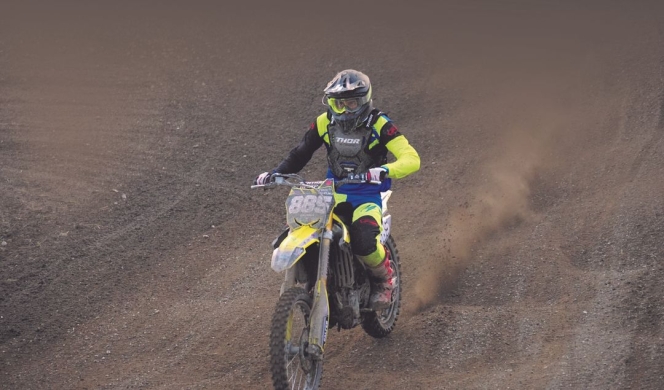
TVS Eurogrip has also introduced racing tyres, which help test new technologies under severe conditions. As part of its branding, the company powered the MMSC Motorcycle Endurance Race 2021. At the event, TVS Eurogrip showcased world-class products with cutting-edge technology for today’s new-age bikers.
Sports have been an excellent platform for companies to reach out to targeted audiences in India, and no sport can beat cricket. Recently, TVS Eurogrip joined hands with Chennai Super Kings as ‘Principal Sponsor’ for the next three years. TVS Eurogrip logo will be seen on the front of the official yellow jersey of the team for the 2022-2024 seasons. “We strongly believe the jersey branding and sponsorship will increase awareness and recognition for our Eurogrip brand name and visual identity. We look forward to co-creating exciting experiences for trade and our customers with this association. We are confident that this partnership will benefit brand TVS Eurogrip in the busy IPL environment,” said the TVS Eurogrip executive.
- AZuR Network
- German Award for Sustainability Projects
- Tyre Retreading
- Retreading: Climate Protection on Wheels
AZuR Wins German Award For Sustainability Projects 2026 For Tyre Retreading Project
- By TT News
- September 19, 2026
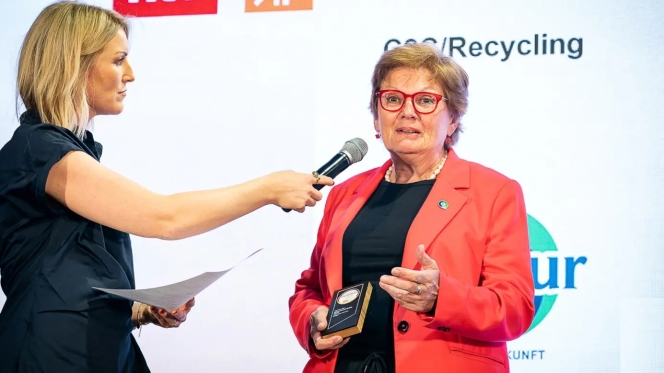
The AZuR Network has been honoured with the German Award for Sustainability Projects 2026 in the C2C/Recycling category for its ‘Retreading: Climate Protection on Wheels’ project. The recognition highlights the network's efforts to expand tyre retreading across Germany and Europe, thereby extending the useful life of tyres. Retreading works by reusing a suitable used tyre casing and applying a fresh tread, keeping a substantial share of the original tyre in circulation.
A life cycle assessment commissioned by AZuR and carried out by the Fraunhofer Institute UMSICHT compared retreaded tyres with equivalent new ones. Under the conditions examined, producing a retreaded truck tyre generated roughly 135 kilogrammes less greenhouse gas emissions, a reduction exceeding 60 percent. The process also reuses considerable portions of the existing tyre casing, reinforcing its environmental advantages.
The jury underscored the project's scalability and its relevance to the industry. Official documentation further noted the political integration of the topic as a key strength, with the EU taxonomy confirmation in 2025 representing a tangible milestone. The award places AZuR among well-known companies and innovative projects, including a climate protection cooker initiative in Cameroon, a capsule-free coffee system and a mental health awareness campaign.
Knauf secured first place in the same category with its circular gypsum supply chain, while Schmitz Cargobull led the Mobility and Logistics Solutions category. Other first-place winners included DEKRA, Hansgrohe, Pfleiderer Germany and SBRS. Presented by DISQ with ntv and DUP UNTERNEHMER under Brigitte Zypries' patronage, the 2026 edition saw 433 nominations, with 46 organisations recognised across 19 categories on 17 September in Berlin.
Christina Guth, Network Coordinator, AZuR, said, “This award belongs to our entire network. Retreading only works when many stakeholders collaborate along the value chain – from certified end-of-life tyre recyclers, tyre manufacturers and retreaders to retailers and fleet operators, all the way to academia. The award highlights the potential of using high-quality tyres for longer and keeping their casings in circulation.”
Birla Carbon To Showcase Sustainable Carbon Black Solutions At Global Polymer Summit 2026
- By TT News
- September 18, 2026
Birla Carbon will present its carbon black solutions at the Global Polymer Summit 2026, scheduled for 28–30 September at the Kentucky International Convention Center in Louisville. The company will exhibit at Booth 417, targeting tyre and mechanical rubber goods (MRG) manufacturers seeking higher performance and reduced environmental impact.
The company’s portfolio spans tyre and MRG applications, addressing durability, strength, abrasion resistance and product life across tyres, belts, hoses, sealing systems and anti-vibration products. Birla Carbon will also feature Continua Sustainable Carbonaceous Material (SCM), a circular carbon range with consistent quality and global availability and Continua Sustainable Carbon Black (SCB), produced from recycled or bio-based feedstocks.
Supported by extensive manufacturing, technical expertise and customer-focused teams across the Americas, Birla Carbon provides reliable volumes, responsive service and tailored solutions. Attendees can meet company experts at Booth 417 to explore its product portfolio, technical capabilities and sustainable offerings.
John Davidson, President – Americas & EMEA, Birla Carbon, said, “The tyre and mechanical rubber goods industries are at an important phase, where performance, supply resilience and sustainability must advance together. The next phase of growth will depend on stronger collaboration across the value chain and the ability to translate innovation into scalable, commercially viable solutions. At Birla Carbon, we are combining our manufacturing network, portfolio strength, technical expertise and regional capabilities to help customers navigate this transition and build more resilient and sustainable businesses.”
Michelin Launches X Multi Energy D2 Tyre For Regional Haul Fleets
- By TT News
- September 18, 2026
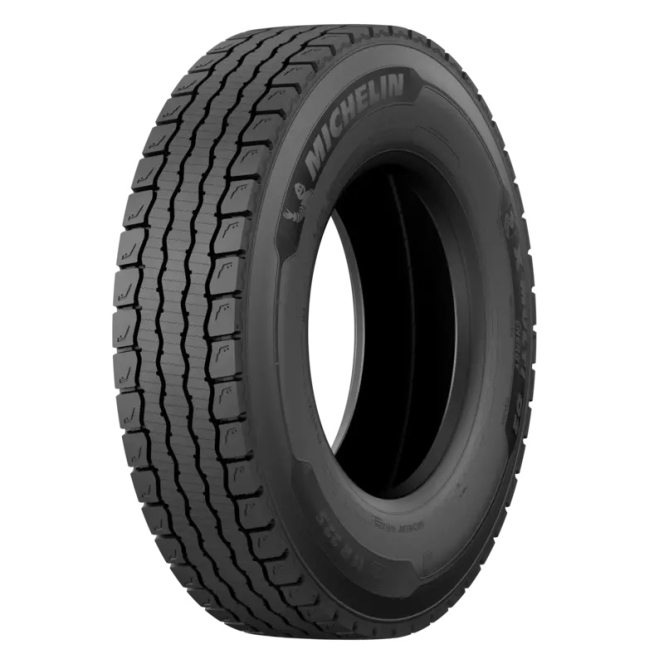
Michelin has unveiled the X Multi Energy D2 tyre, developed to address the specific challenges of regional haul operations. Fleets in this segment face demanding roads, frequent stop-and-start cycles and escalating fuel expenses that affect both performance and profitability. By blending durability, fuel savings and Michelin’s established performance standards, the new tyre aims to boost fleet productivity while reducing overall operating costs.
The tyre features a revised tread pattern and a new tread compound to better resist tread damage caused by high-torque vehicles and stop-and-go regional driving. It is constructed on Michelin’s Duracore casing, which integrates Infinicoil and Powercoil technologies and benefits from a reinforced bead design known as Duracoil Technology. This casing is engineered to last up to one million miles and support as many as four retreads.
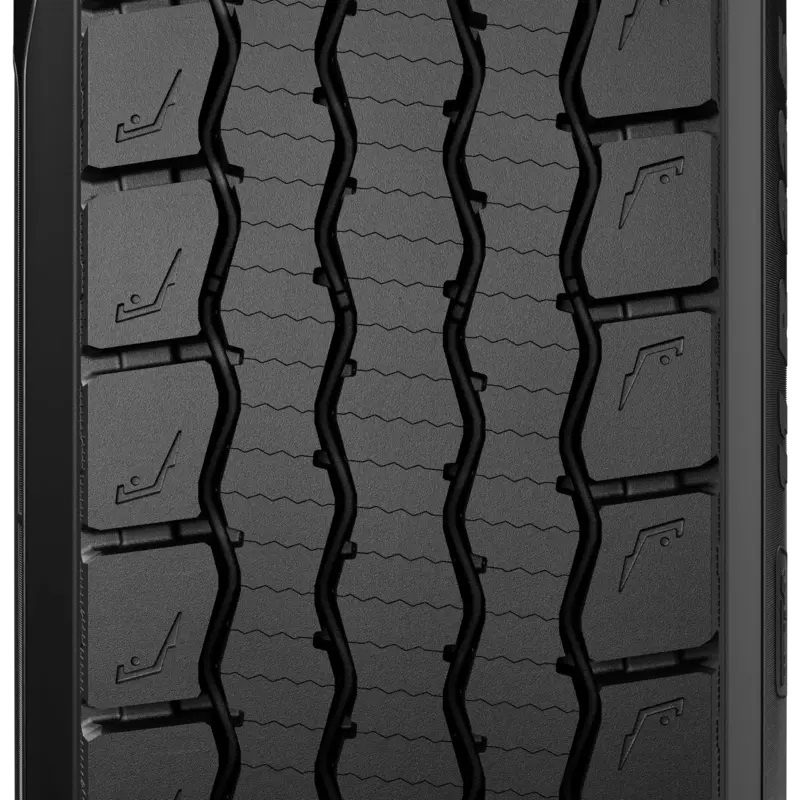
In the effort to curb fuel expenses, the X Multi Energy D2 improves rolling resistance by 9 percent over its predecessor, the Michelin X Multi Energy D tyre, and by 18 percent compared with leading competitors. It also enhances late-life traction, offering 10 percent better wet handling and 16 percent better snow starting traction when worn, giving drivers and operations managers greater confidence on varying roads.
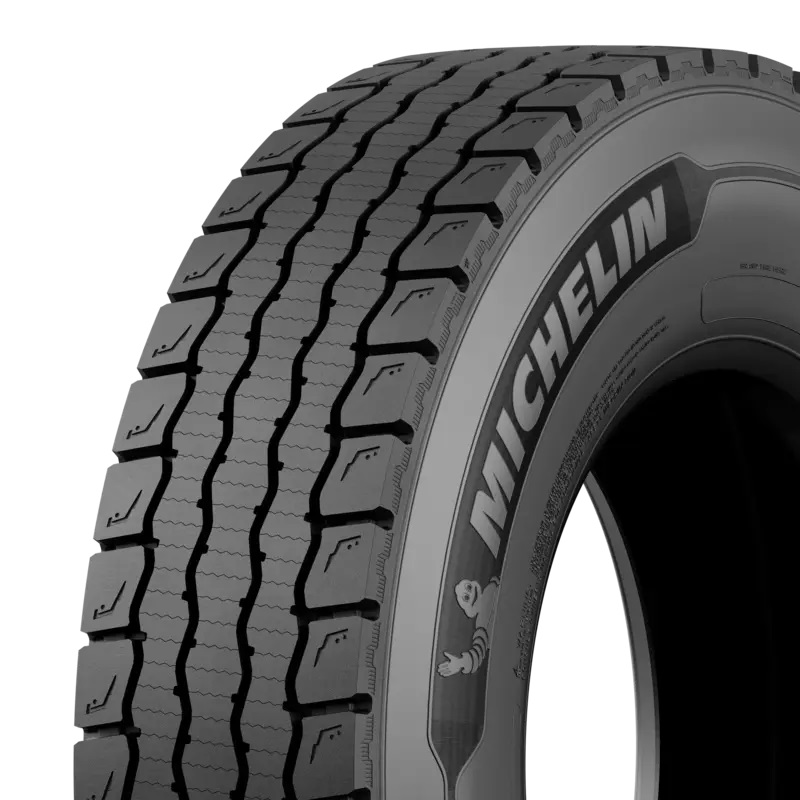
For original equipment manufacturers, the tyre meets Greenhouse Gas standards and supports applicable vehicle carbon-reduction requirements. Designed for regional applications where traction, durability and fuel efficiency matter, it is available in 295/75R22.5 LRG and 11R22.5 LRG and LRH sizes, replacing the X Multi Energy D tyre in those sizes.
Yahn Heurlin, VP of B2B Marketing, Michelin North America, Inc., said, “Michelin is driven by a deep commitment to understanding the needs and challenges customers face every day. This customer-first mindset inspires the development of purpose-built solutions designed to address real-world pain points and help fleets operate more efficiently.”
Firestone Launches Destination LE4 Highway Touring Tyre
- By TT News
- September 18, 2026
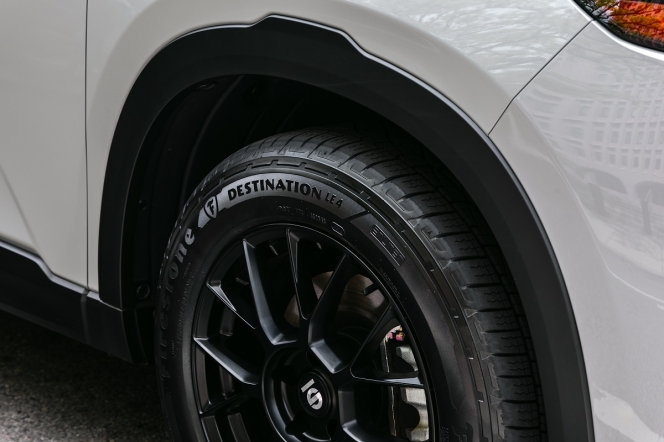
Firestone, a Bridgestone Americas subsidiary, has unveiled the Destination LE4 highway touring tyre as the successor to its best-selling Destination LE3. The new model features a deeper tread depth, an advanced compound and a non-directional tread pattern, delivering longer wear life along with improved wet and light snow performance for year-round driving confidence.
Backed by a 70,000-mile limited warranty, the Destination LE4 is projected in external testing to wear 16 percent longer than its predecessor, 9 percent longer than the General Grabber H/T and 43 percent longer than the BFGoodrich Advantage Control HT. Thinner 3D sipes enhance traction and handling, while internal testing showed wet stopping distances reduced by 8 feet versus the Toyo Open Country H/T II and 4 feet versus the BFGoodrich Advantage Ctrl HT, with dry stopping improved by 8 feet and 2 feet, respectively, plus a 2-foot dry gain over the LE3.
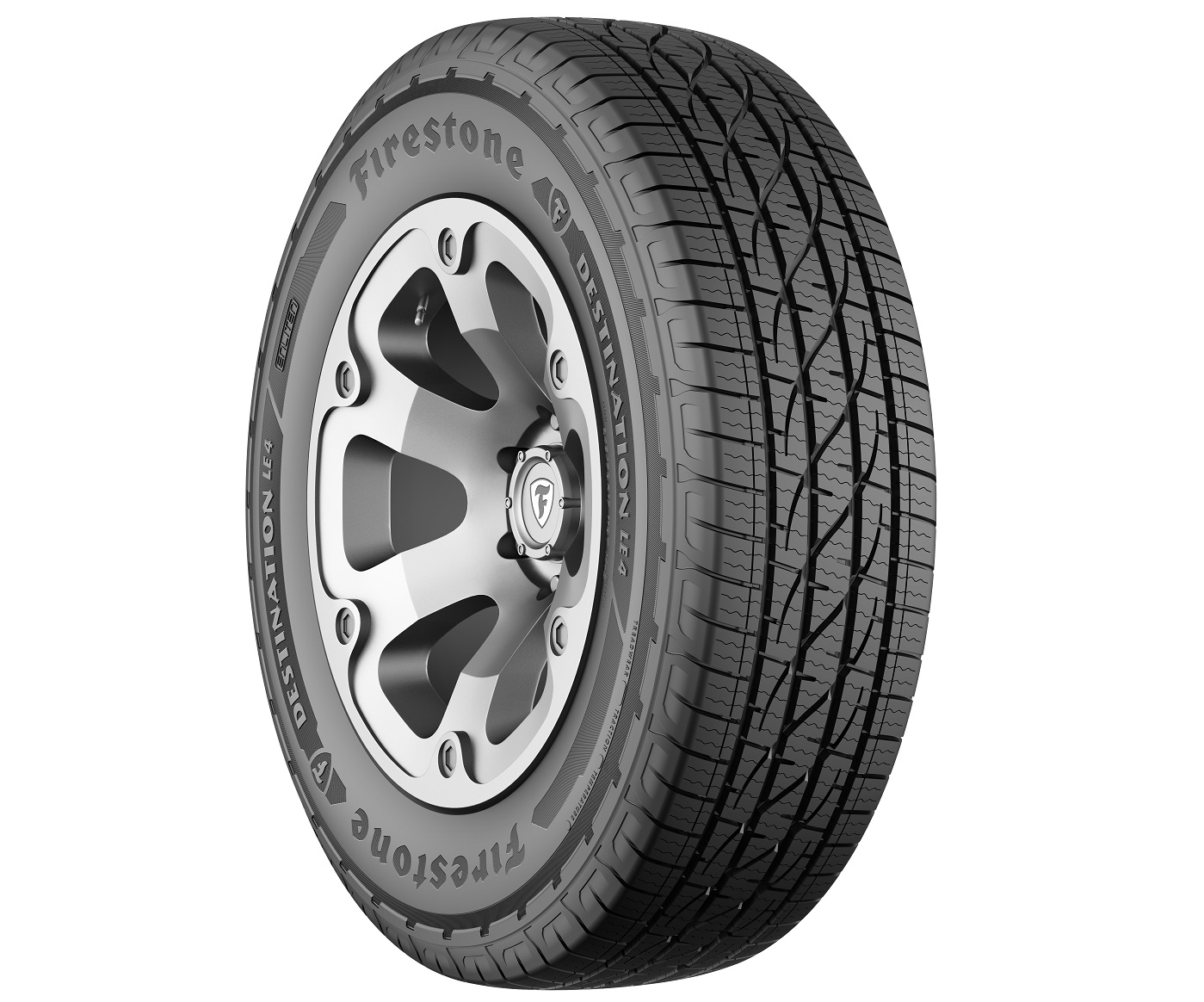
Sustainability gains come through wear-resistance technology, optimised material usage that lowers raw material consumption and enhanced traction technology. Two technical firsts originated at the Bridgestone Americas Technology Center in Akron, Ohio: a high-strength, lightweight carcass architecture using light body plies and steel cords for durability and low rolling resistance despite deeper tread, and advanced compound mixing that improves ingredient consistency for tread wear, handling and wet grip.
Available in 65 sizes for 15- to 22-inch rims, the Destination LE4 covers small CUVs, SUVs, pickups and larger trucks, including the Mazda CX-5, Ford F-150, RAM 1500, Chevrolet Trailblazer and Nissan Armada.
Jeremy Norwood, Chief Engineer, New Product Engineering, Bridgestone Americas, said, “Drivers loved the Firestone Destination LE3 for its comfortable, quiet ride and all-season reliability. With the new Destination LE4, we enhanced those strengths by extending wear life and improving wet-weather handling, delivering dependable performance, confident control and everyday value.”

Comments (0)
ADD COMMENT