

Retreading Reimagined
- By Nilesh Wadhwa
- April 08, 2026

Harinder Pal Kaur
For fleet operators, tyres are more than just rubber on the road – they represent nearly 30 percent of total operational costs. As margins tighten, operators are moving beyond simple replacements and instead reassessing the entire tyre lifecycle to maximise longevity without compromising on safety or uptime.
In India’s cost-sensitive trucking industry, tyres represent one of the most significant operating expenses for fleet operators. Managing tyre life effectively has therefore become a critical part of fleet profitability, pushing many transporters to revisit tyre retreading as a strategic cost-management tool. While retreading has long existed within the commercial vehicle ecosystem, the segment today is evolving rapidly with improved technology, organised service networks and greater industry awareness around sustainability.
In an exclusive interview with Tyre Trends, Harinder Pal Kaur, General Manager of Cargo Carrier at Northern Cargo Service, shared how the company is redefining the role of tyre retreading. At present, the fleet operator manages nearly 800 trucks, where retreading is no longer a mere ‘stop-gap’ repair, it has evolved into a sophisticated, central pillar of their operational strategy.
“When we talk about trucking economics, tyres are one of the major operating costs for fleet operators. Managing tyre life effectively is therefore very important for transporters, and this is where tyre retreading plays a significant role,” she explains.
Over the past few years, rising tyre prices, growing fleet sizes and the need to optimise operational costs have made retreading increasingly relevant. At the same time, improvements in tyre construction, retreading technology and organised service networks are steadily transforming the segment into a more structured component of tyre lifecycle management.
TECHNOLOGY AND ORGANISATION
India has historically had a strong culture of tyre retreading in the commercial vehicle sector, largely driven by the cost-conscious nature of transport operations. However, the quality and reliability of retreaded tyres have not always been consistent in the past, particularly when the industry was dominated by small, unorganised players.
Kaur believes the sector is now entering a new phase of technological maturity. “Over the last few years, the commercial vehicle tyre retreading market in India has evolved steadily. Rising tyre prices, growing fleet sizes and the need to optimise operating costs have encouraged many transporters to look at retreading as a practical solution to extend tyre life and improve cost efficiency,” she notes.
A key factor behind this shift has been the emergence of more advanced retreading technologies. Modern retreading processes now include sophisticated inspection and manufacturing techniques designed to improve reliability and durability.
“Earlier, retreading was often associated with inconsistent quality, but today more organised players and better processes are improving reliability and performance. Technologies such as advanced pre-cure retreading, mould-cure or hot retreading and non-destructive tyre casing inspection systems are helping assess the condition of casings before retreading,” Kaur explains.
Automation is also playing a role in improving consistency. “Automated buffing and building machines along with improved rubber compounds are helping enhance the durability and performance of retreaded tyres,” she adds.
As a result, fleet operators are increasingly viewing retreading not merely as a cost-saving exercise but as a structured process that can extend tyre life while maintaining operational safety.
FREIGHT CYCLES AND FLEET UTILISATION DRIVING DEMAND
The demand for retreaded tyres is closely linked to the operating dynamics of the logistics sector. India has one of the world’s largest commercial vehicle fleets and trucks often operate over long distances with high utilisation rates. This naturally leads to faster tyre wear.
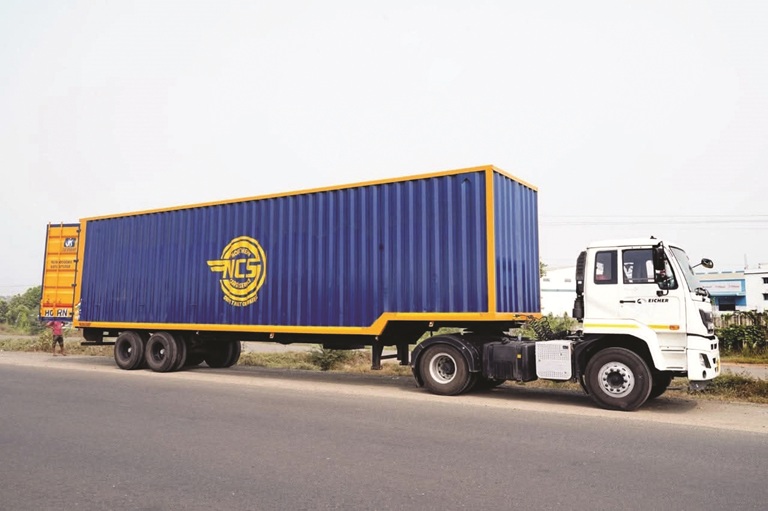
“The expansion of the logistics sector and improving highway infrastructure are allowing trucks to operate at higher speeds and for longer durations, which increases tyre wear and creates further opportunities for retreading,” Kaur explains.
Freight cycles and payment patterns within the industry also influence tyre management decisions. The transport business typically operates with extended payment cycles, which puts pressure on fleet working capital.
“In the transport industry, freight payment cycles are often long. Payments can take time, and in some cases, companies still require the physical hard copy of the lorry receipt before processing payment. Because of this, transporters usually need to maintain around 45–60 days of operational working capital to keep their fleets running,” she says.
During periods of strong freight demand, trucks spend more time on the road and less time idle. While this improves revenue generation, it also accelerates tyre wear.
“Long highway runs generate higher heat build-up in tyres, which leads to faster tread wear and increased tyre consumption,” Kaur notes.
At the same time, operational disruptions can also affect tyre utilisation. “Delays during loading and unloading, accidents or regulatory checks can sometimes keep vehicles stationary for several days,” she says.
In such situations, retreading helps fleet operators balance costs while maintaining operational continuity. “Retreading becomes an important cost-management strategy because it helps extend the life of tyre casings and reduce the overall cost of tyre replacement,” she adds.
CHANGING PERCEPTIONS AMONG FLEET OPERATORS
One of the most notable developments in the past decade has been the gradual shift in how fleet operators perceive retreaded tyres. “Retreading is increasingly seen not as a ‘cheap repair’ but as a part of structured tyre lifecycle management,” Kaur observes.
This change has been driven partly by technological improvements and partly by greater professionalism among fleet operators themselves. As fleets become more organised and data-driven, tyre lifecycle planning is receiving greater attention.
Another important driver behind this shift has been the growing involvement of tyre manufacturers in the retreading ecosystem.
“Tyre manufacturers are now more directly involved in the retreading process through programmes that provide approved retread designs, certified processes and casing inspection standards. This has improved the reliability perception of retreaded tyres and encouraged larger fleets to adopt them with greater confidence,” Kaur explains.
Her own experience highlights how operational acceptance evolves over time. “I remember an interesting experience from the early days of my career in the transport sector. While reviewing ways to control operational expenses, I initially tried approaching tyre manufacturers directly to negotiate better discounts for bulk purchases, but that idea did not work out as planned,” she recalls.
During that process, she discovered retreading vendors who offered a viable alternative. “I came across two vendors in Kolkata who were providing tyre retreading services and spent time understanding the process and its cost advantages,” she says.
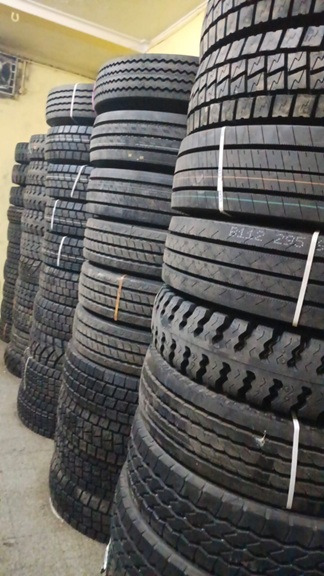 However, adoption within the fleet was not immediate. “When we first introduced retreaded tyres into our fleet, many drivers were hesitant due to concerns about performance. To address this, we started using retreaded tyres only on the dead axle where the operational risk is comparatively lower,” avers Kaur.
The strategy gradually built confidence within the organisation. “Over time, as the tyres performed well, driver confidence gradually improved,” she adds.
TYRE MANAGEMENT AND CASING QUALITY
While retreading offers clear cost advantages, its success depends heavily on how tyres are managed during their first lifecycle.
“Retreadability largely depends on how well a tyre is maintained during its first life. Poor maintenance practices can significantly reduce the chances of a tyre being successfully retreaded. Common mistakes include irregular rotation, incorrect air pressure, delayed servicing and neglecting tube or valve condition,” she says.
Driving behaviour also plays a critical role. “Overloading, harsh braking or aggressive driving can damage the casing and reduce retread potential. Maintaining proper rotation, correct air pressure, regular vehicle servicing and disciplined driving are key to keeping tyres healthy and suitable for retreading,” Kaur explains.
The quality of the original tyre is another crucial factor. Premium tyres often provide stronger casings that can withstand retreading more effectively.
She acknowledges: “premium tyre brands generally offer better retreadability because their casings are stronger and of higher quality. A durable casing maintains its structure after the first life, increasing the chances of a successful retread.”
In contrast, the growing influx of low-cost imported tyres poses challenges for the retreading ecosystem.
“Many imported tyres have shorter lifecycles and weaker casings, which makes them less suitable for reliable retreading. While they may reduce the initial purchase cost, they often offer lower long-term value in terms of durability and retreadability,” says the executive.
ECONOMICS AND SUSTAINABILITY ADVANTAGE
Ultimately, the biggest driver behind retreading adoption remains economics. In a competitive logistics market where margins are often thin, tyre lifecycle optimisation can significantly improve profitability.
“Retreading can add 50,000–55,000 km of additional life to a tyre after its first use. Since retreading costs roughly 40–50 percent of a new tyre, fleets can extend tyre value at a much lower expense,” she says.
When combined with proper tyre rotation and casing management, the savings can be substantial. “Retreading can help reduce overall tyre costs by 20–30 percent per axle while maintaining reliable on-road performance,” she says.
However, fleets often adopt a selective approach to ensure operational safety. “In our operations, we generally use retreaded tyres on vehicles running shorter routes or last-mile deliveries, while long-haul operations rely more on new tyres,” Kaur notes.
Beyond cost savings, sustainability considerations are also encouraging logistics companies to adopt retreading. “Retreading extends the life of a tyre casing and uses significantly less raw material and energy – up to 70–80 percent savings compared to producing a new tyre,” she explains.
In an era where organisations are increasingly focussing on reducing their carbon footprint, usage of retreaded tyres also has its own merit going beyond just cost saving.
“It reduces carbon emissions, lowers material consumption and significantly cuts tyre waste because fewer tyres end up in landfills,” she explains. By extending tyre lifecycles, retreading supports circular economy principles that are increasingly becoming part of corporate sustainability strategies.
THE ROAD AHEAD
Looking ahead, the retreading industry will need to adapt to emerging technological and regulatory trends. One of the biggest shifts on the horizon is the electrification of commercial vehicles.
“Electrification will bring new dynamics to the retreading business. Electric vehicles deliver higher torque, which can increase tyre wear,” she says.
At the same time, EV tyres are designed differently and may require specialised retreading materials and processes. “As tyre technology adapts for electric vehicles, retreading will also need EV-specific compounds and processes,” she explains.
Despite these changes, Kaur believes retreading will continue to remain relevant for fleet operators. “As the EV market grows, retreading could still remain a cost-effective solution, provided the technology evolves along with vehicle and tyre design,” she says.
For India’s logistics sector, where cost efficiency and operational optimisation remain paramount, tyre retreading is likely to remain a vital part of fleet strategy.
As Kaur summarises: “When supported by proper tyre maintenance, reliable partners and structured tyre management practices, retreading can deliver both economic and environmental benefits for fleet operators.”
Panu Ärölä Returns To Tana Oy In Territory Business Manager Role
- By TT News
- October 07, 2026

Tana Oy has appointed Panu Ärölä as its new Territory Business Manager, a role he will assume on 2 November. In this capacity, he will focus on strengthening customer and distributor relationships across designated markets while contributing to the company’s ongoing expansion within the waste management and recycling sector.
Ärölä returns to Tana after previously serving as Sales Manager, where he developed expertise in distributor network growth. His background includes extensive international experience in sales, marketing, business development and strategic leadership. Most recently, he held the position of Head of Sales and Marketing at Jet-Tekno Oy, overseeing customer relationship development and business growth initiatives.
Gerd Schreier, VP – Sales, Marketing & Channel Development, said, “We are delighted to welcome Panu back to Tana. His industry knowledge, customer focus and experience in international sales make him a valuable addition to our team. We look forward to working with him as we continue to develop our business and create value for our customers and partners.”
Schill+Seilacher Appoints Stephan Sielaff As Chief Executive
- By Sharad Matade
- October 07, 2026

Stephan Sielaff took over as chief executive of the Schill+Seilacher Group on 1st October , as the chemicals group seeks to strengthen links between its businesses and focus more closely on customer needs.
Sielaff brings about 30 years of experience in developing international businesses and organisations. His previous roles include positions at Unilever, Symrise, Archroma, Lenzing AG and SSI SCHÄFER Plastics.
His priorities at Schill+Seilacher include getting closer to customers, encouraging greater knowledge-sharing across the group and making better use of capabilities across its businesses and locations.
“A good product alone is no longer enough. What matters is the value we create for our customers,” says Stephan Sielaff.
The group said it would seek to share knowledge, pursue opportunities jointly and strengthen connections between its locations and business areas.
Sielaff's appointment is intended to support a more integrated approach across the group as it develops its businesses in the years ahead.
Toyo Tire Announces Leadership Changes At Americas, Nitto US Units
- By TT News
- October 06, 2026

Toyo Tire Corporation of Japan (Toyo Tire) has announced executive appointments at Toyo Tire Holdings of Americas Inc. (TTHA) and Nitto Tire U.S.A. Inc. (NTU), effective 1 October 2026. Keiko Brockel has become President and Chief Executive Officer at TTHA, while Angelo Naval has beeen promoted to President and Chief Executive Officer at NTU.
Brockel, the first woman and first American to hold the TTHA role, will oversee daily North American business operations. She joined NTU in 2008 and previously served as its President and Chief Executive Officer and President and Chief Operations Officer. Over 18 years at NTU, she has held various executive leadership positions, providing strategic oversight in sales, finance, supply chain and operations, contributing significantly to the company's growth and evolution.

Angelo Naval
Naval, formerly Vice President of Sales and Business Strategy at NTU, will now oversee its business operations. He joined NTU in 2000 and also served as Vice President of Product and Business Strategy. During his 24 years with the company, he has been instrumental in shaping the business, gaining deep understanding and a unique perspective on the Nitto brand, its customers and the markets it serves.
Takashi Shimizu, President & CEO, Toyo Tire Corporation, said, “On behalf of Toyo Tire, I would like to congratulate both Keiko Brockel and Angelo Naval on their well-earned new appointments and thank them for their invaluable contributions to the growth and success of Nitto Tire in the American market.”
ContiTech Appoints Amanda Lacerda As Head Of Communications
- By TT News
- October 06, 2026

ContiTech, the group sector of Continental, has named Amanda Lacerda as its new Head of Communications, with effect from 15 September 2026. In this capacity, she will report directly to Diana Hoppe, who serves as Head of Human Relations and Communications at ContiTech. The appointment places Lacerda at the helm of the organisation’s global communications operations.
In her new position, Lacerda will act as a strategic partner focused on advancing business performance, transformation and brand value. Her responsibilities encompass corporate, executive and brand communications, alongside media and public relations, public affairs, employee communications and reputation management. She is tasked with maintaining a consistent narrative that bolsters ContiTech’s global reputation and aligns with its business priorities and strategic ambitions. Lacerda takes over from Claudia Lademann-Fleger, who has chosen to depart the company for external opportunities.
Lacerda arrives with over two decades of experience in communications, marketing, and public affairs. Her global leadership background includes roles across Brazil, Middle East, Sweden and Germany. Over her career, she has engaged with diverse international markets and industries, assisting organisations in strengthening their brands, managing change and cultivating meaningful relationships with key stakeholders.
Diana Hoppe, Head of Human Relations and Communications, ContiTech, said, “Effective communication plays a key role as ContiTech continues its transformation and prepares for its future as a standalone company. Amanda brings extensive international experience, strategic insight and domain expertise in communications that will help strengthen our brand, enhance our reputation and deepen engagement with employees, customers, partners and communities around the world. As we continue to build a strong and distinctive brand, her leadership will be instrumental in advancing our strategic ambitions and long-term success. I also want to thank Claudia for her many years of dedicated leadership and service to ContiTech, and I wish her every success in the future.”
Lacerda said, “I am excited to join ContiTech at such an important moment in its journey. ContiTech has a strong heritage, talented people and a clear vision for the future. I look forward to working with colleagues around the world to tell our story, support the company’s transformation and help create value through clear, authentic and engaging communications.”


Comments (0)
ADD COMMENT