Rob Montasser Appointed As OmniSource’s Vice President Of Sales For US Market

Rob Montasser Appointed As OmniSource’s Vice President Of Sales For US Market

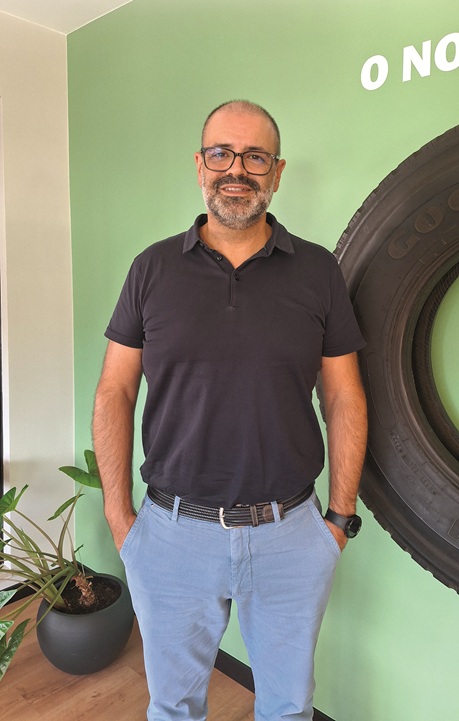
OmniSource has appointed Rob Montasser as Vice President of Sales for the US market.

Montasser will be based in Dallas and collaborate with the leadership team to drive US sales and operations, particularly for Omni United Group’s flagship brand, Radar Tires. In his new role, he will focus on expanding market share, optimising sales strategies, managing sales channels and enhancing brand presence.

With over two decades of experience in sales leadership, organisational development and strategic planning within the tyre, automotive and other industries, Montasser has held various senior leadership positions at Falken Tire, Dunlop Motorcycle Tires and Goodyear. During his stint as Vice President at Falken Tire, a subsidiary of Sumitomo Rubber North America, Montasser led the company for Passenger Light Truck (PLT) and Truck and Bus Radial (TBR) tyres to drive unit growth and enhance sales execution across multiple channels.

GS Sareen, President and CEO, Omni United, said, “The US is a key market for us with immense growth potential. With Rob’s extensive experience, I am confident we will expand our presence and continue to grow. I am excited to welcome Rob to the Omni family and look forward to working closely with him to drive our success forward.”

Montasser said, “I am thrilled to join the Omni family and I look forward to working with our great team to drive growth and innovation in the US market. Together, we will build the Radar brand so that it delivers an exceptional value proposition for our dealers, for the independent retailers and, of course, for the end user.”

The Invisible Giant: How Bekaert Became India’s Most Indispensable Partner Of The Tyre Industry

Bekaert

Tyres may appear simple, but behind their strength and resilience lies a web of intricate engineering and hidden reinforcements. At the heart of this complexity are tyre cords, materials that ensure safety, performance and durability while rarely being noticed. For India’s fast-growing tyre industry, companies like Bekaert have become essential partners, combining global expertise with local innovation. Through decades of investment, technical excellence and sustainable practices, Bekaert has embedded itself deeply into the industry’s transformation, helping shape safer, lighter and more efficient tyres.

In the vibrant industrial heart of Pune, Maharashtra, a Belgian company quietly celebrates a remarkable milestone. Few may realise it, but most journeys on India’s roads, from daily commutes to long-distance drives, are supported by Bekaert’s invisible touch. Through its advanced tyre reinforcement technologies, Bekaert helps make mobility across the country more reliable, efficient and safe. Over the past 25 years in India, the steel wire and advanced materials specialist has mastered the art of being what it calls ‘invisible, yet indispensable’– a philosophy that has made it one of the leading enablers of India’s modern tyre industry.

Every tyre represents a complex engineering trade-off: it must maintain road grip, bear substantial loads and withstand road hazards at higher speeds. The critical but invisible component? Steel cords are embedded within the rubber structure. These high-performance cords prevent tyre deformation during cornering, distribute cargo weight without compromising structural integrity and maintain dimensional stability at high speeds. Without steel reinforcement, modern tyres would fail under the mechanical stresses of everyday use – making these concealed cords essential to road safety. Bekaert, through continued innovation in steel cord technology and close collaboration with tyre manufacturers, ensures this critical structure performs reliably under the most demanding conditions.

“This philosophy – invisible, yet indispensable – reflects Bekaert’s strategy of deep technical expertise and close collaboration with customers to deliver critical, high-quality tyre reinforcement solutions. By understanding industry challenges and unique local conditions, Bekaert develops highly specialised, often custom solutions integral to tyre safety and reliability for more specific local needs,” explains Roopak Karnik, Managing Director, Bekaert Industries Private Limited.

Bekaert didn’t become a global leader in steel wire transformation overnight. The company has spent over 70 years refining its craft across international markets. But it’s India’s story that is more recent – and arguably more interesting. When Bekaert arrived 25 years ago, it was simply a wire supplier. Today, it has helped reshape an entire industry. The company’s partnerships with Indian tyre manufacturers proved critical during the country’s shift from bias to radial tyres, a transition that elevated not just Bekaert’s business but also strengthened competitive standing of India’s entire tyre sector on the global stage.

THE LONG GAME: OVER 25 YEARS OF STRATEGIC INDUSTRY FIRST MOVER

With over 150 years of global expertise and a strong legacy of innovation across continents, Bekaert has been a pivotal force in advancing the global tyre industry. Confident in the potential of the Indian market, Bekaert began manufacturing in India in 2001, strategically positioning itself as a first mover to introduce cutting-edge solutions to a rapidly transforming industry landscape.

“In 1997, Bekaert began its journey in India by trading various products, including steel cord manufactured, globally. Bekaert traditionally has been an early mover in the growth regions and was the first steel cord company to set up manufacturing facilities in China, Indonesia and India,” Karnik tells.

This initiated a methodical expansion that mirrored India’s own industrial transformation. By 2001, recognising the potential of India’s emerging radial tyre market, Bekaert established its first tyre reinforcement plant with a modest 5,000-tonne capacity. This step marked a significant shift from Bekaert’s initial phase of local sales, representing not just an investment in production but a bet on India’s automotive future at a time when most commercial vehicles still ran on bias tyres.

Recognising the uniqueness of the Indian infrastructure evolution, logistics model and transportation requirements, the next major milestone came in 2010 with a local R&D Tech and Engineering Centre in Ranjangaon, ‘dedicated to India-specific tyre needs’. This signalled Bekaert’s commitment to being more than a multinational supplier – it aimed to be a true partner in India’s industrial development.

“At Bekaert, we’ve evolved beyond being just a manufacturer. From creating over 1,000 local jobs to having our global Technology Centre and manufacturing plant in Pune, we work hand-in-hand with customers to co-create solutions before challenges even arise. With our technical division and 24/7 support, we are committed to delivering comprehensive, integrated solutions and addressing any issues our customers face on time. Our goal is simple: be the partner our customers turn to first, backed by local expertise and global experience,” Karnik explains.

Recognising the growth in infrastructure and the development of local steel manufacturing capabilities, Bekaert invested in a plating line to provide the Indian market with a fully integrated plant. This investment has provided the tyre industry with an extremely reliable, flexible and dependable end-to-end local supply chain. The strength and reliability of this local supply chain were proven during the Covid-19 pandemic and again in 2022, when many less integrated supply chains struggled to keep pace with industry demands.

As Bekaert marks its 27th year in India, the company has evolved from a trusted supplier to a strategic partner. Under Karnik’s leadership, Bekaert’s Indian operations now serve as a global hub for services and innovation, reflecting the company’s deepening commitment to both local and international customers.

Bekaert has always been at the forefront of being a partner to its customers, and it is resonated by JK Tyre & Industries Ltd. “As pioneers of radial tyre technology in India and the first to introduce truck radials in the country, JK Tyre shares a longstanding and valued partnership with Bekaert. Our collaboration spans a few decades, during which JK Tyre played an instrumental role in encouraging Bekaert to establish its manufacturing presence in India. Together, we have worked extensively on advancing steel tyre cord technologies, continually setting benchmarks in innovation and quality. Both JK Tyre and Bekaert have been at the forefront of introducing cutting-edge technologies to India, making our partnership especially relevant in today’s context of Atmanirbhar Bharat or the Make in India initiative. These national priorities align well with our shared vision of strengthening India’s self-reliance in critical manufacturing sectors,” says a JK Tyre spokesperson.

“We are confident that with Bekaert’s expanded capacity, robust technology and strong support team, this partnership will continue to contribute meaningfully to JK Tyre’s growth and to India’s journey towards becoming the world’s third-largest economy,” adds the JK Tyre spokesperson.

THE RADIALISATION REVOLUTION

Bekaert has been an integral part of India’s shift from bias to radial tyre journey since the manufacture of the country’s first radial tyre, providing cutting-edge steel cord reinforcement solutions that continue to set industry standards today.

When Bekaert arrived in India in 1997, only five percent of commercial vehicle tyres were radials.

“Bekaert has been instrumental in the radialisation of India’s commercial vehicle tyre market, which has grown from five percent in 1998 to 55 percent in 2023. This shift demanded tyres handle higher loads, improve fuel efficiency and enhance safety. By co-developing solutions, providing technical expertise, joint testing, collaborative innovation and even customised wire rod and cord solutions, we have enabled tyre manufacturers to transition smoothly, improve product performance and meet growing consumer expectations for durability, handling and safety. This has been possible due to a strong local footprint for both research and manufacturing,” says Raj Kalra, SVP, Strategic Marketing and Sales RR at NV Bekaert.

Elaborating on the industry perspective on this transformation, the Automotive Tyre Manufacturers Association (ATMA) says, “Bekaert has been a trusted and longstanding partner in the radialisation journey of the Indian tyre industry. India’s market is unique in its requirements, demanding differentiated and performance-driven raw materials to cater to diverse road conditions and customer expectations. In this context, close collaboration between partners such as Bekaert and the tyre industry has been instrumental in developing technologically advanced solutions, particularly in the area of high-performance steel cord reinforcement, which has significantly contributed to enhancing tyre safety, durability and fuel efficiency. By driving innovations that reduce material usage, improve recyclability and lower the overall carbon footprint of tyres, Bekaert has aligned itself with the broader environmental priorities of the tyre industry. Their efforts complement the industry’s push towards cleaner mobility, energy efficiency and global competitiveness.”

The technical challenges were immense. Radial tyres demand far superior reinforcement compared to their bias counterparts. They must withstand higher stresses, maintain structural integrity under varying loads and deliver the durability that commercial vehicle operators in India’s challenging conditions demand.

LOCAL PRESENCE, GLOBAL EXCELLENCE

Bekaert’s success in India relies on achieving true localisation while leveraging its global innovation powerhouse and expertise. The approach to local production capability exemplifies an effective industrial strategy.

Along with support of manufacturing plants strategically located across regions, local production enables Bekaert to shorten response times, tailor specifications and quickly adapt to market shifts. Unlike imports, Bekaert offers immediate response, agile development and a lean supply chain. By implementing vendor-managed inventory programmes, it minimises inventory in the pipeline, ensuring that products meet the needs of Indian tyre manufacturers.

The advantages extend far beyond logistics. Indian tyre manufacturers have distinct product requirements based on the diverse vehicle types and challenging road conditions in the country. “Bekaert delivers a unique proposition to Indian manufacturers. With the combination of decades of global experience with deep local market knowledge and leveraging its state-of-the-art Technology Centre at the Ranjangaon campus, Bekaert works in close partnership with Indian customers to engineer tyre reinforcement solutions specifically calibrated for local road conditions and operational demands, spanning the entire spectrum from two-wheelers to heavy-duty mining vehicles,” says Jim Dobson, SVP, Technology and Quality at Bekaert.

Bekaert’s in-house engineering department, Bekaert Engineering, designs, manufactures, installs and maintains equipment for its production plants worldwide. This global expertise is a cornerstone of the company’s operations, ensuring that production processes are efficient, standardised and consistent across all facilities. Close collaboration with R&D allows machinery and product innovations to advance in tandem, while maintaining control over its own equipment enables Bekaert to continuously enhance quality, efficiency, safety, sustainability and cost-effectiveness.

In India, this strong global engineering backbone has supported the company’s growth journey – providing the technological foundation and know-how needed to scale efficiently in a complex market. At Bekaert, keeping the customer at the centre of its business isn’t just a philosophy – it’s a strategic advantage that guides every decision, from where facilities are located to how innovation is delivered.

Local production is a prime example of this commitment. Bekaert’s combination of local and global presence insulates the customers from the pressures arising out of geopolitical volatility and trade barriers. This puts Bekaert in the best position to offer a cost-effective supply chain optimising solution.

“The key success factors in the Indian market differ significantly from those in international markets due to variations in consumer behaviour, infrastructure, regulations and competitive scenario. Apollo Tyres has been successful in the Indian market due to its strong dealer and distribution network in the country, which is crucial for reaching customers in the tier II/III cities and rural areas. It is a well-established brand in India synonymous with quality and durability, along with its strong relationships with Indian OEMs, which boosts volumes and brand visibility. In the markets outside India, Apollo Tyres’ focus on building brand equity and meeting international safety, performance and sustainability standards (EU labelling norms) has been the key. Having an established brand, like Vredestein, and manufacturing presence has helped it enter and expand in Europe,” says Apollo Tyres’ spokesperson.

“We build our entire ecosystem around customer needs – aligning our footprint, capabilities and innovation pipeline to deliver maximum value to our partners in minimum time,” says Amit Kulkarni, Sales Director at Bekaert Industries.

Highlighting the strategic value of such partnerships, Apollo Tyres’ spokesperson adds, “Bekaert has a manufacturing footprint which aligns with Apollo’s production locations, allowing local buying at a reduced carbon footprint. It has the added advantage of being a full-range player with a focus on innovation and new products.”

The contrast with import-based models is evident. Imported solutions often follow a ‘reactive, one-size-fits-all approach’, while Bekaert’s local presence enables proactive customisation and rapid adaptation to Indian conditions.

ADVANCING LOCAL CAPABILITIES THROUGH TECHNOLOGY AND PARTNERSHIP

Bekaert’s long-term investment in India reflects a clear ambition: to strengthen the country’s position in the global tyre supply chain through advanced technology, deep customer collaboration and a strong local footprint. The recent expansion of its Pune facility, with a state-of-the-art coating line, demonstrates this commitment to combining global expertise with local manufacturing excellence.

“We are building technology nodes, not just factories. Each region is equipped to deliver innovation and advanced solutions, ensuring our customers benefit from consistent quality and expertise wherever they are,” says Karnik.

Bekaert focuses on transferring global technology and best practices to India. Local operations work hand in hand with global engineering teams to ensure the same standards of performance, safety and sustainability. The Pune site integrates next-generation steel cord processing that reduces Scope 2 emissions, eliminates water-intensive pickling and works on the concept of zero liquid discharge, supporting the industry’s broader sustainability ambitions.

Equally important is the close technical partnership between Bekaert and its customers. Engineers are embedded within development teams, enabling seamless communication between shop floor and R&D. Joint validation programmes, testing and simulation processes help tyre manufacturers bring new designs to market faster and with greater reliability. This hands-on collaboration ensures that products meet global standards while being optimised for India’s specific road and performance conditions.

As one of India’s leading tyre manufacturers, BKT has experienced the benefits of this partnership first-hand. A company spokesperson explains: “When BKT was founded, our focus was strongly oriented towards export. We began engaging with international markets very early, meeting highly demanding customers and operating under strict quality standards. That experience shaped us: it pushed us to invest in technology, strengthen our manufacturing processes and establish ourselves as a trusted global brand. In recent years, however, we have chosen to look more closely at our home market. We’ve recognised the changing landscape in India. With increasing demand for advanced products and a growing emphasis on performance and reliability, we’ve brought our international expertise to bear on these new

challenges. Today, our strength in India lies exactly in this combination: expertise developed in international markets and the ability to adapt it to local needs, supported by a widespread distribution network and customer-focused service. Bekaert is not just a supplier for BKT; it is a long-term technology partner. Its high-performance steel cord plays a vital role in ensuring the strength, durability and reliability of our tyres across all applications. Bekaert’s support is crucial in the development of high-performance steel cords specifically engineered for large mining truck tyres, which are used in both global and Indian markets.”

This collaboration reflects the strength of partnership-driven innovation, where local manufacturing meets global expertise. Through shared technology, joint validation and sustainability-driven practices, Bekaert continues to reinforce the foundation of India’s tyre industry and its journey towards global competitiveness.

Through strategic decentralisation, a focus on sustainability and close integration with local manufacturers, Bekaert demonstrates how global expertise can strengthen India’s tyre industry, delivering reliable, high-performance solutions that support mobility across the country.

CUSTOMER-CENTRICITY IN THE DIGITAL AGE

Bekaert’s strategy is built around creating long-term value while exploring new markets and technologies. The company’s vision is to ‘Establish the New Possible: Safe, Smart, Sustainable’, and it achieves this by strengthening its core business in steel wire applications, pioneering beyond steel into new materials and solutions and ensuring outcomes that are sustainable and positive for the future.

Customer-centricity is not just a slogan at Bekaert. It drives every decision, from boardroom strategy to the shopfloor. The company has designed programmes that link operations directly to customer expectations, such as the Customer Steward Programme. This initiative empowers factory operators to take accountability for quality and consistency, ensuring that every product leaving the facility meets the high standards customers expect.

Initiatives like ‘Always Committed, Best Quality, Customer Delight’ (ABC) implement quality improvements in ways that customers can experience directly. Part of Bekaert’s broader Management System, ABC integrates manufacturing excellence with customer satisfaction on the production line. It instils a customer-first mindset across global operations. Teams are able to identify and resolve issues quickly while maintaining consistent quality and aligning closely with business objectives.

Bekaert’s Zero Loss approach complements this focus on customer value. Embedded within a continuous improvement framework that includes Lean and Six Sigma methodologies, Zero Loss aims to eliminate waste, reduce variation and achieve zero defects. By linking critical business needs directly to shopfloor practices, operators understand how their actions contribute to the company’s overall objectives, strengthening quality and efficiency at every stage.

Beyond internal processes, Bekaert engages with external innovators through corporate venturing. Its ‘Better Together’ philosophy enables rapid integration of new technologies and helps customers stay ahead of market shifts. These collaborations are particularly vital for innovation in sustainable construction and the energy transition, where emerging technologies require agile partnerships to create meaningful impact.

With over 70 years in the automotive sector, Bekaert maintains a forward-looking approach. The company develops products ahead of market demand and supports the transition to ‘New Mobility’ by providing materials for safer, smarter and more sustainable vehicles. This approach considers every stage from raw material sourcing to end-of-life recycling.

Customers recognise and value this collaborative approach. As CEAT explains, “Bekaert is an integral part of our innovation journey, whether by developing newer belt wire with improved performance, sustainability or service levels. The close collaboration enables us to study in depth the integrity and durability of our steel cord packages in a tyre under various service conditions. It also helps us to exchange and understand the global trends in steel wire technology, tyre technology and emerging trends. Bekaert’s support is always at hand whether be it in jointly driving process excellence, sustainable transportation of raw material and lean management, and is well appreciated. Sustainability is gaining focus; we look forward to further encouraging sustainable initiatives with Bekaert.”

“The approach ensures that innovations are not just technically advanced but also aligned with the real-world needs and specifications of Indian OEMs and their tyre suppliers, leading to more impactful solutions. In India’s rapidly evolving automotive market, where OEMs are shortening their product cycles and constantly updating vehicle models, this responsiveness provides a crucial competitive advantage,” Karnik says.

Through deep customer partnerships, continuous improvement and a forward-thinking approach to innovation, Bekaert demonstrates how a global company can remain close to local needs while shaping the future of mobility in India.

WIRE ROD EXCELLENCE THROUGH PARTNERSHIP

Bekaert’s approach with India’s steel sector exemplifies a forward-looking model of industrial collaboration, where the company prioritises expertise and partnership over ownership. By leveraging relationships with domestic steel producers, Bekaert helps advance specialised steel production capabilities critical for high-performance applications.

“Bekaert’s strength lies in its global expertise combined with strong local sourcing relationships in India. Instead of operating its own wire rod production plants, we have partnered with the growing Indian steel sector,” explains Namrata Salunke, Head of Procurement at Bekaert Industries.

Rather than simply procuring standard materials, Bekaert positions itself as a technical partner to Indian steel mills. The company works closely with them to develop the specialised wire rod grades required for demanding applications such as steel tyre cords. This partnership involves technology support, process control improvements, quality system development and process optimisation. As a result, domestic steel producers can manufacture high-performance materials that meet stringent global automotive standards.

Bekaert’s engagement goes beyond specifications to the joint development of innovative steel grades, addressing the evolving needs of the tyre industry. By sharing deep application knowledge and quality benchmarks, the company helps Indian steel manufacturers optimise their capabilities to produce consistent, defect-free wire rod that meets international standards. Sustainability is also embedded in the collaboration, with efforts to reduce Scope 3 emissions and source wire rod with high recycled content, supporting a circular economy.

“By sourcing wire rod locally, we minimise dependency on imports, reduce lead times and collaborate on process efficiencies and material innovations, leading to a better overall operational efficiency. This capability strengthens our value proposition by combining technical expertise with operational agility, allowing us to efficiently co-develop innovative solutions with Indian tyre manufacturers. We at Bekaert are extremely happy and privileged to participate in the government effort relating to the Make in India movement, not only through investment and job creation but also by helping the core steel manufacturing sector produce high-specification wire rods in India,” Salunke says.

PARTNERING FOR SUSTAINABLE SUPPLY CHAINS IN INDIA

For Bekaert, sustainability is more than a responsibility: it is a strategic imperative woven into every aspect of its business. Guided by the Science Based Targets initiative (SBTi), the company has set ambitious goals to reduce its carbon footprint, transition to renewable energy and embed circular economy principles both globally and locally.

In India, these commitments translate into initiatives that address the country’s sustainability challenges while aligning with global climate objectives. Bekaert goes beyond supplying high-quality steel cords, offering complete solutions that combine products, services and technical expertise. This ensures that customers do not just receive a component; they gain a partner who supports them across the entire tyre development cycle.

KEY INITIATIVES DRIVING IMPACT

HIGH RECYCLED CONTENT (HRC) STEEL

Bekaert maximises the use of recycled steel to reduce reliance on virgin resources, lower carbon emissions and contribute to circular economy principles. Third-party verification confirms and certifies the percentage of recycled content in Bekaert’s manufactured and sold steel cord, ensuring traceability, transparency and confidence for tyre manufacturers reporting on recycled content.

LNG-POWERED LOGISTICS

With India’s industrial demand and logistics-related emissions on the rise, Bekaert has introduced liquefied natural gas (LNG) trucks to reduce its transport carbon footprint. This step aligns with the country’s broader transition to cleaner energy sources.

RENEWABLE ENERGY INTEGRATION

By early 2023, Bekaert had signed three power purchase agreements (PPAs) to source electricity from solar farms in India, securing 46.5-megawatt peak of solar capacity. These projects are expected to offset more than 60 percent of the company’s electricity-related emissions in India.

RESOURCE EFFICIENCY IN OPERATIONS

Sustainability is embedded at the plant level through global initiatives like ‘You Know Watt’, which drives continuous improvements in energy and resource consumption. Efforts include energy-efficient production processes, water recycling programmes and optimised material usage.

“Our targets include reducing carbon intensity, increasing recycled content usage and further optimising logistics and production efficiency in line with global and local sustainability standards,” Salunke says.

Through these initiatives, Bekaert demonstrates how a global sustainability vision can be adapted to India’s unique context, ensuring both environmental stewardship and industry resilience.

INNOVATING TYRE REINFORCEMENT FOR INDIA’S FUTURE

Over the next 5–10 years, India’s tyre ecosystem will be reshaped by multiple powerful forces: rapid EV adoption, the demand for lighter, low-rolling-resistance tyres, transparent carbon footprint reporting and Scope 3 reductions, stricter recycling and circularity regulations, geopolitically fragile supply chains and the performance expectations of higher-speed corridors and harsher climates. Bekaert’s roadmap is designed to meet these realities head-on.

The company is addressing this transformation through advanced solutions such as sustainable coatings on cords, Super Tensile (ST) and Ultra Tensile (UT) cords and its Elyta line of innovations. These solutions provide exceptionally high tensile strength while reducing material usage, enabling tyre manufacturers to produce lighter tyres without compromising safety. The result is improved fuel efficiency, lower carbon emissions and longer tyre lifespan, a critical requirement in India’s rapidly evolving market.

“The market dynamics have shifted considerably. This evolution demands tyres with superior performance characteristics, which in turn requires innovation in tyre cord technology,” Kulkarni explains.

Bekaert’s high-tensile and Elyta solutions combine premium materials with advanced design capabilities to tackle weight reduction, durability and sustainability challenges for passenger car and light truck tyres. Indian manufacturers specifically address diverse road conditions, cost-sensitive markets, the emerging EV sector and stringent environmental regulations.

“Our Elyta line combines high-performance materials with advanced design capabilities to address key challenges such as weight reduction, durability and sustainability for passenger car and light truck tyres. For Indian manufacturers, it directly addresses the realities of India’s market with rugged roads, higher vehicle speeds, fuel sensitivity and the rapid rise of EVs,” Selina FIPPL, Head of Strategy & Transformation at NV Bekaert says.

Dobson adds, “This technology allows for the use of up to 20 percent less steel and 10 percent less rubber compound in belt plies. This lets tyre manufacturers produce lighter tyres without compromising safety, improving fuel efficiency and lowering carbon emissions.” By reducing material use, tyres become lighter, lowering rolling resistance and boosting fuel efficiency. Reduced fuel consumption also supports greener manufacturing and helps automakers meet global environmental standards.

These innovations enhance durability and performance, extending tyre lifespan while minimising material waste throughout the product lifecycle.

SAFETY FIRST: BUILDING A CULTURE OF ZERO HARM

Bekaert’s approach to safety in its Indian operations reflects both global standards and local sensitivities, creating what the company describes as an ‘interdependent safety culture’.

Safety is embedded in Bekaert’s operations through rigorous training, regular audits, strict adherence to global protocols and a proactive incident-reporting culture. At the core is the company’s ‘no harm to anyone’ philosophy, which guides safety practices worldwide and is systematically applied across its Indian plants.

The programme goes beyond compliance to create genuine cultural transformation. “The programme aims to create a risk-free working environment by increasing risk awareness among all employees. It emphasises building strong Safety, Health and Environment (SH&E) leadership to steer an interdependent safety culture, where every individual takes responsibility for their own and their colleagues’ safety,” says Kiran Kale, Manufacturing Head at Bekaert Industries.

Cultural practices are firmly embedded in Bekaert’s daily operations, with continuous awareness campaigns, employee participation in safety committees and incentives that encourage safe behaviour. These measures help ensure that every employee and contractor works in a secure environment.

The company’s approach goes beyond physical safety to include overall well-being. Bekaert offers a confidential employee assistance programme, providing counselling services to employees and their families, underscoring its commitment to holistic care.

Continuous improvement drives the programme forward. “By regularly monitoring and benchmarking its practices against industry best performers, Bekaert drives continuous improvement in its SH&E performance,” Kale adds.

TALENT DEVELOPMENT AND INCLUSIVE GROWTH: BUILDING INDIA’S INDUSTRIAL FUTURE

Bekaert’s investment in local talent development reflects a long-term commitment to building capabilities that extend far beyond the company’s immediate needs, contributing to India’s broader industrial competitiveness.

“Bekaert invests in local talent through structured training programmes, apprenticeships and continuous professional development like its Global and Young Graduate programmes,” says Sayali Awachat, HR Head of Bekaert Industries. “These initiatives immerse participants in a hands-on learning environment over 18 months, with international rotations that expose participants to diverse markets, technologies and customer needs – developing future leaders.”

Unlike generic training access, Bekaert focuses on applied learning on the shop floor and at the technology centre. Young engineers are engaged in live technical workshops, customer trials and co-development projects where they learn to solve real challenges in reinforcement technology, quality control and sustainability. This close integration of learning with practice ensures that Bekaert talent is industry-ready from day one.

“We don’t just equip our people with online learning tools; we immerse them in environments where they can co-create solutions with customers. Through initiatives like the Elevation Leadership and Learning Journey for first-time managers, and in-house certification programmes tailored to reinforcement technology, we prepare our teams to lead change in a fast-evolving market,” adds Awachat.

Technical expertise receives focused attention. “Technical workshops, in-house certification programmes and collaborations with academic institutions ensure that employees gain hands-on expertise in reinforcement technology, quality control and innovation practices. This builds a robust pipeline of skilled professionals for the Indian tyre sector,” Awachat says.

Bekaert leverages external partnerships to boost knowledge sharing. By collaborating with research centres and universities worldwide, the company provides its Indian team with access to cutting-edge insights. Combined with internal expertise, these collaborations help Bekaert India remain at the forefront of material science and tyre reinforcement technology.

Bekaert’s initiatives for talent development are built on the core belief of empowering individuals to ‘dare to go beyond and achieve their full potential’.

Bekaert’s inclusion strategy is an integral part of its ‘Put People First’ sustainability pillar, aiming to create an equitable, diverse and safe environment for all employees. The approach combines top-down corporate goals with bottom-up employee-led initiatives, fostering an inclusive culture where every team member has the opportunity to grow, contribute and thrive.

Through its integrated talent development and inclusion programmes, Bekaert is not only preparing its workforce for tomorrow’s challenges but also contributing to the long-term resilience and competitiveness of India’s industrial ecosystem.

LOOKING AHEAD: THE INVISIBLE GIANT SHAPING INDIA’S MOBILITY FUTURE

As Bekaert looks towards its next decade in India, the company’s priorities reflect both the opportunities and challenges of a rapidly evolving industrial landscape. Over 25 years, Bekaert has quietly become indispensable to India’s mobility ecosystem, reinforcing millions of tyres daily with its steel cords, yet remaining purposefully invisible. This strategic invisibility stems from a relentless focus on technical excellence, deep customer partnerships and long-term value creation over brand visibility.

“Bekaert’s priorities for India over the next 5–10 years will be to focus on sustainable growth, leveraging local strengths and aligning with the country’s evolving mobility and infrastructure landscape. As per our philosophy, ‘invisible, yet indispensable’, we will remain an indispensable partner to the tyre industry, quietly delivering co-created, high-performance reinforcement solutions that meet critical industry needs,” says Annie Xu, Divisional CEO RR, NV Bekaert.

Innovation remains central to this vision. “Bekaert will continue to focus on advance testing and simulation ecosystem that will help our customers reduce time to market and continue to be the customers’ preferred choice for development and supply fully Indian products. The company aims to co-develop technologies that address India-specific challenges, from high-speed performance in extreme temperatures to enhanced durability on diverse road conditions,” Dobson adds.

Bekaert’s ambitions extend beyond operational efficiency, positioning sustainability as a strategic opportunity to set industry benchmarks, share best practices and advance India’s circular economy goals. “In the coming decade, we’ll deepen our commitment to India’s tyre industry by placing customers at the heart of innovation,” Karnik says. “Through advanced solutions, sustainable practices, smart manufacturing and talent development, we aim to remain a trusted partner driving long-term value.”

To realise this vision, Bekaert is doubling down on both manufacturing capacity and technological capabilities. “India remains a priority market for us, and with Ranjangaon now at almost terminal capacity, we will explore options for growth in the coming years,” Xu says. “We’re also continuing to invest heavily in our Technology and Innovation Centre at Ranjangaon, creating an advanced product testing and simulation ecosystem that will help our customers reduce time-to-market and stay ahead in an increasingly competitive landscape.”

This expansion aligns with the broader national vision of Atma Nirbhar Bharat, as echoed by MRF: “Bekaert’s expansion of its Pune facility, along with its strategic backward integration investments, demonstrates a strong commitment to this shared goal. These initiatives not only enhance India’s supply chain resilience but also strengthen the technological foundation of the Indian tyre industry. As a trusted partner, Bekaert continues to deliver innovation, sustainability and consistent quality.”

Bekaert’s holistic vision encompasses economic, social and industrial impact. Talent development, innovation and inclusion remain core pillars, ensuring a workforce capable of co-creating solutions with customers, leading change and sustaining the tyre industry’s competitiveness in India.

In an era dominated by corporate grandstanding, Bekaert presents a different model: the power of being invisible yet indispensable. Its sustained investment in local capabilities, advanced technologies and sustainable practices positions both the company and its partners for success as India’s mobility revolution accelerates.

Bekaert’s forward stance is clear: be present locally, lead in cord technology critical for EVs and high-speed India, embed with customers to compress development time and make sustainability measurable within the tyre, ensuring that its philosophy of being invisible yet indispensable continues to define the next chapter.

Through quiet, consistent impact, Bekaert is not just supplying steel cords; it is empowering Indian tyre manufacturers to realise their global growth ambitions, strengthening local capabilities, driving innovation and supporting the nations journey towards mobility excellence, one tyre at a time.

A Chinese Tyre Maker’s European Powerplay

LingLong Tire

Once dismissed for quality concerns, Chinese tyre makers are steadily challenging legacy brands through localisation, OE wins and performance-driven branding. At the forefront is Linglong Tire, which is fast becoming a strategic force in Europe. From securing OE fitments with Stellantis, Volkswagen, Renault Group to launching a high-tech plant in Serbia, Linglong is leveraging smart manufacturing, targeted dealer engagement and sports sponsorships to elevate its brand. While most view OE as a branding tool with thin margins, Linglong claims real profitability, underpinned by market knowledge and pricing precision. Its lean model, combined with bold ambitions, signals a new chapter in global tyre competition.

A common perception associated with Chinese goods that still lingers across economies is ‘inferior quality’. The same fate had befallen Chinese tyres but is gradually changing. Today, Chinese brands are very competitive with global brands including the big names.

Speaking to Tyre Trends, Linglong Tire Head of Marketing Wolf Fuder said, “Our technology is now on par with established brands in Europe. However, branding is a different story. We have several tools and strategies. First and foremost is tyre quality. We’re constantly working on it. We have three main strategies to demonstrate the performance and quality of our tyres. The first is investment in original equipment. Being an OE supplier for brands like Fiat or Volkswagen or Renault Group serves as a clear proof of performance.”

OE fitment plays a critical role. The company began with spare tyres but has since made significant progress with OEM partnerships. While OE brings brand credibility, Fuder acknowledges that real profitability lies in the replacement market.

“The second strategy is rigorous testing. We work hard to get our products included in prominent magazines in Germany, Northern Europe, UK etc. Sometimes we invite testers to observe our testing processes. We’ve received strong results from the Rubber and High-Tech Centre, which we show to both our dealers and customers as proof of performance of our tyres,” he added.

The executive noted that different customised strategies are deployed across markets. In Europe, it offers a 30-day money-back guarantee. “We have partnered with major football clubs like Real Madrid and Chelsea to feature our logo. Football is a key long-term branding tool for us. Our goal is to have one strong club partnership in each European country. We’ve already partnered with Wolfsburg (partnership not extended yet) in Germany and we’re looking for similar opportunities in Italy and France,” noted Fuder.

Beyond sports sponsorships, it invests in advertising and trade fairs. “While branding is certainly about reaching the end user, it’s actually even more important to win over the dealer. In Germany, and across much of Europe, dealers are the real decision-makers in 80–85 percent of purchases. They’re the key link between the tyre and the consumer,” contented Fuder.

As Linglong Tire deepens its European presence, the company’s strategy is increasingly anchored by its manufacturing facility in Serbia. When asked about the company’s performance in the region post-Serbia plant inauguration, Fuder noted that the transition is still underway as ramping up the factory to its full capacity of 14 million passenger car radial (PCR) tyres per year takes time.

Despite that, he expressed satisfaction with the plant’s current progress and emphasised that the facility now supplies tyres to its European dealer network alongside existing exports from China. While imports from China continue, the long-term goal is to gradually shift the supply focus towards European production, making Serbia the primary hub for the region.

The localisation strategy also aligns with its ambition to expand volumes and competitiveness in Europe. In terms of production mix, Fuder confirmed that the Serbian plant manufactures a full range of tyre sizes, from 13 and 14 inches all the way up to larger sizes like 21 and 22 inches.

Notably, while certain older tread patterns continue to be produced in China, newer lines such are exclusively manufactured in Serbia.

To strengthen its presence there, Linglong Tire is launching marketing campaigns in Italy and the UK, expanding its social media footprint in Europe and preparing localised websites in six key markets including Germany, UK, Spain, Italy, France and Serbia.

7+5 STRATEGY

Linglong Tire’s long-term ‘7+5’ global strategy is a framework guiding the company’s international growth trajectory. It represents the vision to operate seven manufacturing plants in China and five international plants across strategic global locations.

(Linglong’s Thailand facility, part of the company’s international expansion strategy)

Currently, Linglong Tire’s international footprint includes operational facilities in Thailand and Serbia with a third under development in Brazil. Two more international sites are yet to be finalised.

Linglong Tire describes its Serbia facility as a ‘smart factory’ equipped with state-of-the-art machinery and designed for eco-efficiency and automation. “Our newer factories in China are also smart but Serbia features the most advanced setup,” explained Fuder.

The facility initially focuses on PCR tyres. In phase-two, production is expanding to include TBR and OTR tyres for agriculture and mining. These were previously made in China but are now shifting to Serbia.

This diversification also helps Linglong Tire avoid global tariffs, particularly in TBR and possibly in the near future in PCR as well, which has been impacted by import duties. “We had set up our Thailand plant earlier to avoid duties. Now, TBR tyres are exclusively produced in Serbia for Europe,” the executive said.

He also highlighted the plant’s 94/100 sustainability score, citing efforts across the supply chain, sustainable materials etc.

Answering why the company selected Serbia for its plant, Fuder explained, “Serbia is very well-connected to China and offers attractive incentives. These include subsidies, affordable land and economic advantages related to labour and operations.”

“The country’s appeal is evident as other tyre manufacturers also explore the region. While some competitors are evaluating sites in Poland or Romania, we secured the Serbia deal nearly six years ago, well before current market shifts,” he added.

Linglong Tire is actively working to expand its presence in Europe through a focused strategy combining dealer partnerships, OE fitment and targeted aftermarket engagement. Currently, the company operates with a relatively small European sales team, which it plans to scale up.

Rather than disclosing an exact dealer count, Fuder emphasised the company’s reliance on key wholesalers across Europe to maximise reach. In countries like Germany, where there are over 4,000 tyre dealers, wholesalers are seen as the most effective distribution route today, especially when supported by local warehousing.

MARKET INTEGRATION

Penetrating the OEM tyre supply chain has always been challenging, given the stringent validation and approval timelines. Traditionally, tyre development took several months, but as the automotive development cycle is accelerating, tyre manufacturers are under pressure to deliver faster without compromising performance.

“Today, companies like Renault are using virtual development loops followed by physical testing, reducing total car development time to under two years. This means tyre development must be completed within 12 to 14 months,” noted Enrico Staffini, the company’s Deputy Director Europe OE Sales.

The key challenge now lies in balancing performance requirements, particularly around rolling resistance, which is critical to meeting emission targets. “OEMs are no longer asking for just A-class tyres. They want A+ and A++ in rolling resistance, which directly impacts wet grip and wear life. There’s no breakthrough material yet that solves all these trade-offs, so we’re constantly optimising within limits,” he added.

Homologation requirements are prioritising rolling resistance, pass-by noise and mileage – metrics that all tyre makers must hit to stay competitive. Linglong Tire has been able to break into this tough segment in part due to its experienced team and its Serbian plant.

“I’ve been doing OE development for over 10 years and we started building this up at Linglong with early SKUs. Then came a turning point, when OEMs needed to cut costs and opened a door for us. Now, Stellantis, Renault and Ford are key OEM partners for us including Volkswagen,” said Staffini.

The industry itself is evolving. In the past, OEMs relied on just three or four tyre suppliers. But economic pressures are forcing change. OEMs now work with up to 12 suppliers, including brands like Kumho, Nexen, Falken, Apollo, Giti, ZC Rubber, Sentury, CEAT and Linglong.

As premium brands exit smaller tyre segments and OEMs expand their supplier base, agile and cost-effective manufacturers like Linglong Tire are seizing the opportunity to scale faster in Europe’s OEM ecosystem.

Another perception about the OE market is of low-margin. But Staffini strongly disagrees with that notion, pointing to recent developments in the company’s European operations as proof.

The company has strategically hired experienced specialists who are well-versed in pricing dynamics, supply chain management and competitive positioning. This expertise allows it to avoid aggressive undercutting.

For Linglong Tire, OE fitment is a crucial tool for building brand visibility in Europe. Unlike established players like Michelin, it benefits from the ‘pull effect’ when consumers see its tyres on new vehicles, helping drive replacement sales in a market where dealer influence is limited.

Sustainability is now a core requirement from OEMs and the company is undergoing independent assessments covering green materials, emissions, labour rights and production ethics.

It is also producing EV tyres in Serbia, but the ICE segment remains dominant due to slow EV adoption caused by high infrastructure costs. It is also expanding in TBR and agricultural tyres, starting to work with OEM like CNH and already supplying trailer tyres to Krone, while other trailer manufacturers are in the pipeline.

MARKET INFLUENCES

In light of ongoing global trade tensions and fluctuating tariffs, Chinese tyre manufacturers are increasingly realising the need to localise production rather than rely solely on exports.

In response to global anti-dumping tariffs, Linglong is also shifting its OE production for PCR and TBR tyres from China to Serbia. This move is not only meant to serve the European market but also offers flexibility to export to tariff-heavy markets like Brazil and US, where shipping from China is no longer commercially viable.

Being the first Chinese tyre manufacturer with a plant in Europe positions Linglong Tire strategically, giving it regulatory agility, tariff advantages and proximity to OEM customers in a fast-evolving global market.

“There’s already ongoing debate in Europe about PCR tyre tariffs and the situation is even more unpredictable in the US. While US tariff policies on Chinese goods have yet to reach an affirmative structure, European Union is seen as more stable,” said Fuder.

Besides the tariffs, major tyre manufacturers in Europe are exiting the small-size tyre segment and instead focusing on larger, high-margin products. This has come as a boon-in-disguise for Chinese tyre makers.

“Premium brands are stepping away from small-size tyres because the margins don’t suit their high-cost structures. But those same tyres are still profitable for us. We’re growing in both market share and profitability and doing so quite comfortably,” noted Staffini.

“Big companies are realising they’re too complex with too many departments and overheads. Now everyone wants to become as lean as the Koreans,” he added, citing Goodyear’s recent large-scale restructuring in Europe.

This industry transition is also redefining distribution and manufacturing. As tyre makers cut direct ties with retailers due to high servicing costs, wholesalers are increasingly taking over logistics and customer interface roles.

“Setting up a plant in Europe is capital-intensive and many do it to serve OEMs. But OEM business is brutally expensive. Total tyre development costs can range from EUR 300,000 to EUR 1 million for regular cars (high-end cars, like Porsche or others, can be easily more), depending on specifications and performance requirements. You also need specialised technology, engineers, testing facilities and logistics,” said Staffini.

In this high-cost, high-pressure environment, Linglong Tire’s lean approach and focus on both small and large tyre segments is giving it a competitive edge.

Furthermore. with the upcoming Euro 7 regulations, OE tyre suppliers like Linglong Tire face new performance demands. These targets are becoming increasingly stringent, requiring not just material innovation but end-to-end process optimisation.

The manufacturer’s Serbia plant gives the company a structural advantage. However, Staffini stressed that automation alone isn’t enough. Stabilising production, especially at a new site, takes time. Transferring moulds from China to Serbia, for example, isn’t a plug-and-play task. It requires fine-tuning and iterative testing to ensure performance consistency and final approval from OEM customers.

SEGMENTATION

Linglong Tire sees the OTR tyre market in Europe as fairly stable with the agriculture segment slightly down by around four percent in early 2025. Historically, the market has fluctuated, and while forecasts indicate slow growth over the next 4–5 years, it’s not expected to expand rapidly.

Another major trend is the shift from tier-I (premium) brands to tier-II and tier-III. Sales of mid-range and budget tyres are increasing, while premium brands like Continental are pulling back from the market. This shift is driven by both economic pressures and improved quality of Chinese and Indian tyres, which now offer better cost-per-hour and competitive performance.

According to the company’s Director Sales and Marketing of Specialty Tire Europe, Jean Paul Spijker, “Chinese brands are gaining trust, moving beyond the outdated perception of inconsistent quality. Today, many customers recognise that while we may not be Michelin or Bridgestone, our products are reliable and good. Brand reputation still matters, but price and quality balance are reshaping the market.”

However, establishing a strong brand presence in speciality tyres such as agriculture and mining requires a fundamentally different approach than in the passenger car radial segment. While PCR marketing focuses on safety, affordability and broad consumer appeal, speciality tyres are all about deep product knowledge and real-world application expertise.

Linglong Tire’s views this as a space for specialists, not just salespeople. “You need experienced professionals who understand technical specifications like load index, terrain behaviour, compound variation and air pressure optimisation,” noted Spijker, who has around 34 years in the tyre industry.

“Unlike the PCR business, where a competitive price and solid safety pitch may close the deal, speciality segments demand consultative selling and engineering credibility. However, one of our key concerns is the loss of industry expertise as younger professionals increasingly prefer to work with car or truck tyres, which are perceived as easier to sell and manage. Today’s generation leans on AI or online searches for answers. But in speciality tyres, you need to understand things like soil compaction, flotation effects and compound flexibility based on pressure and terrain; these can’t just be looked up. They require hands-on experience,” noted Spijker.

To signal its confidence and maturity in the agricultural segment, the company has become the first Chinese manufacturer to offer a 10-year warranty on radial agriculture tyres.

Moreover, the company’s entry into Europe’s speciality tyre segment is driven by experienced hires as building a younger talent pipeline is tough.

While Linglong still imports speciality tyres from China, it plans to begin production in Serbia soon. “Europe’s market is different from India or China. Bigger machines, more SKUs and higher expectations categorise the market. We’re also expanding our very high flexion range to meet OEM demands,” added Spijker.

“Now, with experts in place, we’re focusing on quality and margin. With Serbian production, stronger VF range and growing brand trust, we aim to be a key player in Europe’s speciality market,” contended Spijker.

Continental’s Mount Vernon Tyre Plant Earns ISCC PLUS Certification

Continental’s Mount Vernon Tyre Plant Earns ISCC PLUS Certification

Continental’s Mount Vernon, Illinois, tyre facility has achieved a significant corporate milestone by becoming the company’s first US location to attain ISCC PLUS certification. This globally acknowledged standard verifies the transparent tracing and documented use of recycled and renewable feedstocks in manufacturing. The achievement aligns with Continental’s broader goal of incorporating at least 40 percent sustainable materials in its tyres by 2030, reinforcing its dedication to sustainable mobility in the American market.

This certification follows similar accomplishments across Continental’s European tyre plants and its facility in Hefei, China, underscoring a worldwide strategy. The Mount Vernon site itself has a long manufacturing history, having operated for over five decades. Originally opened in 1974 and acquired by Continental in 1987, the plant now produces tyres for passenger vehicles, light trucks and commercial vehicles. With an annual output of roughly 11.4 million tyres, the 320,000-square-metre location employs nearly 3,900 people.

Central to this material transition is the mass balance approach, a chain-of-custody method that allows certified sustainable materials to be mixed with conventional ones in production while being tracked through meticulous accounting. This system enables Continental to precisely attribute specific quantities of alternative raw

Nik Pearce, Head of the Continental tyre plant in Mount Vernon, Illinois, said, “We are very pleased that our plant has received ISCC PLUS certification. This certification confirms our commitment to increasingly sustainable production processes and recognises the outstanding efforts of our entire team. Together, we are implementing Continental’s global sustainability strategy at the local level – transparently, responsibly and with a clear focus on the future.”

Jorge Almeida, Head of Sustainability, Continental Tires, said, “We rely on transparent and traceable supply chains. That’s a fundamental prerequisite for making our tyres increasingly sustainable. The certification of our largest US plant marks another important step in this direction. It enables us to integrate more sustainable materials into our product portfolio in every region where we operate.”

The Magic Of Industry 4.0

The Magic Of Industry 4.0

production defects in the final product and increase productivity with AI based scanning, inspection, real-time decision-making processes.

Digitalisation in the tyre industry is a gradual process that will improve performance, quality and profitability being on the way of real Industry 4.0 applications in tyre manufacturing. It continually opens up new opportunities to leverage data for better decision-making. Overall, digitalisation in tyre manufacturing is a powerful tool that unlocks the full potential of production. However, after implementation, continuous investment, as well as internal research and improvements, are required.

The tyre manufacturing industry is constantly evolving. Machines are becoming increasingly automated, more precise and data-driven. Recent advances based on the principles of Industry 4.0 include the aforementioned IoT, AI (artificial intelligence), robotics and sustainability.

Industry 4.0-driven digitalisation is based on the concept of the ‘digital twin’, meaning every machine is a data node. Data from every step (compound parameters, component dimensions, curing profiles) is collected for each tyre. This creates a virtual replica of the physical tyre, which is a ‘digital twin’ that enables complete traceability and data-driven process optimisation.

The role of humans is evolving from simple manual tasks to monitoring, diagnostics and data analysis. Robots, especially collaborative robots or cobots,

are taking over tasks such as final inspection and material handling. These revolutionary steps and concepts are having a major impact on manufacturing, optimising quality, performance, customer satisfaction and contributing to business success.

Modern mixing systems are increasingly replacing conventional tangential mixers. The intermeshing of the two rotors ensures more efficient and homogeneous mixing with better temperature control. This leads to higher mixing quality and consistency.

New mixing technologies, on the other hand, utilise ‘continuous mixing systems’, i.e. the continuous and simultaneous supply of all raw materials in precisely controlled quantities. The materials are continuously mixed in a series of specialised extruders and mixing units. At the end, a continuous stream of a perfectly homogeneous mixture emerges. This represents a revolution compared to conventional batch mixing. It improves energy efficiency, reduces the carbon footprint and enables unprecedented consistency and traceability.

Highly automated ‘multi-calender systems’ are equipped with multiple rollers that can simultaneously produce multiple layers (e.g. carcass ply, squeegee layer or inner liner) with extreme precision in thickness and width. Similar to extrusion lines with laser thickness control, these systems ensure 100 percent control and transmit data immediately to the extrusion head and calender roll clearances for automatic adjustment and maintenance of tolerances down to a fraction of a millimetre.

Thanks to the ‘multi-stage transfer’, the tyre casing is transferred between drums for the various production steps automatically and without human intervention, automatic cutting and splicing prevent deviations in quality. RFID technology integrated fully assures correct recipe and security in component application.

The robotic application and component preparation, such as with 6-axis robots, is now widely used for the fast and precise gripping and placement of complex components such as bead and apex assemblies.

Electric vulcanising presses are equipped with intelligent mould controls, whose integrated sensors monitor temperature and pressure in real time across multiple zones. The AI system dynamically adjusts the vulcanisation cycle (time, temperature, steam pressure) to ensure perfect curing of each tyre and compensate for any mould or material deviations.

Furthermore, predictive maintenance is now essential to avoid unplanned production downtime. Vibration, temperature and pressure sensors installed on manufacturing machines monitor all machine functions and alert when maintenance is required. High-precision servomotors, replacing pneumatic or hydraulic systems, work with servo-electric robots and are used in various production phases with submillimetre precision, reducing energy consumption and maintenance requirements.

The most visible technological advances in finishing and inspection lines today are fully automated with full sensitive cameras, AI-integrated and non-destructive testing (NDT) machines. Automated high-resolution X-ray machines scan each tyre to detect hidden defects such as trapped air, steel cord separation, or bead wire issues. Shearography and holography – being traditional but now equipped with intuitive, incredibly fast and precise modes – use lasers and intelligence to detect underlying defects or separations by measuring stress-induced deformations.

Uniformity and force variation measurement systems utilise AI algorithms to not only identify a tyre as ‘good’ or ‘bad’ but also diagnose the root cause of the deviation. Robotic trimming and polishing machines automatically locate and remove burrs (excess rubber) from the tyre using precise grinding tools – a traditionally manual and laborious task.

Of course, the future of tyre manufacturing, driven by advanced digitalisation, IoT and robotics, is rapidly evolving into a model for a smart, autonomous and sustainable industry, often referred to as ‘Tyre Industry 4.0’.

This transformation isn’t just about doing the same things faster; it will fundamentally change tyre design, production, sales and even performance. Tyre production facilities will become more autonomous, adaptable, efficient, predictive, personalised and, as expected, more sustainable.

Industry 4.0 and AI-powered digitalisation will accelerate sustainability. Precision manufacturing minimises material waste through the use of high-precision components. AI can easily manage energy consumption throughout the factory. IoT sensors monitor the overall condition of tyres, ensuring fast tyre changes, safety and performance.

This transformation will lead to safer, more efficient and more environmentally friendly tyres.