

Sustainability All The Way!
- By Juili Eklahare
- December 01, 2022
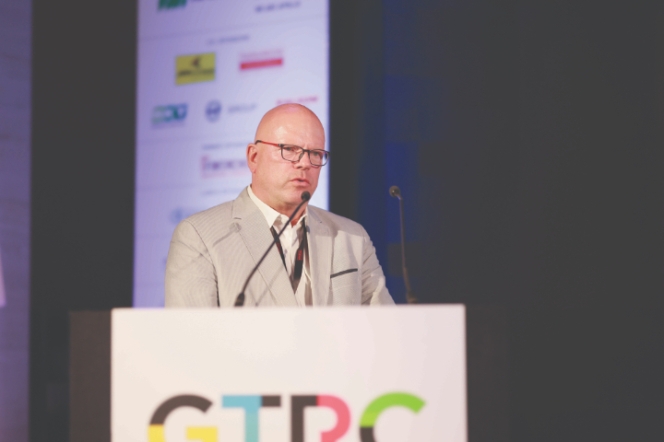
Like every technology sector requires testing, so do the tyres that come with any vehicle. It is important that the tyres of a vehicle function smoothly on different roads and under all weather conditions. This results in tyre manufacturers conducting a number of vital tests to ensure that their tyres perform when the end user sits behind the wheel. Dr Dieter Barz, Director – Sales and Service, and Executive Board Member at Altracon, a company that provides tyre and material property testing solutions and configurations, throws light on tyre testing standards, how the Indian market is one of the major markets of the future for tyre testing and how the future is about sustainability.
What is the role of testing in tyre development as a whole?
When a customer buys a tyre, they, of course, have to be sure that the tyre is safe, comfortable to ride and not noisy. Therefore, tyre testing is essential.
The tyre is a very complex, built-up element. As for tyre testing in general, it is split up into several areas. For one, there’s subjective testing, like the feeling of driving a car, for instance. This would be the tyre performance.
Then there’s tyre measurement. When it comes to tyre measurement, it’s very important that during the development process, one proves that the tyre is fulfilling various standards. These standards are different for different countries – there are European, American, Japanese or Asian standards and so on. But on the whole, the tyre has to show that it is capable of fulfilling those standards. And that is the role of tyre testing.
What kind of regulation, according to you, will fuel more demand for testing businesses?
The future is about sustainability. Energy consumption is one of the most important factors and is influenced by a lot of things. If we look at compound development, we have to find compounds that have low rolling resistance and low damping in order to be energy efficient. So the focus on tyre testing will be in terms of sustainability and energy consumption, looking into the compounds and the complete tyre as well. These are two very important elements to look into.
Does the Asian market require different testing machines?
In general, no. You have different standards to prove, although the test machines are more or less the same. The software program that you run for the test is what stands.
Which is the most exciting market for Altracon right now?
As sustainability is a global project, there are no priority markets. However, we also see that India is developing very fast. Therefore, the demand for tyre testing, now and in the future, will be very high in India. Hence, India will definitely be a focus market in the future.
Can you elaborate more on this? What is Altracon’s scope in the Indian market?
Altracon is already very well known in the Indian market. In fact, we offer machines that directly suit the country’s requirements. Plus, along with our machines, we also provide tools that are sustainable. For example, we offer special energy management to operate the machine. Besides, we also offer machine programmes that help shorten development processes, thus enhancing sustainability by reducing manufacturing and testing efforts. This saves fuel and reduces emissions and pollution.
Can you tell us a bit about the services provided by Altracon? How do you make sure that your customers receive timely and the most effective service possible?
In the past, we have experienced that the online service we provide fulfils more than 90 percent of customer requirements. If there is any issue with the machine, we start a remote service via the internet in order to look into the machine and solve the problem along with the customer. We have a very fast response time and low costs as there is no travelling involved. We go out to the customer in person and fix the machine only if it is really needed.
KraussMaffei Names Ren To Lead Extrusion Unit Alongside China Role
- By TT News
- September 08, 2026
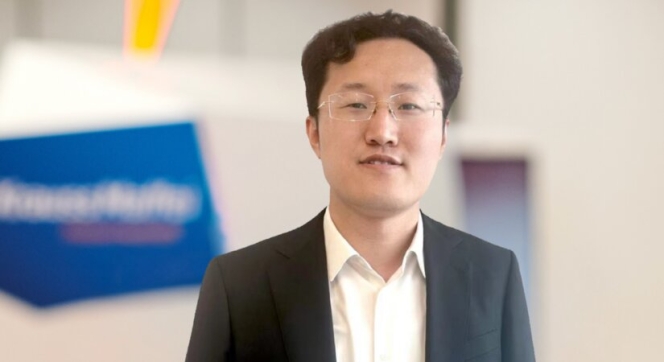
KraussMaffei has appointed Xinting Ren as Managing Director of its extrusion business, effective 1 September, 2026, combining the role with his existing leadership of the group’s China operations.
Ren succeeds Ralf Benack, who left the company at his own request on 31st August , ending a tenure of about two years.
The company said the dual appointment is intended to strengthen integration between its extrusion activities and international operations.
Ren has led KraussMaffei China for the past three years, overseeing cross-technology activities in the Chinese market. Before joining the group, he held several management roles in the chemical industry, including Assistant General Manager at KraussMaffei Company Limited, now operating as Sinochem Equipment Technology Qingdao Co., and most recently served as general manager of Shanxi China Coal Pingshuo Energy Chemical Co., Ltd.
Benack took over leadership of KraussMaffei Extrusion in 2024 and was responsible for the group’s global extrusion business. During his tenure, the company focused on operational processes and customer orientation, reducing delivery times and further developing the Technology Center at its Laatzen site.
The facility now offers 26 pilot lines for development and customer projects, and the company said it also expanded its extrusion technology portfolio.
From September, responsibility for the extrusion business and management of the China business will be combined under Ren’s leadership.
Nokian Tyres Launches Summer Tyre With Top EU Label Ratings Across Range
- By TT News
- September 08, 2026
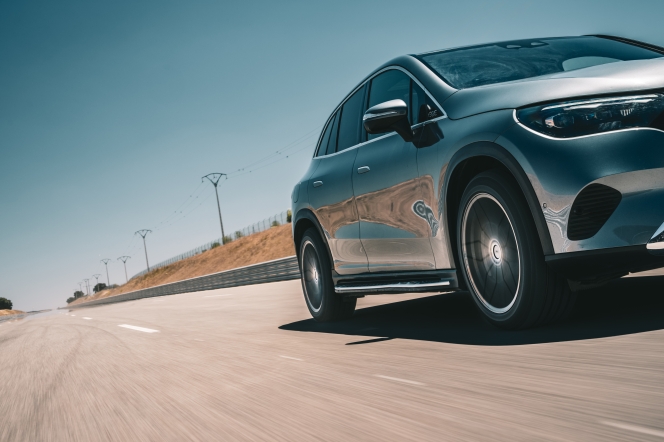
Nokian Tyres plc has introduced a new premium summer tyre, the Powerproof E, designed for Central and Southern European markets, with A-class ratings in all three European Union tyre label categories across its full range.
The company said the tyre achieves top grades for rolling resistance, wet grip and external rolling noise, reflecting a development approach aimed at balancing efficiency, safety and comfort within a single product.
“Whether the priority is maximizing range and efficiency or achieving confidence and comfort in wet conditions, drivers should not have to compromise on safety. The new Nokian Tyres Powerproof E is designed to deliver outstanding performance in the areas that matter most to drivers,” said Tommi Alhola, Senior Vice-President for Passenger Car tyres in Central Europe.
Samu Lepistö, development manager at the company, added: “Achieving A-class ratings in all three EU tire label categories across the entire range is a significant result. These characteristics are all important to today's drivers yet improving one can often affect another. Nokian Tyres Powerproof E was developed to deliver balanced performance across all three areas.”
The tyre incorporates what the company calls Motion Control Technology, combining tread design, compound development and structural engineering to support efficiency and wet-weather performance.
Depending on size, between 40.9 percent and 42.8 percent of the tyre’s material content consists of recycled and renewable inputs, including rice husk ash, recycled carbon black and recycled steel.
Production takes place at the group’s factory in Oradea, Romania, which opened in 2024 and operates with zero direct carbon dioxide emissions, powered by renewable energy.
The Powerproof E is designed for passenger cars, sport utility vehicles and crossover vehicles, including electric, hybrid and internal combustion models. It will be available in sizes ranging from 16 to 20 inches for the 2027 summer season in Central and Southern Europe.
Frank Buntinx Takes Helm As Managing Director Of Continental Tire Canada
- By TT News
- September 08, 2026
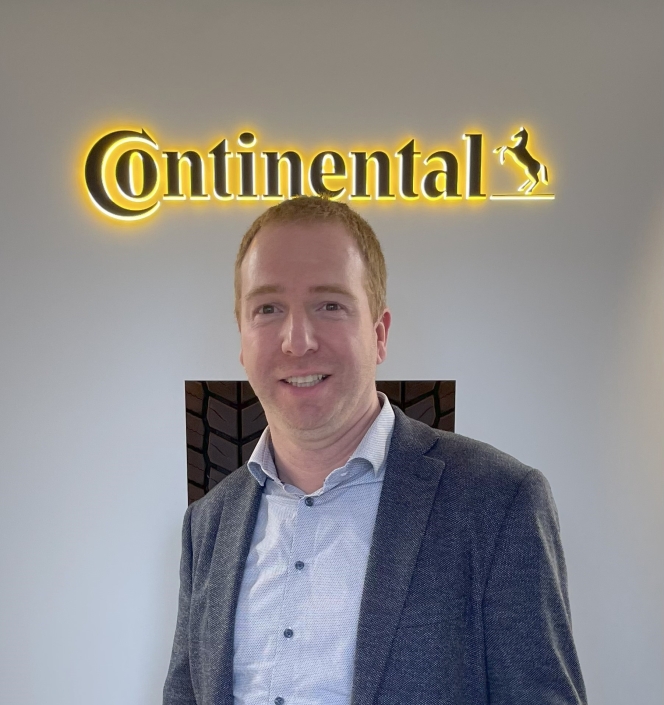
Continental Tire Canada has appointed Frank Buntinx as its new Managing Director, effective 17 August 2026. In this executive capacity, he assumes comprehensive oversight of the organisation’s entire Canadian tyre portfolio, which encompasses passenger and light truck vehicles, commercial truck lines and specialised tyre segments. His leadership will guide the strategic direction and operational performance across these diverse business units.
A native of Belgium, Buntinx brings over two decades of tenure with Continental, having commenced his career there in 2003 within logistics and supply chain management. Over the years, he has accumulated a broad commercial skillset through successive roles in marketing, pricing strategy, business analytics, fleet operations and sales. His professional trajectory later elevated him to senior leadership positions in the Benelux region, where he directed marketing efforts and subsequently headed Fleet Solutions and Truck Tires, thereby acquiring multifaceted management expertise.
This transatlantic appointment signifies a pivotal career transition for Buntinx, offering him the chance to infuse the Canadian market with an international vantage point. His arrival is anticipated to bolster Continental’s regional presence, leveraging his extensive cross-functional background to navigate the complexities of the domestic tyre industry and drive organisational growth.
“I am truly excited to join Continental Tire Canada and begin this new chapter. Continental has built a strong business and reputation in the Canadian market, and I look forward to working alongside our talented team to build on that success, strengthening Continental's position while supporting the growth and success of our customers,” said Buntinx.
Dunlop To Exit Karting Tyre Segment By 2027
- By TT News
- September 07, 2026
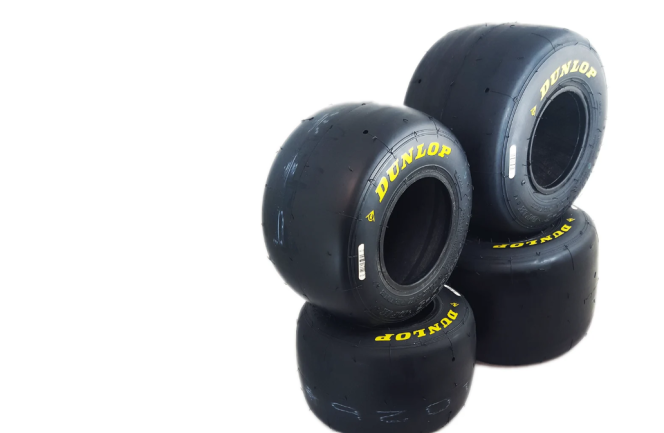
Sumitomo Rubber Industries, Ltd., which operates the Dunlop brand, will discontinue the supply of karting tyres by the end of 2027 as part of a strategic review of its business and allocation of management resources.
The company said it would continue supplying products to existing customers until December 31, 2027.
Dunlop has produced karting tyres since 1976, supplying products homologated by the Commission Internationale de Karting-FIA (CIK-FIA), under the Fédération Internationale de l’Automobile, as well as tyres accredited by the Japan Automobile Federation.
The company said its products had supported a wide range of users, from recreational drivers to young drivers aiming to compete at higher levels, and had contributed to the development of karting participation.
It added that the decision followed a review of its medium- to long-term management strategy and changes in the business environment.
The group said it would continue to contribute to motorsport activities, while expressing appreciation to customers and organisations that had supported its karting tyre business.

Comments (0)
ADD COMMENT