

The Invisible Giant: How Bekaert Became India’s Most Indispensable Partner Of The Tyre Industry
- By TT News
- December 10, 2025

Tyres may appear simple, but behind their strength and resilience lies a web of intricate engineering and hidden reinforcements. At the heart of this complexity are tyre cords, materials that ensure safety, performance and durability while rarely being noticed. For India’s fast-growing tyre industry, companies like Bekaert have become essential partners, combining global expertise with local innovation. Through decades of investment, technical excellence and sustainable practices, Bekaert has embedded itself deeply into the industry’s transformation, helping shape safer, lighter and more efficient tyres.
In the vibrant industrial heart of Pune, Maharashtra, a Belgian company quietly celebrates a remarkable milestone. Few may realise it, but most journeys on India’s roads, from daily commutes to long-distance drives, are supported by Bekaert’s invisible touch. Through its advanced tyre reinforcement technologies, Bekaert helps make mobility across the country more reliable, efficient and safe. Over the past 25 years in India, the steel wire and advanced materials specialist has mastered the art of being what it calls ‘invisible, yet indispensable’– a philosophy that has made it one of the leading enablers of India’s modern tyre industry.
Every tyre represents a complex engineering trade-off: it must maintain road grip, bear substantial loads and withstand road hazards at higher speeds. The critical but invisible component? Steel cords are embedded within the rubber structure. These high-performance cords prevent tyre deformation during cornering, distribute cargo weight without compromising structural integrity and maintain dimensional stability at high speeds. Without steel reinforcement, modern tyres would fail under the mechanical stresses of everyday use – making these concealed cords essential to road safety. Bekaert, through continued innovation in steel cord technology and close collaboration with tyre manufacturers, ensures this critical structure performs reliably under the most demanding conditions.
“This philosophy – invisible, yet indispensable – reflects Bekaert’s strategy of deep technical expertise and close collaboration with customers to deliver critical, high-quality tyre reinforcement solutions. By understanding industry challenges and unique local conditions, Bekaert develops highly specialised, often custom solutions integral to tyre safety and reliability for more specific local needs,” explains Roopak Karnik, Managing Director, Bekaert Industries Private Limited.
Bekaert didn’t become a global leader in steel wire transformation overnight. The company has spent over 70 years refining its craft across international markets. But it’s India’s story that is more recent – and arguably more interesting. When Bekaert arrived 25 years ago, it was simply a wire supplier. Today, it has helped reshape an entire industry. The company’s partnerships with Indian tyre manufacturers proved critical during the country’s shift from bias to radial tyres, a transition that elevated not just Bekaert’s business but also strengthened competitive standing of India’s entire tyre sector on the global stage.
THE LONG GAME: OVER 25 YEARS OF STRATEGIC INDUSTRY FIRST MOVER
With over 150 years of global expertise and a strong legacy of innovation across continents, Bekaert has been a pivotal force in advancing the global tyre industry. Confident in the potential of the Indian market, Bekaert began manufacturing in India in 2001, strategically positioning itself as a first mover to introduce cutting-edge solutions to a rapidly transforming industry landscape.
“In 1997, Bekaert began its journey in India by trading various products, including steel cord manufactured, globally. Bekaert traditionally has been an early mover in the growth regions and was the first steel cord company to set up manufacturing facilities in China, Indonesia and India,” Karnik tells.
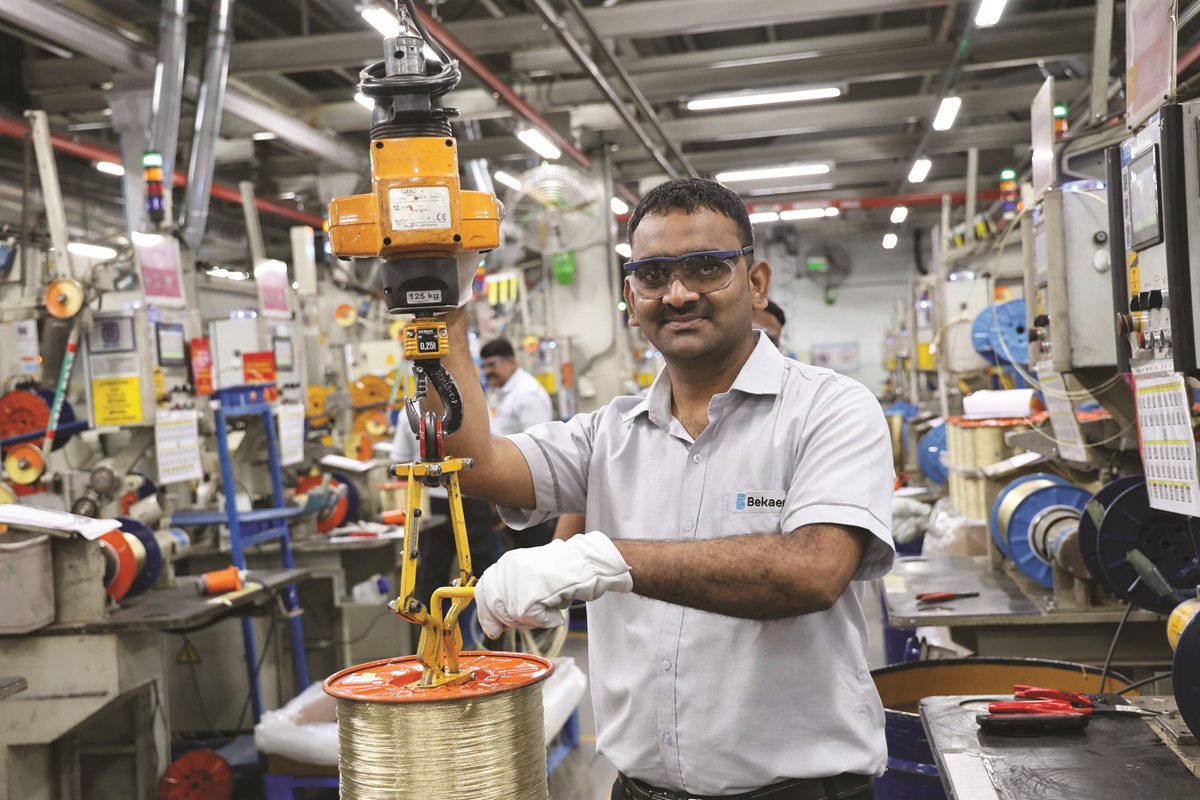
This initiated a methodical expansion that mirrored India’s own industrial transformation. By 2001, recognising the potential of India’s emerging radial tyre market, Bekaert established its first tyre reinforcement plant with a modest 5,000-tonne capacity. This step marked a significant shift from Bekaert’s initial phase of local sales, representing not just an investment in production but a bet on India’s automotive future at a time when most commercial vehicles still ran on bias tyres.
Recognising the uniqueness of the Indian infrastructure evolution, logistics model and transportation requirements, the next major milestone came in 2010 with a local R&D Tech and Engineering Centre in Ranjangaon, ‘dedicated to India-specific tyre needs’. This signalled Bekaert’s commitment to being more than a multinational supplier – it aimed to be a true partner in India’s industrial development.
“At Bekaert, we’ve evolved beyond being just a manufacturer. From creating over 1,000 local jobs to having our global Technology Centre and manufacturing plant in Pune, we work hand-in-hand with customers to co-create solutions before challenges even arise. With our technical division and 24/7 support, we are committed to delivering comprehensive, integrated solutions and addressing any issues our customers face on time. Our goal is simple: be the partner our customers turn to first, backed by local expertise and global experience,” Karnik explains.
Recognising the growth in infrastructure and the development of local steel manufacturing capabilities, Bekaert invested in a plating line to provide the Indian market with a fully integrated plant. This investment has provided the tyre industry with an extremely reliable, flexible and dependable end-to-end local supply chain. The strength and reliability of this local supply chain were proven during the Covid-19 pandemic and again in 2022, when many less integrated supply chains struggled to keep pace with industry demands.
As Bekaert marks its 27th year in India, the company has evolved from a trusted supplier to a strategic partner. Under Karnik’s leadership, Bekaert’s Indian operations now serve as a global hub for services and innovation, reflecting the company’s deepening commitment to both local and international customers.
Bekaert has always been at the forefront of being a partner to its customers, and it is resonated by JK Tyre & Industries Ltd. “As pioneers of radial tyre technology in India and the first to introduce truck radials in the country, JK Tyre shares a longstanding and valued partnership with Bekaert. Our collaboration spans a few decades, during which JK Tyre played an instrumental role in encouraging Bekaert to establish its manufacturing presence in India. Together, we have worked extensively on advancing steel tyre cord technologies, continually setting benchmarks in innovation and quality. Both JK Tyre and Bekaert have been at the forefront of introducing cutting-edge technologies to India, making our partnership especially relevant in today’s context of Atmanirbhar Bharat or the Make in India initiative. These national priorities align well with our shared vision of strengthening India’s self-reliance in critical manufacturing sectors,” says a JK Tyre spokesperson.
“We are confident that with Bekaert’s expanded capacity, robust technology and strong support team, this partnership will continue to contribute meaningfully to JK Tyre’s growth and to India’s journey towards becoming the world’s third-largest economy,” adds the JK Tyre spokesperson.
THE RADIALISATION REVOLUTION
Bekaert has been an integral part of India’s shift from bias to radial tyre journey since the manufacture of the country’s first radial tyre, providing cutting-edge steel cord reinforcement solutions that continue to set industry standards today.
When Bekaert arrived in India in 1997, only five percent of commercial vehicle tyres were radials.
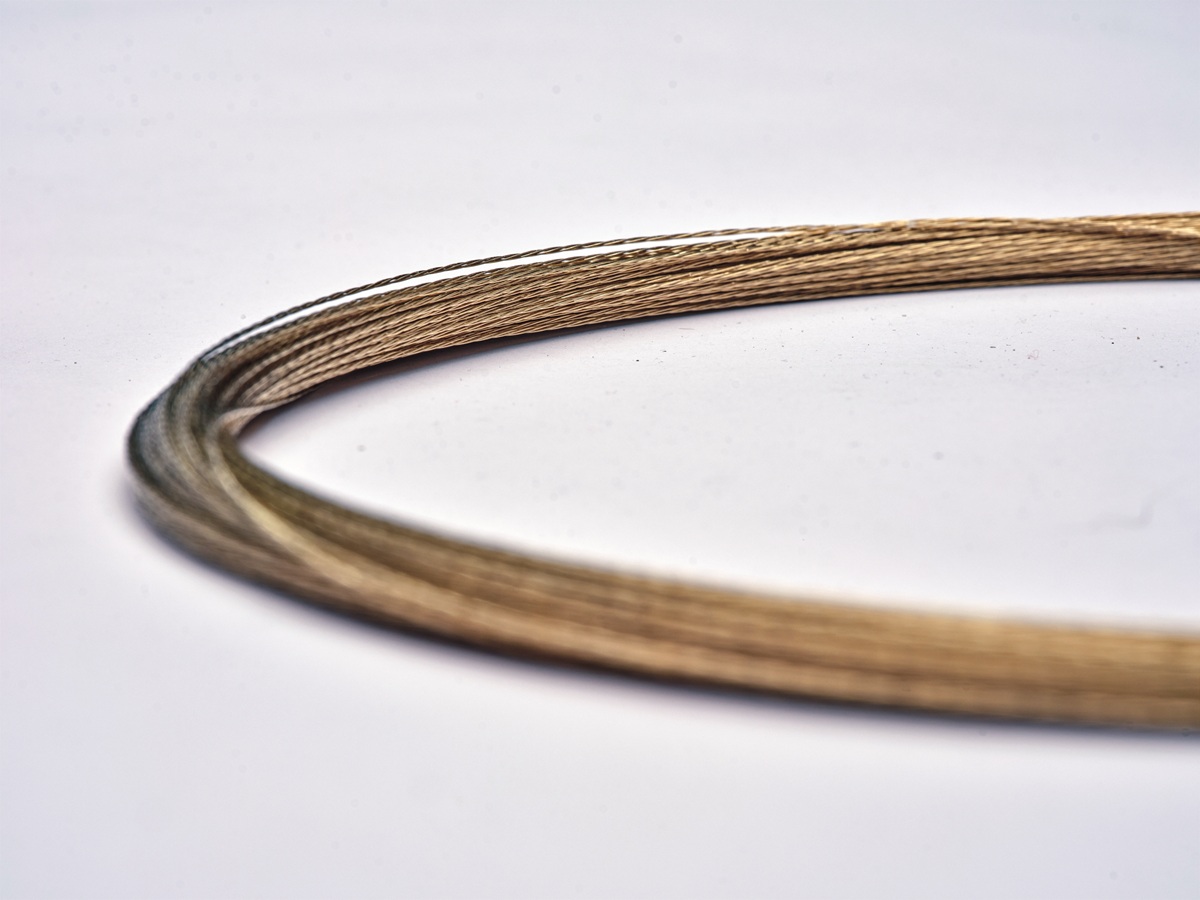
“Bekaert has been instrumental in the radialisation of India’s commercial vehicle tyre market, which has grown from five percent in 1998 to 55 percent in 2023. This shift demanded tyres handle higher loads, improve fuel efficiency and enhance safety. By co-developing solutions, providing technical expertise, joint testing, collaborative innovation and even customised wire rod and cord solutions, we have enabled tyre manufacturers to transition smoothly, improve product performance and meet growing consumer expectations for durability, handling and safety. This has been possible due to a strong local footprint for both research and manufacturing,” says Raj Kalra, SVP, Strategic Marketing and Sales RR at NV Bekaert.
Elaborating on the industry perspective on this transformation, the Automotive Tyre Manufacturers Association (ATMA) says, “Bekaert has been a trusted and longstanding partner in the radialisation journey of the Indian tyre industry. India’s market is unique in its requirements, demanding differentiated and performance-driven raw materials to cater to diverse road conditions and customer expectations. In this context, close collaboration between partners such as Bekaert and the tyre industry has been instrumental in developing technologically advanced solutions, particularly in the area of high-performance steel cord reinforcement, which has significantly contributed to enhancing tyre safety, durability and fuel efficiency. By driving innovations that reduce material usage, improve recyclability and lower the overall carbon footprint of tyres, Bekaert has aligned itself with the broader environmental priorities of the tyre industry. Their efforts complement the industry’s push towards cleaner mobility, energy efficiency and global competitiveness.”
The technical challenges were immense. Radial tyres demand far superior reinforcement compared to their bias counterparts. They must withstand higher stresses, maintain structural integrity under varying loads and deliver the durability that commercial vehicle operators in India’s challenging conditions demand.
LOCAL PRESENCE, GLOBAL EXCELLENCE
Bekaert’s success in India relies on achieving true localisation while leveraging its global innovation powerhouse and expertise. The approach to local production capability exemplifies an effective industrial strategy.
Along with support of manufacturing plants strategically located across regions, local production enables Bekaert to shorten response times, tailor specifications and quickly adapt to market shifts. Unlike imports, Bekaert offers immediate response, agile development and a lean supply chain. By implementing vendor-managed inventory programmes, it minimises inventory in the pipeline, ensuring that products meet the needs of Indian tyre manufacturers.
The advantages extend far beyond logistics. Indian tyre manufacturers have distinct product requirements based on the diverse vehicle types and challenging road conditions in the country. “Bekaert delivers a unique proposition to Indian manufacturers. With the combination of decades of global experience with deep local market knowledge and leveraging its state-of-the-art Technology Centre at the Ranjangaon campus, Bekaert works in close partnership with Indian customers to engineer tyre reinforcement solutions specifically calibrated for local road conditions and operational demands, spanning the entire spectrum from two-wheelers to heavy-duty mining vehicles,” says Jim Dobson, SVP, Technology and Quality at Bekaert.
Bekaert’s in-house engineering department, Bekaert Engineering, designs, manufactures, installs and maintains equipment for its production plants worldwide. This global expertise is a cornerstone of the company’s operations, ensuring that production processes are efficient, standardised and consistent across all facilities. Close collaboration with R&D allows machinery and product innovations to advance in tandem, while maintaining control over its own equipment enables Bekaert to continuously enhance quality, efficiency, safety, sustainability and cost-effectiveness.
In India, this strong global engineering backbone has supported the company’s growth journey – providing the technological foundation and know-how needed to scale efficiently in a complex market. At Bekaert, keeping the customer at the centre of its business isn’t just a philosophy – it’s a strategic advantage that guides every decision, from where facilities are located to how innovation is delivered.
Local production is a prime example of this commitment. Bekaert’s combination of local and global presence insulates the customers from the pressures arising out of geopolitical volatility and trade barriers. This puts Bekaert in the best position to offer a cost-effective supply chain optimising solution.
“The key success factors in the Indian market differ significantly from those in international markets due to variations in consumer behaviour, infrastructure, regulations and competitive scenario. Apollo Tyres has been successful in the Indian market due to its strong dealer and distribution network in the country, which is crucial for reaching customers in the tier II/III cities and rural areas. It is a well-established brand in India synonymous with quality and durability, along with its strong relationships with Indian OEMs, which boosts volumes and brand visibility. In the markets outside India, Apollo Tyres’ focus on building brand equity and meeting international safety, performance and sustainability standards (EU labelling norms) has been the key. Having an established brand, like Vredestein, and manufacturing presence has helped it enter and expand in Europe,” says Apollo Tyres’ spokesperson.
“We build our entire ecosystem around customer needs – aligning our footprint, capabilities and innovation pipeline to deliver maximum value to our partners in minimum time,” says Amit Kulkarni, Sales Director at Bekaert Industries.
Highlighting the strategic value of such partnerships, Apollo Tyres’ spokesperson adds, “Bekaert has a manufacturing footprint which aligns with Apollo’s production locations, allowing local buying at a reduced carbon footprint. It has the added advantage of being a full-range player with a focus on innovation and new products.”
The contrast with import-based models is evident. Imported solutions often follow a ‘reactive, one-size-fits-all approach’, while Bekaert’s local presence enables proactive customisation and rapid adaptation to Indian conditions.
ADVANCING LOCAL CAPABILITIES THROUGH TECHNOLOGY AND PARTNERSHIP
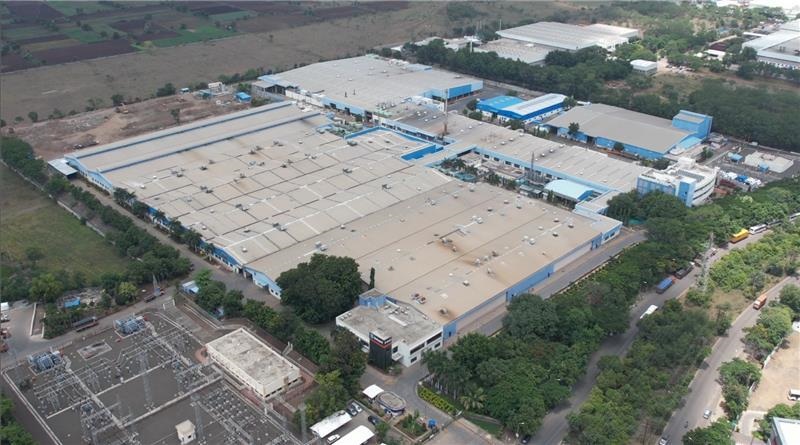
Bekaert’s long-term investment in India reflects a clear ambition: to strengthen the country’s position in the global tyre supply chain through advanced technology, deep customer collaboration and a strong local footprint. The recent expansion of its Pune facility, with a state-of-the-art coating line, demonstrates this commitment to combining global expertise with local manufacturing excellence.
“We are building technology nodes, not just factories. Each region is equipped to deliver innovation and advanced solutions, ensuring our customers benefit from consistent quality and expertise wherever they are,” says Karnik.
Bekaert focuses on transferring global technology and best practices to India. Local operations work hand in hand with global engineering teams to ensure the same standards of performance, safety and sustainability. The Pune site integrates next-generation steel cord processing that reduces Scope 2 emissions, eliminates water-intensive pickling and works on the concept of zero liquid discharge, supporting the industry’s broader sustainability ambitions.
Equally important is the close technical partnership between Bekaert and its customers. Engineers are embedded within development teams, enabling seamless communication between shop floor and R&D. Joint validation programmes, testing and simulation processes help tyre manufacturers bring new designs to market faster and with greater reliability. This hands-on collaboration ensures that products meet global standards while being optimised for India’s specific road and performance conditions.
As one of India’s leading tyre manufacturers, BKT has experienced the benefits of this partnership first-hand. A company spokesperson explains: “When BKT was founded, our focus was strongly oriented towards export. We began engaging with international markets very early, meeting highly demanding customers and operating under strict quality standards. That experience shaped us: it pushed us to invest in technology, strengthen our manufacturing processes and establish ourselves as a trusted global brand. In recent years, however, we have chosen to look more closely at our home market. We’ve recognised the changing landscape in India. With increasing demand for advanced products and a growing emphasis on performance and reliability, we’ve brought our international expertise to bear on these new
challenges. Today, our strength in India lies exactly in this combination: expertise developed in international markets and the ability to adapt it to local needs, supported by a widespread distribution network and customer-focused service. Bekaert is not just a supplier for BKT; it is a long-term technology partner. Its high-performance steel cord plays a vital role in ensuring the strength, durability and reliability of our tyres across all applications. Bekaert’s support is crucial in the development of high-performance steel cords specifically engineered for large mining truck tyres, which are used in both global and Indian markets.”
This collaboration reflects the strength of partnership-driven innovation, where local manufacturing meets global expertise. Through shared technology, joint validation and sustainability-driven practices, Bekaert continues to reinforce the foundation of India’s tyre industry and its journey towards global competitiveness.
Through strategic decentralisation, a focus on sustainability and close integration with local manufacturers, Bekaert demonstrates how global expertise can strengthen India’s tyre industry, delivering reliable, high-performance solutions that support mobility across the country.
CUSTOMER-CENTRICITY IN THE DIGITAL AGE
Bekaert’s strategy is built around creating long-term value while exploring new markets and technologies. The company’s vision is to ‘Establish the New Possible: Safe, Smart, Sustainable’, and it achieves this by strengthening its core business in steel wire applications, pioneering beyond steel into new materials and solutions and ensuring outcomes that are sustainable and positive for the future.
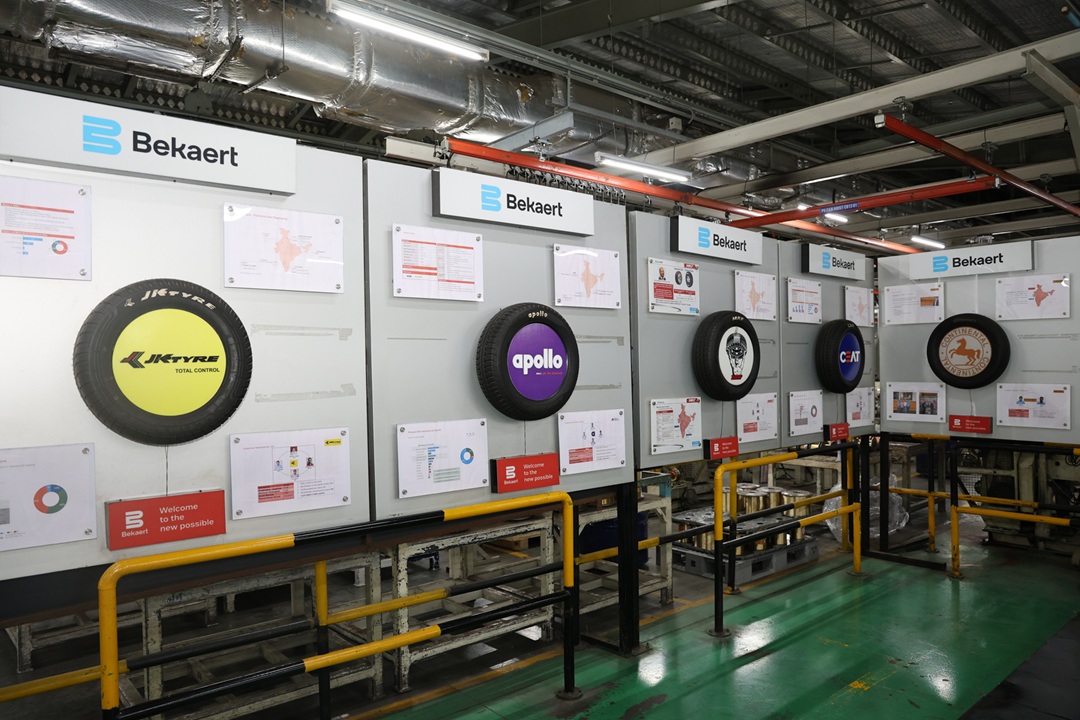 Customer-centricity is not just a slogan at Bekaert. It drives every decision, from boardroom strategy to the shopfloor. The company has designed programmes that link operations directly to customer expectations, such as the Customer Steward Programme. This initiative empowers factory operators to take accountability for quality and consistency, ensuring that every product leaving the facility meets the high standards customers expect.
Initiatives like ‘Always Committed, Best Quality, Customer Delight’ (ABC) implement quality improvements in ways that customers can experience directly. Part of Bekaert’s broader Management System, ABC integrates manufacturing excellence with customer satisfaction on the production line. It instils a customer-first mindset across global operations. Teams are able to identify and resolve issues quickly while maintaining consistent quality and aligning closely with business objectives.
Bekaert’s Zero Loss approach complements this focus on customer value. Embedded within a continuous improvement framework that includes Lean and Six Sigma methodologies, Zero Loss aims to eliminate waste, reduce variation and achieve zero defects. By linking critical business needs directly to shopfloor practices, operators understand how their actions contribute to the company’s overall objectives, strengthening quality and efficiency at every stage.
Beyond internal processes, Bekaert engages with external innovators through corporate venturing. Its ‘Better Together’ philosophy enables rapid integration of new technologies and helps customers stay ahead of market shifts. These collaborations are particularly vital for innovation in sustainable construction and the energy transition, where emerging technologies require agile partnerships to create meaningful impact.
With over 70 years in the automotive sector, Bekaert maintains a forward-looking approach. The company develops products ahead of market demand and supports the transition to ‘New Mobility’ by providing materials for safer, smarter and more sustainable vehicles. This approach considers every stage from raw material sourcing to end-of-life recycling.
Customers recognise and value this collaborative approach. As CEAT explains, “Bekaert is an integral part of our innovation journey, whether by developing newer belt wire with improved performance, sustainability or service levels. The close collaboration enables us to study in depth the integrity and durability of our steel cord packages in a tyre under various service conditions. It also helps us to exchange and understand the global trends in steel wire technology, tyre technology and emerging trends. Bekaert’s support is always at hand whether be it in jointly driving process excellence, sustainable transportation of raw material and lean management, and is well appreciated. Sustainability is gaining focus; we look forward to further encouraging sustainable initiatives with Bekaert.”
“The approach ensures that innovations are not just technically advanced but also aligned with the real-world needs and specifications of Indian OEMs and their tyre suppliers, leading to more impactful solutions. In India’s rapidly evolving automotive market, where OEMs are shortening their product cycles and constantly updating vehicle models, this responsiveness provides a crucial competitive advantage,” Karnik says.
Through deep customer partnerships, continuous improvement and a forward-thinking approach to innovation, Bekaert demonstrates how a global company can remain close to local needs while shaping the future of mobility in India.
WIRE ROD EXCELLENCE THROUGH PARTNERSHIP
Bekaert’s approach with India’s steel sector exemplifies a forward-looking model of industrial collaboration, where the company prioritises expertise and partnership over ownership. By leveraging relationships with domestic steel producers, Bekaert helps advance specialised steel production capabilities critical for high-performance applications.
“Bekaert’s strength lies in its global expertise combined with strong local sourcing relationships in India. Instead of operating its own wire rod production plants, we have partnered with the growing Indian steel sector,” explains Namrata Salunke, Head of Procurement at Bekaert Industries.
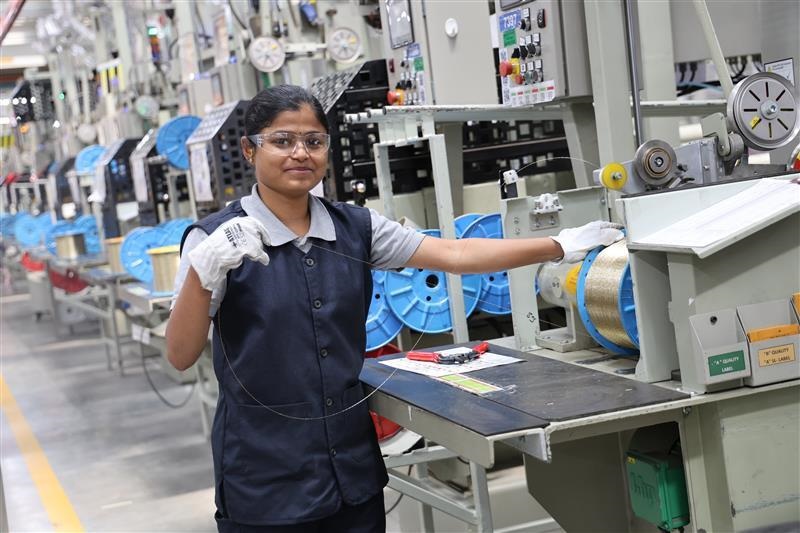
Rather than simply procuring standard materials, Bekaert positions itself as a technical partner to Indian steel mills. The company works closely with them to develop the specialised wire rod grades required for demanding applications such as steel tyre cords. This partnership involves technology support, process control improvements, quality system development and process optimisation. As a result, domestic steel producers can manufacture high-performance materials that meet stringent global automotive standards.
Bekaert’s engagement goes beyond specifications to the joint development of innovative steel grades, addressing the evolving needs of the tyre industry. By sharing deep application knowledge and quality benchmarks, the company helps Indian steel manufacturers optimise their capabilities to produce consistent, defect-free wire rod that meets international standards. Sustainability is also embedded in the collaboration, with efforts to reduce Scope 3 emissions and source wire rod with high recycled content, supporting a circular economy.
“By sourcing wire rod locally, we minimise dependency on imports, reduce lead times and collaborate on process efficiencies and material innovations, leading to a better overall operational efficiency. This capability strengthens our value proposition by combining technical expertise with operational agility, allowing us to efficiently co-develop innovative solutions with Indian tyre manufacturers. We at Bekaert are extremely happy and privileged to participate in the government effort relating to the Make in India movement, not only through investment and job creation but also by helping the core steel manufacturing sector produce high-specification wire rods in India,” Salunke says.
PARTNERING FOR SUSTAINABLE SUPPLY CHAINS IN INDIA
For Bekaert, sustainability is more than a responsibility: it is a strategic imperative woven into every aspect of its business. Guided by the Science Based Targets initiative (SBTi), the company has set ambitious goals to reduce its carbon footprint, transition to renewable energy and embed circular economy principles both globally and locally.
In India, these commitments translate into initiatives that address the country’s sustainability challenges while aligning with global climate objectives. Bekaert goes beyond supplying high-quality steel cords, offering complete solutions that combine products, services and technical expertise. This ensures that customers do not just receive a component; they gain a partner who supports them across the entire tyre development cycle.
KEY INITIATIVES DRIVING IMPACT
HIGH RECYCLED CONTENT (HRC) STEEL
Bekaert maximises the use of recycled steel to reduce reliance on virgin resources, lower carbon emissions and contribute to circular economy principles. Third-party verification confirms and certifies the percentage of recycled content in Bekaert’s manufactured and sold steel cord, ensuring traceability, transparency and confidence for tyre manufacturers reporting on recycled content.
LNG-POWERED LOGISTICS
With India’s industrial demand and logistics-related emissions on the rise, Bekaert has introduced liquefied natural gas (LNG) trucks to reduce its transport carbon footprint. This step aligns with the country’s broader transition to cleaner energy sources.
RENEWABLE ENERGY INTEGRATION
By early 2023, Bekaert had signed three power purchase agreements (PPAs) to source electricity from solar farms in India, securing 46.5-megawatt peak of solar capacity. These projects are expected to offset more than 60 percent of the company’s electricity-related emissions in India.
RESOURCE EFFICIENCY IN OPERATIONS
Sustainability is embedded at the plant level through global initiatives like ‘You Know Watt’, which drives continuous improvements in energy and resource consumption. Efforts include energy-efficient production processes, water recycling programmes and optimised material usage.
“Our targets include reducing carbon intensity, increasing recycled content usage and further optimising logistics and production efficiency in line with global and local sustainability standards,” Salunke says.
Through these initiatives, Bekaert demonstrates how a global sustainability vision can be adapted to India’s unique context, ensuring both environmental stewardship and industry resilience.
INNOVATING TYRE REINFORCEMENT FOR INDIA’S FUTURE
Over the next 5–10 years, India’s tyre ecosystem will be reshaped by multiple powerful forces: rapid EV adoption, the demand for lighter, low-rolling-resistance tyres, transparent carbon footprint reporting and Scope 3 reductions, stricter recycling and circularity regulations, geopolitically fragile supply chains and the performance expectations of higher-speed corridors and harsher climates. Bekaert’s roadmap is designed to meet these realities head-on.
The company is addressing this transformation through advanced solutions such as sustainable coatings on cords, Super Tensile (ST) and Ultra Tensile (UT) cords and its Elyta line of innovations. These solutions provide exceptionally high tensile strength while reducing material usage, enabling tyre manufacturers to produce lighter tyres without compromising safety. The result is improved fuel efficiency, lower carbon emissions and longer tyre lifespan, a critical requirement in India’s rapidly evolving market.
“The market dynamics have shifted considerably. This evolution demands tyres with superior performance characteristics, which in turn requires innovation in tyre cord technology,” Kulkarni explains.
Bekaert’s high-tensile and Elyta solutions combine premium materials with advanced design capabilities to tackle weight reduction, durability and sustainability challenges for passenger car and light truck tyres. Indian manufacturers specifically address diverse road conditions, cost-sensitive markets, the emerging EV sector and stringent environmental regulations.
“Our Elyta line combines high-performance materials with advanced design capabilities to address key challenges such as weight reduction, durability and sustainability for passenger car and light truck tyres. For Indian manufacturers, it directly addresses the realities of India’s market with rugged roads, higher vehicle speeds, fuel sensitivity and the rapid rise of EVs,” Selina FIPPL, Head of Strategy & Transformation at NV Bekaert says.
Dobson adds, “This technology allows for the use of up to 20 percent less steel and 10 percent less rubber compound in belt plies. This lets tyre manufacturers produce lighter tyres without compromising safety, improving fuel efficiency and lowering carbon emissions.” By reducing material use, tyres become lighter, lowering rolling resistance and boosting fuel efficiency. Reduced fuel consumption also supports greener manufacturing and helps automakers meet global environmental standards.
These innovations enhance durability and performance, extending tyre lifespan while minimising material waste throughout the product lifecycle.
SAFETY FIRST: BUILDING A CULTURE OF ZERO HARM
Bekaert’s approach to safety in its Indian operations reflects both global standards and local sensitivities, creating what the company describes as an ‘interdependent safety culture’.
Safety is embedded in Bekaert’s operations through rigorous training, regular audits, strict adherence to global protocols and a proactive incident-reporting culture. At the core is the company’s ‘no harm to anyone’ philosophy, which guides safety practices worldwide and is systematically applied across its Indian plants.
The programme goes beyond compliance to create genuine cultural transformation. “The programme aims to create a risk-free working environment by increasing risk awareness among all employees. It emphasises building strong Safety, Health and Environment (SH&E) leadership to steer an interdependent safety culture, where every individual takes responsibility for their own and their colleagues’ safety,” says Kiran Kale, Manufacturing Head at Bekaert Industries.
Cultural practices are firmly embedded in Bekaert’s daily operations, with continuous awareness campaigns, employee participation in safety committees and incentives that encourage safe behaviour. These measures help ensure that every employee and contractor works in a secure environment.
The company’s approach goes beyond physical safety to include overall well-being. Bekaert offers a confidential employee assistance programme, providing counselling services to employees and their families, underscoring its commitment to holistic care.
Continuous improvement drives the programme forward. “By regularly monitoring and benchmarking its practices against industry best performers, Bekaert drives continuous improvement in its SH&E performance,” Kale adds.
TALENT DEVELOPMENT AND INCLUSIVE GROWTH: BUILDING INDIA’S INDUSTRIAL FUTURE
Bekaert’s investment in local talent development reflects a long-term commitment to building capabilities that extend far beyond the company’s immediate needs, contributing to India’s broader industrial competitiveness.
“Bekaert invests in local talent through structured training programmes, apprenticeships and continuous professional development like its Global and Young Graduate programmes,” says Sayali Awachat, HR Head of Bekaert Industries. “These initiatives immerse participants in a hands-on learning environment over 18 months, with international rotations that expose participants to diverse markets, technologies and customer needs – developing future leaders.”
Unlike generic training access, Bekaert focuses on applied learning on the shop floor and at the technology centre. Young engineers are engaged in live technical workshops, customer trials and co-development projects where they learn to solve real challenges in reinforcement technology, quality control and sustainability. This close integration of learning with practice ensures that Bekaert talent is industry-ready from day one.
“We don’t just equip our people with online learning tools; we immerse them in environments where they can co-create solutions with customers. Through initiatives like the Elevation Leadership and Learning Journey for first-time managers, and in-house certification programmes tailored to reinforcement technology, we prepare our teams to lead change in a fast-evolving market,” adds Awachat.
Technical expertise receives focused attention. “Technical workshops, in-house certification programmes and collaborations with academic institutions ensure that employees gain hands-on expertise in reinforcement technology, quality control and innovation practices. This builds a robust pipeline of skilled professionals for the Indian tyre sector,” Awachat says.
Bekaert leverages external partnerships to boost knowledge sharing. By collaborating with research centres and universities worldwide, the company provides its Indian team with access to cutting-edge insights. Combined with internal expertise, these collaborations help Bekaert India remain at the forefront of material science and tyre reinforcement technology.
Bekaert’s initiatives for talent development are built on the core belief of empowering individuals to ‘dare to go beyond and achieve their full potential’.
Bekaert’s inclusion strategy is an integral part of its ‘Put People First’ sustainability pillar, aiming to create an equitable, diverse and safe environment for all employees. The approach combines top-down corporate goals with bottom-up employee-led initiatives, fostering an inclusive culture where every team member has the opportunity to grow, contribute and thrive.
Through its integrated talent development and inclusion programmes, Bekaert is not only preparing its workforce for tomorrow’s challenges but also contributing to the long-term resilience and competitiveness of India’s industrial ecosystem.
LOOKING AHEAD: THE INVISIBLE GIANT SHAPING INDIA’S MOBILITY FUTURE
As Bekaert looks towards its next decade in India, the company’s priorities reflect both the opportunities and challenges of a rapidly evolving industrial landscape. Over 25 years, Bekaert has quietly become indispensable to India’s mobility ecosystem, reinforcing millions of tyres daily with its steel cords, yet remaining purposefully invisible. This strategic invisibility stems from a relentless focus on technical excellence, deep customer partnerships and long-term value creation over brand visibility.
“Bekaert’s priorities for India over the next 5–10 years will be to focus on sustainable growth, leveraging local strengths and aligning with the country’s evolving mobility and infrastructure landscape. As per our philosophy, ‘invisible, yet indispensable’, we will remain an indispensable partner to the tyre industry, quietly delivering co-created, high-performance reinforcement solutions that meet critical industry needs,” says Annie Xu, Divisional CEO RR, NV Bekaert.
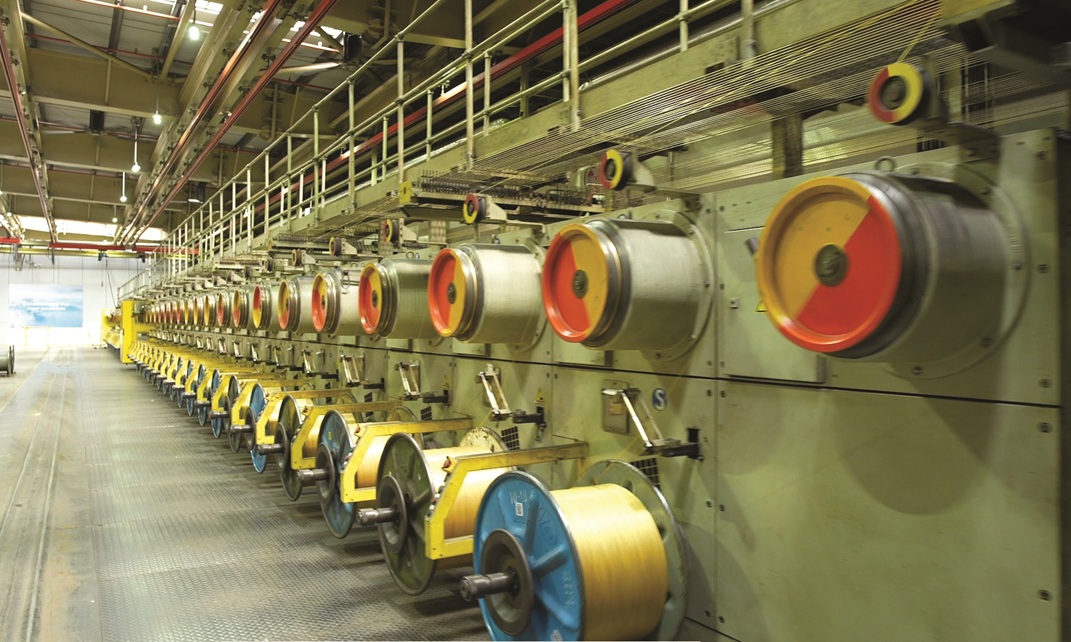 Innovation remains central to this vision. “Bekaert will continue to focus on advance testing and simulation ecosystem that will help our customers reduce time to market and continue to be the customers’ preferred choice for development and supply fully Indian products. The company aims to co-develop technologies that address India-specific challenges, from high-speed performance in extreme temperatures to enhanced durability on diverse road conditions,” Dobson adds.
Bekaert’s ambitions extend beyond operational efficiency, positioning sustainability as a strategic opportunity to set industry benchmarks, share best practices and advance India’s circular economy goals. “In the coming decade, we’ll deepen our commitment to India’s tyre industry by placing customers at the heart of innovation,” Karnik says. “Through advanced solutions, sustainable practices, smart manufacturing and talent development, we aim to remain a trusted partner driving long-term value.”
To realise this vision, Bekaert is doubling down on both manufacturing capacity and technological capabilities. “India remains a priority market for us, and with Ranjangaon now at almost terminal capacity, we will explore options for growth in the coming years,” Xu says. “We’re also continuing to invest heavily in our Technology and Innovation Centre at Ranjangaon, creating an advanced product testing and simulation ecosystem that will help our customers reduce time-to-market and stay ahead in an increasingly competitive landscape.”
This expansion aligns with the broader national vision of Atma Nirbhar Bharat, as echoed by MRF: “Bekaert’s expansion of its Pune facility, along with its strategic backward integration investments, demonstrates a strong commitment to this shared goal. These initiatives not only enhance India’s supply chain resilience but also strengthen the technological foundation of the Indian tyre industry. As a trusted partner, Bekaert continues to deliver innovation, sustainability and consistent quality.”
Bekaert’s holistic vision encompasses economic, social and industrial impact. Talent development, innovation and inclusion remain core pillars, ensuring a workforce capable of co-creating solutions with customers, leading change and sustaining the tyre industry’s competitiveness in India.
In an era dominated by corporate grandstanding, Bekaert presents a different model: the power of being invisible yet indispensable. Its sustained investment in local capabilities, advanced technologies and sustainable practices positions both the company and its partners for success as India’s mobility revolution accelerates.
Bekaert’s forward stance is clear: be present locally, lead in cord technology critical for EVs and high-speed India, embed with customers to compress development time and make sustainability measurable within the tyre, ensuring that its philosophy of being invisible yet indispensable continues to define the next chapter.
Through quiet, consistent impact, Bekaert is not just supplying steel cords; it is empowering Indian tyre manufacturers to realise their global growth ambitions, strengthening local capabilities, driving innovation and supporting the nations journey towards mobility excellence, one tyre at a time.
The Tyre Giant That Doesn’t Want A Dark Factory
- By Sharad Matade
- October 13, 2026
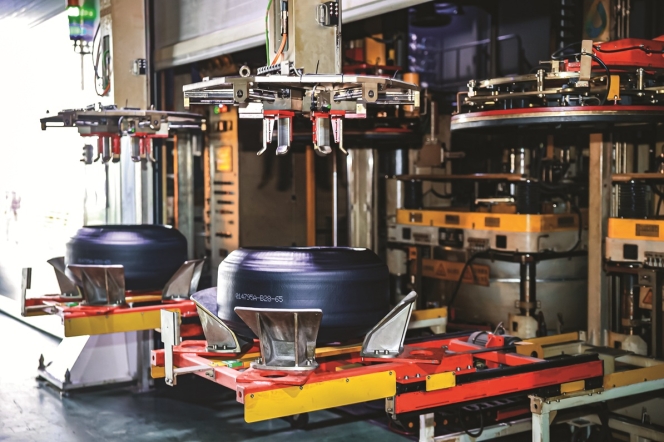
ZC Rubber, China’s largest tyre maker, is running 18 AI agents across its Hangzhou 5G plant. It insists the goal is smarter manufacturing, not emptier factory floors.
Walk into the industrial conversation about automation these days and ‘lights-out’ production tends to come up within minutes: factories with no people, no lighting and machines working in the dark. However, ZC Rubber, the Hangzhou-based group that ranks among the world’s top nine tyre companies, would like to correct that impression before it takes hold.
“We see this as a 5G Smart Factory, or Future Factory V2.0, rather than a ‘dark factory’. The goal is intelligent manufacturing, not simply removing people from the production process,” the company said in an interview.
That is a notable position from a company that has just put 18 AI agents to work across its production chain and reports defect rates well under half those of its earlier operations. It is also a considered one, and the details explain a good deal about how the world’s largest tyre market is approaching the factory of the future.
PEOPLE AT THE EXCEPTIONS
ZC Rubber’s division of labour is simple. Automation, AI and real-time data are steadily taking over what the company calls ‘repetitive and highly standardised operations.’ Its people are being moved towards engineering, process management, quality assurance and the handling of exceptions, meaning the unusual problems that no model has seen before.
“We will continue to increase automation, but fully unmanned production is not the goal,” ZC Rubber said. “It is about combining intelligent systems with human expertise.”
The same logic applies to the future. Asked whether lights-out production is on the roadmap, ZC Rubber was clear. “We do not see fully lights-out production as a goal in itself. Technology will be introduced where it brings clear improvements in quality, efficiency, safety and sustainability,” it said.
EIGHTEEN AGENTS, ONE PRODUCTION CHAIN
The scale of the AI deployment is considerable. Since June 2025, ZC Rubber has introduced 18 AI agents across the full production chain. Their use ranges from AI-assisted formulation and virtual simulation to equipment maintenance, production scheduling and quality control. According to the company, they have helped shorten tyre development cycles by 50 percent and lifted production efficiency by 50 percent.
Where does the value come from? Not from any single stage, the company suggests. “The biggest value comes from using AI to analyse production data, optimise process parameters and support faster decision-making across the manufacturing process,” it said. ZC Rubber does not currently publish a stage-by-stage breakdown of the gains.
INSPECTION AND THE DEFECT RATE
Quality control is where the company’s numbers are most striking. Its latest AI-based visual inspection systems, it says, can achieve a defect detection rate of close to 100 percent, improving both the speed and the consistency of inspection. That matters most in high-volume passenger car radial (PCR) output, where human inspectors face the twin problems of fatigue and sheer throughput.
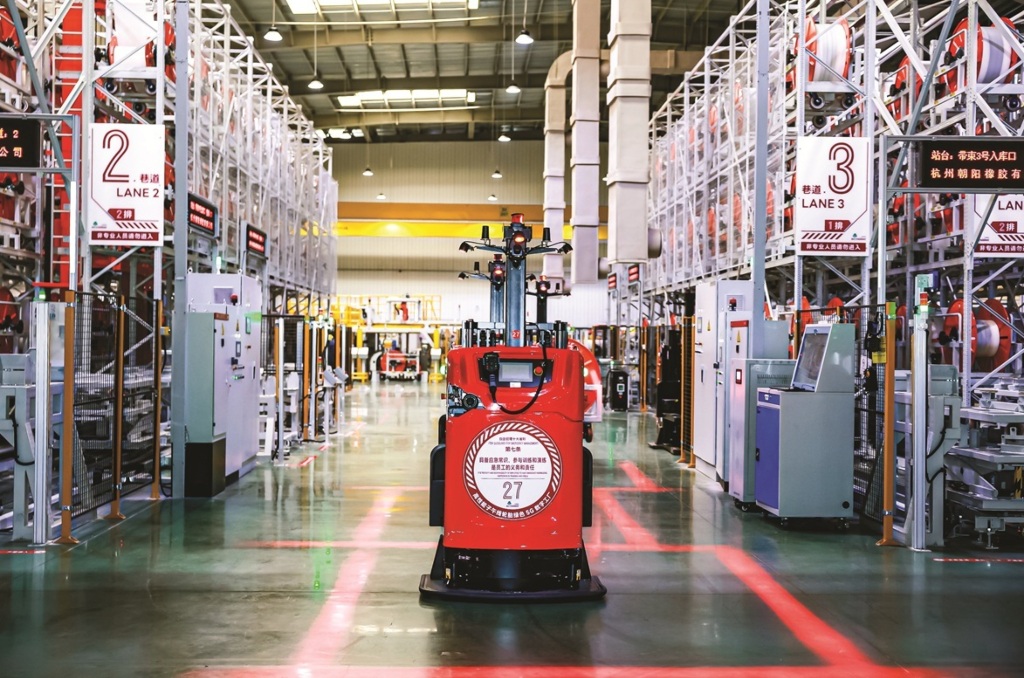 Zooming out, the company says AI and digital quality control across its smart manufacturing system have cut its product defect rate from 1.2 percent to 0.5 percent.
HOW THE SYSTEMS TALK TO EACH OTHER
“Thousands of sensors collect production data in real time, while 5G connects equipment, quality inspection and logistics systems,” the company said. The APS+MES system pulls production, quality and logistics information into one place ‘so operations can be monitored and adjusted quickly’. AI and big data analytics then help staff spot problems and make faster production decisions.
AN EARLIER SET OF NUMBERS, UPDATED
ZC Rubber’s earlier claims of a 15 percent efficiency gain, up to 40 percent lower defect rates and a 5 percent cut in energy use make one notice that the latest figures are considerably better. The company is candid about why. “Those figures reflect an earlier stage of our smart factory development,” it said.
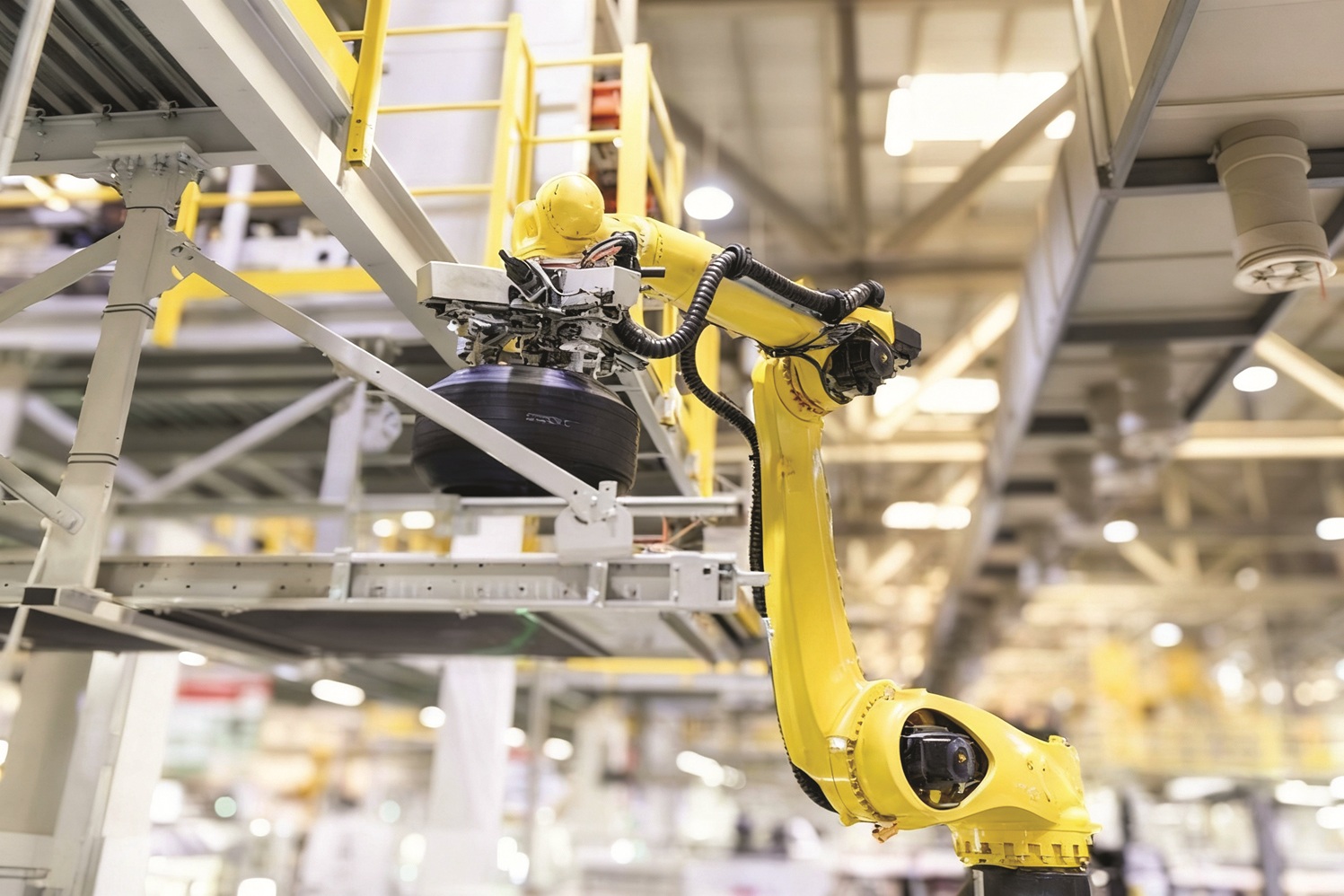
The current numbers, for the 5G Smart Factory, are a 50 percent improvement in production efficiency, defect rates down from 1.2 percent to 0.5 percent and a 10 percent reduction in overall energy consumption.
As for which technology deserves the credit, ZC Rubber declines to rank them. “We do not break down the improvement by individual technology,” it said, naming instead the key components: AI-based process control, automated inspection, intelligent logistics, APS+MES production management and data-driven quality control.
ENERGY, MEASURED VALVE BY VALVE
The energy figure is worth a closer look, because it comes from a fairly granular system. ZC Rubber’s energy management combines 5G, IoT, big data, AI and digital-twin technologies. Smart sensors, smart meters and smart valves feed real-time data into a central energy platform, while AI supports analysis and operational optimisation.
The division of labour among the technologies is neat. “5G provides the connectivity, while AI, big data and digital twins help turn the data into better energy-management decisions,” the company said.
TWO PLATFORMS AND A DIFFERENT STARTING POINT
The manufacturing story is inseparable from the development story. ZC Rubber runs two proprietary technology platforms: the X-Tech System, primarily for truck and bus radial (TBR) tyres, and the Phecda Tech System, primarily for PCR tyres. Each integrates compound formulation, tyre structure, process engineering, simulation, testing and intelligent manufacturing within a single development framework.
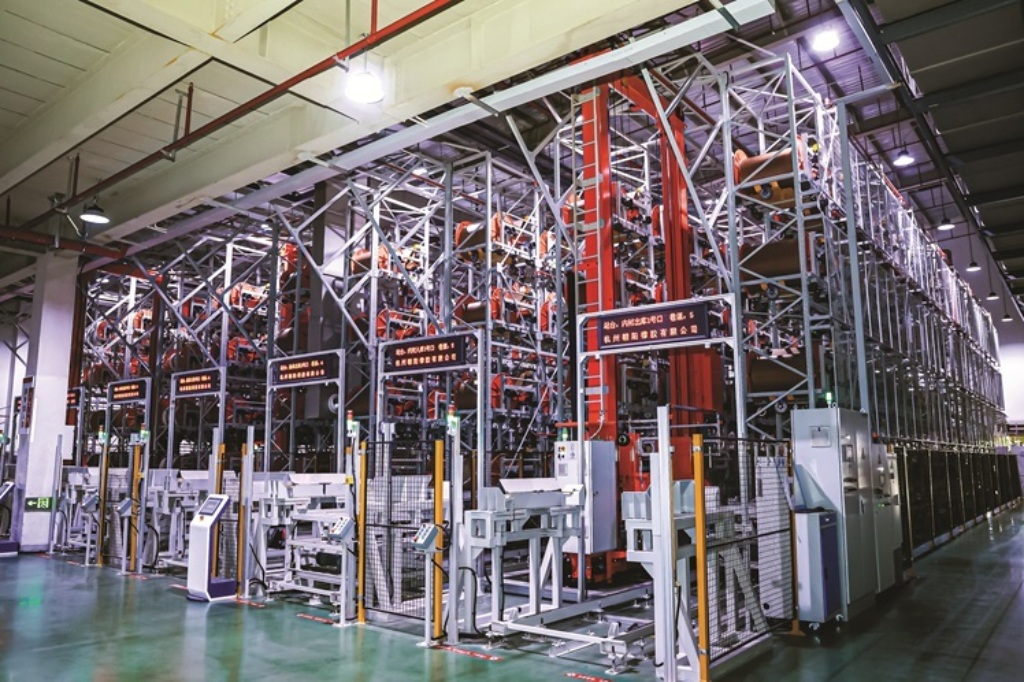
Their defining feature is what the company calls the Forward-development Approach. Traditional development, it explains, “often starts from an existing product and improves it through repeated design and testing cycles”. ZC Rubber starts elsewhere: with the target performance, whether that is vehicle characteristics, duty cycle, climate, road conditions or customer requirements. The compound, tyre structure and manufacturing process are then built around those targets. “This shifts the workflow from repeated iteration to a more integrated, target-driven development process,” the company said.
That, it argues, is where the halving of development time comes from. The 50 percent reduction reflects ‘a more integrated digital development process’, combining engineering expertise with simulation, AI-assisted tools and closer links between R&D, testing and manufacturing. AI lets engineers evaluate more design options against defined performance targets, and virtual simulation cuts out unnecessary physical iterations.
How tightly these platforms are wired into live production data has not been shared publicly. X-Tech and Phecda, the company said, connect R&D, manufacturing and validation within an integrated development process, but the detailed real-time data architecture behind them ‘is not something we currently disclose publicly’.
Henry Shen, ZC Rubber’s Senior Vice President, has made the wider point in the context of the group’s recent State recognition. “Our objective is not simply to develop an individual material, tread pattern or manufacturing process,” he said. “X-Tech and Phecda are complete development systems that connect user requirements with simulation, materials, tyre engineering, manufacturing and validation.”
THE STATE PRIZE
That recognition is significant. ZC Rubber, together with Harbin Institute of Technology, has been awarded the Second Prize of China’s State Science and Technology Progress Award for a project titled ‘Key Technologies and Green Intelligent Manufacturing of High-Performance Tires’. It is one of the country’s highest state-level honours for scientific and technological innovation, and ZC Rubber says it is the only Chinese tyre manufacturer in the past decade to win it at the Second Prize level or above.
The company backs the claim with spending. In 2025, it invested around RMB 1.54 billion (approximately USD 226 million in R&D, equal to 3.43 percent of annual revenue, according to its annual report. The award, it says, recognises technologies that have ‘progressed beyond laboratory research into industrial application’.
GLOBAL FOOTPRINT
ZC Rubber has built a truly global footprint, combining a strong manufacturing base in China with an expanding network of operations across Europe, the Americas, Southeast Asia and beyond. In China, the company operates through multiple sites, including its headquartered in Hangzhou and facilities in Tianjin, Chaoyang, Jiande, Qingquan, Yonggu, Anji and Jintan, supported by dedicated units for recycling technology and automotive aftermarket services in Hangzhou.
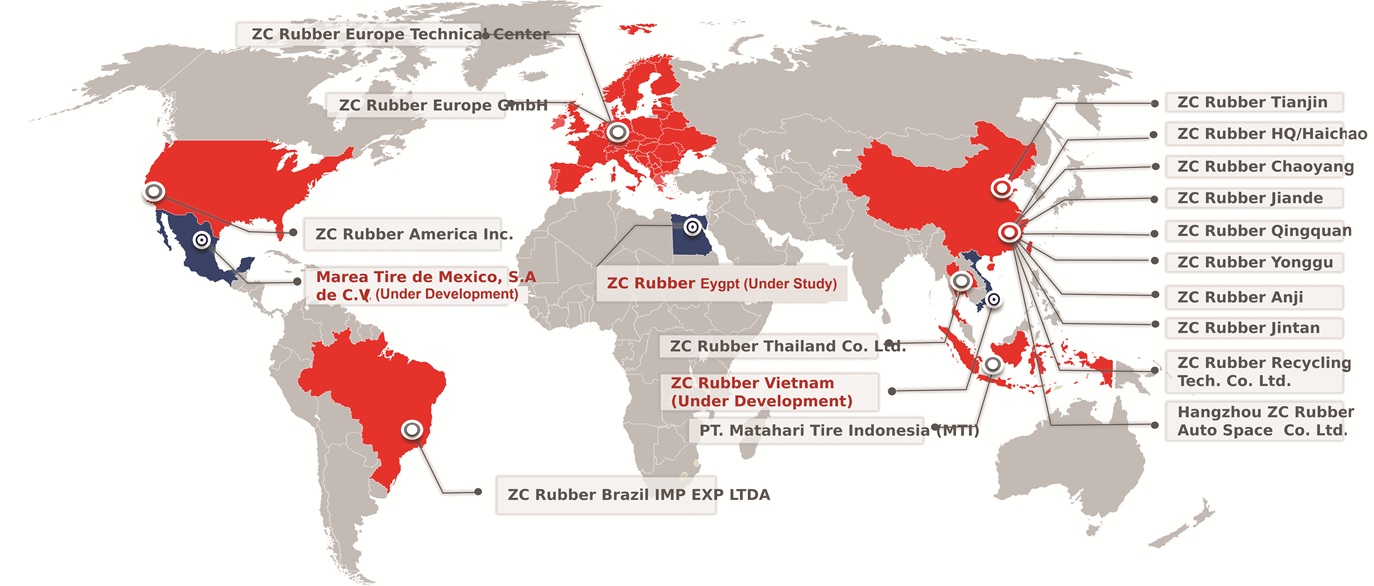
Beyond China, ZC Rubber has established a European presence through ZC Rubber Europe GmbH and its Europe Technical Center, alongside ZC Rubber America Inc. in the United States, ZC Rubber Brazil IMP EXP LTDA in South America and ZC Rubber Thailand Co. Ltd. and PT. Matahari Tire Indonesia (MTI) in Southeast Asia.
The company is also preparing for further expansion, with new projects under development in Vietnam and Mexico (Marea Tire de Mexico, S.A. de C.V.) and a feasibility study underway in Egypt. Together, these locations allow ZC Rubber to serve customers closer to their markets, strengthen supply chain resilience and combine local insight with global technical expertise.
CUSTOMISATION WITHOUT THE PENALTY
The forward-development model has a commercial payoff: tyres tailored to where and how they will be used. Asked whether the platforms allow genuine mass customisation, including regional climates and EV-specific requirements, ZC Rubber answered ‘to a significant degree’.
“X-Tech and Phecda allow us to develop tyres around specific climates, road conditions, vehicle applications and performance targets, including EV-specific requirements,” it said. On the factory floor, flexible production lines adjust output as product mix and orders change. The company does not disclose a separate efficiency figure for customised production, though ‘the goal is clear: to increase product flexibility while keeping production efficient’.
The regional examples are concrete. In Asia, X-Tech underpins the X-Elite Truck Tyre Series. In Europe, it is applied to the WESTLAKE Gen II commercial lineup, with a focus on fleet efficiency, performance and regulatory requirements. Phecda sits behind the WESTLAKE ZuperAce Z-007 and GOODRIDE Solmax 1 passenger tyres, and technologies from both platforms have been applied across ARISUN’s full TBR and PCR ranges for the Americas.
“International markets do not have identical requirements,” Shen said. “A tyre developed for European highway fleets, Southeast Asian transport operations or passenger vehicles in the Americas must respond to different vehicles, roads, climates and customer priorities.”
WHAT COMES NEXT
Much of the technology commonly billed as next-generation is already in service at ZC Rubber. Automated logistics, AI-based visual inspection, process optimisation, digital simulation and virtual testing are all in use. Digital twins are applied in areas such as energy management, and a broader digital-twin virtual factory is part of the next-stage plan.
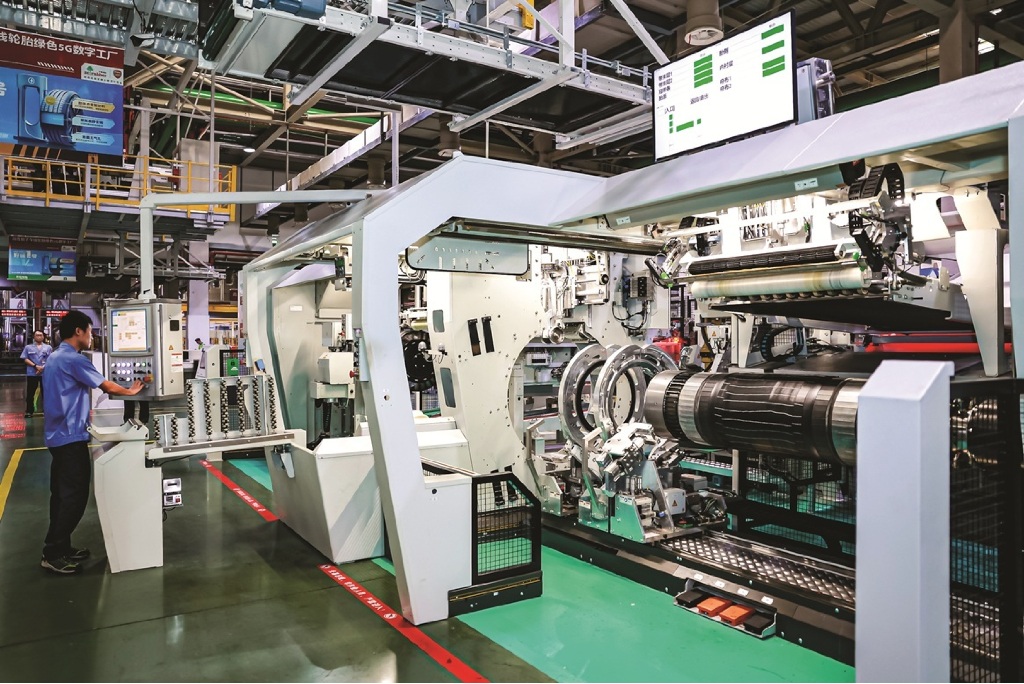 The company frames the coming three years as a period of deepening rather than reinvention: more smart-factory applications, more AI and industry-specific models and close attention to emerging technologies such as humanoid robotics ‘as they mature’.
That phrasing may be the most revealing thing about ZC Rubber’s approach. It is chasing results rather than headlines. As the company itself puts it, the launch of the Hangzhou plant marks ‘a new opportunity and starting point’, and its stated ambition is to become a world-leading tyre company with higher standards. Whether the lights stay on, it seems, is the least of its concerns.
AMETEK Completes USD 5bn Acquisition Of Indicor Instrumentation Businesses
- By TT Bureau
- October 12, 2026
AMETEK recently completed its USD 5- billion all-cash acquisition of a portfolio of instrumentation businesses from Indicor.
The businesses, collectively known as Indicor Instrumentation, make equipment for industrial and scientific applications. Their products serve markets that overlap with AMETEK’s existing operations and generate recurring revenue from consumables, services and aftermarket support.
David A Zapico, AMETEK’s Chairman and Chief Executive, said: “We are excited to complete this highly strategic acquisition and to welcome the Indicor Instrumentation team to AMETEK. With its mission-critical solutions, deep technical expertise, and strong positions in attractive end markets, Indicor Instrumentation is an excellent fit with AMETEK. We also see meaningful opportunities to create value through integration into our proven operating model.”
Indicor Instrumentation is expected to contribute about USD 350 million to AMETEK’s sales in 2026 and to be modestly accretive to adjusted earnings for the year.
The acquired businesses will join AMETEK’s Electronic Instruments Group and Electromechanical Group, according to their products and market focus.

The Goodyear Tire & Rubber Company has elected Joe Hinrichs as chairman of its Board of Directors, effective 7 October 2026. He will also chair the board's Governance and Executive Committees. Hinrichs joined the board in 2023 and succeeds Laurette Koellner, who will retire at the 2027 annual meeting under Goodyear's Corporate Governance Guidelines.
Hinrichs most recently served as President and Chief Executive Officer of CSX Corporation. Before that, he held numerous leadership roles at Ford Motor Company, including President of the Global Automotive Business, Executive Vice President and President of Global Operations, Executive Vice President and President of the Americas, President of Asia Pacific and Africa, and Chairman and Chief Executive Officer of Ford China. He also led Ford Canada. Hinrichs holds a bachelor's degree in electrical engineering from the University of Dayton and an MBA from Harvard Business School.
Koellner previously held several leadership roles at The Boeing Company. She joined Goodyear's board in 2015, became independent Lead Director in 2019, and Non-Executive Chairman in 2024.
Hinrichs said, "I would like to recognise and thank Laurette for her leadership, dedication and unwavering commitment to Goodyear. On behalf of the Board, we are grateful for her many contributions throughout her more than a decade of service. I look forward to working alongside my fellow board members and the leadership team as we continue to innovate, strengthen our competitive position, create long-term value for our shareholders and build a stronger Goodyear."
CEAT Specialty’s Off-Highway Tyre Playbook
- By Sharad Matade
- October 09, 2026
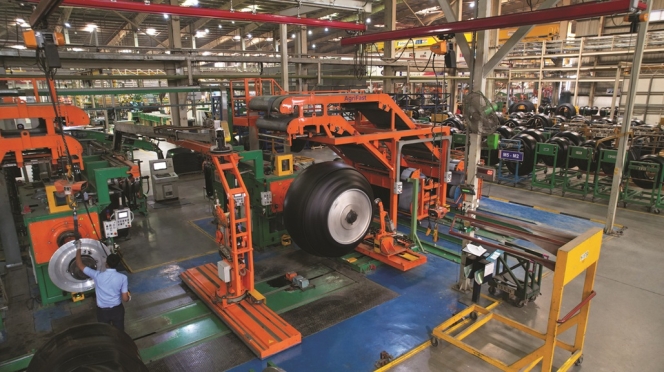
CEAT’s Chennai and Halol plants are the only tyre facilities globally with two WEF Global Lighthouse Network inductions, and the company has also won the Deming Grand Prize for manufacturing excellence.
Yet 30 km from Mumbai, CEAT Specialty’s 49-acre Ambernath plant tells a different story: tyres too heavy for automation, built instead around nitrogen curing, induction presses and orders as small as one unit – a bet that sustainability will win markets in Europe and America.
The stakes: an INR 5 billion investment in all-steel radial technology, capacity expansion to 160 tonnes/day and a Camso manufacturing deal Tolani pegs at up to USD 1 billion – turning a manufacturing constraint into a competitive edge.
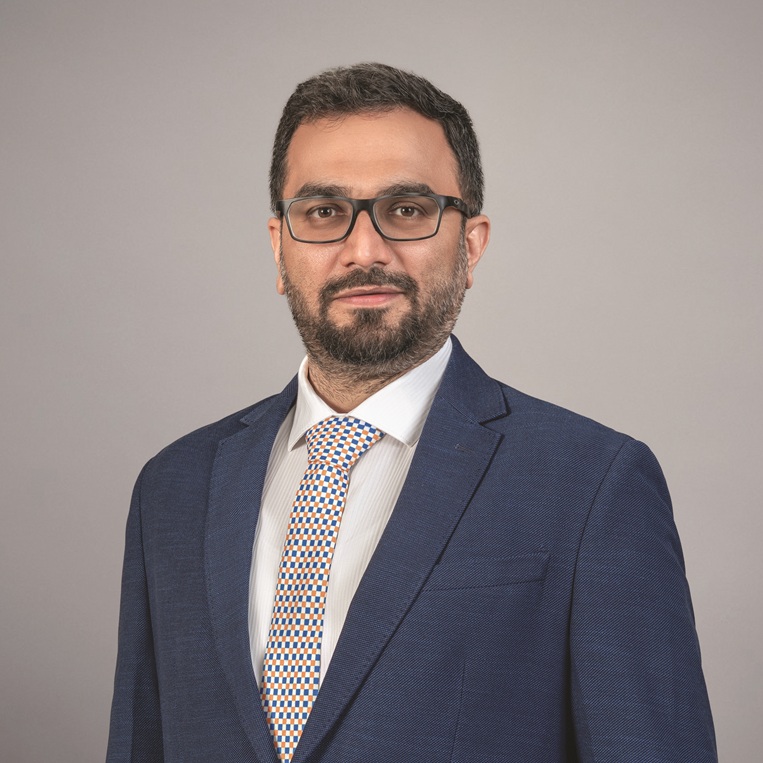
Amit Tolani, Chief Executive of CEAT Specialty, does not talk about tyres the way most executives talk about their products. He talks about them the way an engineer talks about a puzzle that keeps changing shape. “The way to look at it is that the manufacturing processes that we follow – how modern they are, how capable they are, how technically efficient – that’s what matters,” he says, sitting inside the plant that has become the nerve centre of CEAT’s off-highway tyre (OHT) business.
That plant – the Ambernath facility, a division of Mumbai-headquartered RPG Group’s CEAT Limited – is not a conventional tyre factory. It builds tyres that can weigh up to over 600 kilogrammes, tyres too large and too heavy for the automation that has transformed the passenger-car tyre business. And it is this constraint, as much as any strategic masterplan, that has shaped how CEAT Specialty has chosen to compete.
A PLANT THAT CANNOT SIMPLY COPY THE ROBOTS
Ask Tolani why Ambernath has not adopted the wall-to-wall robotic automation seen at CEAT’s Chennai or Halol facility, and the answer is refreshingly unglamorous: physics. “PCR tyres can be lifted by an ordinary human being, or a forklift, or robots,” he explains. “For these tyres, which are 600–700 kg, it’s very difficult to have a conveyor that can just lift them.” In the processes that do lend themselves to automation – mixing, calendering, curing – Ambernath’s equipment, he insists, is ‘as modern as the Chennai plant. More modern’. The plant intends to formalise that claim in the coming months by pursuing Industry 4.0 certification.
Where the physical limits of scale end, digital ones have taken over. A SCADA system tracks steam lines running beneath the plant floor. Where a leak once required a worker to walk the line, take manual temperature readings and diagnose the fault, artificial intelligence now flags the location almost instantly. “The point time taken to identify the problem is close to zero,” Tolani says. Every tyre carries a digital identity from raw material to finished good; a single scan reveals the batch, the machine, the operator and the timestamp behind it. AI is also being trained on the plant’s visual tyre inspection – traditionally a human, eyeball-driven task – using high-resolution cameras to catch defects, and on optimising mixing recipes and cycle times, the invisible chemistry that determines how a tyre performs in a paddy field or a quarry.
CURING WITHOUT STEAM
The most technically striking claim to emerge from Ambernath concerns curing – the energy-intensive process of vulcanising rubber under heat and pressure that has, for a century, meant steam. “This plant has already started using nitrogen curing on one of the lines,” Tolani says. Alongside it sit two proof-of-concept induction curing presses – a steam-free process, while the nitrogen conversion has come via LMT. “There are two presses that are already commissioned here,” he says. “We’ve already started working in that direction, where we want to take a lead in this space.”
The bulk of the plant’s newest investment, however, is going into something more conventional in principle but strategically significant in intent: all-steel radial off-the-road tyres. CEAT Specialty has committed INR 5 billion to this latest phase of expansion, representing a decisive shift in product architecture. Where a car’s tyres are universally radial, only 60–70 percent of truck tyres have made that transition, and agricultural and OTR applications lag further still – agriculture because usage is seasonal, OTR because a fabric-belted bias tyre still does much of the heavy lifting. All-steel radial construction changes that calculus by delivering higher load-carrying capacity and greater comfort, attributes increasingly demanded not only by Indian buyers but, crucially, by European and American customers. “It’s for demand from the European market, the US market – and the Indian market is also growing in such a handsome fashion that we want to cater to it,” Tolani says.
LEAN BY DESIGN, NOT BY SLOGAN
CEAT’s manufacturing philosophy is inseparable from its most prized accolade: in 2017, CEAT became the first tyre company outside Japan to win the Deming Prize, the world’s most prestigious award for total quality management; in 2023, it became the first tyre company anywhere to win the Deming Grand Prize, a distinction held by only 33 organisations globally as of 2025. Inside CEAT, this discipline is branded QBM – Quality Based Management – a homegrown fusion of Total Quality Management, the Toyota Production System and Total Productive Maintenance.
“We are a Deming Grand organisation. That means we follow the philosophy of lean manufacturing – not to use resources or have any wastage in the process,” Tolani says. That philosophy is embedded, quite literally, in the plant’s straight-flow layout, which runs from raw material storage through mixing, stock preparation, tyre building, curing and final finish in a single unbroken line. Even small batch sizes, he says, are produced without the wastage, excess labour or lost efficiency – what the plant’s internal vocabulary calls ‘Muri’ – that might otherwise creep in.
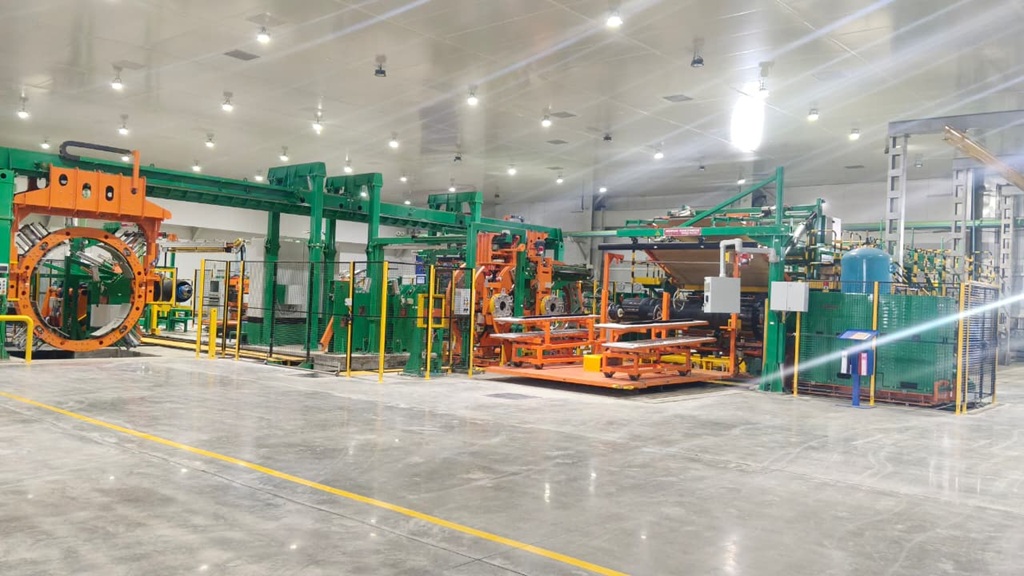
That same lean instinct underpins one of Ambernath’s more unusual competitive claims: a minimum order quantity of one. In an industry historically built around economies of scale, the plant will build a single speciality tyre to a customer’s specification without demanding batch aggregation – a capability the company says few OHT plants worldwide can match. Self-managed teams on the shop floor plan and execute changeovers themselves, allowing a highly automated, digitally traceable line to pivot rapidly to low-volume, customised orders. A related innovation, branded Unistage, builds and shapes an agricultural or OTR radial carcass into its final toroidal form on a single drum rather than the conventional two-stage process, reducing the handovers.
AN R&D CENTRE BUILT FOR SPEED, NOT SCALE
CEAT Specialty operates a dedicated in-house research and development facility at Ambernath, distinct from the group’s broader R&D infrastructure, and Tolani is candid about why. Tolani says, “This business is very, very different. There is no Pareto here – no 80/20 rule where a handful of product sizes serve the bulk of demand. Because farm and off-highway equipment come in such a long tail of sizes and configurations, and because the plant supplies numerous international OEMs directly, the time taken to develop, validate and commercialise a new tyre has to be compressed.”
“We needed a dedicated facility, closer to the manufacturing, so that we can quickly pilot, quickly turn around,” he adds. A new Compound Laboratory, opened in September 2025, now anchors materials science work spanning OTR, agricultural and industrial segments, while AI-assisted testing has trimmed, by Tolani’s estimate, roughly a third off the time from concept to market. The centre’s pipeline currently spans all-steel OTR tyres, a newly launched forestry range, very high flexion (VF) agricultural tyres and expanding work in earthmoving and material handling.
CAMSO ACQUIRED FOR BRAND, CHANNEL AND CATEGORY
CEAT Specialty’s move into Camso – a name Tolani values at up to USD 1 billion in brand potential across agricultural tracks, power sport tracks and material handling – may be its most consequential strategic bet. “It was a natural fit for us in terms of completing our portfolio,” he says. Ambernath, built in 2018 solely for agricultural radial tyres, gains through Camso’s new OEM ties (Massey Ferguson, John Deere) and construction-channel access across South America and Europe.
Under a three-year Michelin agreement, CEAT can currently manufacture and sell only compact construction tyres and tracks under Camso, taking over end-consumer sales in that segment – with other categories opening up once the term ends. The impact is already visible: standalone, CEAT Specialty’s off-highway mix is 85:15 agriculture to non-agriculture; with Camso’s, it shifts toward 50:50.
THE NUMBERS BEHIND THE AMBITION
Ambernath is running at 105 tonnes a day, at 92–95 percent utilisation – ahead of schedule. A further phase, due within 45 to 60 days, will lift capacity to 160 tonnes. Camso, still integrating, runs at roughly 50 percent.
Off-highway tyres make up close to 20 percent of CEAT’s speciality revenue, with the agriculture-to-non-agriculture split narrowing from 85:15 to near 50:50 once Camso is included. Domestically, Tolani credits GST reforms for a strong OEM market, led by Mahindra and TAFE, while mining stays flat – a segment Camso’s construction heritage should help lift as the new all-steel OTR line comes online.

Comments (0)
ADD COMMENT