

Yokohama’s USD 905 Million Goodyear Acquisition Targets Global OTR Market Growth
- By Sharad Matade
- August 12, 2025

The Japanese Tyre Maker Combines Operations, Eyes Second-Place Position in Off-The-Road (OTR) Tyre Segment.
Yokohama Rubber Co. is betting big on heavy machinery tyres. The Japanese manufacturer completed its USD 905 million acquisition of Goodyear Tyre & Rubber Co.’s off-the-road (OTR) tyre business in February and has already begun an aggressive expansion strategy that includes a USD 35 million Romanian plant purchase and the appointment of veteran industry executive Loic Ravasio to lead the combined operations.
These moves elevate Yokohama to third in the global OTR market, but ambitions are set higher. Loic Ravasio, now president of Yokohama’s combined OTR business, has made it clear that the goal is to become the world’s second-largest supplier of specialised tyres for mining and construction.
“The essence of the acquisition is to grow and gain market share and not only to maintain our 3rd position but aim to be number two in the near future,” Ravasio said. “We have the people, the knowledge and the products for it.”
The acquisition represents the largest strategic investment under Yokohama’s ‘Hockey Stick Growth’ initiative, part of its Yokohama Transformation 2026 medium-term management plan. The deal brought Yokohama not just Goodyear’s extensive product lineup – spanning tyre diameters from 25 inches to ultra-large 63-inch models – but also advanced manufacturing technologies, established brand recognition and approximately 500 specialised employees.
STRATEGIC COMPLEMENTARITY
Goodyear OTR achieved USD 678 million of annual sales as of fiscal 2023, bringing important scale to Yokohama’s off-highway tyre business. However, above and beyond the revenue increase, Ravasio highlights how the two operations are complementary both geographically and in terms of product specialisation.
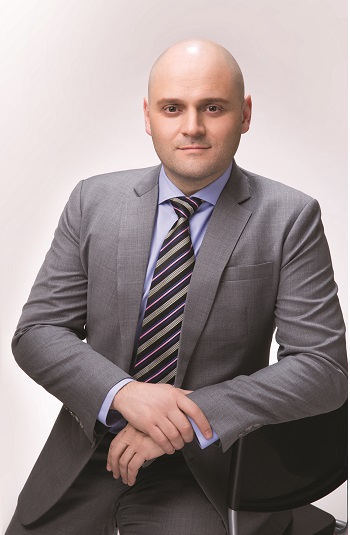 “The two businesses literally complement each other from a product point of view as well as presence point of view,” Ravasio explained. “Goodyear OTR is strong in Europe, APAC and Canada, whereas Yokohama OTR is strong in the US and Japan. Goodyear OTR has excellent ultra large haulage tyres, whereas Yokohama has mobile crane and port tyres.”
This product and geographic synergy is the basis for Yokohama’s strategic challenge to entrenched market leader Michelin and Bridgestone. The merged company now has what Ravasio terms “a broad, complete OTR portfolio offering from the smallest to the biggest tyres, delivering top performance and services in any application.”
The integration extends beyond product lines to leverage operational efficiencies in procurement, manufacturing, finance and legal operations. Yokohama has preserved the key intellectual property, seasoned personnel and service capabilities that made the Goodyear OTR business worth acquiring while introducing its global organisational strengths to increase operational effectiveness.
EUROPEAN EXPANSION STRATEGY
Yokohama’s drive for expansion was evident just months after it sealed the acquisition of the Goodyear OTR business. In May 2025, the company paid USD 35 million to purchase fixed assets, including land, buildings and manufacturing equipment, at a closed tyre factory in Drobeta-Turnu Severin, Romania.
The facility, Yokohama’s first significant European production site for OTR tyres, covers 200,000 square metres and will manufacture the full range of mining and construction tyres, including ultra-large sizes for global mining operations.
“The Romanian asset is a first step in the expansion,” Ravasio said. “We will be producing most of the OTR range in this factory, including the ultra-large tyres. We are working diligently on assessing solutions such as green field and/or brown field at the right locations to further grow and better serve our customers.”
The Romanian investment timing is part of a larger market trend behind the demand for OTR tyres. Global infrastructure development in roads, rails and residential projects continues to grow with the transition towards the green economy, which necessitates huge volumes of mineral extraction to produce electric vehicle batteries and renewable energy systems.
“These growing needs are driven by a growing world population that needs more housing, more roads, more communication means, plus the push for green(er) economy with the electrification of the world,” Ravasio noted.
INNOVATION THROUGH DUAL R&D CENTRES
The acquisition provides Yokohama with two R&D facilities, one in Japan and the other in the US. Rather than merging them, the company will utilise both to accelerate innovation and share best practices globally.
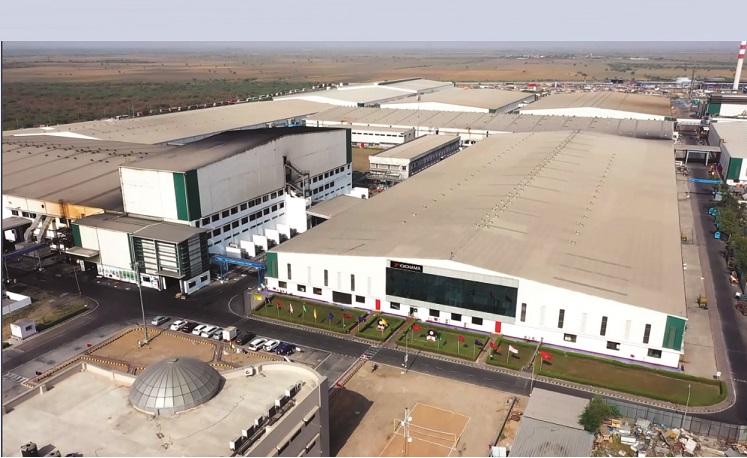
“Having two R&D centres will accelerate and intensify our innovation while learning best practices and continuously improve our overall performance,” Ravasio explained. The collaboration has already yielded practical benefits, with engineers able to combine Yokohama OTR casings (the structural base of the tyre) with Goodyear OTR tread compounds to enhance tyre performance.
The dual-centre approach addresses the complex technical challenges in OTR tyre development. These products must withstand extreme operating conditions while delivering optimal performance metrics that directly impact customers’ operational costs. As Ravasio puts it, “OTR tyres remain a complex assemblage of diverse technologies and solutions to deliver the required performance.”
Innovation priorities are driven to address changing customer needs for performance, sustainability and service. Industry pressure towards ‘Faster/Further/Heavier’ operations creates greater stress on tyre manufacturers to produce products capable of supporting more rigorous applications while being reliable and cost-effective.
MARKET DYNAMICS AND CUSTOMER EVOLUTION
Different principles from consumer tyres drive the OTR tyre business. Buyers – mainly from the mining, construction and infrastructure sectors – prioritise the total cost of ownership, which presents opportunities for manufacturers focused on durability and service.
“The OTR tyre market is very dynamic by nature. The industry has always been driven by the best cost of ownership,” Ravasio said. “The products, services and solutions provided must help our customers to optimise their operations.”
This emphasis on operational efficiency has grown stronger as customers are under pressure to be more efficient and less environmentally aggressive. Environmental concerns now influence the choice of tyres, prompting manufacturers to develop solutions that offer both performance and environmental friendliness.
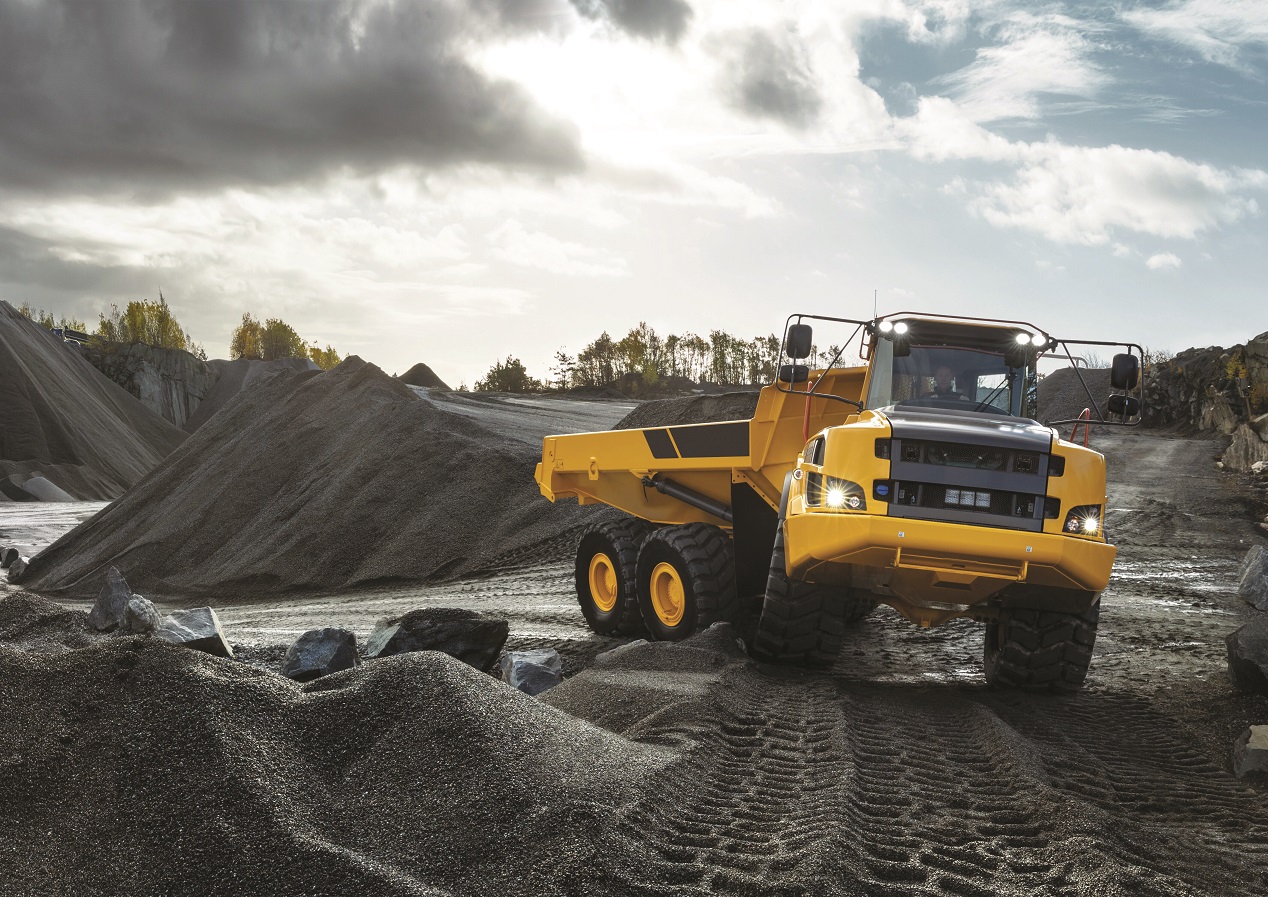 Yokohama’s sustainability strategies involve lower-resistance compounds, improved materials, energy-efficient manufacturing and total retreading solutions. It has the industry’s sole OTR retread factory owned by a tyre manufacturer, and through this, it offers customers the opportunity to extend tyre life and minimise waste.
INTEGRATION CHALLENGES AND OPPORTUNITIES
Successfully integrating two large tyre operations presents significant operational and cultural challenges. Yokohama’s approach prioritises continuity for both customers and employees during the transition period.
“Our immediate priorities are and always will be our customers and our employees,” Ravasio emphasised. “For our customers, we aim to ensure a smooth transition, business continuity and a combined, more comprehensive portfolio of products, services and solutions to support them in their business growth.”
Employee integration focuses on creating development opportunities within a larger global organisation. Yokohama retained all Goodyear OTR personnel, recognising that their expertise and customer relationships represent much of the acquisition’s value.
“The critical parts of this acquisition were the IP knowledge, the experience and the people more than the equipment and the products. We kept all of that,” Ravasio said. The company has established a global leadership team combining experienced executives from both organisations to design the integrated structure and manage the transition process.
FINANCIAL TARGETS AND GROWTH STRATEGY
Yokohama prioritises market share gains and customer satisfaction over raw revenue for the merged OTR business. The growth strategy focuses on targeted investments in key geographies and technologies to enhance performance and quality at a cost-effective level.
The financial effect of the acquisition will start to be reflected in Yokohama’s consolidated performance from the first quarter of 2025. The company is now determining the exact earnings contribution as the integration continues.
Ravasio’s appointment to the post of president of the merged OTR operations marks a commitment by Yokohama to aggressive expansion. Ravasio reports to Nitin Mantri, Co-Chief Operating Officer and Head of the Off-Highway Tyre Unit, and will leverage his global tyre industry expertise to lead the next phase of growth.
“I’m humbled and excited to take on this important role at Yokohama, a company focused on growth and expansion,” Ravasio said upon his appointment. “We have a great future ahead, with the best associates in the industry and an outstanding value proposition to serve our customers.”
FUTURE MARKET POSITION
The long-term development curve of the global OTR tyre market underpins Yokohama’s ambitious expansion goals. The development of world infrastructure and the mineral extraction needs of the unfolding green economy transition are expected to sustain demand for heavy-duty tyres in various applications.
Yokohama aims to capitalise on OTR market growth to steal share from larger rivals. By combining Yokohama’s operations, Goodyear’s customer base and expertise and targeted manufacturing investment, executives believe they have a winning formula.
“As we invest in growth, our expansion strategy is based on the right location and the right technology/equipment to deliver top performance and quality and the right cost,” Ravasio explained.
The global reach of the company offers flexibility to supply customers in diverse markets while maximising production and distribution networks. With secure positions in complementary geographic locations and product categories, the integrated operation can provide end-to-end solutions to multinational customers engaged in multiple markets.
INDUSTRY OUTLOOK AND COMPETITIVE RESPONSE
The next three to five years will pose a challenge to Yokohama’s capacity to implement its aggressive growth strategy in a more competitive market. Its peers will not surrender market share without reacting to Yokohama’s improved competitive footing.
Achievement will depend on continued technological progress in tyre compounds, manufacturing techniques and digital technology to achieve progressively higher performance standards. The development of the industry towards more sustainable, more technologically sophisticated products presents opportunities as well as challenges for all producers.
“In the today and tomorrow of the OTR tyre market, it will be crucial to continue innovating in compounding, manufacturing processes and digital technologies to meet the evolving and stringent needs of the industry,” Ravasio observed.
Yokohama’s dual R&D centres and expanded global presence provide tools to compete effectively. Still, execution will determine whether the company can achieve its goal of becoming the world’s second-largest OTR tyre supplier.
For now, the company expresses confidence in their strategy and capabilities. As Ravasio puts it: “We look forward to celebrating it when we will be a strong number two in the near future.”
Yokohama Europe Appoints Giuseppe La Iacona To Lead Southern Operations
- By TT News
- September 18, 2026
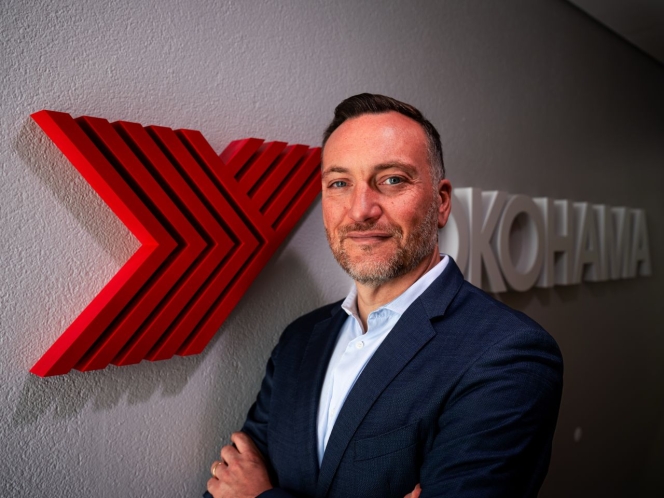
Yokohama Europe has appointed Giuseppe La Iacona to a series of senior leadership roles as the company seeks to strengthen its position across the region.
La Iacona joined the business on September 15 and will assume responsibility for supporting growth and organisational consolidation in the European market.
He brings more than 20 years’ experience in the tyre industry, spanning sales, marketing, business development, country management and international customer relations. He has held senior roles across several European markets, developing experience in managing local dynamics while driving cross-border business expansion.
Reporting to Takashi Maki, La Iacona has been appointed General Manager for southern Europe, where he will lead a newly created regional cluster covering Italy and France. The role is intended to improve coordination and operational synergies between the two markets.
He will also serve as Chief Executive of Yokohama Italia, with overall responsibility for the Italian subsidiary, alongside taking on the role of head of international customers. In that capacity, he will oversee the management and development of clients operating across multiple European markets, with the aim of creating a more consistent commercial approach and strengthening collaboration between subsidiaries.
His remit includes improving organisational alignment and fostering closer cooperation between markets and customers as the company expands its European operations.
“I am very pleased to welcome Giuseppe to YOKOHAMA Europe at an important stage in our development,” said Maki. “His extensive international experience, deep knowledge of the tyre industry and ability to work across different markets will be valuable assets as we continue to strengthen our European organisation and pursue sustainable growth.”
La Iacona said: “I am excited to join YOKOHAMA Europe and to contribute to the company’s next phase of growth in Europe. YOKOHAMA has a strong heritage, a distinctive brand and significant opportunities across the European market. I look forward to working closely with our teams, customers and partners across countries to further develop the business and strengthen our presence in the region.”
Özka Tyre Appoints Mehmet Yüksel As New Chief Operating Officer
- By TT News
- September 18, 2026
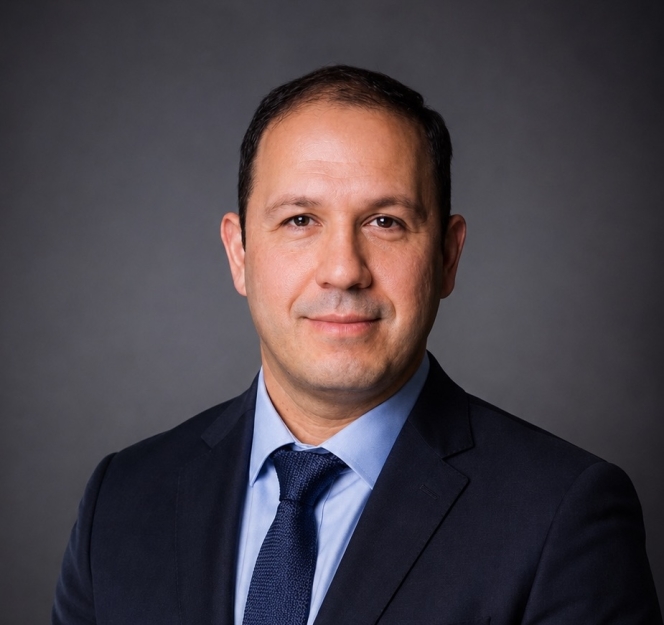
Özka Tyre, a prominent Turkish manufacturer of tyres for agricultural and construction equipment, has reinforced its leadership team as part of a broader push towards global expansion and technological modernisation in production. The company has appointed Mehmet Yüksel as its new Chief Operating Officer, bringing aboard an executive with extensive senior experience from Goodyear’s Luxembourg-based international organisation.
In his new role, Yüksel will oversee functions central to Özka’s production and operational strength. His responsibilities encompass production, quality, research and development, planning, investment and projects, electricity and maintenance, occupational safety and quality management systems, positioning him to steer critical areas of the company’s industrial performance.
Driven by investments and a focus on advancing its manufacturing strength, Özka continuously monitors shifts in the worldwide tire sector, particularly technological progress in Europe, and uses those insights to shape its future production infrastructure. As new investments prepare to elevate its output capacity and technical systems, the firm is simultaneously bolstering its organisational framework to sustain that transformation.
Cabot Names Steve Delahunt As Interim CFO
- By TT News
- September 16, 2026
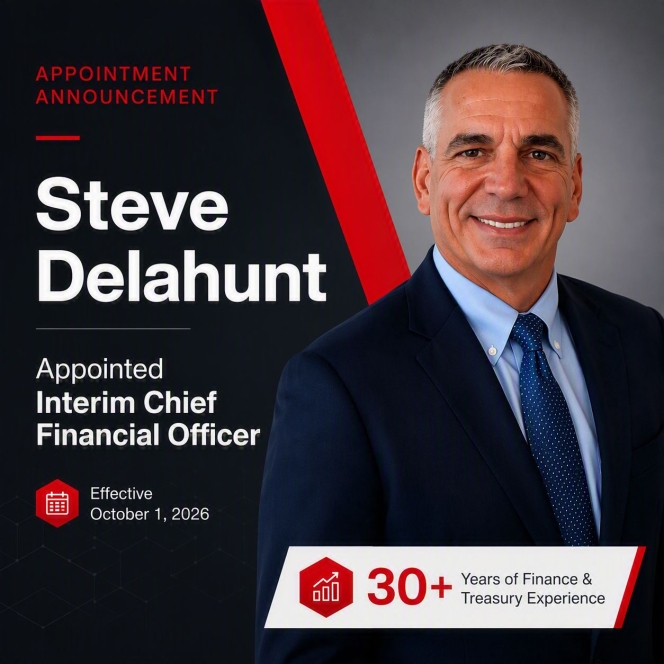
Cabot Corporation has named Steve Delahunt, currently Vice President and Corporate Treasurer, to assume the Chief Financial Officer role on an interim basis starting 1 October 2026. He will hold the position while Cabot continues searching for a permanent finance chief.
The interim appointment follows the previously disclosed leadership transition in which Erica McLaughlin, Executive Vice President, Chief Financial Officer and Head of Corporate Strategy, will become President and Chief Executive Officer on the same date. McLaughlin succeeds Sean Keohane and will relinquish her CFO duties at that time.
Delahunt brings over three decades of finance and treasury experience, including nine years leading Cabot's investor relations function through January 2026. As Corporate Treasurer, he oversees global treasury operations, capital markets strategy, liquidity management, banking relationships, risk management and pension investments. He has been central to Cabot's capital allocation, financing, investor engagement and strategic growth initiatives, as well as strengthened shareholder relations during his investor relations tenure.
McLaughlin said, “Steve is a highly respected finance leader with deep knowledge of our business, strong relationships across our global organisation and a proven track record of disciplined financial leadership. As we continue executing our strategy and building on our strong financial position, Steve’s experience, judgment and understanding of our business make him exceptionally well suited to lead our finance organisation while the Company conducts its search for our next Chief Financial Officer.”
JK Tyre Launches New Off-The-Road Tyres For Construction And Mining Sectors
- By TT News
- September 15, 2026
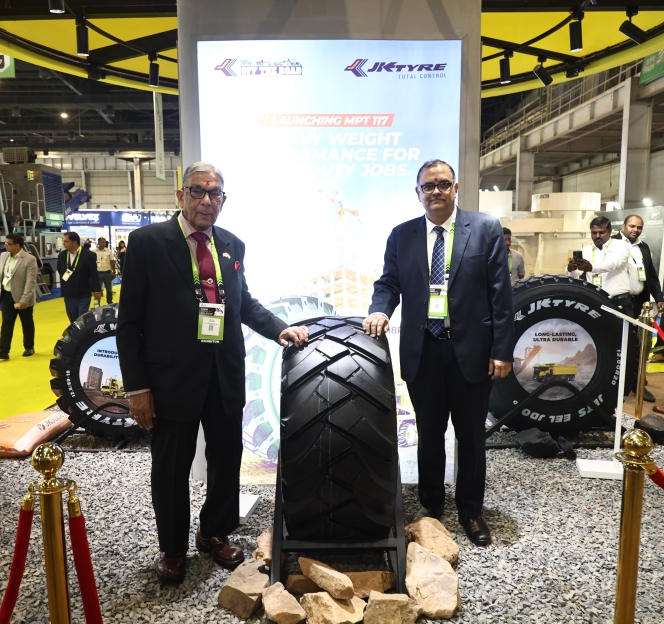
JK Tyre & Industries Ltd has launched four new off-the-road (OTR) tyre products for construction, material handling and mining applications, as the company expands its portfolio in performance-focused segments.
The products were unveiled at BAUMA CONEXPO INDIA 2026, held at the India Expo Centre in Greater Noida, and are designed to improve durability, load-carrying capacity, traction and operational efficiency in demanding conditions.
The new range includes tyres for self-loading concrete mixers, backhoe loaders, telehandlers and mining tippers. JK Tyre said the additions are intended to meet evolving requirements across India’s construction, infrastructure and mining sectors.
Srinivasu Allaphan, Director of Sales And Marketing at JK Tyre & Industries Ltd, said: “India’s infrastructure and industrial growth is creating a growing need for high-performance, reliable and application-specific mobility solutions. At JK Tyre, we are committed to developing OTR solutions that address the specific needs of our customers and the demanding conditions in which their equipment operates. Our latest range combines durability, reliability and performance to help customers maximise equipment uptime and operational efficiency. As we continue to strengthen our premium OTR portfolio, we remain committed to delivering solutions that create value for our customers and support the growth of India’s construction, infrastructure and mining sectors.”
The company said the MPT 45 tyre pattern has been developed for traction and stability in mixed terrain, while the MPT117 range is designed for construction and material-handling operations, with a focus on grip and durability. A separate JDO XD tyre has been introduced for mining tippers, with reinforced construction aimed at resisting cuts and abrasions.
JK Tyre said the products were developed with Indian operating conditions in mind and are intended to improve machine performance and reduce operating costs in demanding applications.
The group added that the launch supports its expansion in off-the-road tyres across construction, mining and specialised industrial segments.

Comments (0)
ADD COMMENT