

Siemens Brings Traditional Tyre Making Into Digital Age
- By Sharad Matade
- November 04, 2025
The global tyre industry is in the midst of its greatest upheaval since the pneumatic tyre – driven by rapid digital transformation. Siemens, the German global technology company, is leading this revolution, quietly redefining how tyres are designed, manufactured and maintained worldwide.
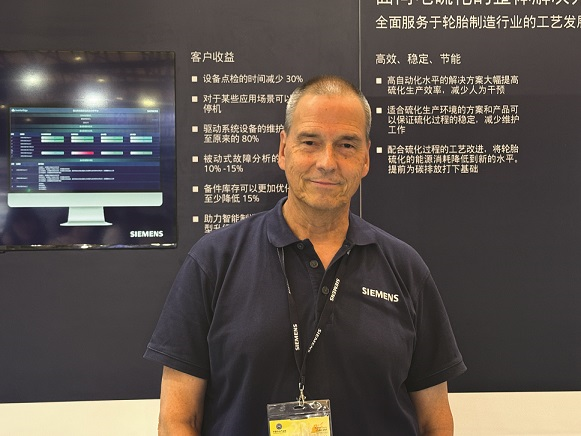
In a sprawling industrial complex outside Nuremberg, Peter Haan, Head of Global VM Tire, Siemens, brings the enthusiasm of someone who has witnessed an industry’s complete metamorphosis to the oversight of Siemens’ global tyre operations. Recently, Haan outlined the company’s comprehensive strategy for modernising tyre production – addressing the price-sensitive manufacturers of Asia as well as the sustainability-focused plants of Europe.
“Digital transformation didn’t start yesterday, and it didn’t even start during the pandemic,” Haan explains, dispelling common misconceptions about the industry’s technological evolution. “We’ve been working on this for more than 10 years now. We had digital twins a decade ago, which might surprise people who think this is cutting-edge technology.”
The Industrial Metaverse Revolution
The foundation of Siemens’ approach lies in what Haan calls ‘digitalisation for design’ – the creation of what the company now terms the industrial metaverse. This comprehensive digital simulation integrates machines, programmes and entire production processes. It represents years of focused development and has achieved what Haan considers ‘very good status with our integrated approach’.
Haan’s descriptions of recent projects clarify these implications. “We are just building a new plant in Singapore and expanding an existing plant in Germany” he reports. Due to confidentiality agreements, he cannot display the complete digital representation on his computer. Instead of seeing only lines and geometric shapes that require imagination to translate into real machines, one can now observe photorealistic models: virtual people moving, machinery operating and materials progressing through the production process.
This industrial metaverse requires immense computing power, necessitating a close partnership between Siemens and Nvidia. While most consumers know Nvidia for its gaming graphics cards, the company also produces high-end simulation capabilities that enable Siemens and Siemens customers to run simulations in real time with an absolute realistic look and feel.
A second key pillar is digitalisation for operations, achieved through advanced planning and scheduling systems. Tyre manufacturing today exists in a dynamic environment, where customer demands can change daily, a stark contrast to the older, more predictable monthly or quarterly cycles.
“Today, a customer might want to capture one market segment. Tomorrow, they might pivot to electric vehicle tyres. Next week, they could have entirely different ideas based on market conditions,” Haan explains. “Traditional planning systems simply cannot handle this level of flexibility.”
The solution involves Manufacturing Operations Management (MOM) systems that provide immediate responsiveness to market changes. Siemens has successfully implemented this approach across multiple regions, including a completely new greenfield facility in Chennai, which was designed from the ground up using digital operations principles.
Modernising Legacy Infrastructure
The process of implementing digitalisation becomes more challenging when accounting for the hundreds of tyre manufacturing plants worldwide, many of which are equipped with machinery that has decades of operational history. Nevertheless, Siemens has crafted a methodical approach to address these ageing systems.
“This is actually easier to answer than most people expect, though the implementation requires careful planning,” Haan notes. The process begins with laser scanning systems that create high-precision three-dimensional digital representations of entire facilities, mapping every machine location, material flow and worker movement pattern.
This laser-generated data becomes the foundation for plant simulation software that models current operations. “The next crucial step is comparing our simulation results with actual reality to ensure accuracy,” Haan explains. “Initially, no improvement is achieved – we’re simply creating a digital mirror of existing operations.”
Once accurate digital representations exist, optimisation can begin in the virtual environment first. Companies can simulate workflow changes, test automated guided vehicle implementations and identify bottlenecks without disrupting actual production.
To add intelligence to existing machinery, Siemens utilises edge computing devices. “Our SIMATIC IPC127E, for instance, can connect to all existing automation systems, even equipment that’s 30 years old,” Haan says. “We can interface with legacy automations systems from Siemens and any supplier, thus adding intelligence to old machines”
The retrofit approach varies based on existing capabilities. Some situations require minimal hardware changes, while others demand comprehensive replacements of the automation system. “If you have a state-of-the-art automation system, you might need no new hardware at all – just download additional functionality,” Haan explains.
Digital Twins And Real-Time Optimisation
The concept of digital twins running parallel to actual production represents one of Siemens’ most sophisticated technological achievements. These systems utilise edge computing to operate what Haan calls ‘live twins’ that mirror physical machine behaviour in real-time.
Tyre curing provides a compelling example of this technology’s potential. “The temperature inside the bladder during the curing process is challenging to measure directly, especially with traditional rubber bladders,” Haan explains. “But with our digital twin technology, we have virtual sensors so sophisticated that you can specify any point in the bladder, and our system can compute and calculate the exact temperature at that location.”
This capability bridges the gap between simulation and the real world, providing measurement data that is unobtainable through physical sensors. The digital twin processes information such as product geometry, material compression due to steam or water and flow directions influenced by the physical layout. With this, precise optimisation of curing parameters becomes achievable.
 “The simulation can then influence real curing behaviour, making the process more accurate and potentially reducing curing time,” Haan notes. For electric curing systems, this precision enables targeted heating adjustments, such as applying additional heat to tyre edges while maintaining optimal internal temperatures.
Regional Market Dynamics
The global tyre industry’s digital transformation unfolds differently across regions, requiring distinct strategies tailored to local market conditions and regulatory environments. These differences significantly impact how Siemens approaches each market.
In China and the broader Asia-Pacific region, price sensitivity dominates decision-making processes. “Customers are extremely price-sensitive, focusing primarily on capital expenditure (CAPEX). Operational expenditure (OPEX) considerations often aren’t in scope initially,” Haan explains. “We have to continually focus about lifecycle costs versus initial purchase prices.”
This dynamic creates challenges for Siemens’ solutions. When comparing automated guided vehicles, for example, Chinese manufacturers often prefer locally-produced systems based on proprietary electronics that appear cheaper initially. Siemens takes a different approach, building AGVs exclusively with industrial automation components – standard PLCs, drives, motors and HMIs.
“Initially, our solution costs more compared to a proprietary electronics-based AGV – we simply cannot compete on initial price with local suppliers,” Haan acknowledges. “However, when you consider lifecycle costs, our approach becomes significantly less expensive.”
The advantage becomes apparent during maintenance scenarios. When a motor fails in a Siemens system, customers can replace it with standard components they likely maintain in inventory for other machinery. Proprietary systems require specific spare parts from original manufacturers, assuming availability and reasonable delivery times.
European Cybersecurity And Workforce Challenges
Europe presents entirely different challenges, beginning with the Cyber Resilience Act (CRA) that will fundamentally reshape the automation landscape starting in 2026. This legislation mandates that all industrial automation products meet specific cybersecurity requirements, with significant implications for existing equipment.
“The European Commission has decided that industrial production and critical infrastructure must be secured against cyber-attacks,” Haan explains. “Given that Europe is effectively at war and cyber attacks are a daily occurrence, this is not just theoretical.”
Siemens is proactively addressing this transition by working with customers to review their equipment bills of materials and provide updated specifications for compliant replacements. This affects both new installations and retrofits, as any significant upgrade must meet new security requirements.
Europe also faces demographic challenges that influence automation requirements. “We have an ageing society with fewer people than countries like India or China, and we’re experiencing a shortage of experienced workers and technical experts,” Haan explains. “This means our products must be simple to use, and machines of our customers must be operated simply.”
European manufacturers also demand continuous operation capabilities. “24/7/365 operation – production cannot be interrupted by unexpected downtime. Predictive maintenance isn’t just nice to have; it’s urgently necessary,” Haan emphasises. “When we work with major German tyre manufacturers, predictive maintenance is included from the beginning. If anyone offered a mixing line without predictive maintenance, they wouldn’t even be considered.”
Artificial Intelligence In Manufacturing
The application of artificial intelligence (AI) in tyre manufacturing has moved from experimental to essential, particularly in areas traditionally requiring human intervention. Visual inspection represents the most obvious opportunity for AI implementation.
“Even in highly automated plants – and I’ve visited completely automated facilities that are quite impressive – you still typically see 20 people doing visual inspection of finished tyres,” Haan observes. “But here’s the fundamental problem: after inspecting 100 tyres, human consistency inevitably declines. We’re not machines – our attention wavers, we get tired, we make mistakes.”
Siemens is collaborating with companies to develop AI-powered inspection systems that integrate high-quality optical equipment with sophisticated pattern recognition algorithms. “The AI must determine whether there’s a fault, what type of fault it is – is it a bubble, is it incorrect wire placement, is it a surface imperfection?” Haan explains.
When discussing accuracy expectations with plant managers, Haan maintains realistic perspectives. “When asked whether the machine recognises 100 percent of failures, I’m honest – no, not 100 percent. But I can say that it recognises defects more accurately and consistently than human beings.”
AI applications extend beyond inspection into production processes themselves. In curing operations, Siemens utilises AI through digital twin technology that operates in parallel with physical equipment. “We measure all incoming variables – electric power consumption, steam pressure, external temperature, internal conditions – and feed this information to our digital life twin running on edge computing devices,” Haan explains.
Using computational fluid dynamics simulations, the system accurately understands how heat behaves throughout the curing process. Real-time comparison between simulation predictions and actual conditions enables continuous optimisation. “For electric curing systems, we can even create different temperature zones – applying more heat to tyre edges while maintaining optimal internal temperatures.,” says Haan.
Sustainability Beyond Green Materials
Sustainability in tyre manufacturing encompasses far more than renewable raw materials, extending through entire product lifecycles from manufacturing to end-of-life processing. Siemens has developed comprehensive approaches to address these challenges.
The company’s ‘SiGREEN’ system calculates complete product-related carbon footprints using standardised communication protocols that include all supplier contributions. “Most companies, when asked about the carbon footprint of a specific tyre, can’t provide accurate data,” Haan notes. “Approximately three-quarters of a tyre’s carbon footprint doesn’t come from the manufacturing plant. It comes from purchased materials and the energy used to produce them.”
This complexity requires sophisticated tracking capabilities. “These complex calculations change dynamically as supply chains shift towards geographically closer sourcing locations,” Haan explains. “Our system links to the bill of materials for each product, tracking exactly what compounds are used in tyre treads versus sidewalls and maintaining complete supply chain traceability.”
This transparency is becoming crucial for business relationships. “Previously, negotiations between tyre manufacturers and automotive companies focused primarily on price. Now we have a new critical component: carbon footprint,” Haan says. Automotive manufacturers face government-mandated carbon limits with significant penalties for non-compliance, making tyre carbon footprints a competitive differentiator.
Tyre recycling represents another sustainability frontier where Siemens provides technological solutions. The company collaborates with several organisations that are advancing pyrolysis technology for tyre breakdown, including joint ventures involving major tyre manufacturers that utilise our completely web-based process control system SIMATIC PCS neo.
“Pyrolysis plants are sophisticated chemical operations requiring precise parameter control,” Haan explains. “You cannot simply shut down a pyrolysis plant during lunch breaks like some other manufacturing processes. These systems require continuous operation with carefully managed temperature, pressure and material feed rates.”
Siemens also supports ultra-high-pressure water jet technology for tyre breakdown, which uses high-pressure water streams to separate tyre components for direct reuse. “This technology requires precise PLC control to manage water pressure, flow rates and separation processes,” Haan notes.
Innovative Equipment Design
Siemens has identified fundamental inefficiencies in traditional tyre manufacturing equipment and developed innovative solutions to address them. Curing presses exemplify this approach effectively.
Standard curing presses typically feature large HMI screens for operator interaction, but actual utilisation analysis reveals these expensive displays are used less than five percent of operating time. “These screens are costly to build and maintain, especially in curing environments with high temperatures and corrosive gases that damage electronic displays. Yet they sit unused most of the time,” Haan explains.
Siemens’ solution eliminates local HMI screens entirely, replacing them with mobile devices, such as tablets, connected to centralised SCADA systems running WinCC software. Haan says, “All screens for all curing presses across a plant are hosted on centralised servers. When an operator needs to interact with a specific curing press, they log into that machine through their mobile device,” says Haan.
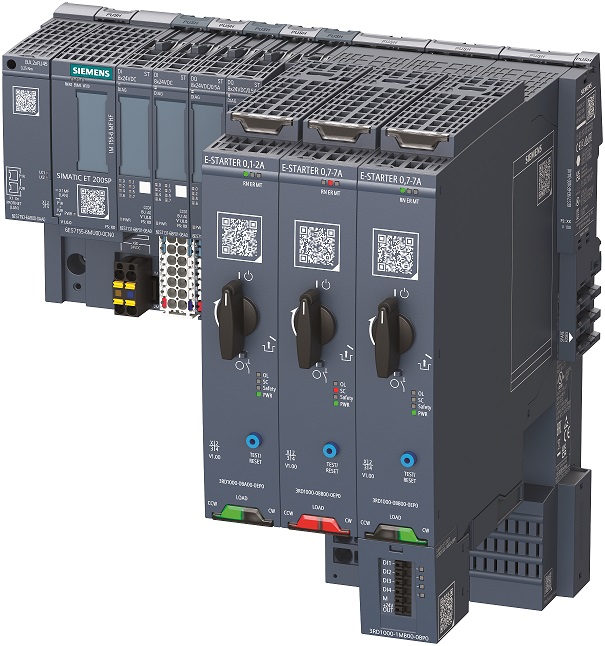
This approach provides identical functionality while dramatically reducing costs and improving reliability. “If a plant has 10 operators, providing 10 tablets costs far less than installing individual screens at each curing press. The mobile devices also have much higher utilisation rates and can be used anywhere in the facility,” adds Haan. Electrical curing technology represents another significant innovation thanks to Siemens’ modular ‘e-Starter’ systems, which control heating circuits in electric curing presses. The modular design accommodates various press configurations while providing automatic protection against electrical faults commonly found in high-temperature environments.
“In steel moulds at high temperatures, insulation can fail, creating dangerous grounding or short circuit conditions. Our system recognises these automatically and sends immediate alerts to operators,” Haan explains. The flexibility allows manufacturers to configure systems precisely for their needs, whether they require eight heating segments or 20 or more.
Advanced Fleet Management
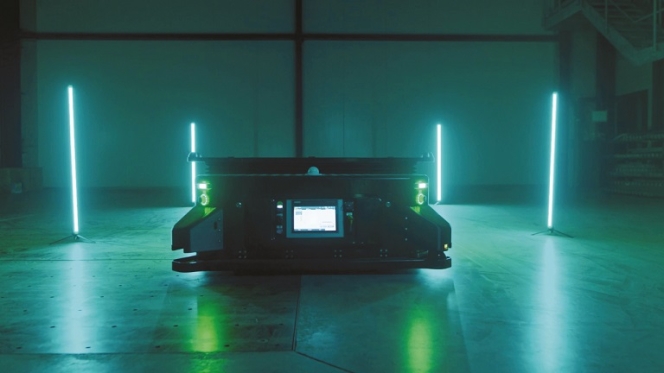
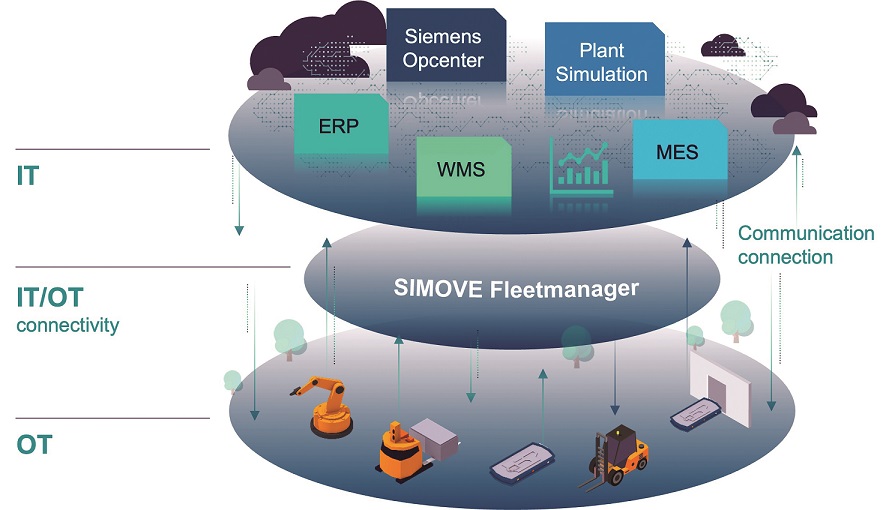
Material handling and logistics automation have evolved significantly. Siemens’ offerings include SIMOVE AGV technology along with comprehensive fleet management solutions, featuring free navigation capabilities that offer greater operational flexibility compared to traditional guided vehicle systems.
The company’s unique approach to AGV fleet management centres on the SIMOVE platform and fleet manager software. “We use only industrial automation components in our AGVs – standard PLCs, drives, motors and HMIs that customers already understand and maintain,” Haan explains.
The fleet management system supports VDA 5050, a standardised communication protocol enabling AGVs from different manufacturers to communicate with each other and central management systems. “Think of it like Profinet for industrial automation – a common communication standard,” Haan says.
Siemens can integrate proprietary protocols from various suppliers, with the fleet manager currently supporting over 20 different AGV communication protocols. This capability gives customers the flexibility to operate mixed AGV fleets while maintaining centralised control.
“The system can control both real-world operations and simulations. If you have a digital simulation of your plant, our fleet manager can demonstrate how AGVs will operate before physical implementation,” Haan notes.
Predictive Maintenance Evolution
Siemens’ Senseye predictive maintenance system distinguishes itself through two key advantages over competitor offerings. First, the system utilises data from standard automation components that generate extensive operational information automatically.
“All drives, all PLCs generate extensive operational data automatically. You can get current consumption, torque output, operating temperatures and many other parameters directly from standard components,” Haan explains. “Just by analysing this standard information, we can predict when machines are at risk.”
Pattern recognition enables early identification of developing problems. Unexpected changes in current consumption patterns might indicate bearing wear or other mechanical issues weeks before actual failure occurs.
The second advantage involves Senseye’s internet-based architecture, which, with customer permission, compares similar machines across Siemens’ global installed base by connecting to standard databases. “This means customers benefit not just from learning about their own machines but from patterns identified across all connected machines worldwide,” Haan says.
This global learning capability creates powerful network effects. When Siemens identifies a failure pattern in one facility, that knowledge immediately becomes available to prevent similar failures in other locations using comparable equipment.
Industry Consolidation And Future Outlook
The global tyre industry is experiencing dramatic structural changes, particularly evident in China, where consolidation has accelerated significantly. “Five years ago, there were approximately 500 tyre manufacturers in China. Now we’re down to fewer than 300,” Haan reports.
This consolidation reflects both market forces and deliberate government policies that promote industry efficiency and environmental performance. “China’s manufacturing policy demands higher technology adoption, better environmental performance and reduced energy consumption,” says Haan. Export challenges compound these pressures, making it difficult for smaller manufacturers to achieve the scale necessary for survival. Government support actively encourages consolidation towards larger, more technologically advanced companies capable of global competition.
Siemens is positioning itself for these changes through what Haan calls ‘glocalisation’ – the company’s new plant that is planned in Singapore reflects this approach. “We’ll see increasingly region-specific trends that require local adaptation while maintaining global technological standards,” adds Haan. The future belongs to companies embracing comprehensive digital transformation rather than piecemeal automation upgrades. “Companies must understand lifecycle costs rather than focusing solely on initial purchase prices. They need to integrate sustainability metrics into operations from the beginning, not as an afterthought,” Haan emphasises.
Most importantly, successful manufacturers will be those capable of rapid adaptation to changing market demands through flexible, digitally-enabled production systems. “The technology exists today to achieve this flexibility – the question is which companies will have the vision and commitment to implement it comprehensively,” says Haan. As Haan concludes: “The tyre industry’s digital transformation is no longer a future possibility – it’s happening now. Companies that delay this transition risk being left behind in an increasingly competitive and regulated global marketplace.”
Anyline Rolls Out Major TireBuddy Update With Fully Automated Tyre Inspections
- By TT News
- July 27, 2026
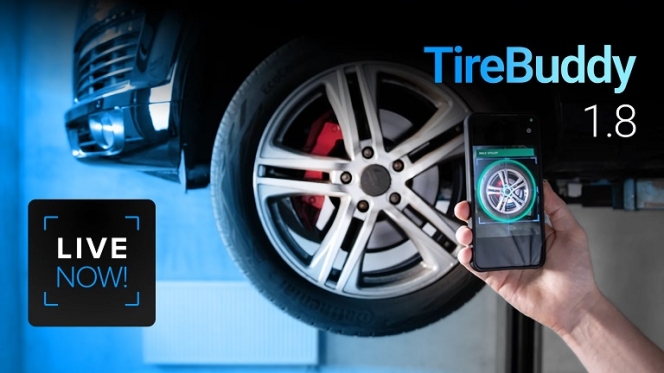
AI mobile data capture company Anyline has released the latest version of TireBuddy, a smartphone-based system for automotive tyre inspections. Version 1.8 introduces fully automated sidewall capture that removes human variability from data collection. The tool has already helped service teams achieve faster, more uniform inspections over the past year, leading to increased tyre sales and stronger customer trust.
The automated mechanism uses on-device guidance that evaluates each image against four criteria: full sidewall detection, sharpness, proper distance and angle and overall clarity. This real-time feedback minimises redo scans by guiding technicians to capture optimal images immediately. The system addresses common challenges in busy service bays where accuracy often suffers due to varying experience levels.
Standardisation of inspection quality is a primary benefit, as consistent results are achieved regardless of who holds the phone. This removes dependency on technician skill or training duration. New or seasonal staff can perform scans confidently from day one without extensive instruction. The automated capture now serves as the standard protocol for all inspections across locations and shifts.
Additional features include tyre mismatch alerts that flag size discrepancies, automated email reports to back-office systems and a redesigned results screen consolidating sidewall information and tread measurements. With hundreds of thousands of annual inspections, this update reinforces TireBuddy's role in modernising tyre service operations.
Lukas Kinigadner, CRO, Anyline, said, “A shop is only as consistent as its least experienced inspector. Automated sidewall capture gets every scan to the same standard, so teams can stop treating inspection quality as a variable.”
Epson Unveils Expanded Robotics Portfolio At Automation Expo Mumbai 2026
- By TT News
- July 23, 2026
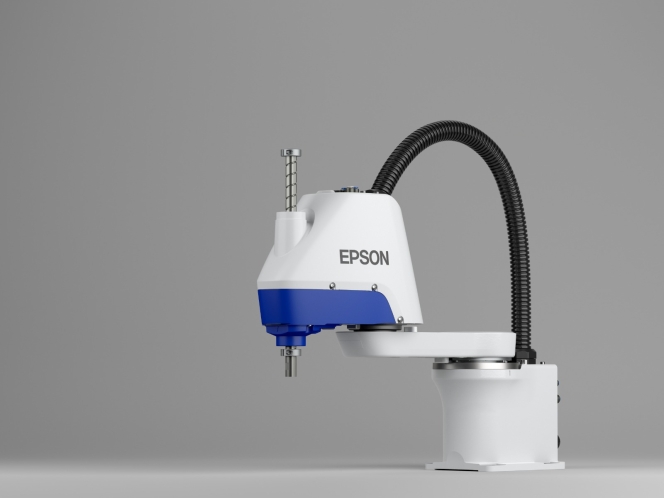
Epson, a global leader in SCARA robot manufacturing, has unveiled its next-generation industrial robotics portfolio at Automation Expo Mumbai 2026. The newly introduced lineup features the high-end CX-A Series 6-axis robots, the LS-C Series SCARA robots, the RC+ 8.0 programming software and the advanced SafeSense safety technology, all designed to address diverse manufacturing applications such as pick-and-place, precision assembly, parts transfer and material handling.
The new offerings significantly expand Epson’s existing industrial robotics family, which already includes the 6-axis C-Series and SCARA T-Series and LS-Series models with payloads ranging from 3 to 20 kilogrammes. With the addition of the CX-A and LS-C Series, manufacturers across various sectors can achieve heightened productivity, flexibility and operational efficiency. The CX-A Series is engineered for complex tasks with a payload capacity of up to seven kilogrammes and a reach of 900 millimetres, available in IP67, cleanroom and ESD variants, while the LS-C Series provides a compact SCARA platform with a 50-kilogramme payload, a 1,000-millimetre reach and cycle times as fast as 0.298 seconds.
Complementing the hardware, the RC+ 8.0 software offers an integrated environment for programming, simulation and system management, facilitating faster automation deployment with support for Visual Studio and C++ development. Additional efficiency features include enhanced diagnostics, OPC UA, GUI builder and safety functions, alongside co-creation tools like Library Builder and RC+ Extension. Meanwhile, the SafeSense technology promotes safer human-robot collaboration by incorporating Safety Limited Speed and Safety Limited Position functions, which can potentially reduce the need for extensive safety fencing and thereby increase operational flexibility.
With over four decades of industrial robotics expertise and more than 200,000 robotic arms deployed globally, Epson continues to drive operational excellence for businesses. Attendees at Automation Expo Mumbai 2026 have the opportunity to view live demonstrations of these solutions and consult with Epson specialists about transforming their manufacturing operations.
Siva Kumar, Sr General Manager – Sales and Marketing, Epson India, said, "India is rapidly emerging as a global manufacturing hub, and automation will play a pivotal role in shaping its future. With our new industrial robot lineup and RC+ 8.0 platform, Epson is delivering the speed, precision and intelligence manufacturers need to compete in an increasingly dynamic marketplace. We remain committed to enabling businesses to accelerate automation adoption and build smarter, more agile and globally competitive manufacturing operations."
- Fraunhofer Institute For Structural Durability And System Reliability LBF
- Fraunhofer ICT
- Fraunhofer IGD
- Fraunhofer IWM
- TERIS
Fraunhofer Consortium Advances Standardised Tyre Abrasion Testing With TERIS Milestone
- By TT News
- July 21, 2026
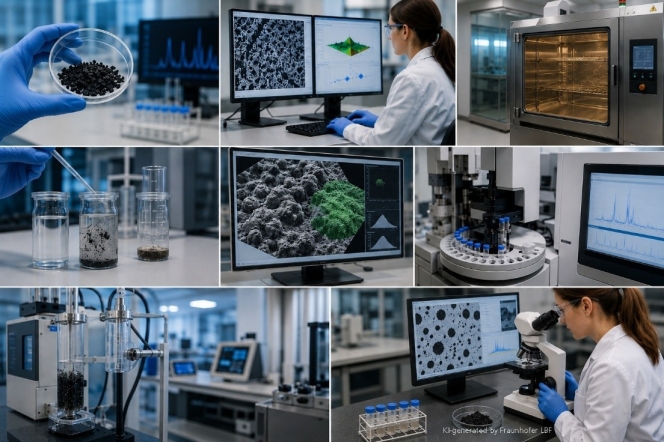
A consortium of Fraunhofer institutes has reached a key milestone in the Technology Platform for Tire Abrasion and the Identification of its Emissions in Road Traffic (TERIS) project, moving closer to establishing standardised laboratory methods for generating, analysing and predicting tyre wear.
The project, led by the Fraunhofer Institute for Structural Durability and System Reliability LBF, together with Fraunhofer ICT, Fraunhofer IGD and Fraunhofer IWM, aims to provide the tyre industry, testing organisations and environmental agencies with reliable and practical laboratory procedures for assessing tyre abrasion emissions.
The first project milestone has been completed following a successful review by an advisory board comprising industry experts.
The consortium has developed reference methods for tyre abrasion, particle analysis, tribological modelling, artificial intelligence-based surface analysis, a laboratory test bench concept, accelerated ageing techniques and volatile organic compound (VOC) detection.
According to the consortium, combining different particle collection and measurement techniques enables more precise analysis of both airborne and deposited tyre wear particles. At the same time, tribological models have been developed to better understand the relationship between loading conditions, material properties, surface structures and particle formation, allowing real-world tyre wear processes to be replicated under laboratory conditions.
Researchers have also developed a specialised test chamber for accelerated ageing, enabling tyre samples to be exposed to controlled environmental conditions before evaluating their abrasion behaviour.
Another development is an optical detection system that uses artificial intelligence to identify and classify surface structures. The system has been validated using substitute materials and is expected to be applied to rubber samples during the next phase of the project.
The consortium has also designed a laboratory test bench that combines multiaxial loading, controlled generation of tyre wear particles, targeted particle collection and integrated optical sensors within a single testing platform.
In addition, the project combines accelerated weathering with chemical analysis of volatile organic compounds released from tyre abrasion to assess the environmental impact of tyre wear particles.
The researchers said the work will provide the foundation for faster and more practical laboratory evaluation of new rubber compounds. The resulting methods are intended to help tyre manufacturers reduce emissions, accelerate product development and support compliance with the requirements of the Euro 7 standard.
At Fraunhofer IWM, researchers focused on refining tribological wear models and friction surface concepts to simulate particle formation under controlled laboratory conditions. The institute designed a parameterisable wear test that studies friction between plate materials and model surfaces with different structures, enabling researchers to investigate the mechanisms responsible for particle generation.
Initial findings indicate that tyre wear results from multiple interacting mechanisms rather than a simple relationship between particle emissions and factors such as speed, contact force or temperature. The researchers collected and analysed particles across a wide range of sizes during the study.
ZF Group India Wins Contracts For Battery, Tyre and E-Axle Testing
- By TT News
- June 30, 2026
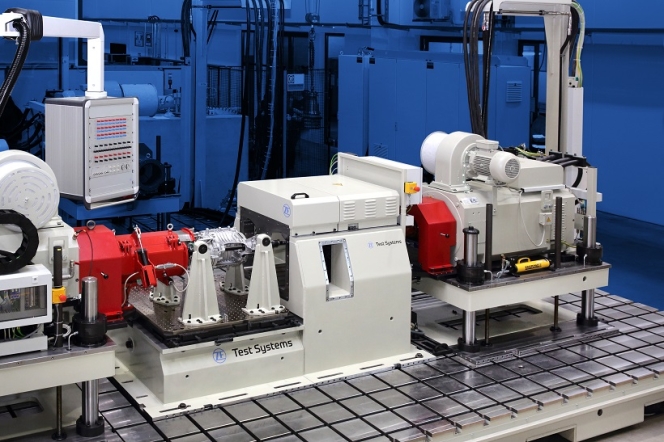
ZF has secured a significant milestone in the Indian automotive sector, receiving three major orders for its advanced test systems. The contracts, which encompass battery, tyre and e-axle testing, position the global driveline and chassis technology leader at the forefront of the nation’s drive to enhance road safety and establish more robust vehicle certification processes. This development aligns with India’s accelerating regulatory efforts to ensure that vehicle testing becomes more independent, rigorous and comprehensive, marking a critical step forward for the industry.
A key aspect of ZF's strategy involves a strong commitment to local manufacturing, with the company emphasising high levels of domestic content for its test systems in support of the ‘Make in India’ initiative. The firm’s extensive background in the field is underscored by its experience in testing over 100 million transmissions, a testament to the proven global reliability of its technology. This foundation of expertise is now being applied to address the specific safety and performance demands emerging in the Indian market.
With the rapid adoption of electric vehicles, battery safety has become a paramount concern, and ZF’s solutions cover the complete spectrum from individual cells to complete packs. These systems evaluate performance, endurance and environmental factors, including rigorous mechanical abuse testing, while adhering to a wide array of international and Indian standards. Furthermore, the company’s tyre testing capabilities are poised to play a crucial role as India prepares to enforce new mandatory regulations, including the BNVSAP and the AIS 142 TPMS Mandate. The ZF Tyre Efficiency Tester (TET.lab), recognised for its precision, offers a modular platform capable of testing everything from motorcycles to heavy commercial vehicles.
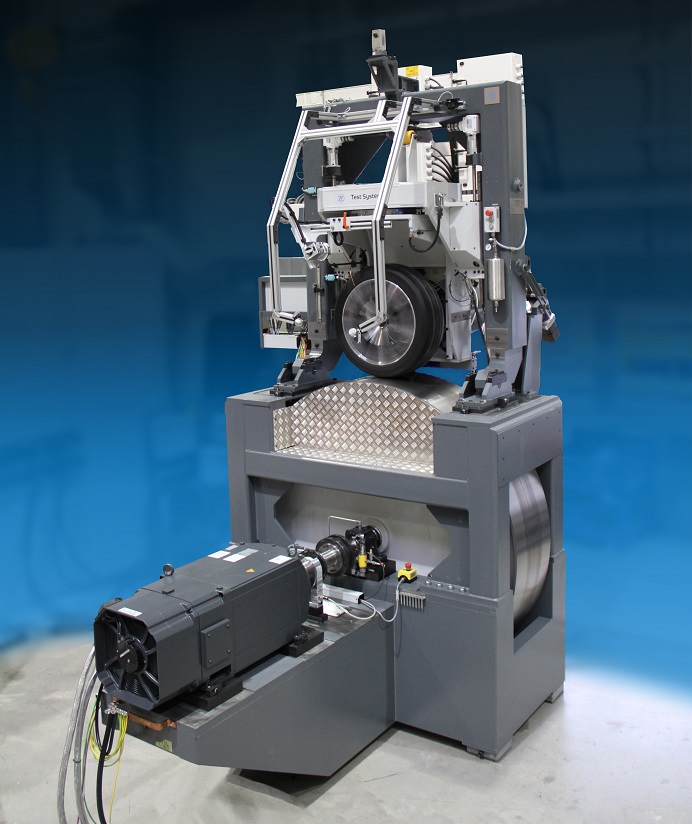
The company’s e-mobility test benches feature a high-performance drive module with a flexible, modular architecture designed to accommodate both conventional and electric drivetrains. These systems can be configured for various operations, integrating frequency converters and precision measurement technology for comprehensive testing. ZF’s deep expertise, already deployed by manufacturers and testing authorities worldwide, positions it as a key technology partner for India. As regulatory requirements tighten and the demand for quality escalates, the company is set to support the nation's ambition of building a safe and sustainable automotive ecosystem.
Akash Passey, President, ZF Group India, said, “Testing agencies are the final arbiters of vehicle safety, the bodies whose certification regulators and the public trust. Being chosen across three independent and Government agencies, for three distinct testing disciplines, is a powerful validation of ZF's accuracy, reliability and deep understanding of India's regulatory and testing landscape. ZF Group is proud to provide the technical foundation that makes world-class automotive safety infrastructure possible in India, not just for our OEM customers but also for Government and independent testing agencies.”
Thomas Trebitsch, Vice President, ZF Test Systems and Testing, said, “Over the past years, we have been focusing on the tyre industry in India and introducing our complete product portfolio to India. As the market develops rapidly towards regulations and safety, there is a strong need for robust and world-class testing technology. ZF brings its global competence and a deep understanding of the Indian auto industry to address its specific needs.”
Comments (0)
ADD COMMENT