


Thus, our newly developed "Tire Leap AI Analysis" utilises advanced AI-based analysis technology to analyse (for example) electron microscope imagery of tyre rubber compounds in order to achieve high-precision analysis that far exceeds human capabilities, thereby making it possible to derive accurate estimates of rubber properties from structural data found in this imagery.
Specifically, it is a technology that estimates rubber properties precise from combining data on the individual raw materials contained in a rubber compound with data on its internal structure. In the future, we will continue to develop this technology and develop technology to estimate the future rubber properties from electron microscope imagery of unused rubber.
■ Technology to Precisely Estimate Rubber Properties Based on Structures & Materials
Tire Leap AI Analysis utilises an AI-based image analysis system to analyse the internal structures of rubber in images captured by an electron microscope in order to infer information about the properties of the rubber based on its structural data (i.e. the results of image analysis). By combining this structural data with data about the materials that make up rubber compounds, this technology is then able to derive information about the physical properties of rubber with a high degree of precision.
■ Technology to Detect Changes in the Internal Structures of Rubber After Use & Estimate Resulting Changes in Rubber Properties
By comparing images of a tyre that has never been used (i.e. that is brand new) with images of a tyre that has been used (i.e. after wear over time), this AI-based image analysis system can determine where changes have occurred in the internal structures of the tyre’s rubber and then estimate the physical properties of the rubber in the areas that have undergone these changes. The practical application of this technology will facilitate the design of new rubber compounds that are less prone to performance degradation due to wear and tear, thus contributing to the development and advancement of Performance Sustaining Technology.
 Dr. Miki Haseyama, Hokkaido University: We have developed a new AI technology that is able to estimate the extent of changes in the structures based on analysis of images of the internal structures of rubber. As compiling data for this kind of machine learning would otherwise be extremely time-consuming, one of the main merits of this new technology is the fact that this AI does not require prior field data from structural changes in rubber for machine learning. Rather, this AI uses deep learning to learn about the properties of new rubber (i.e. prior to undergoing structural changes) and then estimates the extent of changes in the structure by analysing how data from old rubber (i.e. after undergoing structural changes) compares to the data that it has previously learned about new data. This approach to machine learning allows the AI to automatically detect various types of changes in the structures of rubber.
Kiyoshige Muraoka, Senior Executive Officer, Sumitomo Rubber Industries: We have been working jointly with Hokkaido University to further advance the development of AI technology that can understand how the internal structures of tyre rubber change through use. We have already put this new technology to use in the development of our latest “ENASAVE NEXT III” fuel-efficient tyres, which not only achieve the highest possible “AAA-a” rating for fuel efficiency and wet grip performance (under Japan’s tyre labelling system), but also reduce changes in tyre performance that occur over time as a result of use by half. Moving forward, we will continue to advance our Tire Leap AI Analysis technology to find and analyse slight variations in the internal structures of rubber that human senses and knowhow have been unable to detect so that we can then use the resulting knowledge to develop new technologies that further enhance tyre performance and ensure that this high performance lasts longer. In this way, we will accelerate research and development toward producing high-performance tyres that provide greater safety and peace of mind with the aim of contributing to the realisation of a sustainable mobility society for future generations.
References:
Ren Togo, Naoki Saito, Takahiro Ogawa, Miki Haseyama, “Estimating regions of deterioration in electron microscope images of rubber materials via a transfer learning-based anomaly detection model,” IEEE Access, vol. 7, pp. 162395-162404, 2019.
Cleanmax Bets On Hybrid Renewables As Tyre Makers Accelerate Decarbonisation
- By Sharad Matade
- June 09, 2026
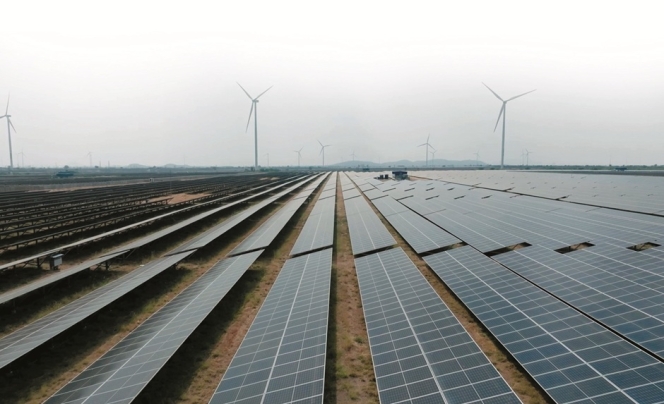
As India’s industrial sector accelerates its shift towards cleaner energy, tyre manufacturers are emerging as a critical test case for integrating renewable power into continuous, high-load operations. In this conversation, Kuldeep Jain, Founder and Managing Director of CleanMax, outlines how demand from companies such as CEAT and Michelin is reshaping renewable procurement – from conventional solar contracts to hybrid, round-the-clock solutions – while positioning clean energy as both an operational necessity and a strategic lever for decarbonisation.
Industrial decarbonisation in India is entering a more operational phase, where renewable electricity is no longer a peripheral lever but an embedded component of manufacturing strategy. For CleanMax, this shift is most visible in energy-intensive sectors such as tyre manufacturing, where continuous processes, global supply-chain pressures and ESG commitments are converging to reshape how power is procured and consumed.
Kuldeep Jain, Founder and Managing Director of CleanMax, describes a market moving beyond cost arbitrage towards structural integration of clean energy. Demand from tyre manufacturers – long characterised by high, stable electricity loads – is now influencing both project design and procurement models, pushing developers towards hybrid and round-the-clock renewable solutions.
Energy-intensive industries are increasingly prioritising renewable electricity to manage power costs and reduce operational emissions. Manufacturing sectors with continuous loads are particularly suited to long-term renewable procurement models such as group captive and open-access PPAs, which provide cost stability while supporting decarbonisation goals,” Jain says.
That demand is already translating into project pipelines. CleanMax’s collaboration with CEAT involves developing 59 MW of hybrid wind-solar capacity to supply renewable power to its Halol and Kanchipuram plants. Similarly, its engagement with Michelin includes an open-access solar power purchase agreement supporting operations at the company’s Chennai facility.
“These projects illustrate how large industrial consumers are integrating renewables into their long-term energy strategy. For instance, globally, the International Energy Agency has already noted that industrial electrification and renewable procurement will drive the next phase of the energy transition. Tyres are firmly in that wave,” Jain notes.
FROM INTERMITTENT SUPPLY TO ENGINEERED RELIABILITY
Tyre manufacturing presents a distinctive challenge for renewable integration. Plants operate continuous processes – mixing, curing and vulcanisation – that require stable baseload electricity and thermal energy. Traditional solar PPAs, while cost-effective, are inherently intermittent, limiting their suitability for such operations.
The industry is therefore evolving towards hybrid models that combine multiple renewable sources. “Hybrid projects are gaining traction because they smooth generation across the day, improving plant load factors,” Jain says. According to the International Renewable Energy Agency, such hybrid systems are among the fastest-scaling formats for industrial decarbonisation.
“As a result, the industry is moving beyond single-source solar PPAs towards wind-solar hybrid projects and open-access group captive models that provide higher plant load factors and more balanced generation profiles across the day. Wind-solar hybrid is increasingly seen as the most practical and efficient pathway to scale renewable penetration in continuous manufacturing environments,” Jain explains.
This shift reflects a broader reframing of renewables – not as intermittent substitutes for fossil fuel power but as engineered systems tailored to industrial demand curves. The emphasis is on aligning generation profiles with consumption patterns, rather than expecting operations to adapt to variable supply.
SECTOR-SPECIFIC DECARBONISATION PATHWAYS
Not all heavy industries decarbonise along the same trajectory. Jain draws a clear distinction between tyre manufacturing and sectors such as cement or steel, where process emissions form a significant share of the carbon footprint.
 “If you step back, industries don’t decarbonise in the same way because they don’t consume energy in the same way. A tyre plant is largely powered by electricity. So if you clean up the electricity, you’ve already addressed a meaningful part of its emissions,” he says.
However, the challenge lies in reliability. “These are continuous operations. They don’t switch off when the sun sets or the wind drops. That’s why hybrid becomes important, as a way of shaping energy to demand,” Jain adds.
“In case of cement or steel, a significant portion of emissions comes from how the product itself is made. So the shift we’re seeing is subtle but important. It’s about redesigning the energy profile itself so that clean energy isn’t intermittent in theory but dependable in practice,” he continues.
The implication is that electrification-driven sectors such as tyre manufacturing can achieve faster decarbonisation gains through renewable procurement, provided supply reliability is addressed through hybridisation and system design.
ESG, PRODUCT STRATEGY AND COMPETITIVE POSITIONING
Renewable energy is also assuming a more strategic role within tyre companies’ ESG frameworks. What began as a cost-management exercise is increasingly tied to product innovation, sustainability reporting and global competitiveness.
“The conversation around renewable energy in the tyre industry has clearly evolved beyond cost optimisation. Many manufacturers are increasingly integrating renewable power into their broader ESG strategies and supply-chain decarbonisation commitments, particularly as global automotive OEMs push for lower-carbon sourcing across the value chain,” Jain says.
This transition is evident at the product level. CEAT’s launch of its SecuraDrive CIRCL tyre – produced with up to 90 percent sustainable materials – signals how manufacturers are aligning product design with sustainability objectives.
“Renewable electricity procurement helps reduce Scope 2 emissions and supports the development of lower-carbon products, which is becoming an important factor in both sustainability reporting and global competitiveness. As a result, renewable energy is now seen not only as a cost-management tool but also as a strategic lever for product decarbonisation and ESG positioning,” Jain explains.
TECHNOLOGY MIX AND OPERATIONAL ALIGNMENT
From a systems perspective, no single technology provides a complete solution. CleanMax advocates a portfolio approach that combines generation assets with digital tools and flexible contracting structures.
“A portfolio approach works best. For manufacturing operations with steady electricity demand, hybrid renewable systems combining solar and wind have proven effective, as the complementary generation profiles improve overall availability and plant load factors,” Jain says.
Digital energy management platforms play a supporting role by optimising dispatch and aligning supply with consumption patterns. Flexible procurement structures, including open-access and group captive models, further enhance adaptability across sites and regulatory regimes.
“In practice, hybrid setups combining solar and wind have proven effective because they smooth generation across the day and improve overall availability. That’s what makes renewable power usable at scale,” Jain adds.
The CEAT and Michelin projects exemplify this approach, integrating multiple procurement pathways – onsite solar, offsite generation and open-access PPAs – to increase renewable penetration without compromising operational stability.
POLICY VARIABILITY AND MULTI-LOCATION STRATEGIES
India’s regulatory landscape remains heterogeneous, with state-level policies shaping the feasibility and economics of renewable procurement. For tyre manufacturers operating across multiple locations, this creates both complexity and opportunity.
“Overall, the ecosystem is steadily evolving to support higher renewable penetration practically. Open-access mechanisms are becoming more aligned with industrial needs. Renewable procurement is naturally becoming more location-specific,” Jain says.
Different state frameworks enable companies to tailor their energy mix – combining onsite solar with offsite wind or solar depending on regional resource availability and regulatory incentives.
“In practice, this leads to more balanced and resilient energy portfolios. This is also where developers with experience across markets can add value by structuring solutions that are aligned to each site’s load profile, regulatory context and long-term cost objectives, rather than taking a one-size-fits-all approach,” Jain explains.
GLOBAL SUPPLY CHAINS AND RISING EXPECTATIONS
Pressure from global automotive OEMs is accelerating the adoption of renewable energy in India’s tyre sector. As manufacturers integrate more deeply into international supply chains, emissions performance is becoming a criterion for sourcing decisions.
“As tyre manufacturers become more integrated with global OEM supply chains, expectations around emissions are becoming more defined. Renewable electricity is one of the more immediate ways to address this, especially for Scope 2 emissions,” Jain says.
“What we’re seeing is more about alignment – companies are adapting their energy mix to stay relevant in global markets, where sustainability is increasingly part of how sourcing decisions are made,” Jain says.
This dynamic is likely to intensify as OEMs tighten decarbonisation targets and extend accountability across their value chains, reinforcing the role of renewable energy in industrial competitiveness.
THE NEXT FRONTIER: TRACEABILITY AND CARBON MARKETS
As companies move towards net-zero targets, the focus is broadening beyond direct emissions to include value-chain impacts and verification mechanisms.
“Instruments such as renewable energy certificates and carbon markets help companies transparently account for the renewable electricity they procure. At the same time, there is growing focus on Scope 3 reporting as manufacturers work to address emissions across their broader value chains and align with global supply-chain decarbonisation expectations,” Jain says.
Traceability – ensuring that renewable energy claims are verifiable and auditable – is expected to become increasingly important, particularly for export-oriented manufacturers facing stringent disclosure requirements.
A DECADE OUTLOOK: ACHIEVABLE, BUT CONDITIONAL
Looking ahead, Jain is cautiously optimistic about the pace of renewable adoption in India’s tyre manufacturing sector. The fundamentals – declining costs, expanding capacity and supportive policy evolution – are largely in place.
“Over the next decade, higher renewable penetration in tyre manufacturing is well within reach, especially as clean power availability continues to expand. For electricity-led operations, increasing the share of renewable energy is already a practical pathway, not a distant target,” he says.
However, execution will hinge on system-level factors. “What will make the difference is how reliably this power can be integrated at scale – through consistent open-access frameworks, stronger grid alignment, and wider use of hybrid solutions that better match continuous industrial demand,” Jain says.
The trajectory is clear: renewable energy in tyre manufacturing is transitioning from opportunistic adoption to structural integration. For developers such as CleanMax, the challenge – and opportunity – lies in engineering solutions that convert intermittent resources into dependable industrial infrastructure.
Wallace Instruments Launches WAS3 Pneumatic Cutting Press To Enhance Specimen Precision And Safety
- By TT News
- June 08, 2026
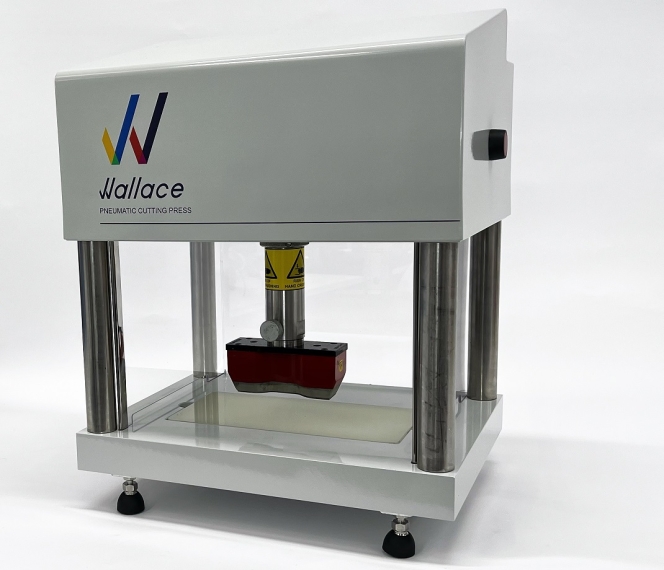
Wallace Instruments, a globally recognised leader in rubber testing equipment, has expanded its United Kingdom-manufactured specimen preparation lineup with the launch of the WAS3 Pneumatic Cutting Press. The new device joins the company’s range of rubber testing equipment.
Unlike manual cutting methods, pneumatic systems apply consistent force on every cycle, eliminating operator fatigue and variability. Poorly prepared specimens with uneven edges or internal stress can compromise test accuracy, while the pneumatic approach also reduces repetitive physical strain, supporting technician wellbeing during long production runs.
The WAS3 prioritises safe single-operator use through a two-button activation system requiring both buttons to be pressed within half a second, preventing any hand contact with the cutting area. Additional three-sided protective guards further enhance operational safety.
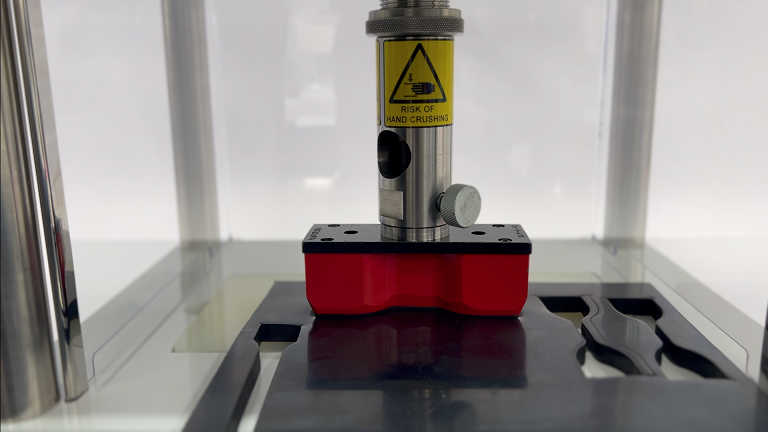
Delivering 15 kN of cutting force, the press easily cuts through 10-mm thick, 95 Shore A rubber sheet using five bar of filtered air pressure. It works with existing Wallace cutting dies, so laboratories can integrate the unit without replacing current tooling, and its compact footprint suits both lab and production environments.
Chris Norval, Managing Director, Wallace Instruments, said, "Specimen preparation is the foundation of accurate rubber testing. With the WAS3, we focused on practical safety, dependable cutting performance and drop-in compatibility. Labs get a compact pneumatic press that fits the air lines already in place, uses their current Wallace dies and delivers consistent results for every operator – because when specimen quality is controlled, you can have confidence in the results that follow."
- DUNLOP
- Sumitomo Rubber Industries
- Fujitsu Limited
- Tyre Analysis
- FUJITSU MONAKA
- Finite Element Method
DUNLOP And Fujitsu Slash Tyre Analysis Time By 90 Percent With New AI Surrogate Model
- By TT News
- June 04, 2026
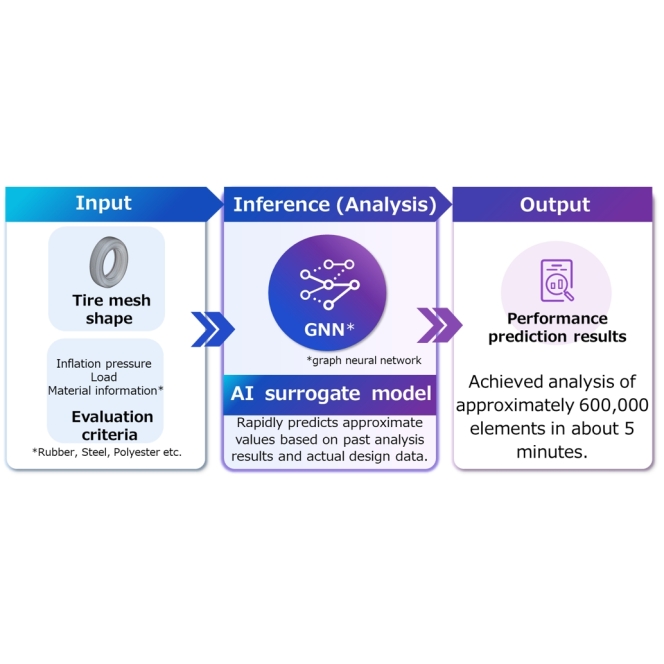
DUNLOP (company name: Sumitomo Rubber Industries, Ltd.) has teamed up with Fujitsu Limited to create an artificial intelligence (AI) surrogate model that predicts tyre performance rapidly and with high precision. The breakthrough was validated in a proof of concept tied to DUNLOP’s digital transformation strategy. When applied to tyre deformation upon road contact, the technology slashed analysis time by 90 percent, from 45 minutes to just 5 minutes while processing nearly 600,000 mesh elements.
Based on these results, both firms will build a design support tool, aiming for deployment at DUNLOP by April 2027. The system runs on FUJITSU MONAKA, a next-generation energy efficient Arm-based CPU.
Tyre design typically relies on finite element method (FEM) analysis, where finer mesh grids boost accuracy but increase calculation time and costs. To tackle this, the partners developed an AI surrogate model that solves FEM equations using past data. The model, based on the Graph Neural Network algorithm, predicted contact shape with 87.7 percent accuracy, enabling faster decisions and lower costs.
Select findings will be shared at the 31st Computational Engineering Conference starting 3 June 2026. By December 2026, both companies will test the model on a FUJITSU MONAKA prototype to refine speed and power use.
Under its long-term strategy R.I.S.E. 2035, DUNLOP seeks to provide new experiential value from rubber. Through this co creation, the tyre maker will enhance its analytical technologies and strengthen innovation. Fujitsu will promote this approach across large scale FEM analysis in automotive and other manufacturing sectors, contributing to carbon neutrality via an AI platform combining FUJITSU MONAKA and GNN.
Starrett-Bytewise Appoints GL Inspect GmbH As European Sales Representative
- By TT News
- May 22, 2026
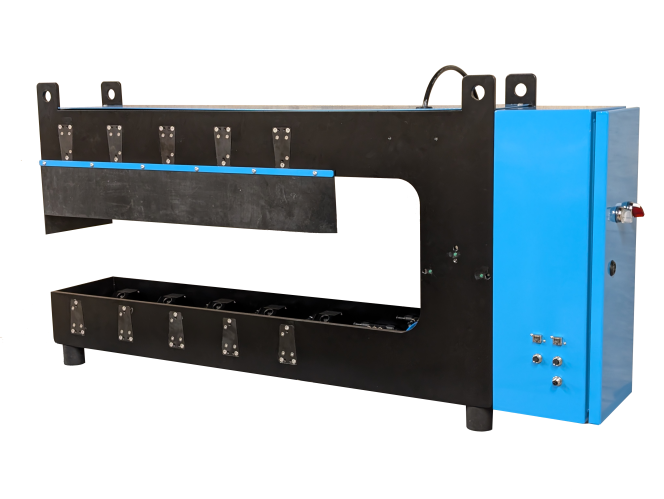
Starrett-Bytewise has appointed GL Inspect GmbH as its new European sales representative. The German firm, led by Christian Lantzsch and based in Hargesheim, will oversee regional operations. The partnership aims to provide local expertise for demanding measurement challenges across tyre plants, steel mills and extrusion lines.
Lantzsch and the GL Inspect team bring a sophisticated understanding of non-contact metrology. Their technical background aligns with the diverse industrial sectors served by Starrett-Bytewise, ensuring that European customers receive support tailored to specific materials and production environments. The collaboration strengthens local technical knowledge and on-site application assistance.
Under this agreement, European customers gain direct access to local consultations and expanded on-site evaluations led by Lantzsch’s team. Laser measurement solutions can be better integrated into individual production lines. The partnership also streamlines communication and support, building on existing European infrastructure to enable seamless transitions to automated in-line inspection.
The appointment represents a significant investment in European infrastructure. Having GL Inspect on the ground shortens the distance between Starrett-Bytewise’s U.S. engineering team and local factory floors. Faster application assessments, more frequent site visits and industry-specific language support are key outcomes of the new arrangement.

Comments (0)
ADD COMMENT