

Tyre Industry Welcomes GST cut; Retreading Cries Foul
- By Sharad Matade and Gaurav Nandi
- September 05, 2025
The GST Council’s 56th meeting delivered major relief for India’s tyre industry, slashing rates on new pneumatic tyres to tractor tyres. The move, aimed at reducing input costs and supporting rural demand, has been welcomed by manufacturers, though retreaders caution the reforms risk sidelining sustainability.
Sharad Matade and Gaurav Nandi
The Goods and Services Tax (GST) Council, in its 56th meeting, lowered the GST rates on a range of tyre and rubber products on Thursday, in a move aimed at easing input costs for the farming community and providing a much-needed relief to the domestic tyre manufacturing sector.
The decision, taken by the GST Council, reflects the government’s strategy of supporting rural demand while simultaneously addressing industry grievances over high taxation and duty anomalies.
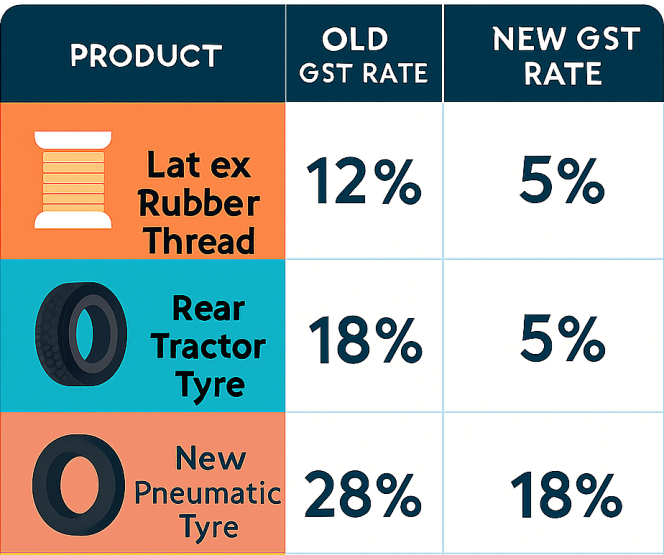
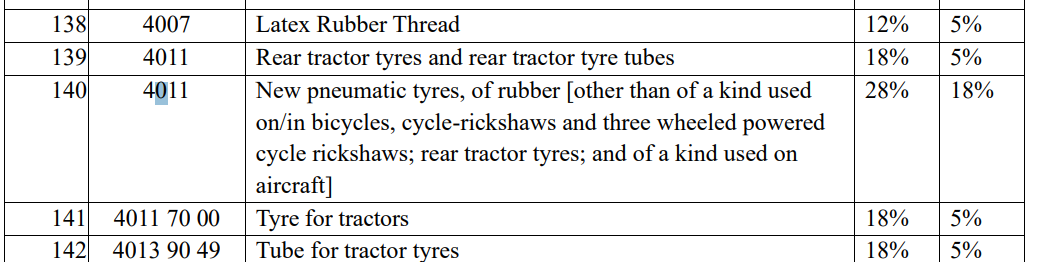
One of the headline changes is the reduction of GST on latex rubber thread, which has been cut from 12 percent to 5 percent. Similarly, tyres and tubes used in tractors, a critical expense for farmers, have seen their GST rates slashed from 18 percent to just 5 per cent.
Rear tractor tyres and their corresponding tubes, along with tyres specifically meant for agricultural tractors, will also benefit from this lower rate.
The most significant change for the industry is the decision to reduce GST on new pneumatic tyres of rubber, excluding those used in bicycles, cycle-rickshaws, aircraft, and tractors, from the highest slab of 28 per cent to 18 percent.
Automotive Tyre Manufacturers’ Association (ATMA) welcomed the decision, stating, “Lower GST on tyres will translate into more affordable mobility for millions of users, starting from farmers and small traders to transporters, motorists and logistics operators. It will also help bring down vehicle operating costs, which in turn reduces overall logistics expenses in the economy,” said ATMA Chairman Arun Mammen.
ATMA further noted that the reduction in GST rates on tyres will support road safety. High prices often discourage vehicle owners from timely tyre replacement, leading to extended use of worn-out tyres, which is a known risk factor for accidents. With the tax burden eased, tyre affordability will improve, encouraging motorists and fleet operators to replace tyres at the right time, thereby enhancing vehicle and passenger safety on roads.
Industry reactions
According to ICRA, the GST rate cut on most tyre categories is expected to boost domestic replacement demand, which makes up nearly two-thirds of India’s tyre market. Lower operating costs will benefit transport operators, improving fleet profitability and cash flows, while reduced logistics costs across industries are set to fuel aftermarket demand.
In addition, lower GST on new vehicles in entry-level, mid-range, and tractor segments should support OEM tyre demand through higher production and sales. The cut on tyre cord fabric, though a small cost component, is also margin-accretive.
In addition to the broad restructuring of tyre-related tax slabs, the GST Council has also moved to reduce the levy on key raw materials used in tyre production. Tyre cord fabric of high tenacity yarn, whether made of nylon, other polyamides, polyesters or viscose rayon, will now attract a Goods and Services Tax of 5 percent, down from the earlier 12 percent.
Exuding optimism on the move, CEAT Chief Executive Officer Arnab Banerjee noted, “We welcome the GST Council’s decision to rationalise tax rates in the tyre sector. The reduction of GST on new pneumatic tyres from 28 percent to 18 percent and the further relief for tractor tyres and tubes to 5 percent, is a progressive step that will significantly benefit the industry. This reform will make tyres more affordable for customers across commercial, agricultural and passenger vehicle segments, while also supporting rural mobility through lower input costs for farmers.”
Commenting on the market impact of the revised rates, Partner and Automotive Tax Leader at EY India for the Auto sector, Saurabh Agarwal, said, “The rationalisation of GST rates on automotive vehicles and parts is a truly welcome and significant development. By making vehicles more affordable across all segments, this move will not only boost consumer spending but also simplify complex classification disputes that have long burdened the industry. The discontinuance of the cess is a particularly pragmatic step, which will provide much-needed support to a sector that is a vital contributor to our nation’s GDP.”
Commenting on the development, Shantanu Deshpande, Chairman, CII Task Force on Tyre and Managing Director, Michelin India, noted, “Thanks to the government for reducing GST rates on important products, including tyres. These changes will help lower costs for manufacturers and make tyres more affordable for consumers, while also enabling simplification and ease of doing business for the tyre industry. These changes complement the robust growth and improvement made in our road infrastructure and will further boost the growth of the industry. The new rates will support local manufacturing, encourage investment, increase business volumes and help India become more self-reliant in tyre manufacturing. We deeply appreciate this enabling decision.”
Commenting on the issue, Senior Vice President, India & SAARC, Yokohama-ATG, Anuj Thakar, said, “The cut in GST from 18 percent to 5 percent on tractor tyres and tubes and 28 percent to 18 percent on new pneumatic tyres is a historic reform that will directly benefit the farmers and off-highway tyre customers in India. As makers of Alliance and Primex Tires, we see this GST reduction as an opportunity to assist our consumers in choosing the right application-specific mobility solutions at lower operating costs.”
Retreaders’ woe
While the council’s move is slated to benefit the OE and aftermarket, retreaders aren’t happy.
Tyre Retreading and Education Association Chairman Karun Sanghi said, “The GST on retreading remains stuck in the same slab despite representations to the GST Council even two weeks ago. The government promotes recycling and reducing carbon footprint, but has overlooked retreading in its policies. Tractor tyres have GST reduced to 5 per cent, while retreading is still at 18 per cent. This narrows the price gap between new and retreaded tyres, hurting demand for retreading and undermining recycling and carbon goals. Ideally, GST on retreading should have been reduced to 5, in line with new tyres.”
Currently, 80–90 percent of the retreading market is truck tyres, while 10–15 percent is farm, OTR and tractor tyres. The industry expects a significant impact on the tractor and commercial segments.
However, Sanghi noted that as an association, they will continue to approach the government, highlighting the retreading and environmental benefits, though lobbying power is far weaker compared to other organisations in the industry, which may explain why retreading’s concerns are often sidelined.
While the GST cuts mark a win for tyre makers and farmers, retreaders remain burdened by an unchanged rate. This threatens recycling demand and carbon reduction efforts even as affordability improves for new tyres. The industry now looks to the government for parity that balances growth with environmental goals.
Dunlop Motorcycle Europe Backs 43 Teams At Bol d'Or Season Finale
- By TT News
- September 18, 2026
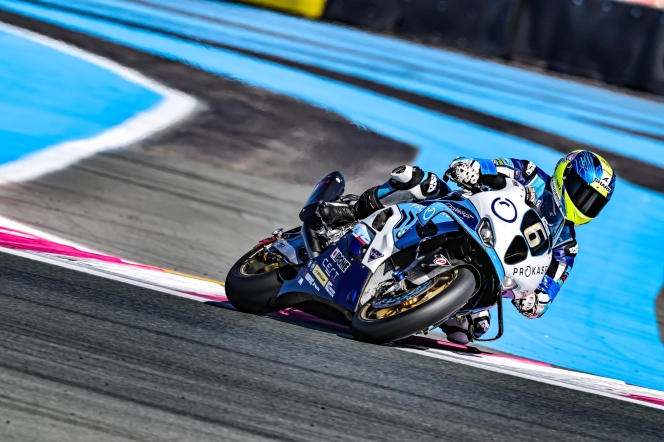
Dunlop Motorcycle Europe is set to back teams and riders contending for championship honours at the 2026 FIM Endurance World Championship (EWC) finale, the 89th Bol d’Or, held at Circuit Paul Ricard.
The tyre manufacturer will assist 43 teams in total, serving as exclusive tyre supplier to all 24 Superstock and 13 Production Trophy entrants. Five manufacturers will contest the Production Trophy’s second title, while six privateer squads in the open-tyre Formula EWC class have opted for Dunlop, among them the No. 6 ERC Endurance Team, which recorded a 1:52.173 best lap in Bol d’Or testing.
The season-closing 24-hour race poses a demanding mix of technical corners and fast stretches, notably the 1.8-kilometre Mistral Straight, alongside day-to-night running and traditionally changeable weather that may test both dry and wet KR allocations.
Dunlop will provide its established KR108 and KR109 slicks, plus a latest-generation medium front specification, developed as G2_01 VAL3 and validated with EWC teams in 2025 for improved durability and performance. The range targets single-lap speed and multi-stint longevity, with intermediate and wet tyres available for all conditions.
David Auerbacher, International Motorcycle Race Event Leader, Dunlop Motorcycle Europe, said, “We’re excited to return to Circuit Paul Ricard for the season finale, where both the Superstock and Production Trophy champions will be crowned. It’s been another strong season for Dunlop across all categories, as we celebrate five years as the exclusive tyre supplier to the Superstock Trophy and two years supporting the Production Trophy. Both categories have continued to grow and develop, while leading privateer teams also continue to choose Dunlop as they fight for wins and podiums in the Formula EWC class. We’re looking forward to an exciting season finale and are proud to support all the teams and riders as they battle for championship success at the biggest race of the EWC calendar.”
TRA Briefing Day 2026: MP Tessa Munt Attacks Government Policy Inaction On Waste Tyres
- By TT News
- September 18, 2026
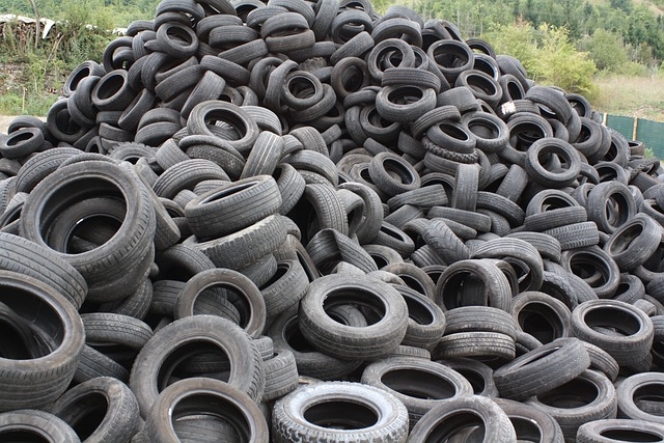
The Tyre Recovery Association convened its Briefing Day 2026 at Coombe Abbey Hotel in Warwickshire, drawing more than 100 senior figures from the UK tyre recovery, retreading, retail and manufacturing sectors alongside national regulators, parliamentarians and trade bodies. The event served as a platform to press for meaningful reforms covering tyre recovery, green procurement and domestic circular resilience.
Tessa Munt, the MP for Wells and Mendip Hills, delivered a keynote address that attacked the enduring disconnect between government policy rhetoric and industrial reality. Drawing on her parliamentary work regarding end-of-life tyre exports to India and her engagement with Somerset businesses, she condemned official inaction and set out four priority areas for reform, criticising a reliance on superficial slogans while domestic capacity lies stranded.
The MP highlighted what she described as a double standard, noting that the Environment Agency imposes strict Digital Waste Tracking on compliant domestic operators while granting misplaced goodwill and deadline extensions to non-compliant overseas exporters. Before the rules were diluted, proof-of-arrival compliance stood at just 20 percent. She further noted that more than 150,000 tonnes of licensed UK recycling and remanufacturing capacity remains entirely idle while raw waste is shipped abroad.
Her proposed reforms comprised the immediate statutory withdrawal of T8 exemptions to establish an audited permit regime, adoption of the Australian shred-only export model to end whole and baled tyre exports, instant revocation of export licences for brokers failing to supply timestamped and geotagged proof of delivery and mandatory green public procurement quotas for remanufactured tyres and rubberised asphalt. The RAC Foundation's Steve Gooding also addressed the conference, explaining that a modest 10 percent rubberised asphalt target in public highway contracts would absorb all idle UK crumb capacity, reduce road noise by three to five decibels and produce longer-lasting roads. Strong participation from the Tyre Recovery Association (TRA), the National Tyre Distributors Association (NTDA), the British Tyre Manufacturers' Association (BTMA) and the Imported Tyre Manufacturers Association (ITMA) underscored growing cross-sector unity.
Peter Taylor OBE, Secretary General, TRA, said, "The TRA Briefing Day proves that the British tyre recovery sector is united, highly innovative and ready to grow. Having around 100 key players and all four leading trade associations in one room shows that our industry is speaking with one voice. If the UK’s tyre recovery sector does not grow, it will soon disappear from these shores. We are gradually making progress in getting government to understand this, but there is a long way to go. We have the domestic processing infrastructure, the technical capability and the private capital ready to build a world-class circular economy. What we lack is a regulator and a government willing to back domestic industry by ending illegal whole tyre exports and enforcing green procurement. Tessa Munt MP highlighted this in her powerful speech. We are very grateful to her, Steve Gooding and all those who spoke yesterday, as well as our sponsors Vaculug, Murfitts and KwickFit. These contributions made the event an overwhelming success. The message from industry is clear: the time for policy talk is over, we need to statutory reform."
TyreSafe And West Yorkshire Police Join Forces On Tyre Safety
- By TT News
- September 17, 2026

TyreSafe, UK’s leading tyre safety charity, has entered a new partnership with West Yorkshire Police, reinforcing a joint commitment to road safety and reducing fatalities and serious injuries across the county. The collaboration arrives amid concerning road safety figures, with 51 deaths and 1,210 serious injuries recorded on West Yorkshire’s roads in 2025.
The two organisations will work together to highlight the essential role tyres play in road user safety. Drivers will be encouraged to perform routine checks on tyre pressure, tread depth and overall condition. The initiative also supports West Yorkshire Vision Zero, which aims to eliminate deaths and serious injuries from the county’s roads.
West Yorkshire Police becomes part of a growing network of over 260 organisations partnering with TyreSafe to promote safer motoring and enhance public understanding of tyre safety. A rising number of police forces now recognise tyre safety as a vital component of their broader road safety efforts.
As the sole point of contact between a vehicle and the road, properly maintained tyres are critical for braking, steering and grip, especially in difficult conditions. TyreSafe advises road users to check their tyres monthly and before long journeys, helping identify pressure, tread and condition issues before they become safety risks. This partnership marks another significant step in TyreSafe’s mission to reduce tyre-related incidents and improve road safety across Britain.
Stuart Lovatt, Chairman, TyreSafe, said, “We are delighted to welcome West Yorkshire Police as a TyreSafe partner. The fact that 51 people lost their lives and more than 1,200 suffered serious injuries on West Yorkshire’s roads in 2025 is a stark reminder that there is still so much work to do. Road safety requires a collective effort, and partnerships such as this are incredibly important. By combining the reach and expertise of West Yorkshire Police with TyreSafe’s specialist knowledge and campaigns, we can help ensure more road users understand the simple but crucial role their tyres play in keeping themselves and others safe.”
Inspector Claire Gray, Roads Policing Support and Proactive Intercept Team Inspector for West Yorkshire Police, said, “Every death and serious injury on our roads has a devastating impact on families, friends and communities. We are committed to working with partners to make West Yorkshire’s roads safer and to support the Vision Zero ambition. Vehicle safety is an important part of that work, and tyres are fundamental to a vehicle’s ability to stop, steer and maintain grip. We are pleased to be working with TyreSafe to help raise awareness and encourage road users to take responsibility for checking and maintaining their tyres.”
Hankook Showcases First Pre-Production Tyre From Expanded Rácalmás Facility For CVs
- By TT News
- September 17, 2026
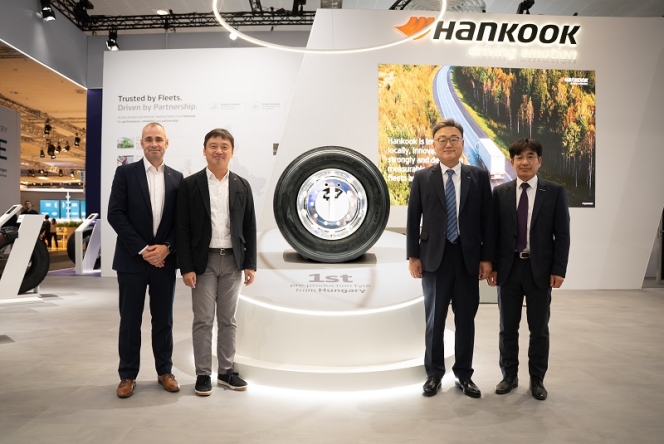
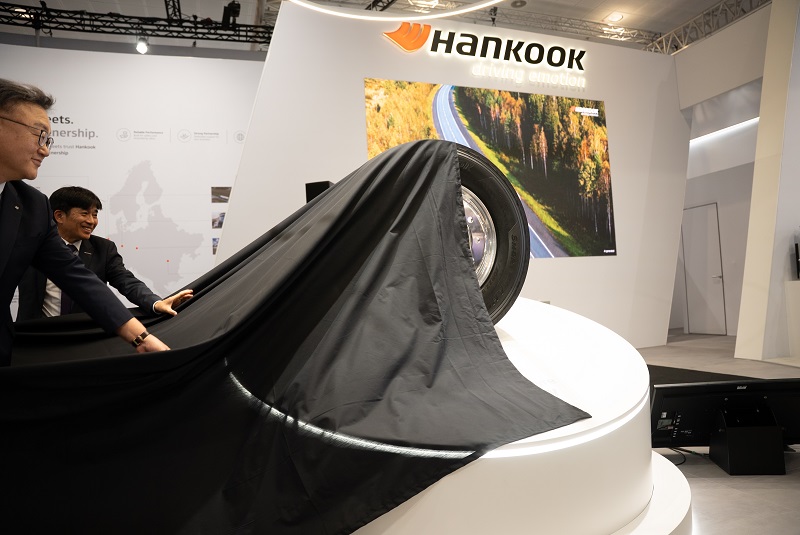
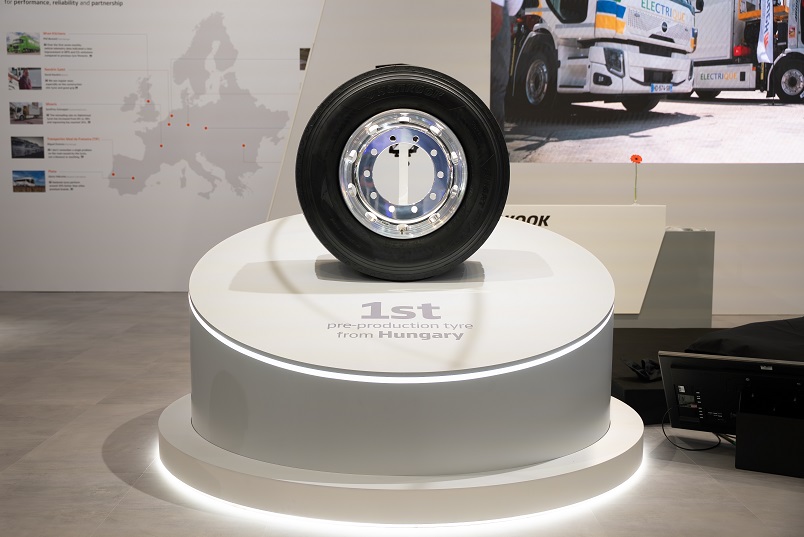
Hankook Tire has completed a significant expansion of its European manufacturing facility in Rácalmás, Hungary, marking the company's first production of truck and bus tyres on the continent. The new line, representing an investment of EUR 540 million, is scheduled to commence operations in October and has been configured to deliver more than 800,000 units annually. The first pre-production tyre from these facilities was officially unveiled at the ongoing IAA Transportation exhibition.
Previously, Hankook supplied European commercial vehicle customers exclusively from plants in Korea and China. The Hungarian line substantially reduces delivery distances, strengthening supply reliability and cutting lead times. Logistics-related carbon dioxide emissions also decline as lengthy transport routes from Asia are partially eliminated. Europe represents roughly 45 percent of Hankook's worldwide sales, making it a critical market for the tyre maker.
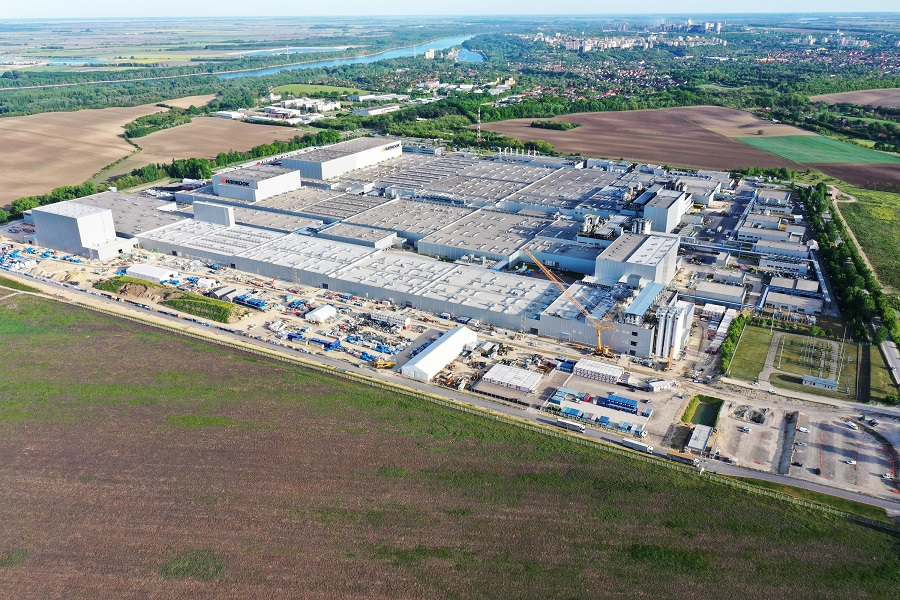
The Rácalmás site has received approximately EUR 856 million across three earlier expansion phases since 2007, with the third stage finishing in spring 2015. It now produces as many as 17 million tyres yearly for passenger cars, SUVs and light commercial vehicles. The fourth phase added the truck and bus tyre line and has seen around 66,000 square metres of production and support buildings constructed since 2024. More than 450 local jobs are being created. Globally, Hankook operates eight plants with capacity for up to 100 million tyres annually and employs about 20,000 people.
Designed as a highly automated facility, the new line relies on automated logistics systems, autonomous guided vehicles and real-time tracking to manage material flow and warehousing, while automated testing ensures consistent quality. Sustainability guided planning and operation through energy-efficient systems, optimised supply infrastructure and modern process controls that lower energy and water use. The plant earned ISCC PLUS certification in 2023. Production will initially centre on 22.5-inch truck and bus tyres, gradually broadening as capacity and approvals allow.
Jongho Park, President and COO, Hankook Tire Europe, said, “The expansion of our European production plant with a new line for truck and bus tyres is yet another key milestone for Hankook in Europe. The central location of the facilities in Hungary and their proximity to the core European markets is a key locational advantage. It will enable us to supply our European customers with premium commercial vehicle tyres even more reliably and quickly, and to respond to their needs with the greatest possible flexibility.”
Ho Taek Lim, Vice President and Managing Director of the plant in Rácalmás, said, “This expansion project was one of the largest industrial development projects ever undertaken at the site in Hungary. The new truck and bus tyre production facilities will transform the plant into a comprehensive production site of significantly greater complexity and with a higher level of automation.”

Comments (0)
ADD COMMENT