

- Arun Mammen
- Automotive Tyre Manufacturers' Association
- ATMA
- MRF
- Hiroshi Yoshizane
- Bridgestone India
- INROAD project
MRF Boss Arun Mammen Is New Chairman Of ATMA, Hiroshi Yoshizane Vice-Chairman
- By TT News
- March 12, 2025
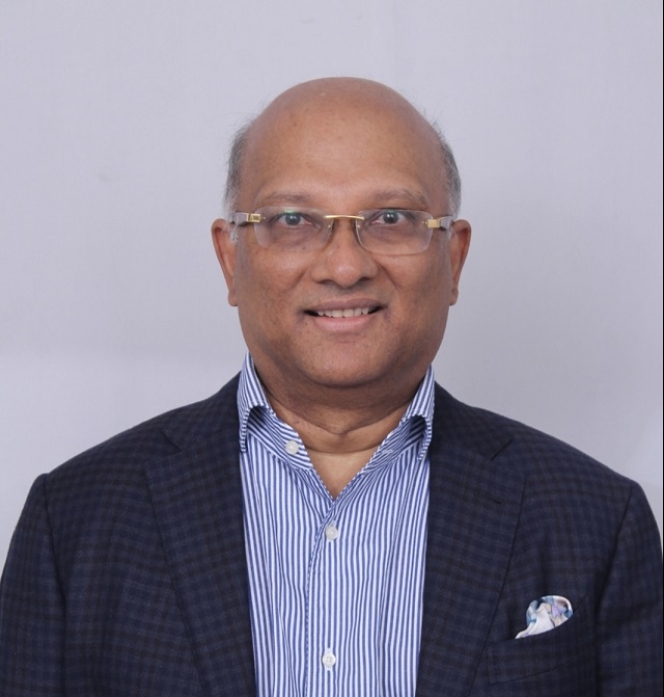
The Automotive Tyre Manufacturers’ Association, the apex body representing automotive tyre manufacturers in the country, has announced its new leadership structure.
The apex tyre body has elected Arun Mammen, Vice Chairman & Managing Director of MRF as the new Chairman of ATMA and Hiroshi Yoshizane, MD, Bridgestone India as the new Vice-Chairman of ATMA.
The appointment comes at a crucial juncture as ATMA celebrates 2025 as its Golden Jubilee year.
Mammen hold a graduate degree from the Madras Christian College and MBA from the Ashland University, US. He became the Managing Director of MRF in 2004 and Vice Chairman and Managing Director in 2017.
He believes that the Indian tyre industry should strive to be a major global manufacturer in the next decade and he will work on policy enablers to make the industry more competitive and technologically superior for meeting the needs of developed countries.
ATMA highlighted that given the global push towards carbon emission, there is a clear need to reduce carbon footprint in manufacturing and supply chain among others. The tyre industry on its part is already investing towards regenerative and recycled raw materials, along with using clean energy and reduction in water usage in manufacturing.
Furthermore, the INROAD Project as an industry initiative is expected to further add 200,000 hectares of new rubber plantation in the next two years.
“Over the next five years, focus needs to be given to upgradation of quality and training of the stakeholders,” added Mammen.
- Satish Goyal
- Jairaj Zarekar
- Anand Kumar
- H. M. Meena
- Sanjeev Sharma
- Arup Kumar Misra
- Tushar Suhalka
- Varun Manjunath
- Jayant Vaidya
India’s Tyre Recycling Industry Examines Standards, Technology And Circularity At RE-GO 2026
- By TT News
- October 26, 2026
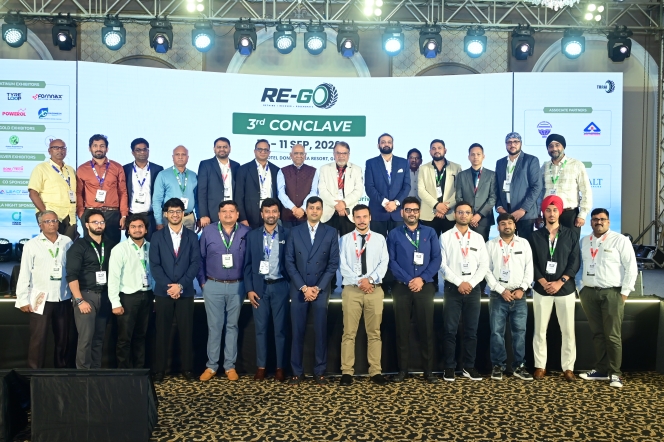
India’s tyre recycling industry discussed regulation, technology and material recovery at RE-GO 2026, a three-day conclave held in South Goa from 10 to 12 September. Organised by the Tyre & Rubber Recyclers Association of India (TRRAI), the event brought together more than 250 delegates, representatives from more than 200 companies and participants from more than 20 states.
The third annual conclave, hosted at Novotel Goa Dona Sylvia, included more than 20 speakers and experts, three panel discussions and more than 20 exhibitors and sponsors. The conference programme ran on 10 and 11 September , followed by a departure programme on September 12.
Regulation and technology dominate discussions
Held under the theme of policy, compliance and circularity, the conclave brought together recyclers, technology providers, tyre industry representatives, policymakers, regulators, standards professionals, consultants and business leaders.
Discussions covered regulation and standards, extended producer responsibility (EPR), traceability, automation, environmental performance, digitalisation, artificial intelligence, material recovery and circularity.
The technical programme examined automated pyrolysis, co-processing, national standards for tyre pyrolysis oil (TPO) and recovered carbon black (rCB), fleet management, EPR policy and compliance, and the Common EPR Portal. Other topics included life-cycle assessment (LCA), greenhouse gas emissions accounting, digital transformation and technical innovation.
Industry and regulatory representatives attend opening session
The inaugural session featured Satish Goyal, President of TRRAI, and Jairaj Zarekar, its Secretary. Other participants included Anand Kumar, Former Director and Scientist ‘F’ at the Central Pollution Control Board; H. M. Meena, Scientist ‘D’ and Joint Director at the Bureau of Indian Standards; and Sanjeev Sharma, Senior Vice-President And Business Head For Mobility Solutions And Fleet Management at JK Tyre & Industries.
Arup Kumar Misra, Chairman of the Assam Pollution Control Board, was the chief guest and delivered the keynote address, “Tyre Recycling: From Liability to Asset”. The address focused on turning end-of-life tyres into recoverable resources and sources of economic value.
Three panels examine the sector’s priorities
The conclave featured three high-level panel discussions on sustainable recycling policy, recycling technology and the development of a circular tyre economy.
The first examined policy, standards, EPR, compliance and sustainable development. The second focused on shredding, granulation, automation and continuous pyrolysis. The third considered how collection, technology, markets and manufacturing could be connected to support a circular tyre economy.
The panels were moderated by Tushar Suhalka, Varun Manjunath and Jayant Vaidya, respectively.
The event also included an exhibition featuring more than 20 exhibitors and sponsors, networking sessions and an awards and recognition ceremony.
TRRAI highlights collaboration and standards
TRRAI said it had more than 500 members, representing approximately 75 percent of the tyre recycling market. The association works on standardisation, professionalisation, technical advancement, regulatory dialogue and collaboration across the sector.
The conclave highlighted the role of co-operation among industry participants, government bodies, regulators, standards organisations, technology providers and technical experts. Its discussions reflected a focus on stronger standards, improved traceability, environmental accountability, digitalisation and circularity.
Renaud Lapointe Named President Of Metso's Aggregates Division
- By TT News
- October 24, 2026
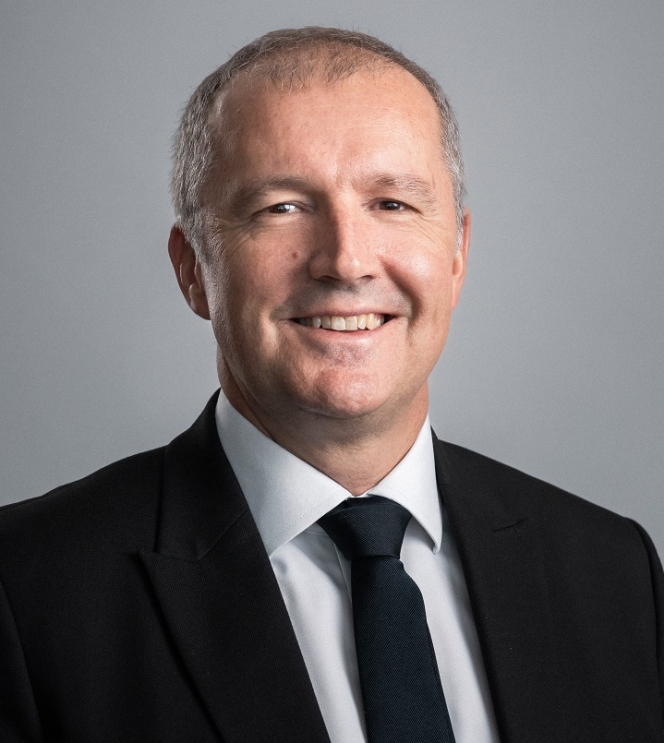
Metso has named Renaud Lapointe as President of its Aggregates business area and a member of the Metso Leadership Team, with the appointment taking effect on 15 November 2026. He takes over from Markku Simula, whose departure from the company was announced on 11 August 2026.
Lapointe has been with Metso since 2005 and has served as President of the Europe and Central Asia market area since December 2024. Before that, he led the Metso Products business line within the Aggregates business area from 2018 to 2024, and between 2014 and 2017 he was Vice President of the Crusher Systems business line in the same segment. Earlier in his tenure, from 2005 to 2014, he held several leadership positions at Metso in France. Lapointe holds a degree in mechanical engineering from ISTIL in Lyon, France.
Lapointe said, "I am excited to return to the Aggregates business and lead such a highly respected global organisation. With its strong customer relationships, industry-leading solutions and talented team, the business is well positioned for continued success and growth.”
Sami Takaluoma, President and CEO, Metso, said, “Renaud brings experience from both our Aggregates business and our market area organisation. This combination will support the continued development of our offering and close cooperation with customers. I look forward to welcoming him to the Metso Leadership Team.”
JK Tyre Eyes Double-Digit Growth Despite Cost Pressures Testing Margins
- By Nilesh Wadhwa
- October 23, 2026
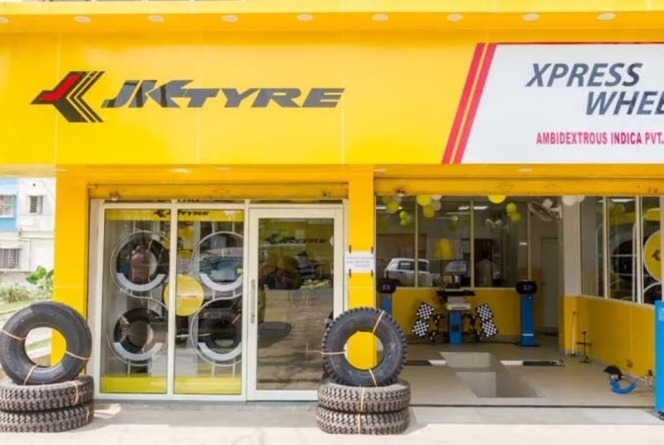
JK Tyre & Industries is targeting double-digit growth in FY2027, supported by healthy commercial vehicle demand, sustained OEM traction and a growing market for premium passenger car tyres. However, rising raw material costs and elevated freight rates continue to pressure margins, prompting the company to pursue further price increases and operational efficiencies.
Anshuman Singhania, Managing Director, JK Tyre & Industries, expects demand to remain stable through the second half of FY2027, with commercial vehicle tyre sales projected to record double-digit growth for the full year. While passenger vehicle demand could moderate slightly, healthy OEM order books and replacement market traction are expected to support the industry's growth momentum.
“We are very optimistic going ahead that demand would be quite stable,” Singhania said during the post-results media interaction, adding that the positive momentum was expected to continue through the third and fourth quarters.
Record Revenue in Q2 FY2027
JK Tyre reported its highest-ever consolidated quarterly revenue of INR 48.5 billion in Q2 FY2027, up 20 percent year-on-year (YoY). Consolidated EBITDA rose 28 percent sequentially to INR 3.43 billion, with an EBITDA margin of 7.1 percent. Profit after tax stood at INR 600 million.
Domestic sales grew 32 percent YoY, led by a 65 percent increase in OEM sales following the implementation of GST 2.0. Exports also gained momentum, rising 14 percent sequentially despite geopolitical uncertainties and challenging international market conditions.
Growth was broad-based across product segments. OEM volumes increased 76 percent in truck and bus radial (TBR) tyres and 35 percent in passenger car radial (PCR) tyres. The tubeless tyre portfolio grew 25 percent YoY, against estimated industry growth of 10 percent, while tipper tyre sales increased 20 percent compared with industry growth of 11–12 percent.
Sales in the two- and three-wheeler category rose approximately 85 percent YoY, driven primarily by scooters. Replacement sales increased 20 percent, reflecting continued traction across channels.
Despite the revenue growth, profitability remains under pressure as input and logistics costs rise faster than they can be recovered through pricing.
Raw Material Costs and Freight Weigh on Margins
JK Tyre's raw material basket increased approximately 9 percent sequentially in Q2, with the cumulative increase over the preceding six months estimated at around 30 percent. Singhania expects a further 4–5 percent increase in the basket during Q3.
Elevated container freight rates have added to the pressure, with increases across geographies affecting exports and shipments from India. Higher petrol and diesel prices have also contributed to rising logistics costs.
The company is seeking to offset these pressures through price increases, manufacturing efficiencies and a richer product mix. However, the timing of margin recovery will depend on the extent to which higher costs can be passed on in a price-sensitive market.
Further Price Hikes Planned
JK Tyre increased prices by approximately 4–5 percent in Q1 and a further 7 percent sequentially in Q2, taking the cumulative increase during the first half of FY2027 to around 11–12 percent. The company intends to implement another 4–5 percent increase in Q3, subject to market conditions.
“The raw material increase is putting a lot of pressure on margins. But we are steadily increasing our prices to pass through,” Singhania said.
OEM pricing is partly linked to input cost indices, allowing some increases to be recovered through contractual adjustments. In the replacement market, price increases have been implemented more gradually over the past two quarters, with further adjustments expected.
Singhania acknowledged that the industry typically experiences a lag between cost escalation and full price recovery. While the company expects margins to improve through better OEM mix, price indexation and operational efficiencies, it has not quantified the anticipated improvement.
Premium Tyres Gain Share
JK Tyre is increasing its focus on premium passenger car tyres, particularly those with rim sizes of 16 inches and above. The company said the share of these tyres in its passenger car OEM mix increased to approximately 40 percent in H1 FY2027, compared with 35 percent in FY2026. These sizes account for around 27 percent of its overall mix, including the aftermarket.
The shift towards larger rim sizes is being supported by new vehicle launches and wider adoption across passenger vehicle categories. JK Tyre has secured 10 OEM approvals during the year, eight of which involve models in the 16-inch-and-above category. These include the Maruti Suzuki Brezza, Mahindra Thar, Renault Duster and Tecton, and MG Tomahawk, as cited during the media interaction.
“The market is growing, but our market is growing at a faster rate,” Singhania said, highlighting the opportunity presented by new OEM programmes and rising demand for larger rim sizes.
The company expects this segment to support product realisation and improve its sales mix, with additional capacity helping it meet evolving OEM requirements.
Expansion Continues as Exports Offer Headroom
JK Tyre is proceeding with its INR 11.3 billion capacity expansion programme, which Singhania confirmed would not be deferred. The previously announced INR 50 billion capital expenditure programme is also progressing through its initial phase.
The investments are intended to support domestic demand and create capacity for export opportunities. JK Tyre reported encouraging demand from Latin America and Africa, while some markets in Asia and Europe softened amid geopolitical uncertainty.
The company plans to continue serving established markets across Latin America, the Middle East, Southeast Asia and Africa, alongside a limited presence in Europe, while prioritising domestic OEM and replacement requirements.
For the second half of FY2027, JK Tyre expects commercial vehicle demand to remain supportive and is targeting double-digit growth in the segment for the full year. Strong OEM order books, replacement demand and the increasing contribution of premium tyres are expected to underpin growth. The key challenge will be translating higher volumes into sustainable profitability as the company navigates raw material inflation, freight costs and the lag in price recovery.
ATD Names Michael Broderick Interim President As Ira Silver Departs
- By TT News
- October 23, 2026
American Tire Distributors (ATD), a leading independent supplier in the replacement tyre industry, has appointed Michael Broderick as Interim President, effective immediately. He takes over from Ira B Silver. ATD also announced that the company and Silver have parted ways.
Broderick, who currently sits on ATD's Board of Directors and brings extensive automotive aftermarket experience, will guide the leadership transition. Meanwhile, the Board is conducting a comprehensive search for a permanent Chief Executive Officer, evaluating both internal and external candidates.
ATD continues to hold a significant position in the North American tyre market, supported by a broad distribution network, longstanding customer relationships and a diverse portfolio of manufacturer and proprietary brands. During 2026, the company eliminated more than USD 170 million in structural costs, reinvesting a portion of the savings, while shareholders have backed further investment in the national distribution network to strengthen market position and operating performance.
Philippe Gilbert, Chairman of the Board of Directors of ATD, said, “ATD has made important progress sharpening our focus on our core tyre distribution business, improving operational efficiency and delivering outstanding service and value to our customers and partners. As we look to accelerate these efforts, we determined that now is the right time to initiate a leadership transition. Mike brings substantial experience leading complex automotive businesses, and we are pleased that he is stepping in as Interim President to help us during this transition period. He will be supported by the ATD management team, which has played a central role in the Company's operational transformation, providing continuity of leadership across its distribution operations and strategic initiatives. On behalf of the Board, I would like to thank Ira for his leadership and contributions to help move the Company forward during a critical time.”
Broderick said, “I’m excited to step in and work alongside ATD’s team of talented associates as we focus on enhancing our network to provide customers with high-quality products and unparalleled service. As a member of ATD’s Board and over a decade of working with ATD as a customer, I’ve witnessed firsthand the strength of the Company’s robust national distribution network, deep customer and manufacturer relationships and long-held commitment to exceptional service. I look forward to advancing our efforts to strengthen our core tyre distribution business and build a stronger, more efficient company.”

Comments (0)
ADD COMMENT