

Premium Makeover
- By Sharad Matade
- December 05, 2025
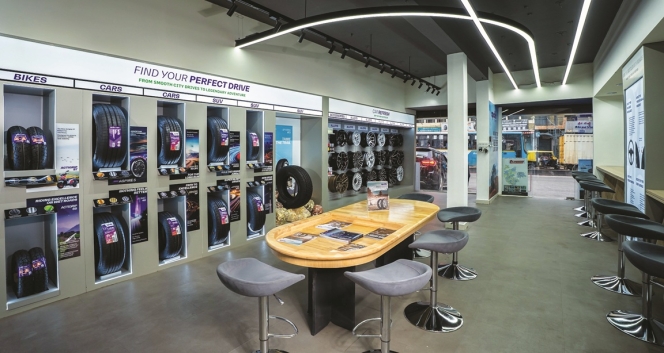
India’s tyre retail industry is undergoing a dramatic makeover, moving far beyond the cluttered workshops and transactional buying of the past. Fuelled by rising demand for premium vehicles, digital-first customers and stronger export momentum, tyre makers are transforming retail spaces into sleek, immersive experience centres. What was once a routine utility purchase is rapidly evolving into a premium, advisory-led mobility experience designed for a new generation of motorists.
India’s tyre retail scene is shifting gears, leaving behind the era of crowded workshops and impersonal counters. In their place, manufacturers are rolling out sleek, thoughtfully designed, tech-powered spaces that echo the luxury of high-end car showrooms. What started as a few bold pilots in big cities has quickly become the go-to playbook for tyre brands eager to win over a new generation of savvy, comfort-loving, digital-first customers.
From urban to rural areas, this transformation reveals a profound change in how Indians approach mobility. Today’s motorists – especially those behind the wheel of SUVs, luxury sedans and electric cars – want more than just a tyre swap. They crave expert advice, a polished atmosphere and a shopping experience that reflects the elegance of their vehicles. Once a utilitarian afterthought, tyre retail is now emerging as a coveted part of the automotive journey.
Strong OEMs and replacement demand in both domestic and export markets underpin the transition.
In FY 24-25, tyre exports from India surged by nine percent year-on-year to INR 251 billion, according to data released by the Ministry of Commerce. With an estimated annual turnover of INR 1 trillion and exports exceeding INR 250 billion, the Indian tyre industry stands out as one of the few manufacturing sectors in the country with a high export-to-turnover ratio.
Though tyre exports have hit a speed bump due to higher US tariffs on select categories of Indian tyres compared to those of competing nations, the long-term prospects for the Indian tyre industry remain strong. According to a joint report by ATMA and PwC India titled ‘Viksit Bharat 2047: Vision and Roadmap for the Indian Tyre Industry’, India’s tyre production volumes are projected to grow nearly fourfold by 2047, while industry revenues are expected to expand almost 12 times to about INR 13 trillion.
Against this backdrop, tyre makers are modernising aggressively to retain customers and build a more profound emotional affinity. The broad shift is visible in how retailers are reinventing their spaces. Lounges with crafted lighting, upholstered seating, minimalist décor and large digital walls are replacing traditional steel racks and dusty counters. Informational murals and heritage display trace decades of tyre innovation, strengthening brand storytelling. Stores increasingly feature curated experience zones where customers can explore tyre technologies, EV-compatible profiles, eco-friendly materials and performance characteristics through visual displays and interactive tools.
A clear sign of this trend is the rise of personalised, advisory-led engagement, replacing the old dependence on technicians. Retailers now profile driving habits, terrain usage, daily distance and vehicle type to recommend tyres customised to each consumer’s pattern. This service-led model is shifting the customer’s mindset from price-first decision-making to long-term value evaluation.
The new premium outlets are designed to deliver a lifestyle-driven, hospitality-grade experience rather than a traditional tyre shop visit. Customers receive personalised mobility recommendations tailored to their vehicle, driving style and needs, supported by smart service innovations like intelligent product selection, quick-fit services and digital scheduling. The space also acts as a community hub for driving enthusiasts, creating a connected ecosystem around the brand. With lounge-style comfort, immersive storytelling and specialised tyre and service packages for luxury and performance vehicles, the outlet blends convenience, premium care and brand-centric offerings into an elevated customer experience.
“Customer experience at the point of sale is another branding exercise poised to change buyer characteristics. Multi-brand outlets often commoditise the tyre-buying experience. That’s why companies are launching exclusive brand outlets with curated customer experiences. Over the next decade, new delivery models will emerge,” said Kavan Mukhtyar, Partner and Leader – Automotive, PwC India.
Apollo Tyres articulates this change as a move towards lifestyle-led retailing. Its new super-premium outlets have been built not as showrooms but as emotionally resonant spaces.
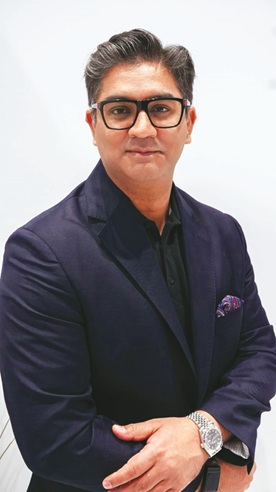
Udyan Ghai, Group Head of Marketing at Apollo Tyres, explained that the company’s new retail architecture is anchored in long-term strategic priorities: “Our move to a lifestyle-led, immersive tyre retail format is driven by our own desire for premiumisation and category leadership. We are looking at elevating tyre retail in India by setting new benchmarks and shifting from commodity selling to a premium, lifestyle-driven experience.”
He said the brand aims to ‘emotionally engage with customers, offer tailored solutions, build a community of driving enthusiasts and tap into premium segments – all while delivering a differentiated, modern retail experience’.
Ghai believes retail ambience plays a decisive role in influencing perception. “A relaxed and well-designed lounge signals comfort, trust and premium value,” he said, adding that such environments elevate tyres from a mundane requirement to a core element of vehicle care and identity.
Digital transparency, he believes, is the second pillar of modern tyre retail. “Digital systems ensure transparency and help demystify tyre selection – tread patterns, speed ratings, durability and fitment. Consumers feel less dependent on a technician’s word and more in control, which boosts their confidence and perceived fairness,” Ghai said.
Customers today are inundated with choices, and digital systems, he said, turn tyre buying into an ‘informed, personalised decision’, comparable to selecting a smartphone, a pair of performance shoes or even a detailed insurance plan. According to Ghai, this new retail model is ‘a strategic investment in the future of mobility retail’, designed to be scalable and to support community-building events, workshops and enthusiast interactions. As India moves towards EVs and connected cars, he said these premium outlets will provide EV-focused tyre expertise, interactive digital tools and personalised recommendations that appeal to younger, digitally savvy motorists.
CEAT shares a similar philosophy. Its national retail revamp focuses heavily on digital immersion, consistent messaging and design-led layouts. Lakshminarayanan B, the company’s Chief Marketing Officer, said the modernised CEAT Shoppes are fundamentally reshaping the category.
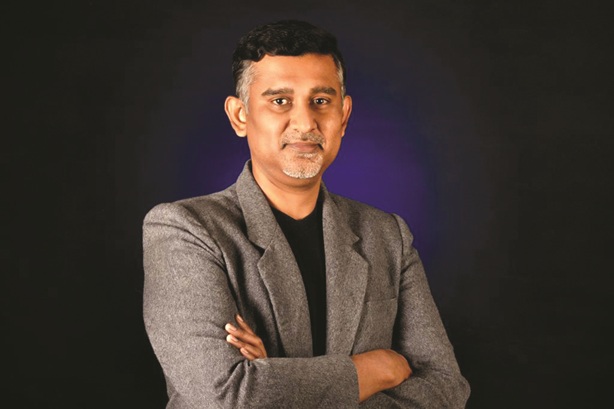
“The modern layouts and digital integration in CEAT Shoppes are revolutionising the tyre-buying experience, making it more experiential and customer-centric,” he said, adding that these updated outlets elevate the experience, build trust through uniform communication and drive decisions by reducing ambiguity around features and value.
Lakshminarayanan highlighted CEAT’s attempt to harmonise customer experience across demographics: “The approach in urban markets through premium stores, product offerings and services is to create access and aspiration for premium customers. The same is replicated in upcountry markets also.”
The CEAT Executive said the company is building for a future where personalisation will be the defining characteristic of tyre retail. “CEAT is focused to drive the future of tyre retail through end-to-end personalisation,” he said.
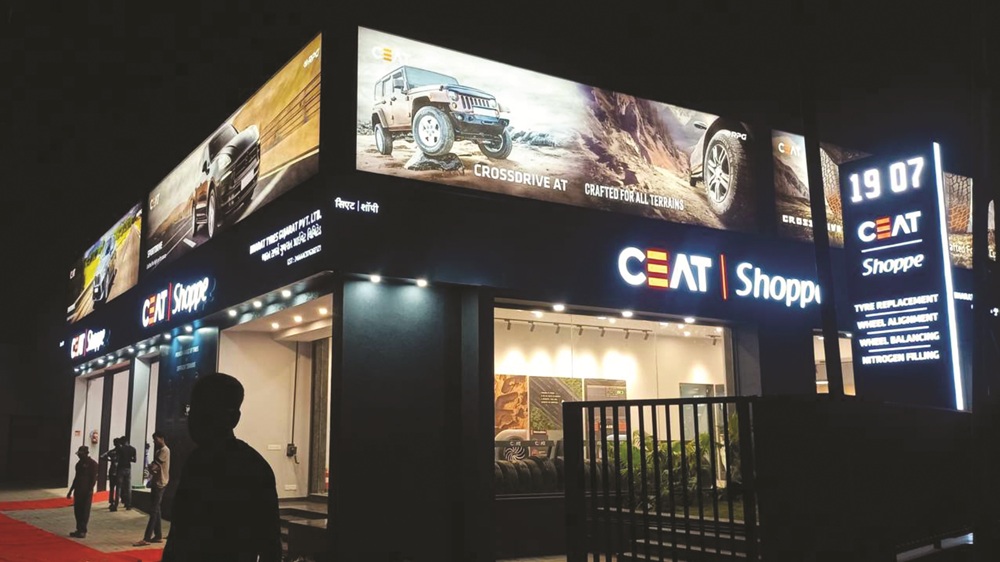
As experiential retail takes hold, service portfolios inside tyre stores are expanding faster than ever. Advanced wheel balancing, laser-driven alignment systems, nitrogen inflation, premium alloy wheel installations, EV-oriented tyre consultations, digital appointment scheduling and real-time tyre-health diagnostics are now standard. Many outlets also provide car detailing, interior cleaning, ceramic coating, PPF application, brake checks, battery inspections and multi-point vehicle health reports, making them full-fledged mobility centres.
Global players have pushed the envelope even further. Michelin’s 25,000-square-foot Experience Store in Nashik features a heritage wall and innovation displays showcasing electric mobility, materials science and environmental responsibility. It houses precision wheel-alignment bays, detailing studios, and accessory galleries. “We are proud to unveil Michelin’s first Experience Centre in India. The sole purpose of this store is to go beyond traditional tyre retail and provide customers with an immersive experience of the brand,” said Shantanu Deshpande, Managing Director of Michelin India.
Continental Tyres is also strengthening India’s premium retail ecosystem through its CPD outlets, which include ambient lounges, diagnostic equipment, premium alloy wheels and digitally enabled guidance. “With our new CPD store in Indore, we bring Continental’s promise of safety, innovation and comfort closer to Madhya Pradesh’s clients,” said Samir Gupta, Managing Director of Continental Tyres India. He added that the brand’s ‘In the Market, For the Market’ approach is central to its retail expansion strategy.
Even in rural markets, tyre retail is becoming more formalised, structured and service-oriented. JK Tyre’s ‘Steel Wheels’ format is targeted at towns with populations under 100,000 and offers standardised layouts, value-added services, best-in-market pricing and instant claim facilities. “Our Rural expansion programme will help us reach the interiors of the real Bharat that is economically vibrant but often underserved. We are not just building retail points; we are also enabling entrepreneurship and access,” said Managing Director Anshuman Singhania.
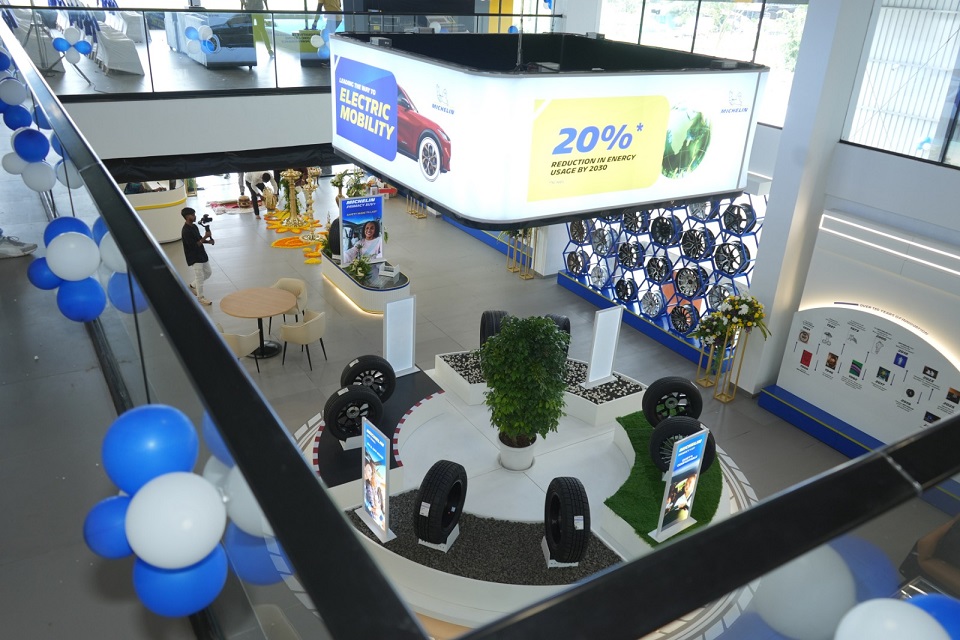 Together, these developments mark a decisive shift in how tyre brands engage customers. Tyre stores are increasingly functioning as lifestyle environments, designed for comfort, informed decision-making, personalisation, transparency and community. The industry is moving away from a product-first mindset to a customer-experience-led philosophy.
As premium cars, SUVs and EVs become mainstream, and as younger motorists prioritise digital empowerment and ambience, tyre retailers are aligning with these new expectations. India’s tyre makers are building a retail landscape where experiential engagement, technology integration, service breadth and emotional connection define long-term brand success.
For an industry long anchored in grease, metal and functionality, the transformation is profound. Tyre retail in India is no longer just about fitment; it is becoming a premium mobility experience, curated for a generation that demands clarity, comfort and an elevated relationship with every aspect of vehicle ownership.
Yokohama Europe Appoints Giuseppe La Iacona To Lead Southern Operations
- By TT News
- September 18, 2026
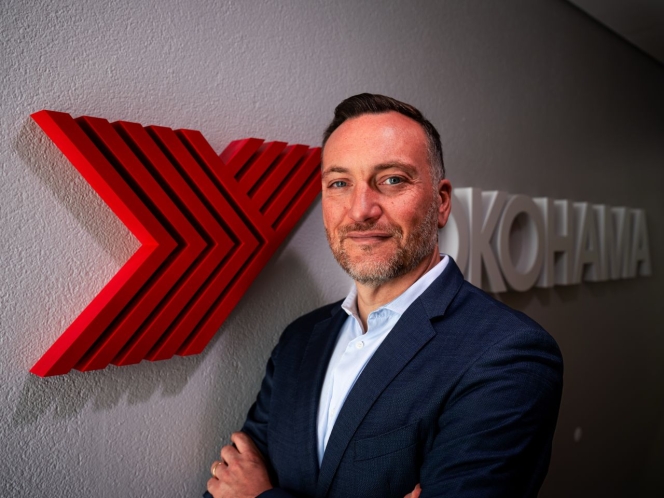
Yokohama Europe has appointed Giuseppe La Iacona to a series of senior leadership roles as the company seeks to strengthen its position across the region.
La Iacona joined the business on September 15 and will assume responsibility for supporting growth and organisational consolidation in the European market.
He brings more than 20 years’ experience in the tyre industry, spanning sales, marketing, business development, country management and international customer relations. He has held senior roles across several European markets, developing experience in managing local dynamics while driving cross-border business expansion.
Reporting to Takashi Maki, La Iacona has been appointed General Manager for southern Europe, where he will lead a newly created regional cluster covering Italy and France. The role is intended to improve coordination and operational synergies between the two markets.
He will also serve as Chief Executive of Yokohama Italia, with overall responsibility for the Italian subsidiary, alongside taking on the role of head of international customers. In that capacity, he will oversee the management and development of clients operating across multiple European markets, with the aim of creating a more consistent commercial approach and strengthening collaboration between subsidiaries.
His remit includes improving organisational alignment and fostering closer cooperation between markets and customers as the company expands its European operations.
“I am very pleased to welcome Giuseppe to YOKOHAMA Europe at an important stage in our development,” said Maki. “His extensive international experience, deep knowledge of the tyre industry and ability to work across different markets will be valuable assets as we continue to strengthen our European organisation and pursue sustainable growth.”
La Iacona said: “I am excited to join YOKOHAMA Europe and to contribute to the company’s next phase of growth in Europe. YOKOHAMA has a strong heritage, a distinctive brand and significant opportunities across the European market. I look forward to working closely with our teams, customers and partners across countries to further develop the business and strengthen our presence in the region.”
Özka Tyre Appoints Mehmet Yüksel As New Chief Operating Officer
- By TT News
- September 18, 2026

Özka Tyre, a prominent Turkish manufacturer of tyres for agricultural and construction equipment, has reinforced its leadership team as part of a broader push towards global expansion and technological modernisation in production. The company has appointed Mehmet Yüksel as its new Chief Operating Officer, bringing aboard an executive with extensive senior experience from Goodyear’s Luxembourg-based international organisation.
In his new role, Yüksel will oversee functions central to Özka’s production and operational strength. His responsibilities encompass production, quality, research and development, planning, investment and projects, electricity and maintenance, occupational safety and quality management systems, positioning him to steer critical areas of the company’s industrial performance.
Driven by investments and a focus on advancing its manufacturing strength, Özka continuously monitors shifts in the worldwide tire sector, particularly technological progress in Europe, and uses those insights to shape its future production infrastructure. As new investments prepare to elevate its output capacity and technical systems, the firm is simultaneously bolstering its organisational framework to sustain that transformation.
Cabot Names Steve Delahunt As Interim CFO
- By TT News
- September 16, 2026

Cabot Corporation has named Steve Delahunt, currently Vice President and Corporate Treasurer, to assume the Chief Financial Officer role on an interim basis starting 1 October 2026. He will hold the position while Cabot continues searching for a permanent finance chief.
The interim appointment follows the previously disclosed leadership transition in which Erica McLaughlin, Executive Vice President, Chief Financial Officer and Head of Corporate Strategy, will become President and Chief Executive Officer on the same date. McLaughlin succeeds Sean Keohane and will relinquish her CFO duties at that time.
Delahunt brings over three decades of finance and treasury experience, including nine years leading Cabot's investor relations function through January 2026. As Corporate Treasurer, he oversees global treasury operations, capital markets strategy, liquidity management, banking relationships, risk management and pension investments. He has been central to Cabot's capital allocation, financing, investor engagement and strategic growth initiatives, as well as strengthened shareholder relations during his investor relations tenure.
McLaughlin said, “Steve is a highly respected finance leader with deep knowledge of our business, strong relationships across our global organisation and a proven track record of disciplined financial leadership. As we continue executing our strategy and building on our strong financial position, Steve’s experience, judgment and understanding of our business make him exceptionally well suited to lead our finance organisation while the Company conducts its search for our next Chief Financial Officer.”
JK Tyre Launches New Off-The-Road Tyres For Construction And Mining Sectors
- By TT News
- September 15, 2026
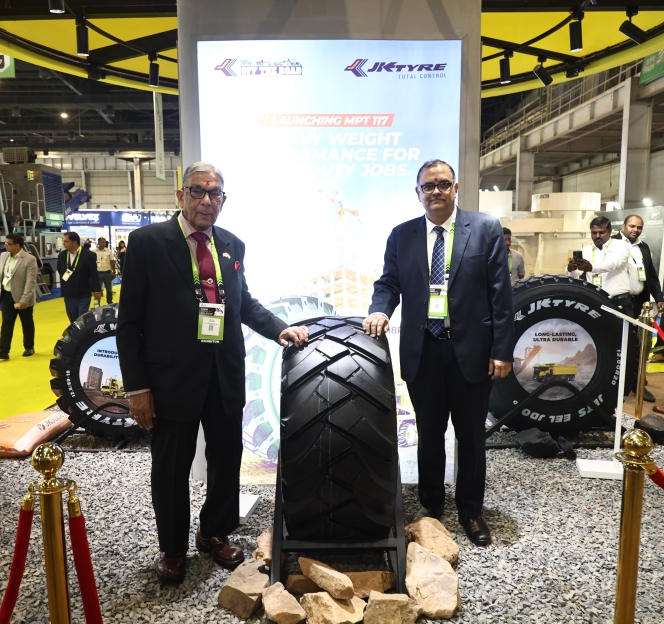
JK Tyre & Industries Ltd has launched four new off-the-road (OTR) tyre products for construction, material handling and mining applications, as the company expands its portfolio in performance-focused segments.
The products were unveiled at BAUMA CONEXPO INDIA 2026, held at the India Expo Centre in Greater Noida, and are designed to improve durability, load-carrying capacity, traction and operational efficiency in demanding conditions.
The new range includes tyres for self-loading concrete mixers, backhoe loaders, telehandlers and mining tippers. JK Tyre said the additions are intended to meet evolving requirements across India’s construction, infrastructure and mining sectors.
Srinivasu Allaphan, Director of Sales And Marketing at JK Tyre & Industries Ltd, said: “India’s infrastructure and industrial growth is creating a growing need for high-performance, reliable and application-specific mobility solutions. At JK Tyre, we are committed to developing OTR solutions that address the specific needs of our customers and the demanding conditions in which their equipment operates. Our latest range combines durability, reliability and performance to help customers maximise equipment uptime and operational efficiency. As we continue to strengthen our premium OTR portfolio, we remain committed to delivering solutions that create value for our customers and support the growth of India’s construction, infrastructure and mining sectors.”
The company said the MPT 45 tyre pattern has been developed for traction and stability in mixed terrain, while the MPT117 range is designed for construction and material-handling operations, with a focus on grip and durability. A separate JDO XD tyre has been introduced for mining tippers, with reinforced construction aimed at resisting cuts and abrasions.
JK Tyre said the products were developed with Indian operating conditions in mind and are intended to improve machine performance and reduce operating costs in demanding applications.
The group added that the launch supports its expansion in off-the-road tyres across construction, mining and specialised industrial segments.

Comments (0)
ADD COMMENT