

- Ian Andrews
- NTDA
- National Tyre Distributors Association
- National Tire Conference and National Tire Awards
Charting A New Course For NTDA
- By Gaurav Nandi
- December 12, 2025
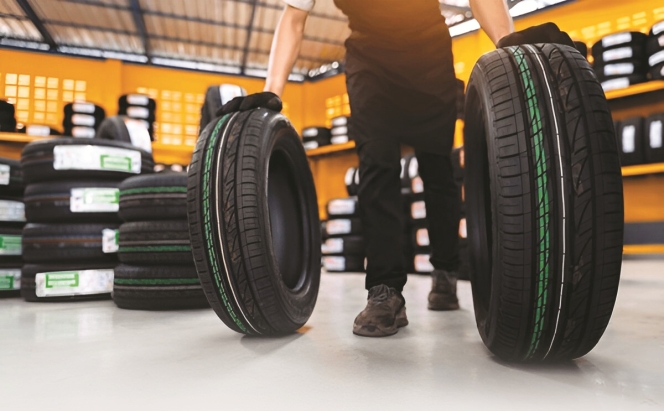
Ian Andrews steps into the role of NTDA Chief Executive at a precarious moment for the UK tyre industry, where skills shortages, demographic shifts and mounting environmental pressures threaten to outpace the sector’s readiness. New to tyres but not to membership organisations, Andrews must prove his ability to turn fresh perspective into actionable solutions bridging gaps in recruitment, diversity and sustainability while convincing members that the nearly century-old association can adapt quickly enough to safeguard its relevance.
Ian Andrews, the newly appointed Chief Executive Officer of the National Tyre Distributors Association (NTDA), has embarked on a mission to address urgent challenges within the UK tyre sector, undertaking a comprehensive strategy to tackle recruitment issues, enhance member engagement, promote collaboration and advance environmental sustainability.
Coming from two decades of senior leadership in membership-based organisations but new to the tyre industry itself, Andrews brings a fresh perspective combined with seasoned leadership skills to the nearly 100-year-old trade association.
Upon assuming his role, Andrews emphasised a grounded approach focused on learning directly from NTDA members. “My immediate priorities are to understand the challenges and opportunities that face the tyre sector here in UK, principally, but globally as well,” he shared.
 Approaching the role without preconceived notions, he aims to listen and respond to member feedback. Early indications point to recruitment and careers as pressing issues. “Careers and recruitment seem to be one of the early areas of work that we need to focus on. There are significant recruitment issues here in UK, not just in tyres but across the whole motor vehicle sector,” said Andrews during the exclusive interview with Tyre Trends.
TACKLING GAPS
The UK tyre sector faces a looming demographic shift with a substantial number of experienced professionals expected to retire over the next decade, risking a critical loss of institutional knowledge and technical skills.
Andrews warned, “The sector has got a significant number of people who will retire in the next 10 years. So there’ll be a significant loss of knowledge and skills.”
While larger companies have training and HR departments to manage recruitment and development efforts, smaller businesses face a heavier burden. “They are doing it themselves, and if you’re employing somebody new, then it’s a huge commitment to train and develop that person until they start generating revenue and making a return on the investment,” he explained.
Recognising the sector’s traditionally male-dominated nature, Andrews stressed the imperative of building a more diverse workforce. “We need to look at getting a better and more diverse workforce. Moreover, any business should be reflective of the community it’s working in. If you’re in an ethnically diverse community, your workforce will be best when it’s ethnically diverse,” he noted.
Yet he acknowledged the cultural shift required will take time and that’s not going to happen overnight.
Furthermore, Brexit has complicated recruitment by reducing access to talent from Europe, shifting the focus predominantly to UK-based recruitment. “Most of the tyre sector focus is on UK recruitment, perhaps more so now after Brexit,” Andrews noted.
Despite these constraints, his message was clear: “If we keep doing what we’ve always done, we’ll end up with what we’ve always had. So we need to look at doing different things. Reaching different groups of people.”
To address the skills and professionalism gap, NTDA has expanded its tyre technician licensing schemes significantly. Andrews reported robust uptake with over 16,000 technicians licensed by the NTDA.
This growth is particularly notable in the past two years. Acknowledging the specialised skills needed in emerging technologies, he highlighted the introduction of licensing for electric vehicle tyre (EV) technicians. “The whole electric vehicle is bringing a new plethora of challenges and opportunities. It’s a different skill set. Everything is different in EVs,” he said.
ENGAGING MEMBERS
Member engagement and retention stand as foundational pillars for Andrews’s leadership as well. He aims to increase members’ awareness of
NTDA’s benefits and encourage their active participation. “Often, members pay their membership fee but don’t really explore all the member benefits,” he observed.
Plans include surveying members on their benefit awareness and usefulness while exploring additional services that may be introduced. To foster greater connection, Andrews is looking at enhancing local engagement through regional events across UK, alongside leveraging digital platforms.
He mentioned, “We run large national events in October, including our National Tire Conference and National Tire Awards, which are very well supported. But we need to explore how else we can engage with members on a more local basis for physical events but also on a digital basis.”
His previous experience includes organising half-day digital forums with speakers and interactive participation, offering participants the flexibility to attend live or watch recorded sessions later.
Collaboration within the sector forms a cornerstone of Andrews’s strategic outlook. While mindful and cautious of anti-competitive regulations, he believes substantial benefits can come from sharing resources and best practices, especially on recruitment and sustainability challenges.
“There’s always greater advantage in collaboration than there is in competition. Who is doing it well? What are they willing to share? What resources do they have that might be made more widely available?” he asserted.
At the same time, he acknowledged the necessity of protecting commercially sensitive information: “There will always be things that are commercially sensitive and need to be kept such, but that’s fine. Let’s collaborate on the 90 percent that isn’t commercially sensitive and keep the 10 percent that is.”
ENVIRONMENTAL STEWARDSHIP
Environmental stewardship and sustainability have emerged prominently on the NTDA agenda. Andrews described active engagement with the UK Environment Agency regarding the management of end-of-life tyres.
“We’re engaged with the agency that is responsible for where end-of-life tyres end up, making sure that they end up in the right place at the right time and don’t clog up our rivers, canals and green spaces,” he stated.
Growing government interest in tyre runoff impacting watercourses may further intensify oversight. “There’s government interest in where runoff from tyres is ending up in the water courses,” Andrews noted, emphasising the importance of proactive dialogue. “With all aspects of working with government, it’s about getting to them before they get to you.”
He committed to openness and transparency if issues arise, stating, “If there’s an issue, then be upfront and open that there’s an issue and we’re working on it and there is a solution.”
Looking to the future, Andrews identified his plans for NTDA’s next three to five years that include member growth, recruitment and environmental awareness. “Internally, it is driving member engagement and member value and therefore driving up member growth,” he shared.
Externally, recruitment and environmental matters are key concerns. Noting that larger companies typically have sustainability specialists, Andrews highlighted the need to support smaller businesses struggling to navigate sustainability practices. “Helping the whole sector regardless of the size of the business is important,” he said.
Throughout the interview, Andrews repeatedly underscored the fundamental role of the tyre industry in public health and safety. “The tyre sector is fundamentally about health, safety and well-being,” he emphasised.
“You wouldn’t put your most precious things anywhere without some assurance that they’re going to be safe. Let’s not put our partners, children, parents into vehicles without some assurance that the tyres are going to do the job that’s expected of them,” he asserted.
Based in Halesbury, Buckinghamshire, Andrews expressed enthusiasm for leading the NTDA forward. While new to tyres, he is confident in his ability to learn quickly with the board and executive council’s support. “The tyre stuff I will learn. When I joined the BPCA, I knew nothing about pest control. Now I’d like to think the same will be true of tyres. It’s all learnable,” he said.
He also stressed his readiness to bring expert colleagues to discussions, for example, when facing government ministers, to ensure the expertise needed is present.
As he takes charge of NTDA during a time of transformation, Andrews seeks to position the association as the collective voice of the tyre sector, delivering professional standards and fostering a collaborative, diverse and sustainable industry that prioritises safety and well-being.
Anyline Rolls Out Major TireBuddy Update With Fully Automated Tyre Inspections
- By TT News
- July 27, 2026
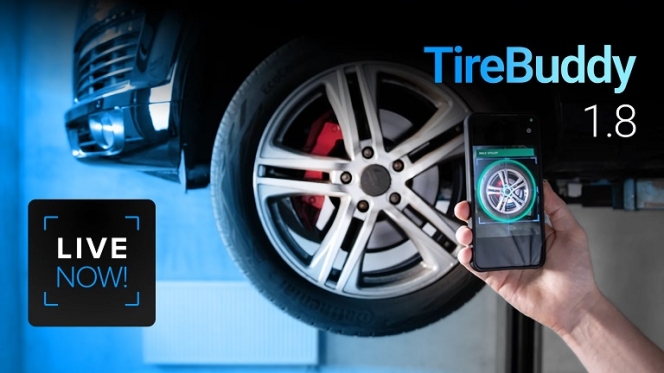
AI mobile data capture company Anyline has released the latest version of TireBuddy, a smartphone-based system for automotive tyre inspections. Version 1.8 introduces fully automated sidewall capture that removes human variability from data collection. The tool has already helped service teams achieve faster, more uniform inspections over the past year, leading to increased tyre sales and stronger customer trust.
The automated mechanism uses on-device guidance that evaluates each image against four criteria: full sidewall detection, sharpness, proper distance and angle and overall clarity. This real-time feedback minimises redo scans by guiding technicians to capture optimal images immediately. The system addresses common challenges in busy service bays where accuracy often suffers due to varying experience levels.
Standardisation of inspection quality is a primary benefit, as consistent results are achieved regardless of who holds the phone. This removes dependency on technician skill or training duration. New or seasonal staff can perform scans confidently from day one without extensive instruction. The automated capture now serves as the standard protocol for all inspections across locations and shifts.
Additional features include tyre mismatch alerts that flag size discrepancies, automated email reports to back-office systems and a redesigned results screen consolidating sidewall information and tread measurements. With hundreds of thousands of annual inspections, this update reinforces TireBuddy's role in modernising tyre service operations.
Lukas Kinigadner, CRO, Anyline, said, “A shop is only as consistent as its least experienced inspector. Automated sidewall capture gets every scan to the same standard, so teams can stop treating inspection quality as a variable.”
Epson Unveils Expanded Robotics Portfolio At Automation Expo Mumbai 2026
- By TT News
- July 23, 2026
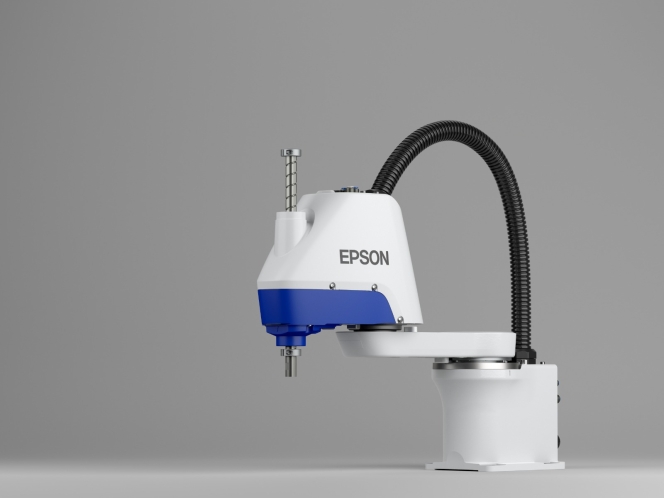
Epson, a global leader in SCARA robot manufacturing, has unveiled its next-generation industrial robotics portfolio at Automation Expo Mumbai 2026. The newly introduced lineup features the high-end CX-A Series 6-axis robots, the LS-C Series SCARA robots, the RC+ 8.0 programming software and the advanced SafeSense safety technology, all designed to address diverse manufacturing applications such as pick-and-place, precision assembly, parts transfer and material handling.
The new offerings significantly expand Epson’s existing industrial robotics family, which already includes the 6-axis C-Series and SCARA T-Series and LS-Series models with payloads ranging from 3 to 20 kilogrammes. With the addition of the CX-A and LS-C Series, manufacturers across various sectors can achieve heightened productivity, flexibility and operational efficiency. The CX-A Series is engineered for complex tasks with a payload capacity of up to seven kilogrammes and a reach of 900 millimetres, available in IP67, cleanroom and ESD variants, while the LS-C Series provides a compact SCARA platform with a 50-kilogramme payload, a 1,000-millimetre reach and cycle times as fast as 0.298 seconds.
Complementing the hardware, the RC+ 8.0 software offers an integrated environment for programming, simulation and system management, facilitating faster automation deployment with support for Visual Studio and C++ development. Additional efficiency features include enhanced diagnostics, OPC UA, GUI builder and safety functions, alongside co-creation tools like Library Builder and RC+ Extension. Meanwhile, the SafeSense technology promotes safer human-robot collaboration by incorporating Safety Limited Speed and Safety Limited Position functions, which can potentially reduce the need for extensive safety fencing and thereby increase operational flexibility.
With over four decades of industrial robotics expertise and more than 200,000 robotic arms deployed globally, Epson continues to drive operational excellence for businesses. Attendees at Automation Expo Mumbai 2026 have the opportunity to view live demonstrations of these solutions and consult with Epson specialists about transforming their manufacturing operations.
Siva Kumar, Sr General Manager – Sales and Marketing, Epson India, said, "India is rapidly emerging as a global manufacturing hub, and automation will play a pivotal role in shaping its future. With our new industrial robot lineup and RC+ 8.0 platform, Epson is delivering the speed, precision and intelligence manufacturers need to compete in an increasingly dynamic marketplace. We remain committed to enabling businesses to accelerate automation adoption and build smarter, more agile and globally competitive manufacturing operations."
- Fraunhofer Institute For Structural Durability And System Reliability LBF
- Fraunhofer ICT
- Fraunhofer IGD
- Fraunhofer IWM
- TERIS
Fraunhofer Consortium Advances Standardised Tyre Abrasion Testing With TERIS Milestone
- By TT News
- July 21, 2026
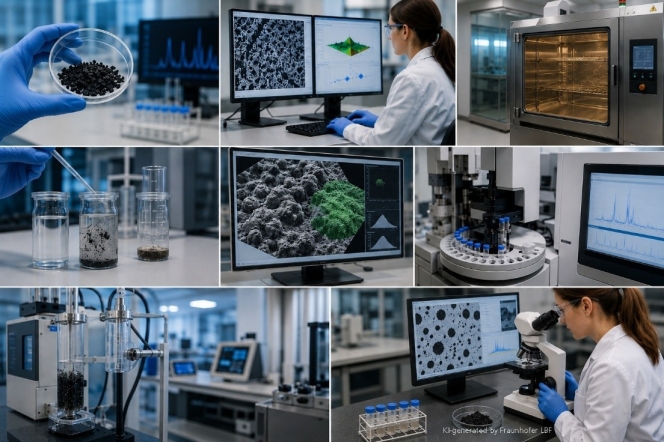
A consortium of Fraunhofer institutes has reached a key milestone in the Technology Platform for Tire Abrasion and the Identification of its Emissions in Road Traffic (TERIS) project, moving closer to establishing standardised laboratory methods for generating, analysing and predicting tyre wear.
The project, led by the Fraunhofer Institute for Structural Durability and System Reliability LBF, together with Fraunhofer ICT, Fraunhofer IGD and Fraunhofer IWM, aims to provide the tyre industry, testing organisations and environmental agencies with reliable and practical laboratory procedures for assessing tyre abrasion emissions.
The first project milestone has been completed following a successful review by an advisory board comprising industry experts.
The consortium has developed reference methods for tyre abrasion, particle analysis, tribological modelling, artificial intelligence-based surface analysis, a laboratory test bench concept, accelerated ageing techniques and volatile organic compound (VOC) detection.
According to the consortium, combining different particle collection and measurement techniques enables more precise analysis of both airborne and deposited tyre wear particles. At the same time, tribological models have been developed to better understand the relationship between loading conditions, material properties, surface structures and particle formation, allowing real-world tyre wear processes to be replicated under laboratory conditions.
Researchers have also developed a specialised test chamber for accelerated ageing, enabling tyre samples to be exposed to controlled environmental conditions before evaluating their abrasion behaviour.
Another development is an optical detection system that uses artificial intelligence to identify and classify surface structures. The system has been validated using substitute materials and is expected to be applied to rubber samples during the next phase of the project.
The consortium has also designed a laboratory test bench that combines multiaxial loading, controlled generation of tyre wear particles, targeted particle collection and integrated optical sensors within a single testing platform.
In addition, the project combines accelerated weathering with chemical analysis of volatile organic compounds released from tyre abrasion to assess the environmental impact of tyre wear particles.
The researchers said the work will provide the foundation for faster and more practical laboratory evaluation of new rubber compounds. The resulting methods are intended to help tyre manufacturers reduce emissions, accelerate product development and support compliance with the requirements of the Euro 7 standard.
At Fraunhofer IWM, researchers focused on refining tribological wear models and friction surface concepts to simulate particle formation under controlled laboratory conditions. The institute designed a parameterisable wear test that studies friction between plate materials and model surfaces with different structures, enabling researchers to investigate the mechanisms responsible for particle generation.
Initial findings indicate that tyre wear results from multiple interacting mechanisms rather than a simple relationship between particle emissions and factors such as speed, contact force or temperature. The researchers collected and analysed particles across a wide range of sizes during the study.
ZF Group India Wins Contracts For Battery, Tyre and E-Axle Testing
- By TT News
- June 30, 2026
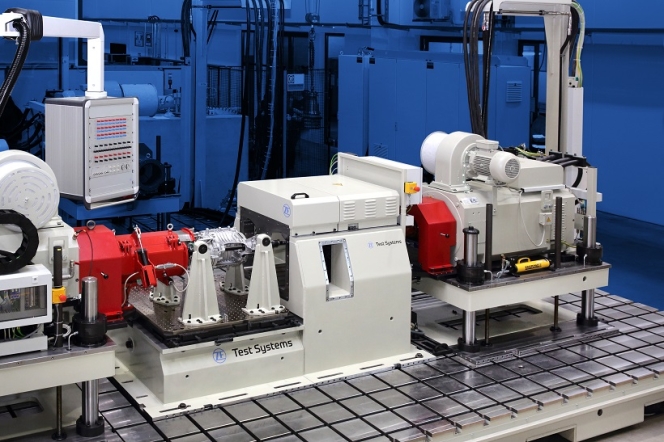
ZF has secured a significant milestone in the Indian automotive sector, receiving three major orders for its advanced test systems. The contracts, which encompass battery, tyre and e-axle testing, position the global driveline and chassis technology leader at the forefront of the nation’s drive to enhance road safety and establish more robust vehicle certification processes. This development aligns with India’s accelerating regulatory efforts to ensure that vehicle testing becomes more independent, rigorous and comprehensive, marking a critical step forward for the industry.
A key aspect of ZF's strategy involves a strong commitment to local manufacturing, with the company emphasising high levels of domestic content for its test systems in support of the ‘Make in India’ initiative. The firm’s extensive background in the field is underscored by its experience in testing over 100 million transmissions, a testament to the proven global reliability of its technology. This foundation of expertise is now being applied to address the specific safety and performance demands emerging in the Indian market.
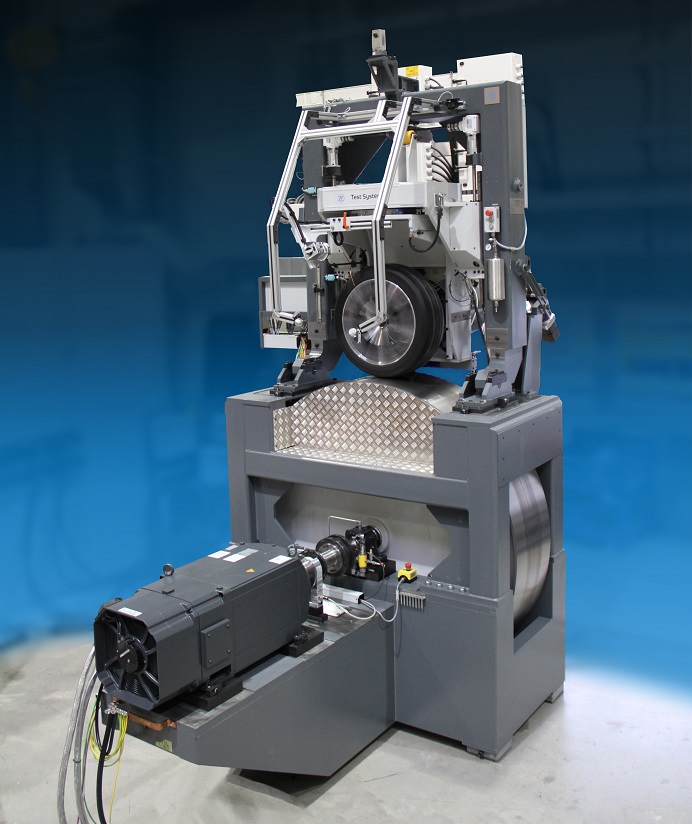
With the rapid adoption of electric vehicles, battery safety has become a paramount concern, and ZF’s solutions cover the complete spectrum from individual cells to complete packs. These systems evaluate performance, endurance and environmental factors, including rigorous mechanical abuse testing, while adhering to a wide array of international and Indian standards. Furthermore, the company’s tyre testing capabilities are poised to play a crucial role as India prepares to enforce new mandatory regulations, including the BNVSAP and the AIS 142 TPMS Mandate. The ZF Tyre Efficiency Tester (TET.lab), recognised for its precision, offers a modular platform capable of testing everything from motorcycles to heavy commercial vehicles.
The company’s e-mobility test benches feature a high-performance drive module with a flexible, modular architecture designed to accommodate both conventional and electric drivetrains. These systems can be configured for various operations, integrating frequency converters and precision measurement technology for comprehensive testing. ZF’s deep expertise, already deployed by manufacturers and testing authorities worldwide, positions it as a key technology partner for India. As regulatory requirements tighten and the demand for quality escalates, the company is set to support the nation's ambition of building a safe and sustainable automotive ecosystem.
Akash Passey, President, ZF Group India, said, “Testing agencies are the final arbiters of vehicle safety, the bodies whose certification regulators and the public trust. Being chosen across three independent and Government agencies, for three distinct testing disciplines, is a powerful validation of ZF's accuracy, reliability and deep understanding of India's regulatory and testing landscape. ZF Group is proud to provide the technical foundation that makes world-class automotive safety infrastructure possible in India, not just for our OEM customers but also for Government and independent testing agencies.”
Thomas Trebitsch, Vice President, ZF Test Systems and Testing, said, “Over the past years, we have been focusing on the tyre industry in India and introducing our complete product portfolio to India. As the market develops rapidly towards regulations and safety, there is a strong need for robust and world-class testing technology. ZF brings its global competence and a deep understanding of the Indian auto industry to address its specific needs.”
Comments (0)
ADD COMMENT